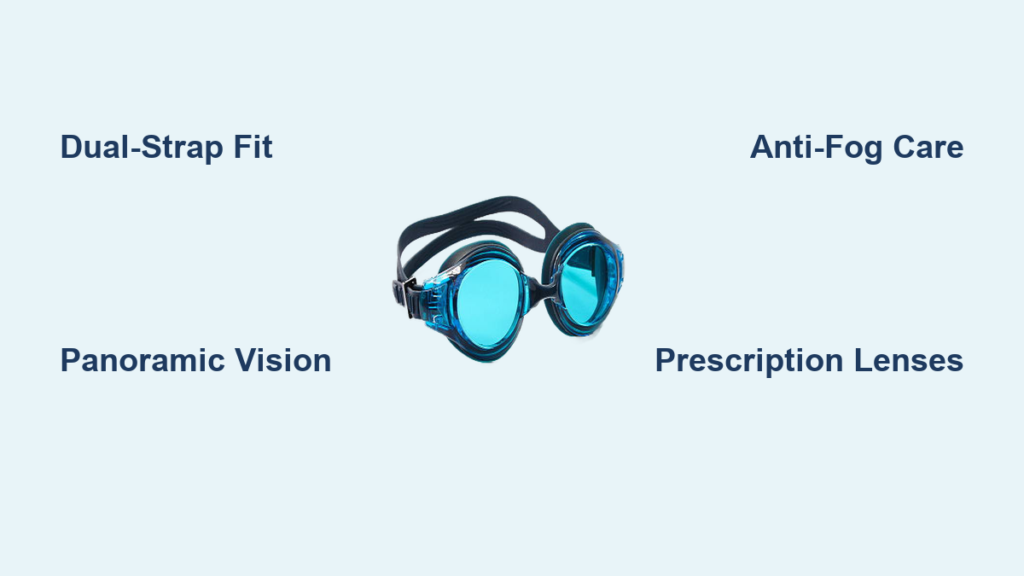
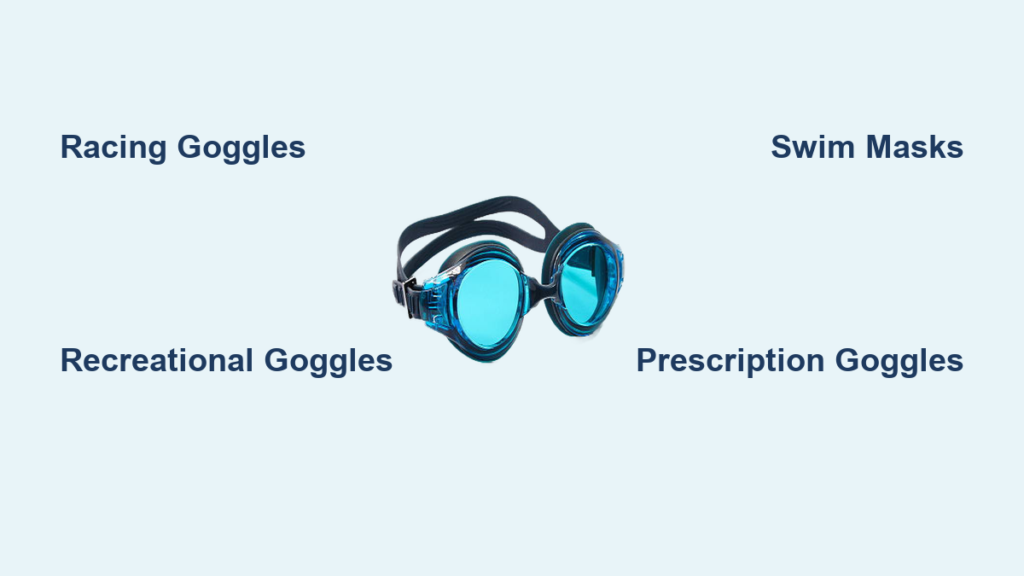
That frustrating moment when water stings your eyes mid-lap, forcing you to stop and adjust cheap goggles that promised a “watertight seal.” You’re not alone—millions of swimmers waste time and money on the wrong types of swimming goggles because they don’t understand the critical differences between models. Choosing incorrectly isn’t just uncomfortable; it actively sabotages your stroke efficiency, turn speed, and overall enjoyment. This guide cuts through the marketing fluff to show you exactly which goggle types solve specific problems, whether you’re racing the 50m freestyle or teaching your toddler to blow bubbles. You’ll discover why Olympic swimmers never wear recreational goggles and how the right lens tint can prevent disorientation in open water.
Stop guessing which swimming goggles work for your face shape and swimming conditions. We’ve tested every major category so you can match goggle types to your actual needs—not generic “best of” lists that ignore critical variables like nose bridge width or anti-fog durability. By the end, you’ll know precisely how to identify competitive-grade hydrodynamics versus recreational comfort, decode lens color codes for different lighting, and avoid the #1 fitting mistake that causes leaks even in expensive models.
Competitive Racing Goggles: The Speed Machine Your Times Demand
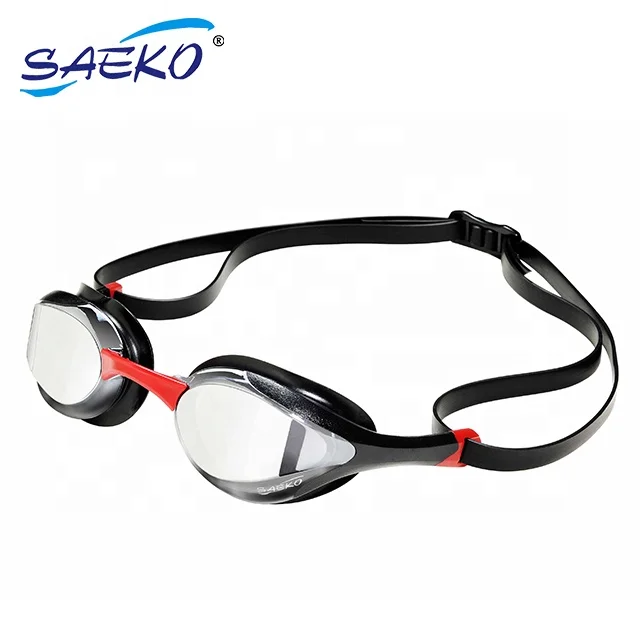
Forget bulky recreational styles—elite racing goggles slice through water with surgical precision. These low-profile speed tools use single-piece hydrodynamic frames made from flexible, drag-reducing materials that hug your face like a second skin. Notice how the lens sits millimeters closer to your eyes than standard goggles? That minimal profile prevents water turbulence during explosive starts and flip-turns when every microsecond counts.
Why Your Racing Goggles Fail During Dive Starts
Water rushing into goggles during entries usually means a compromised seal. Competitive models solve this with interchangeable nose bridges (XS to XL) that create a customized watertight barrier across diverse facial structures. The magic happens in the gasket: ultra-thin silicone forms a vacuum-like suction without painful pressure points. For indoor competitions, clear lenses maximize light transmission in dim pools, while mirrored tints combat glare in outdoor events. Pro tip: Press racing goggles against your face without the strap—if they don’t hold suction for 5 seconds, they’ll flood during dives.
Recreational Fitness Goggles: Your Daily Lap Workhorse
When you’re logging 20+ weekly laps, comfort trumps hydrodynamics. These versatile workhorses prioritize pliable gaskets that won’t leave racetrack imprints after 45 minutes in the pool. Unlike racing models, they feature adjustable nose bridges and dual-material straps that distribute pressure evenly—critical for swimmers with sensitive sinus areas. Most include interchangeable lenses (clear for dawn swims, mirrored for noon sun), but the real differentiator is the gasket type.
Foam vs. Silicone Gaskets: The Durability Trade-Off
Foam gaskets deliver instant “pillow-soft” comfort but degrade rapidly in chlorine, losing seal integrity within 3-6 months. Silicone versions resist chemical breakdown for years but require precise fitting—too tight and they pinch, too loose and they leak. For triathletes transitioning between pool and open water, choose models with quick-swap lens systems. Warning: Never rub anti-fog coatings dry; rinse with fresh water post-swim to prevent permanent fogging. These goggles dominate lap lanes for good reason—they balance field of view, comfort, and adaptability better than any other swimming goggle type.
Swim Masks: Panoramic Vision for Open Water Navigation
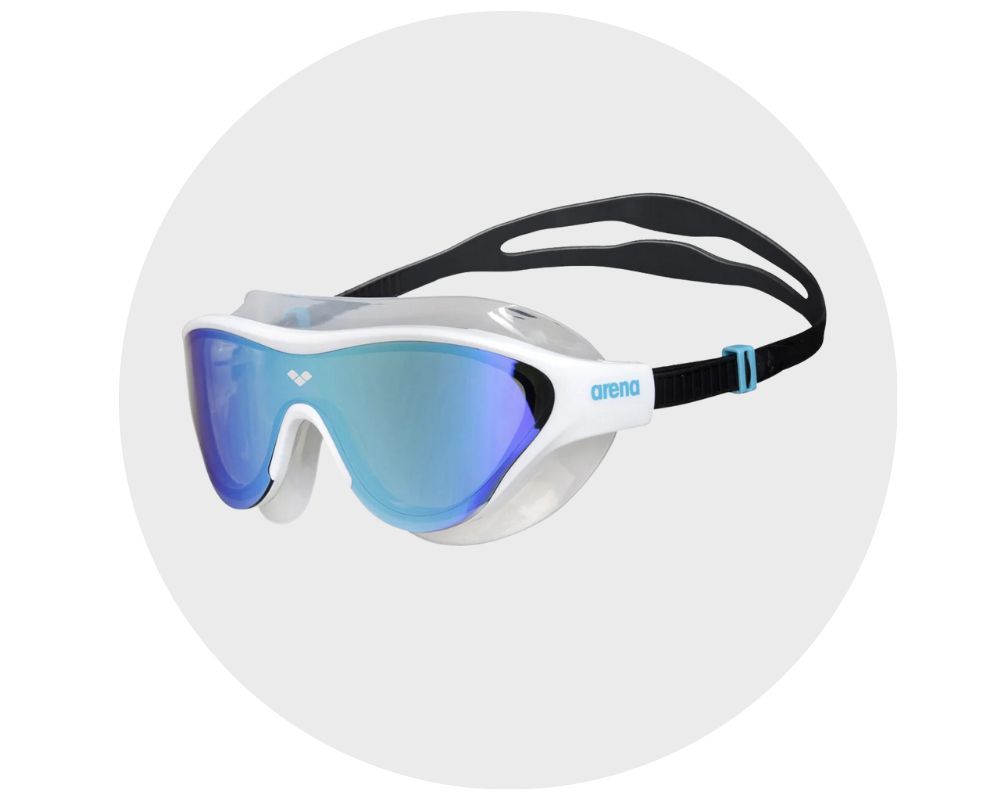
Struggling to spot kayakers or buoys during open water swims? Standard goggles create tunnel vision that forces constant head lifting. Swim masks eliminate this danger with wraparound lenses covering your entire orbital area. The single large gasket seals from cheekbone to brow, providing 180-degree peripheral vision so you see approaching swimmers and obstacles without turning your head.
Why Narrow-Faced Swimmers Should Avoid Standard Masks
That panoramic view fails if the gasket doesn’t contour your facial topography. Masks work best for average-to-wide faces but leak on narrow bridges or high cheekbones. Test fit by pressing the mask against your face—no strap—and inhaling gently through your nose. If it doesn’t seal instantly across the entire perimeter, water will invade during choppy conditions. Serious open water athletes now use low-profile racing masks with tinted lenses (blue for ocean contrast, amber for river silt) that maintain hydrodynamics while expanding visual awareness.
Prescription Swimming Goggles: Ditch the Contacts Forever
Blurred lane lines aren’t just annoying—they’re dangerous during flip-turns. Prescription goggles solve this by bonding corrective lenses (-1.0 to -8.0 diopters) directly to the inner surface of standard goggle lenses. Unlike drugstore readers, these maintain the original curvature for proper sealing. Off-the-shelf “diopter” models offer fixed prescriptions (e.g., -2.0 for both eyes), while custom versions match your exact Rx including astigmatism correction.
Critical Fit Tip for Prescription Swimmers
Never assume your glasses prescription matches your goggle needs. Water’s refractive index changes light bending, so many swimmers require 0.5-1.0 diopter less correction underwater. Test models in-store by submerging your head in a demo tank—if lane lines look sharp at 5 meters, the prescription is optimal. Pro racers use clear lenses indoors and switch to mirrored for outdoor competitions, maintaining visual precision across environments.
Kids’ Swimming Goggles: Safety-First Design for Little Faces

Standard goggles slip off children’s narrow faces within minutes, causing panic and frustration. Kids’ models solve this with ultra-soft, medical-grade silicone that won’t irritate delicate skin. The breakaway strap (required by EU safety standards) releases under 5 lbs of pressure—critical for preventing entanglement in pool ladders. Lenses use shatterproof polycarbonate that withstands fist-pounding during underwater games.
The UV Protection Trap Parents Miss
Most assume “tinted” kids’ goggles block UV rays. False—only models explicitly labeled “100% UV protection” shield developing eyes from sun damage during outdoor lessons. Check for the CE mark or ANSI Z80.3 certification. For first-time swimmers, choose bright colors (neon yellow, electric blue) that are easy to spot if dropped in deep water. Never force a seal test; let kids blink naturally—if tears flow, the suction is too strong.
Goggle Lens Colors Decoded: Your Lighting Condition Cheat Sheet

Lens tint isn’t cosmetic—it’s mission-critical for visual clarity. Choose wrong, and you’ll battle glare or miss turn indicators. This breakdown matches lens types to real-world conditions based on Olympic training protocols.
Clear Lenses: The Indoor Pool Essential
Use exclusively for dimly lit pools, evening swims, or overcast days. These maximize light transmission (90%+ clarity) so you see black lane lines against blue pool bottoms. Never use clear lenses in direct sun—they’ll cause pupil constriction that strains eyes when diving underwater.
Mirrored Lenses: Beat Glare on Bright Days
The silver/blue mirror coating reflects 50-60% of incoming light, cutting surface glare that obscures underwater markers. Essential for outdoor 8 a.m. swims when sun hits the water at low angles. Warning: Mirrored coatings scratch easily—rinse lenses face-down to avoid debris contact.
Polarized Lenses: Open Water’s Secret Weapon
Standard mirrored lenses reduce glare but not reflected light bouncing off waves. Polarized filters block horizontal light waves, revealing submerged obstacles in choppy water. Triathletes use amber-polarized lenses for ocean swims—they enhance contrast against blue-green backgrounds while neutralizing blinding wave reflections.
Photochromic Lenses: The Transition Solution
These auto-darkening lenses (like Transitions eyewear) use UV-reactive molecules to shift from clear to smoke tint in 30 seconds. Ideal for masters swimmers who train indoors but race outdoors. Avoid cheap versions that turn yellowish—premium models maintain true color perception during transitions.
Contrast-Enhancing Tints: Spot Turns Faster
Amber lenses make white pool walls “pop” against blue water, critical for long-course 50m turns. Violet tints improve depth perception for breaststrokers watching kickboards. Blue tints dominate open water swimming—they sharpen horizon lines against ocean haze while reducing eye fatigue from blue-light exposure.
Specialty Goggles: Niche Solutions for Unique Challenges
Beyond standard categories, specialized models solve specific problems. Anti-fog goggles use permanent hydrophilic coatings that disperse condensation—never wipe these lenses, as oils from fingers destroy the treatment. Prescription swim masks combine panoramic vision with corrective optics for visually impaired open water athletes. Snorkel-compatible masks feature top-mounted dry snorkels that auto-seal during dives, popular with triathletes doing sighting drills.
How to Match Goggle Types to Your Face and Goals
Stop buying goggles based on color alone. Follow this field-tested selection protocol:
- Define your primary use: Racing demands hydrodynamics (low-profile racing goggles), daily fitness needs comfort (recreational), open water requires vision (swim masks). Never cross-utilize—racing goggles leak during water aerobics; recreational models create drag in races.
- Conduct the suction test: Press goggles against eyes without straps. Inhale gently through nose—they must hold for 3+ seconds. If they fall, the seal won’t survive flip-turns.
- Match lens to lighting: Indoors = clear; bright sun = mirrored; open water = polarized or blue tint; variable light = photochromic.
- Prioritize gasket material: Foam for immediate comfort (short-term use), silicone for durability (year-round swimmers).
The perfect swimming goggles disappear on your face—no pressure points, no leaks, no visual distortion. When you select the right type for your physiology and environment, you’ll gain milliseconds per turn, eliminate eye strain, and finally swim with the confidence that your vision won’t fail you. Test models in-store using the suction method, then rinse new goggles in saliva (not water) to activate anti-fog coatings before first use. Your fastest, most comfortable swim starts with choosing the correct goggle type—not the shiniest pair on the rack.