That sudden sting in your eye when a tiny wood chip flies toward your face. The heart-stopping moment when chemical cleaner splashes near your workstation. These aren’t rare workplace incidents—they’re daily risks for millions of workers. Your eyes can suffer permanent damage in less than a second, yet many people still treat safety goggles as an optional accessory rather than essential protection. Understanding the true safety goggles purpose goes beyond simply complying with workplace regulations—it’s about preserving your vision for life. This guide reveals exactly what safety goggles protect you from, who absolutely needs them, and how to select the right pair that actually works for your specific hazards.
Without proper eye protection, you’re gambling with one of your most vital senses. The human eye is incredibly vulnerable to workplace hazards, yet often the last piece of safety equipment workers consider. When you understand the precise safety goggles purpose—creating a sealed barrier against specific threats—you’ll never skip wearing them again. Let’s break down exactly what these critical pieces of personal protective equipment do and how they save your vision every single day.
What Exactly Do Safety Goggles Protect You From?
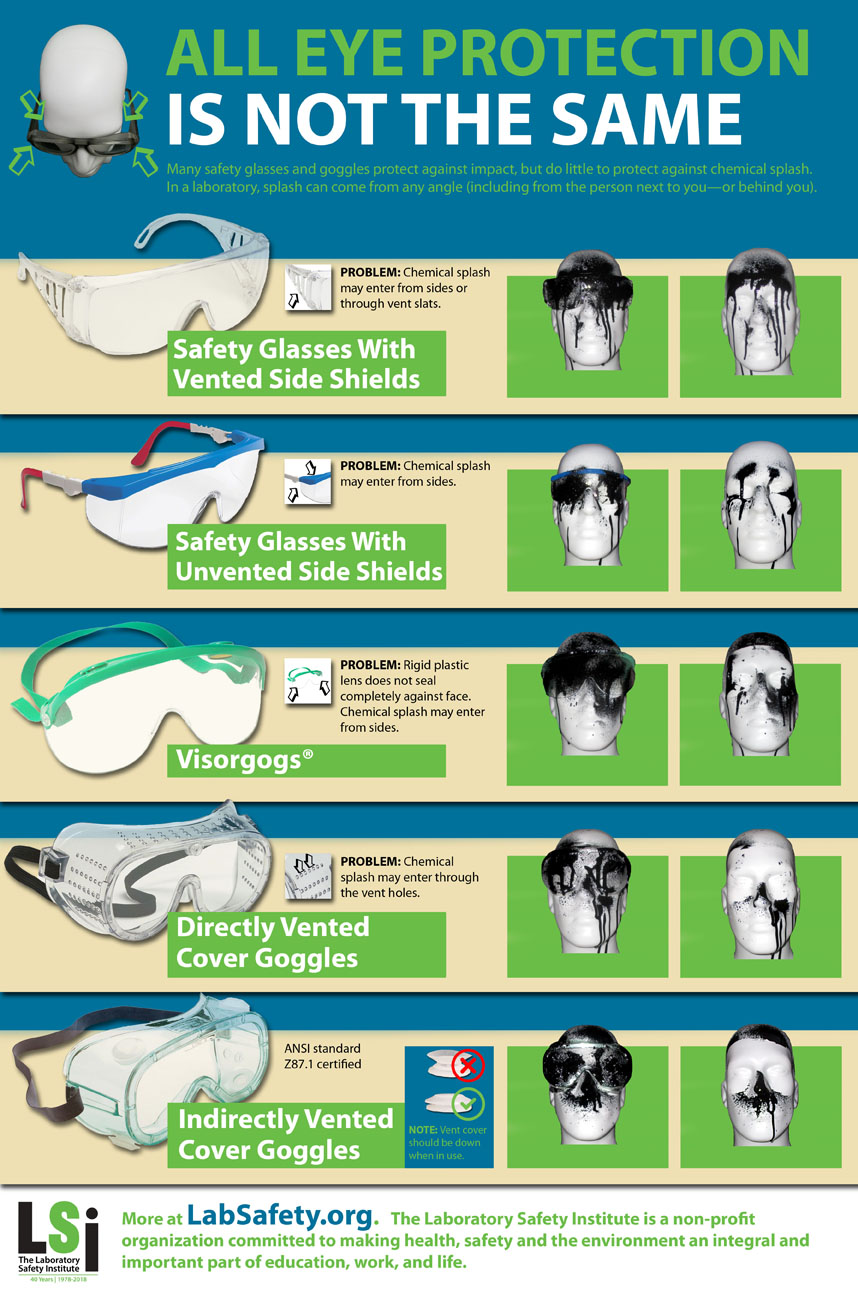
Safety goggles create a complete physical barrier that standard safety glasses can’t match. Their unique purpose is forming a tight seal around your eyes to block multiple hazard types simultaneously. Unlike safety glasses that only protect from frontal impacts, goggles wrap completely around your eye area with a soft foam or rubber gasket that prevents particles and liquids from sneaking in from the sides, top, or bottom.
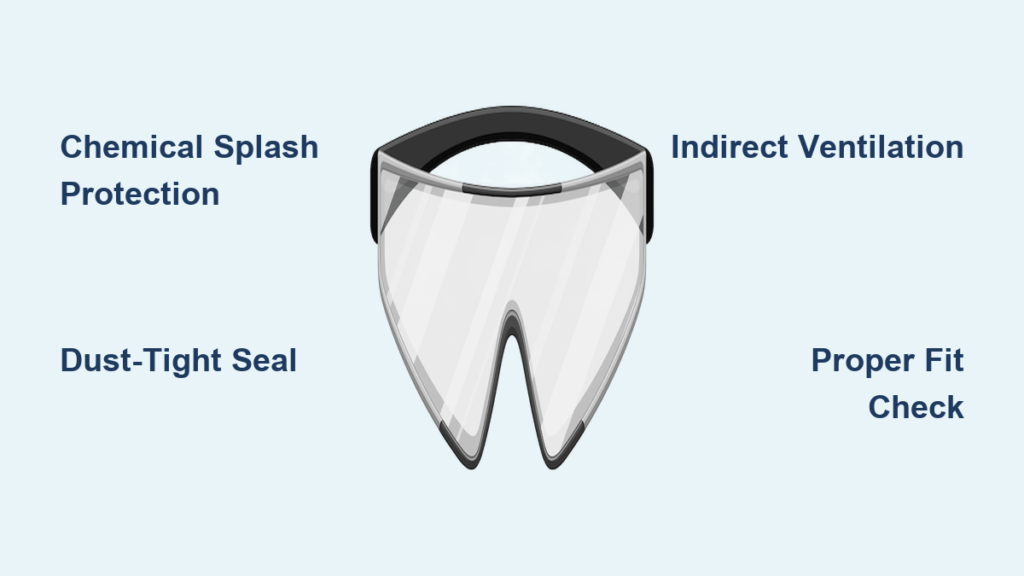
When you’re working with dangerous materials, knowing what your goggles actually stop matters. Chemical splash goggles feature indirect ventilation systems that let air circulate while blocking liquid entry—critical when handling acids or solvents that could cause blindness in seconds. For fine dust environments like woodworking or construction, dust-tight goggles seal out microscopic particles that regular glasses would allow through the gaps. Even seemingly harmless activities like pressure washing create aerosolized contaminants that require proper sealed protection.
Why Impact Protection Alone Isn’t Enough for Most Jobs
Many workers mistakenly believe that if their safety glasses meet impact standards, they’re fully protected. This dangerous assumption ignores the reality of workplace hazards. That chemical splash you didn’t expect? It flows around standard glasses and directly into your eyes. The fine wood dust from sanding? It migrates through ventilation holes and settles in your eyes, causing irritation or long-term damage.
Consider these real workplace scenarios where standard glasses fail:
– A lab technician pouring hydrochloric acid gets splashed from an unexpected reaction—the liquid flows over the top of safety glasses
– A construction worker grinding concrete has silica dust enter from the sides of their glasses
– A nurse treating a patient gets blood splatter that lands above their standard eyewear
Your vision depends on understanding that safety goggles purpose extends far beyond impact protection—they’re your last line of defense against invisible threats that glasses can’t stop.
Who Absolutely Must Wear Safety Goggles on Your Job?

If your work involves any of these specific activities, safety goggles aren’t optional—they’re essential vision insurance. Medical professionals handling blood or bodily fluids need chemical splash goggles to prevent exposure to infectious agents. Woodworkers sanding or routing should wear sealed dust goggles because fine particles become airborne and settle in eyes hours after work stops. Laboratory technicians working with volatile chemicals require non-vented goggles when handling hazardous substances that could produce dangerous vapors.
Construction Workers: When Standard Glasses Put You at Risk
On construction sites, the difference between safety glasses and proper goggles can mean the difference between clear vision and permanent damage. When you’re cutting concrete with a masonry saw, silica dust becomes airborne in concentrations that easily penetrate standard glasses. Grinding metal creates both fine particles and potential sparks that can enter from multiple angles. High-pressure cleaning operations aerosolize contaminants that standard eyewear won’t stop.
Pro tip: If you’re working overhead or in confined spaces where debris might fall from above, sealed goggles provide critical top protection that glasses lack. The foam seal creates a barrier that stops particles from entering from any direction—not just straight on.
Direct Ventilation vs. Indirect Ventilation Goggles: Which Hazard Do You Face?

Choosing between vented and non-vented goggles determines whether your eye protection actually works for your specific hazard. Direct ventilation goggles have visible holes that allow airflow but provide minimal protection against liquids—they’re designed strictly for impact protection against large particles. If you’re woodworking or doing general construction without chemical exposure, these might suffice, but they offer zero splash protection.
Indirect ventilation goggles solve the fogging problem while maintaining chemical protection through a labyrinth design that blocks liquids but allows air circulation. Look for the “W” marking on the frame indicating indirect vents. These are essential when handling cleaning chemicals, biological materials, or any situation where liquid splash could occur. The vents curve in a way that lets air out but prevents liquids from traveling inward.
How to Identify Goggle Ventilation Types at a Glance
You can quickly determine a goggle’s ventilation type by examining the sides:
– Direct vents: Visible straight holes you can see through from the side
– Indirect vents: Hooded or curved channels you cannot see through directly
– Non-vented: Completely solid sides with no openings
Never guess—check the manufacturer’s markings. The ANSI Z87.1 standard requires specific labeling that tells you exactly what protection the goggles provide. Your eyes depend on matching the goggle type to your actual workplace hazards.
How to Pick Safety Goggles That Actually Fit Your Needs
Selecting proper eye protection requires more than grabbing the nearest pair off the shelf. Start by identifying your primary hazard—impact, chemical splash, dust, or radiation—then choose goggles engineered specifically for that threat. For chemical handling, non-vented goggles provide complete liquid protection. For woodworking with fine dust, indirect vent goggles offer the right balance of protection and breathability.
Your 3-Step Goggle Selection Checklist
- Verify certification markings: Look for “Z87+” on the lens and frame indicating impact and splash protection—basic “Z87” only covers impact
- Test the seal: Press the goggles against your face without the strap—properly fitting goggles will stay in place when you open your eyes
- Check compatibility: Ensure goggles work with other PPE you wear (hard hat, respirator, face shield)
Warning: Never compromise on fit. Goggles that leave gaps over your nose bridge or at your temples provide false security—you might as well not be wearing protection at all.
Daily Safety Goggle Inspection: 3 Critical Checks You Can’t Skip
Your goggles only protect you when they’re in perfect condition. Before each use, perform this quick inspection:
- Lens integrity check: Hold goggles at eye level and look for cracks, deep scratches, or cloudiness that distorts vision
- Seal examination: Run your finger around the entire gasket—check for tears, hardening, or gaps that would break the protective seal
- Strap functionality: Ensure the headband stretches properly and the adjustment mechanism works smoothly
Damaged goggles become dangerous because compromised lenses can shatter on impact, and broken seals allow contaminants to reach your eyes. Replace goggles immediately if you notice any defects—your vision isn’t worth the risk.
Why Foggy Lenses Compromise Your Eye Protection
Fogging isn’t just annoying—it’s a serious safety issue that makes you tempted to remove your goggles. When lenses fog, you can’t see hazards clearly, defeating the entire purpose of wearing eye protection. Modern goggles solve this with permanent anti-fog coatings (look for “AF” marking) or ventilation systems designed to minimize condensation.
Pro tip: If your goggles fog despite anti-fog treatment, don’t wipe them with your sleeve—that scratches the lens. Instead, use a microfiber cloth designed for safety eyewear. For persistent fogging in humid environments, consider goggles with dual-pane lenses that prevent internal condensation.
Common Safety Goggle Mistakes That Leave Your Eyes Vulnerable
Many workers unknowingly compromise their eye protection through these preventable errors:
- Wearing prescription glasses under goggles without proper fit: Creates gaps that allow hazards to enter—opt for prescription safety goggles instead
- Using chemical splash goggles for grinding operations: The indirect vents can allow fine metal particles to enter
- Ignoring expiration dates: Polycarbonate lenses degrade over time and lose impact resistance
- Storing goggles improperly: Leaving them in direct sunlight or hot cars damages the materials
Critical reminder: Safety goggles have a limited lifespan. Replace them every 6-12 months with regular use, or immediately after any significant impact—even if no damage is visible.
Your eyes deserve protection that matches the specific hazards you face daily. By understanding the true safety goggles purpose—not just as required equipment but as your personal vision insurance—you make smarter choices about eye protection. Never settle for inadequate eyewear when your sight is on the line. Properly selected, maintained, and worn safety goggles provide that critical sealed barrier your eyes need against the invisible threats lurking in your workplace. Check your goggles today, verify they match your actual hazards, and commit to wearing the right protection every single time—you’ll never regret protecting your most valuable sense.