Sunglasses do more than make a fashion statement. The right lenses protect your eyes from harmful UV rays while enhancing your vision for specific activities. With so many types of sunglasses lenses available, choosing the perfect pair can feel confusing. Each lens color and technology serves a different purpose, from blocking glare on the water to improving contrast on the golf course. This guide breaks down every major lens type, technology, and category so you can choose sunglasses that genuinely improve how you see.
Understanding lens specifications matters more than most people realize. A dark lens without proper UV protection can actually harm your eyes more than going without sunglasses. This article covers lens technologies like polarization and mirroring, color options for different activities, VLT categories that determine appropriate use, and prescription options for vision correction.
Lens Technologies That Actually Improve Your Vision
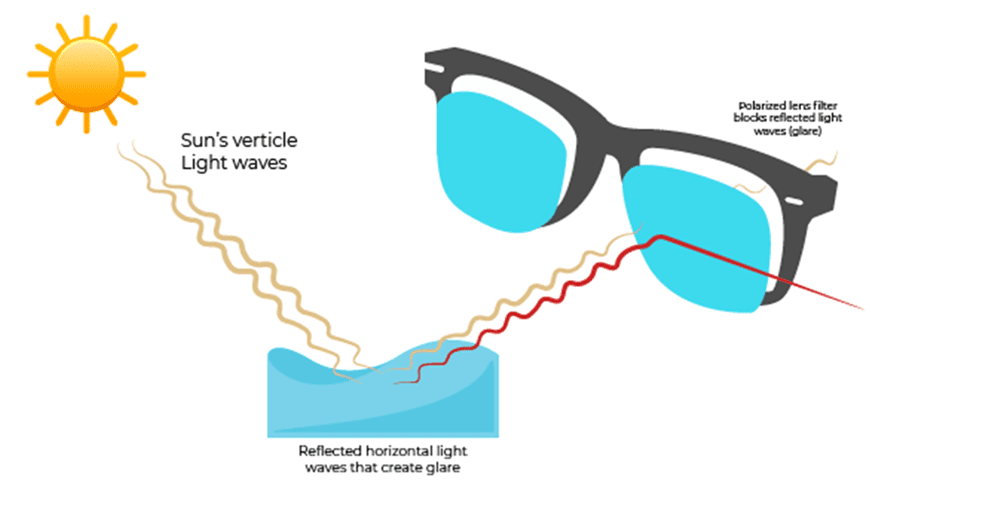
Polarized lenses contain a special chemical filter that blocks horizontal light waves responsible for glare from flat surfaces like water, snow, glass, and pavement. The filter allows only vertically oriented light to pass through, reducing reflected glare by up to 55 percent. This technology enhances contrast and depth perception while minimizing eye strain in bright conditions.
Key things to know about polarization:
• Does not block UV rays by itself; must be paired with UV400 protection
• Can reduce visibility on LCD screens like car dashboards and smartphones
• Available in prescription and non-prescription formats
• Can be combined with various lens colors
Mirrored lenses feature a reflective metallic coating on the outer surface that bounces sunlight away before it enters your eyes. This flash coating adds an extra layer of protection in extremely bright conditions like deserts, mountains, and open water. The coating works with any base tint and is often paired with polarization for dual protection.
Gradient lenses fade from dark at the top to lighter or clear at the bottom. This design blocks overhead sun while allowing more light through the lower portion for viewing dashboards, maps, or reading. Single-gradient styles are most common, while double-gradient designs are lighter at both top and bottom with the darkest tint in the middle.
How Lens Colors Affect What You See
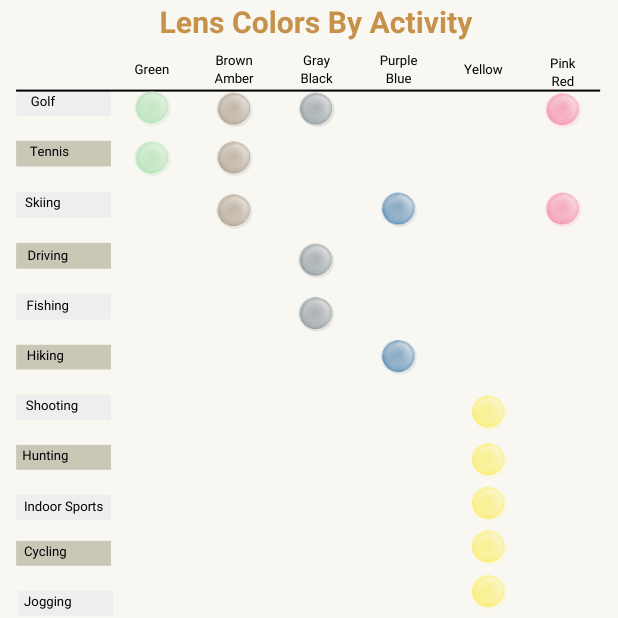
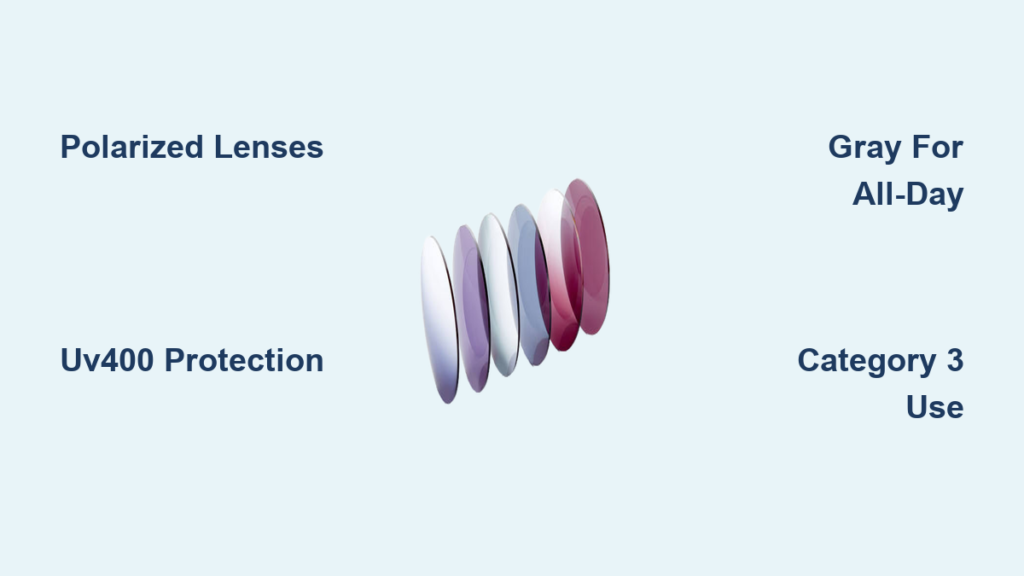
Gray lenses provide neutral light reduction without distorting colors. They cut brightness evenly across the spectrum, preserving natural hues while reducing eye fatigue in strong sunlight. These are ideal for general-purpose wear, driving, water sports, and bright urban environments. Most gray lenses fall into Category 3 with VLT between 9 and 18 percent.
Brown and amber lenses filter blue light to enhance contrast and depth perception. They improve object definition against complex backgrounds, making them excellent for tracking moving objects. These colors work particularly well for fishing where you need to see beneath the water surface, golfing to read greens, and driving to improve road detail. Avoid brown lenses in low light conditions.
Green lenses offer a middle ground between gray and yellow. They enhance contrast slightly while maintaining good color fidelity, performing well in both sunny and partially cloudy conditions. Green lenses typically fall into Category 2 or 3, making them versatile for all-day outdoor wear.
Yellow lenses block minimal visible light but dramatically increase contrast in dim, foggy, or flat-light conditions. They have a VLT of 44 to 80 percent, placing them in Category 1. Yellow lenses excel for dawn and dusk activities, winter sports in flat light, and shooting or cycling where quick visual reactions matter. These are not for bright sun as high light transmission can cause eye strain.
Pink and red lenses filter out blue-green wavelengths linked to eye strain and migraines. They enhance depth perception and reduce glare from fluorescent lights, making them popular among migraine sufferers and people sensitive to artificial lighting. Rose tints also improve driving comfort in urban environments with LED and fluorescent glare.
Blue lenses are cool-toned and fashion-focused while remaining functional when polarized. They maintain good color accuracy and enhance contrast on snow and water. These lenses work well for lifestyle and fashion wear, beach and snowy environments, and medium sun conditions.
Understanding VLT Categories for Proper Sun Protection

Visible Light Transmission measures how much light passes through a lens, determining which conditions each pair suits. Sunglasses fall into four categories based on VLT percentage.
| Category | VLT Range | Darkness Level | Best Use |
|---|---|---|---|
| 1 | 44-80% | Very light | Overcast, night, indoor |
| 2 | 19-43% | Moderate | Partly sunny |
| 3 | 9-18% | Dark | Bright sun, most common |
| 4 | 3-8% | Very dark | Extreme sun, not for driving |
Category 3 lenses represent the most popular choice for daily wear, driving, and most outdoor activities. Category 4 lenses are extremely dark and designed for high-altitude environments, glaciers, and deserts. These lenses are illegal for driving in many countries because they allow insufficient light for safe road visibility.
Remember that darkness does not equal UV protection. A dark lens without UV400 labeling can be more dangerous than a lighter lens with proper protection. Dark lenses cause your pupils to dilate, letting more harmful rays into your eyes if UV protection is missing. Always verify UV400 protection regardless of lens darkness.
Prescription Sunglass Options for Every Need
Single-vision lenses correct one distance, whether near, intermediate, or far. These typically start around $195 when including a frame and come with UV400 protection, scratch-resistant coating, and anti-reflective treatment. They work well for drivers, readers, or anyone with consistent focal needs.
Progressive lenses offer seamless correction for near, intermediate, and distance vision without visible lines. Signature progressives use digital free-form design starting around $425. Precision progressives are custom-measured for your face and prescription, offering wider fields of view and less distortion starting at $495. Progressive lenses require an ADD value in your prescription.
Readers provide magnification in sunglasses for close-up tasks without needing a full prescription. These typically max out at +2.75 magnification and start around $195 for sunglass versions. They work well for reading menus, maps, or labels in sunlight.
Lens material choice matters for prescription sunglasses. CR-39 is lightweight and color-stable, included free with standard prescriptions. Polycarbonate is impact-resistant and inherently UV-protective, ideal for active lifestyles and children’s glasses. High-index 1.67 lenses are up to 20 percent thinner, recommended for strong prescriptions at +$150 additional cost.
Best Lens Types for Specific Activities
Drivers benefit most from gray or brown polarized lenses with gradient finish. These cut road and windshield glare while maintaining visibility of digital dashboards. Avoid Category 4 lenses while driving as they impair vision on the road.
Fishers should choose amber or brown polarized lenses. These block water glare and enhance contrast to spot fish beneath the surface. Pair with a wrap-around frame for side protection against peripheral glare.
Skiers and snowboarders need gray or rose polarized lenses in Category 3 or 4. Snow reflects up to 80 percent of UV radiation, requiring strong protection. Non-polarized dark lenses will not stop the blinding reflections from snow.
Migraine sufferers benefit from rose or pink tints that filter blue-green wavelengths known to trigger headaches. These also reduce strain from fluorescent and LED lighting in offices and urban environments.
Outdoor athletes performing in variable conditions should keep two options. Gray or brown polarized lenses work for sunny conditions while yellow or amber lenses maximize contrast in low light. Quick lens changes improve performance during changing weather.
Fashion-focused buyers can choose mirrored, blue, gradient, or fashion tints. These styles turn heads while still offering UV400 protection. Adding polarization provides real-world function beyond aesthetics.
High-altitude hikers need Category 4 polarized lenses because UV increases 10 to 12 percent per 1,000 meters of elevation. Pair with wrap-around frames and side shields for complete coverage.
Caring for Your Sunglasses
Clean lenses with a microfiber cloth and lens-safe cleaning solution. Never wipe dry lenses because dust particles can cause micro-scratches. Store sunglasses in a hard case when not in use to prevent damage.
Remove sunglasses before napping or sleeping. Pressure from lying on them can crack or scratch lenses. Most premium brands offer warranties against scratching, with some providing free replacement within six months of purchase.
UV protection remains non-negotiable regardless of lens condition. Verify UV400 labeling on all sunglasses. This standard blocks 100 percent of UVA and UVB rays up to 400 nanometers, preventing cataracts and retinal damage.
Frequently Asked Questions About Types of Sunglasses Lenses
What is the best lens color for everyday sunglasses?
Gray lenses offer the best all-around performance for everyday wear. They provide true color perception, reduce brightness evenly across the spectrum, and work well in most conditions. Gray polarized lenses in Category 3 represent the most versatile choice for general-purpose use.
Do polarized lenses block UV rays?
Polarization and UV protection are separate features. Polarized lenses reduce glare from reflective surfaces but do not block UV radiation by default. Always verify that polarized lenses also include UV400 protection for complete eye safety.
Which lens category is safest for driving?
Category 2 or 3 lenses are safest for driving. Category 3 provides darkening for bright conditions while allowing enough light for safe road visibility. Avoid Category 4 lenses while driving as they are too dark for safe operation.
Are mirrored lenses better than regular tinted lenses?
Mirrored lenses add an extra layer of protection by reflecting sunlight before it enters the lens. They work well in extremely bright conditions like snowfields and water but are not necessarily better than quality tinted lenses for everyday use. The best choice depends on your specific activity and lighting conditions.
Can I get prescription lenses in any sunglass frame?
Most frames can accommodate prescription lenses, though some wrap-around sport frames have limitations. High-index lenses work best for strong prescriptions in smaller frames. Consult with an optician about compatibility with your preferred frame style.
Key Takeaways for Choosing Sunglasses Lenses
Selecting the right types of sunglasses lenses involves matching lens technology, color, and VLT category to your specific activities and environment. Prioritize UV400 protection above all other features because a dark lens without proper UV filtering causes more harm than good. Polarized lenses dramatically reduce glare from water, snow, and pavement, making them worth the investment for anyone spending time outdoors.
Match your lens color to your activity for optimal performance. Gray works everywhere, brown enhances contrast for sports, yellow maximizes low-light visibility, and rose or pink helps people sensitive to bright light or prone to migraines. Remember that lens categories determine appropriate use, with Category 4 lenses reserved exclusively for extreme sun conditions and never suitable for driving.
With this knowledge, you can confidently choose sunglasses that combine protection, performance, and style. The right lenses transform how you see the world while keeping your eyes healthy for years to come.