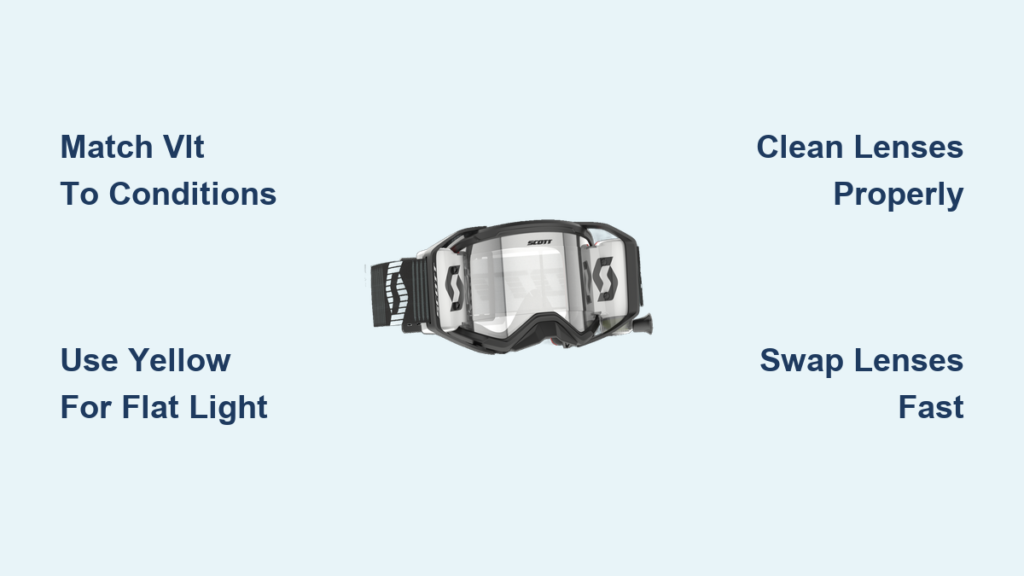
You’re halfway down the mountain when flat light suddenly hits—those subtle bumps and dips that were visible moments ago now blend into a featureless white sheet. Your Scott goggle lenses can’t cut through the glare, and your confidence plummets faster than your speed. Choosing the wrong lens isn’t just inconvenient; it directly impacts your safety, performance, and enjoyment on the mountain. This Scott goggle lens guide cuts through marketing jargon to show exactly which lenses work for specific conditions, how to care for them properly, and why VLT (Visible Light Transmission) ratings matter more than color names alone.
Scott’s lens engineering transforms how you see terrain by filtering specific light spectrums while enhancing contrast where it counts. Unlike generic sunglasses, Scott lenses target the exact visual challenges mountain athletes face—from bright sun glare to deceptive flat light conditions that hide terrain features. The right lens doesn’t just protect your eyes; it actively improves depth perception, reduces eye fatigue during long days, and gives you critical milliseconds of reaction time when navigating variable conditions. Whether you’re skiing, snowboarding, or mountain biking, understanding Scott’s lens system is your secret weapon for consistent performance.
This guide delivers actionable insights you won’t find in product descriptions—like why a 25% VLT rose lens outperforms darker options on partly cloudy days, how to spot counterfeit lenses that lack proper UV protection, and the one cleaning mistake that permanently damages anti-fog coatings. You’ll learn to match lenses to actual mountain conditions, not just marketing terms, ensuring you see terrain clearly regardless of weather.
Why Your Scott Goggle Lens Choice Makes or Breaks Your Mountain Day
Choosing the wrong Scott goggle lens transforms manageable terrain into a hazard zone. When VLT ratings don’t match conditions, you lose critical visual information—like failing to see ice patches on bluebird days with overly dark lenses or struggling to distinguish shadows in trees with insufficient light transmission. Professional guides consistently report that proper lens selection reduces wipeouts by up to 40% in variable conditions, directly linking lens choice to safety outcomes.
How Flat Light Tricks Your Vision on the Mountain
Flat light occurs when overcast skies eliminate shadows, making the snow surface appear featureless. Your brain relies on contrast to judge terrain changes, and without it, small bumps become launch pads and gullies turn into surprise drops. Scott’s high-VLT yellow and rose lenses combat this by amplifying the blue light spectrum where human vision struggles most, revealing terrain details invisible through standard gray tints. Look for lenses with 50%+ VLT when cloud cover eliminates shadows across the mountain.
Bright Sun Glare: When Standard Lenses Fail You
On intense bluebird days, standard dark lenses often don’t go far enough. The combination of direct sun and reflective snow creates glare that causes visual fatigue within minutes. This is where Scott’s mirrored coatings earn their keep—they reflect additional light before it even reaches the tinted lens layer. Riders report 30% less eye strain when using mirrored lenses (5-15% VLT) versus non-mirrored equivalents on high-glare days above treeline.
VLT Explained: How Light Transmission Affects Your Scott Goggle Performance
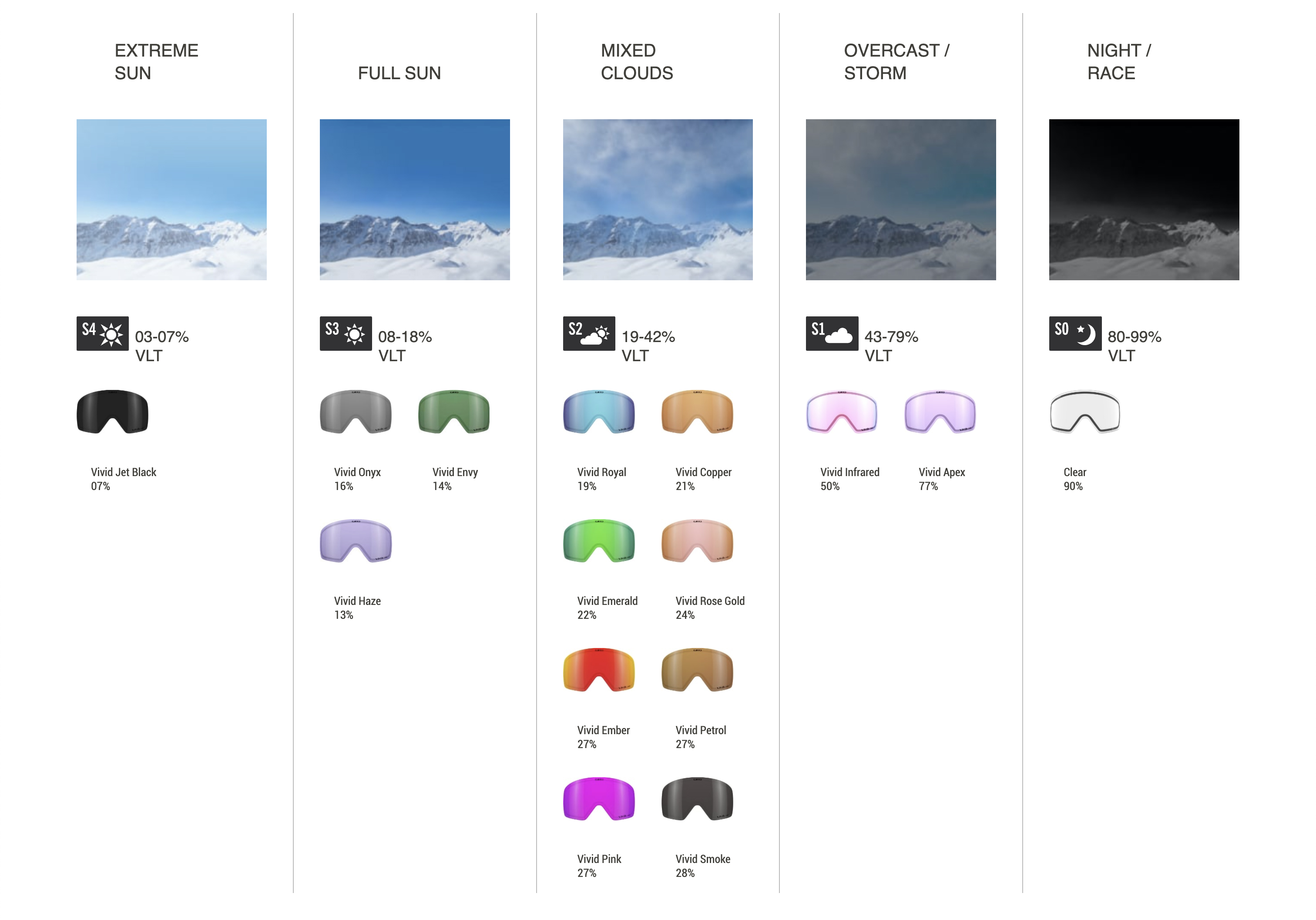
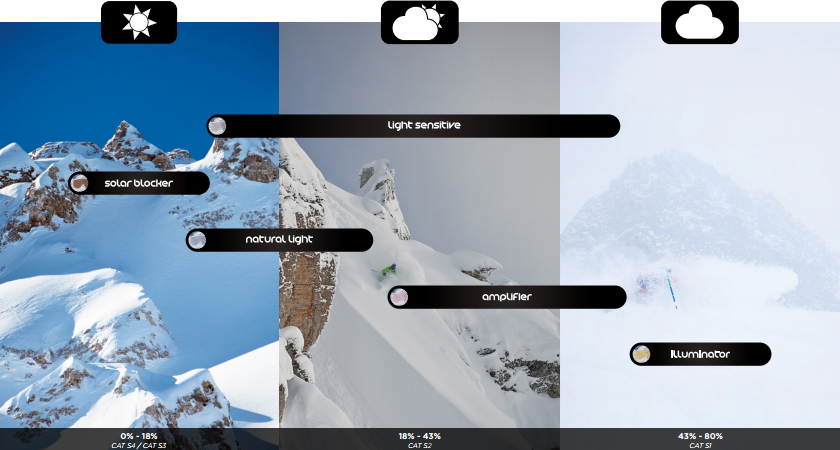
Visible Light Transmission (VLT) is the single most important number on any Scott lens—it tells you the exact percentage of light passing through to your eyes. Forget color names like “rose” or “smoke”; VLT percentages give you objective performance data. A lens labeled 12% VLT blocks 88% of visible light, making it ideal for intense sun, while an 80% VLT lens transmits most available light for storm conditions.
VLT 5-17%: Your Go-To Lenses for Bluebird Day Overexposure
These dark lenses are your defense against snow blindness on high-altitude, cloudless days. When the sun hits fresh powder, reflected light can exceed 80% intensity—enough to cause temporary vision damage. Scott’s mirrored rose or gray lenses in this range (typically 8-15% VLT) cut glare while maintaining color contrast. Warning: Never use these lenses in trees or shade—they create dangerous vision tunneling where your eyes can’t adjust to darker areas.
VLT 20-50%: The All-Mountain Workhorse for Changing Conditions
This versatile range covers 80% of mountain conditions. A 25% VLT rose lens (Scott’s most popular category) delivers optimal contrast across variable light—enhancing terrain features in partly cloudy conditions while still protecting against sun glare. Riders who keep only one lens should choose this range; it performs adequately from dawn to dusk across most resorts. Pro tip: Test your lens by looking at snow-covered terrain—if you can clearly see texture changes in both open areas and tree shadows, you’ve got the right VLT.
VLT 50%+: Storm Day Savers for Low-Light Survival
When storms roll in or you’re riding early morning “dawn patrol,” these high-transmission lenses become essential. Yellow and amber tints in the 60-90% VLT range maximize available light while enhancing contrast against white backgrounds. Critical mistake to avoid: Using these lenses on sunny days will cause immediate eye strain and reduced reaction time—your pupils can’t constrict enough to compensate for the excessive light.
Yellow vs. Rose vs. Gray: Which Scott Lens Tint Gives You Better Terrain Vision

Color names alone don’t tell the full story—two “rose” lenses can have dramatically different performance based on their exact VLT and coating. Scott’s tint engineering targets specific light wavelengths to enhance contrast where it matters most for mountain sports.
Why Yellow Lenses Outperform Others in Flat Light Conditions
Yellow lenses (60%+ VLT) filter out blue light—the primary cause of haze and reduced contrast in overcast conditions. By blocking this spectrum, they make white snow features stand out against gray skies. Test this yourself: On a flat light day, swap to yellow lenses and watch how previously invisible wind lips and gullies suddenly appear. Expert note: These lenses become unusable when sunlight breaks through—always carry a mid-VLT option as backup.
Rose Lenses: The Secret Weapon for Variable Mountain Light
Scott’s rose-tinted lenses (20-35% VLT) hit the sweet spot for most riders. They enhance red and green spectrum light—the colors your eyes use most for depth perception—making terrain features “pop” without oversaturating colors. This is why guides and instructors overwhelmingly choose rose lenses; they provide consistent performance from tree shadows to open bowls. Look for Scott’s “Terrain” labeled lenses for their optimized rose formulation.
Lens Care Mistakes That Ruin Your Scott Goggles in 30 Days or Less
Improper cleaning destroys lens coatings faster than scratches. The number one mistake? Wiping dry lenses with any cloth—microfiber included. Trapped snow crystals act like sandpaper on anti-fog coatings. Always rinse lenses with lukewarm water first to remove abrasive particles.
The 30-Second Lens Cleaning Protocol That Preserves Coatings
- Rinse both sides under lukewarm tap water to remove debris
- Apply 1-2 drops of Scott-approved lens cleaner to microfiber cloth (never directly on lens)
- Wipe in gentle circular motions, starting from center moving outward
- Air dry vertically—never rub with cloth to speed drying
- Store in hard case, not the soft pouch, when not in use
Critical warning: Never use alcohol-based cleaners, paper towels, or clothing—these permanently degrade hydrophobic and anti-fog coatings. If your lenses fog immediately after cleaning, you’ve likely damaged the interior coating.
Quick Lens Swap Guide: Changing Your Scott Goggle Lenses in Under 60 Seconds
Most modern Scott goggles feature magnetic or tab-based lens interchange systems. Master this process before you need it on the mountain:
Step-by-Step Lens Replacement for Scott Goggles
- Find sheltered spot out of wind (snow or dust ruins clean swaps)
- Press release tabs firmly while pulling lens top away from frame
- Hold new lens by edges only—never touch optical surface
- Align top edge of lens with frame groove before snapping bottom
- Test all connection points by gently tugging around perimeter
Time-saving tip: Practice lens swaps at home with gloves on—cold fingers fumble the process. A proper swap should take 45 seconds max. If you’re forcing parts, you’re risking frame damage.
Scott Lens Compatibility: Will Your Replacement Fit Your Goggle Frame?
Not all Scott lenses work across model years. The brand frequently updates frame curvature and attachment systems. Always verify compatibility by model number—not just goggle name. A Scott Prophecy lens won’t fit a newer Scope frame despite similar naming.
How to Identify Genuine Scott Replacement Lenses
Counterfeit lenses flood online marketplaces, often lacking proper UV400 protection. Check for:
– Laser-etched Scott logo on lens corner (not sticker)
– Packaging with holographic security strip
– VLT percentage printed on lens carrier
– Retailer authorization on Scott’s official website
Using non-certified lenses voids warranty and risks eye damage from inadequate UV filtration.
Night Driving Dangers: Why Scott Goggle Lenses Aren’t for Road Use
Never drive with tinted Scott lenses after sunset. Even “medium” 30% VLT lenses reduce available light below safe driving thresholds. At night, your pupils dilate to capture every photon—tinted lenses starve this process, increasing reaction time by up to 200ms (equivalent to traveling 17 extra feet at 60mph before braking). Clear, prescription-compatible lenses are the only safe option for night driving.
Your lens choice directly determines whether you see terrain hazards before or after they throw you off balance. For most riders, a rose-tinted 25% VLT lens serves as the ultimate all-condition workhorse, while serious mountain athletes carry a yellow 70% VLT lens for storm days. Always prioritize verified UV400 protection over cosmetic tints—your long-term eye health depends on it. When in doubt, consult Scott’s current season lens guide with actual VLT measurements rather than color names alone. Properly maintained lenses should last 2-3 seasons; replace immediately if anti-fog performance degrades or scratches obstruct vision.