Nothing ruins a sunny day like smudged, hazy sunglasses. Yet, many people unknowingly damage their lenses while trying to clean them. Improper cleaning leads to micro-scratches, coating degradation, and reduced clarity, all compromising eye protection and visual performance. The good news is that cleaning sunglasses properly is simple when you know the right technique. This guide reveals the safest, most effective method to clean any pair, whether polarized, mirrored, or prescription, without harming delicate coatings.
You will learn what tools to use, what to avoid, and how often to clean for long-lasting performance. Each section provides step-by-step instructions tailored to different lens types and frame materials, ensuring your sunglasses stay crystal clear for years.
Wash Hands Before Handling Your Sunglasses
Always start with clean hands before touching your sunglasses. Oils, sweat, and bacteria from your skin transfer to lenses and frames during handling, which undoes your cleaning efforts immediately. Use fragrance-free, lotion-free soap and dry with a lint-free towel.
This simple step prevents recontamination and protects anti-reflective, hydrophobic, and polarized coatings from residue buildup. Skipping hand washing increases smudge risk and forces more frequent cleaning, which accelerates wear on lens surfaces.
Prevent Oil Transfer During Cleaning
Your fingertips carry more than you realize. Every time you touch your face, you transfer sebum, dead skin cells, and environmental grime. When this contacts lenses, it creates a hazy film that regular wiping cannot remove. Clean hands ensure your cleaning effort actually works.
Rinse Under Lukewarm Water First
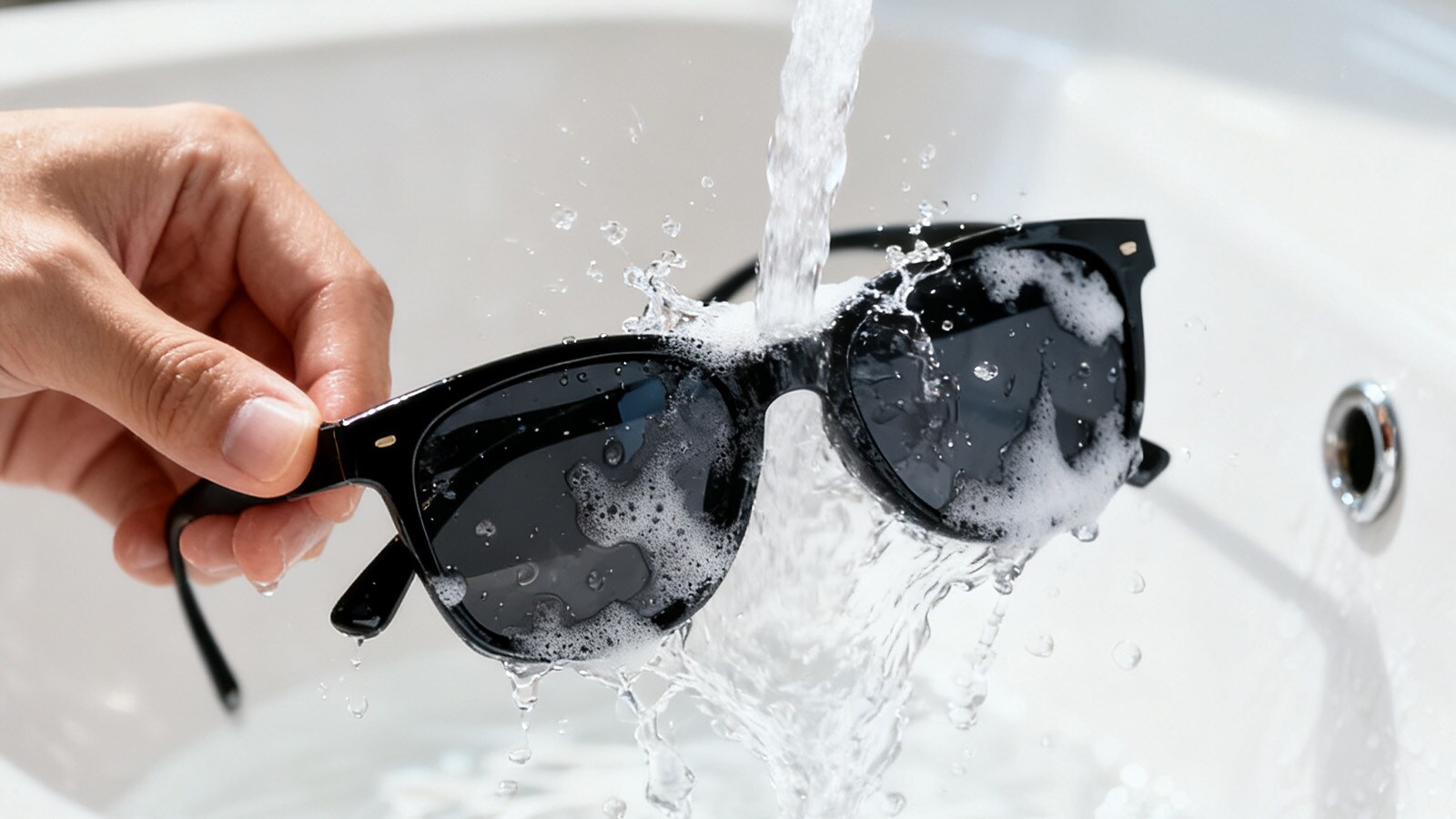
Hold your sunglasses under lukewarm or room-temperature water to flush away dust, sand, salt, and pollen. Hot water can warp plastic frames and weaken adhesives in polarized or photochromic lenses. Ensure full coverage on both lens sides, nose pads, hinges, and temple arms.
Rinsing first lifts abrasive particles, preventing scratches when you wipe. Never dry wipe, because grit trapped between cloth and lens causes permanent micro-abrasions that accumulate over time.
Why Water Temperature Matters
Hot water damages the laminated layers inside polarized and photochromic lenses. The heat causes adhesives to weaken, leading to delamination. Room-temperature or slightly warm water safely removes debris without thermal shock to lens coatings.
Apply Mild Dish Soap Correctly
Place one drop of non-moisturizing liquid dish soap on each lens. Avoid citrus-scented or lotion-infused soaps, because citric acid and additives degrade coatings over time. Gently massage soapy water across lenses and frame crevices using your fingertips in circular motions.
Spend ten to twenty seconds per side. For deep cleaning, focus on gaskets, rubber seals, and nose pads where oil and sweat accumulate most heavily.
Choosing the Right Soap
Look for clear, additive-free dish soap. Dawn Original and Seventh Generation Clear are safe options. Avoid anything with moisturizers, citrus scents, or exfoliating particles. These leave residues that attract more dirt and damage coatings.
Re-Rinse Thoroughly to Remove All Soap
Return your sunglasses to running water until all suds disappear completely. Leftover soap attracts dust, creates streaks, and may corrode lens layers over time. Check the rinse water, because clear runoff means your sunglasses are residue-free.
This step is critical for maintaining hydrophobic and oleophobic finishes. These water-repelling and oil-resistant coatings lose their effectiveness when soap residue builds up.
Signs of Incomplete Rinsing
If water sheets off rather than beading up, rinse longer. Streaky drying patterns also indicate residue remains. Take an extra thirty seconds to ensure perfect results.
Dry with a Microfiber Cloth Properly

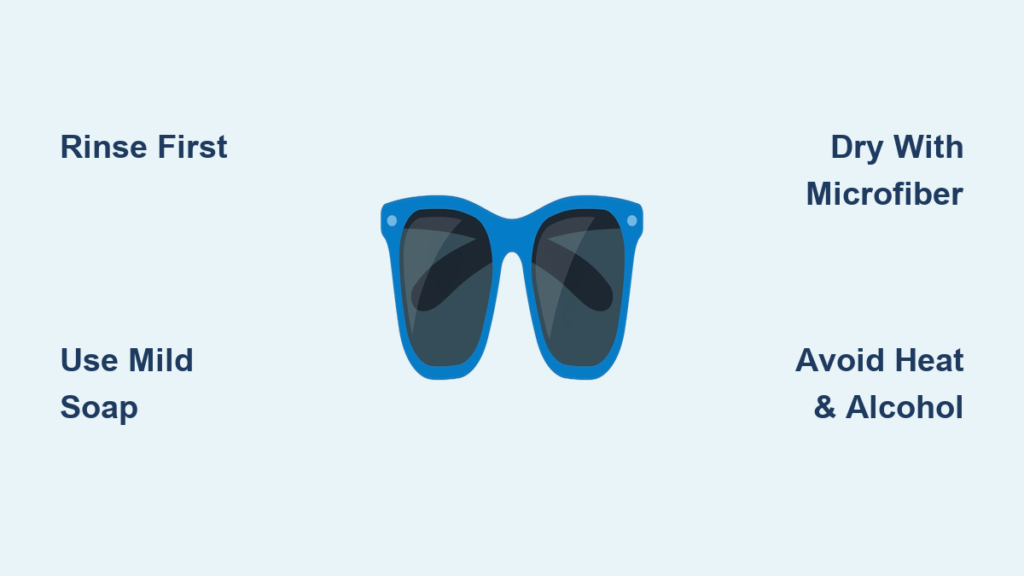
Shake off excess water, then wipe lenses with a clean, dry microfiber cloth using a circular motion from center to edge. Never air-dry, because minerals in tap water can leave spots and evaporation causes watermarks on coated lenses.
Use only cloths designed for optics. Paper towels, tissues, and clothing act like sandpaper on lens surfaces. Store your microfiber in a protective sleeve to keep it free of dirt and oils.
Caring for Your Microfiber Cloth
Wash microfiber cloths weekly in mild detergent without fabric softener. Replace every six to twelve months or when frayed, stained, or ineffective. A dirty microfiber does more harm than good.
Deep Clean for Stubborn Residue
If your sunglasses have persistent haze, salt buildup, or greasy film from sunscreen, a deep clean is necessary. This is especially important after beach days, boating trips, or high-sweat activities.
Remove Lenses If Interchangeable
Some sport models allow lens removal. Place a microfiber cloth over the lens, then gently pull down and push outward to release. Never press from behind, because this can crack the lens or warp the frame.
Soak and Scrub Frame Gaps
Submerge removable lenses or entire frames in soapy water for up to five minutes. Use a soft toothbrush to clean crevices, hinges, and rubber seals. Focus on nose pads and temple tips where grime builds up fastest.
Reinstall Lenses Correctly
Reattach lenses by aligning them with the frame and pressing gently until you hear a distinct click. Wipe off new fingerprints with a fresh microfiber cloth. For non-removable lenses, skip removal but extend rinsing and scrubbing time instead.
Professional Ultrasonic Cleaning
Opticians offer ultrasonic cleaning for embedded debris in high-end or vintage sunglasses. This method restores clarity without manual scrubbing and is ideal for sunglasses with complex frame structures.
On-the-Go Cleaning Solutions
When water is not available, use portable tools that will not damage lenses. Having the right travel-friendly options prevents desperate measures that cause damage.
Use Alcohol-Free Lens Wipes
Choose optically safe, pre-moistened wipes labeled for coated lenses. Avoid baby wipes or disinfecting wipes, because they contain alcohol, fragrances, and lotions that strip coatings. Wipe gently in a circular motion, let dry completely, then store in a case.
Spray Cleaner Plus Microfiber
Apply lens-safe spray directly to the lens or cloth, never into hinges. Wipe immediately with a clean microfiber. Carry a travel-sized bottle in your car, backpack, or beach bag for quick touch-ups.
Portable Cleaning Pens
These pens have replaceable microfiber pads for fast clarity fixes. They are ideal for drivers or athletes needing quick results without setup.
Never Breathe on Lenses
Avoid the habit of breathing on lenses to fog them for wiping. Saliva contains enzymes that degrade coatings over time, causing permanent cloudiness.
Avoid These Damaging Mistakes
Even small actions can cause irreversible lens damage. Knowing what to skip is just as important as knowing what to do.
Do Not Wipe with Clothing
Shirts, pants, and hats trap dust and grit. Rubbing with fabric causes micro-scratches invisible to the eye but harmful over time. Cotton fibers are more abrasive than they appear.
Never Use Paper Towels or Tissues
Made from wood pulp, these are highly abrasive and leave lint. They degrade lens coatings faster than any other method.
Skip Harsh Chemicals Completely
Avoid Windex, vinegar, bleach, rubbing alcohol, and citrus cleaners. Ammonia destroys anti-reflective and UV-blocking layers. Acids eat away at lens bonding agents and mirror coatings.
Avoid Heat Exposure
Never leave sunglasses on a car dashboard, near a heater, or in direct sunlight for long periods. Heat warps frames, causes crazing, and can delaminate polarized lenses.
Do Not Use Toothpaste or Saliva
Despite myths, toothpaste is abrasive and scratches lenses. Saliva introduces bacteria and enzymes that cloud coatings.
Never Rinse in Saltwater
Salt is corrosive. Ocean water leaves mineral deposits that etch lenses and damage metal hinges. Always rinse with fresh water after beach or boating use.
Clean Frame and Contact Points
Lenses are not the only parts needing care. Regular maintenance of frames and accessories prevents hygiene issues and maintains proper fit.
Wipe Nose Pads Weekly
Nose pads collect oils, sweat, and bacteria fast. Clean with soapy water during every full wash. If discolored, cracked, or greasy, replace them. Most brands sell replacement kits online.
Clean Temple Arms and Hinges
Temple tips touch hair and skin daily. Wipe them down to remove makeup, hair spray, and oils. Use a damp microfiber or cotton swab for tight spaces around hinges.
Wash the Case Monthly
A dirty case recontaminates clean sunglasses. Rinse the interior with soapy water and air dry. Never store glasses in a dusty or damp bag.
Special Care by Lens Type

Different lenses need tailored care to preserve their specialized technologies.
Polarized Lenses
These contain a delicate internal filter to block glare. Avoid hot water, alcohol, and aggressive wiping, because these can cause delamination. Clean only with mild soap and room-temperature water, then dry with microfiber.
Anti-Reflective Coatings
AR coatings are extremely sensitive to chemicals. Use only AR-safe cleaners or mild dish soap. Never use ammonia or alcohol, and avoid prolonged soaking.
Photochromic Lenses
Clean normally but avoid heat and UV-damaging chemicals. Leaving them in hot cars reduces their ability to darken and shortens lifespan significantly.
Mirrored or Gradient Coatings
The outer reflective layer is fragile. Avoid rubbing with anything but microfiber. Use spray cleaner for touch-ups. Heat causes bubbling or peeling, so store in a cool place.
UV-Protected Lenses
Ensure cleaning does not degrade UV-blocking layers. Use only mild soap, water, or manufacturer-approved sprays. Avoid solvents like acetone or alcohol.
Frame Material-Specific Tips

Match your cleaning approach to your frame type for best results.
Matte Finish Frames
Common in many premium models, these scratch easily and develop shiny spots. Use only soft microfiber cloths. Avoid soaking, because moisture can seep into joints. Dry immediately after rinsing.
Metal Frames
Prone to corrosion from salt and sweat. Clean hinges regularly. Inspect for tarnishing or loose screws. Avoid prolonged water exposure.
Plastic Frames
Can warp under heat. Clean with lukewarm water and mild soap. Never use solvents or alcohol-based cleaners.
Store Sunglasses Properly
How you store your sunglasses matters as much as how you clean them.
Always Use a Hard Case
Soft pouches do not protect against crushing or scratches. A rigid, protective case shields lenses from impacts and debris. Always return sunglasses to it after use.
Keep Away from Heat
Never leave them on a car dashboard, near radiators, or in direct sunlight. Heat causes crazing, warping, and coating failure, especially in mirrored lenses.
Do Not Place Face-Down
Even a clean table may have micro-particles. Always lay them lens-up or store in a case.
Store Cloth in a Sleeve
A microfiber left loose in a bag collects dirt and becomes abrasive. Use a sealed pocket or protective sleeve.
Clean at the Right Frequency
Regular cleaning prevents the need for aggressive methods later.
After Every Use
Clean immediately after exposure to sweat, sunscreen, saltwater, or pollution.
Daily or Every Few Wears
This is the minimum routine for regular wearers. It prevents grime buildup and maintains clarity.
Weekly Deep Clean
Scrub nose pads, hinges, and frame joints. This is ideal for athletes, drivers, or beachgoers.
Monthly Maintenance
Wash the case and microfiber cloth. Replace worn nose pads.
Know When to Replace
Even perfect care cannot stop aging forever. Watch for these signs.
Persistent Haze or Cloudiness
If cleaning does not restore clarity, the coating has failed. This reduces UV protection and visual sharpness.
Visible Scratches
Deep scratches impair vision and cannot be polished out. Surface micro-scratches accumulate from improper wiping.
Peeling or Bubbling
This indicates delamination, especially in polarized or mirrored lenses. Replacement is necessary.
Loose Hinges or Warped Frames
These affect fit and optical alignment. Tighten screws or visit an optician.
Frequently Asked Questions About Cleaning Sunglasses
Can I use household glass cleaner on my sunglasses?
No. Household glass cleaners like Windex contain ammonia, which destroys anti-reflective, hydrophobic, and UV-blocking coatings. Always use mild dish soap and water or manufacturer-approved cleaners.
How often should I clean my sunglasses?
Clean daily or every few wears for regular use. Clean immediately after exposure to saltwater, sunscreen, or heavy sweat. Weekly deep cleaning is recommended for athletes and beach users.
Why do my sunglasses still look cloudy after cleaning?
Persistent cloudiness indicates coating failure, not cleaning inadequacy. The protective layers have degraded and can only be fixed by replacement.
Can I clean polarized sunglasses the same way as regular ones?
Yes, but with extra caution. Avoid hot water, alcohol, and harsh chemicals. Use only mild soap and room-temperature water to prevent delamination.
What is the best way to remove sunscreen residue?
Use the full rinse-wash-rinse-dry method. Apply dish soap directly to lenses, scrub gently, rinse thoroughly, and dry with microfiber. Repeat if necessary.
Is it safe to use lens cleaning wipes on all sunglasses?
Only use wipes specifically labeled safe for coated lenses. Avoid baby wipes, disinfecting wipes, or multipurpose cleaners containing alcohol, fragrances, or lotions.
Key Takeaways for Proper Sunglass Care
Cleaning sunglasses properly is about consistency, not perfection. By following these steps, you will preserve lens clarity, extend UV protection, and protect your investment for years.
Always rinse before wiping to remove abrasive particles. Use only lukewarm water and mild dish soap. Dry with clean microfiber, never clothing or paper products. Store in a hard case away from heat.
Whether you own budget shades or premium Oakleys, the same rules apply. Keep a microfiber cloth and travel spray handy. Clean after exposure to salt, sweat, or sunscreen. Avoid heat, harsh chemicals, and improper tools.
With proper care, your sunglasses will deliver crisp, clear vision for many seasons to come.