If you’ve recently had cataract surgery, you may notice that sunlight feels painfully bright even on cloudy days. This isn’t just in your head. After the clouded lens is removed and replaced with a clear artificial one, your eyes suddenly receive more light than they have allowed in for years. The result is intense light sensitivity, glare, and discomfort, especially in the first few days after surgery.
Wearing sunglasses after cataract surgery isn’t optional. It protects your healing eye from UV damage, wind, dust, and other irritants while reducing painful light sensitivity. This guide breaks down exactly how long to wear sunglasses after cataract surgery, based on clinical guidelines and surgeon recommendations.
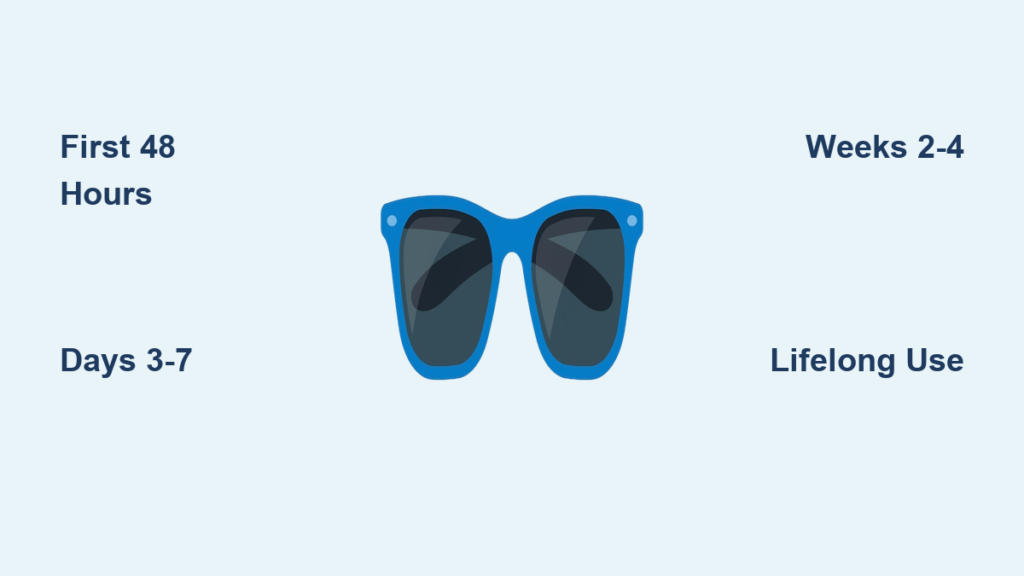
First 48 Hours: Peak Sensitivity Phase
Light sensitivity is strongest in the first one to two days after surgery. Your pupil is likely still dilated from preoperative eye drops, and your brain is adjusting to dramatically clearer vision. Even indoor lights can feel harsh, and stepping outside without sunglasses may feel overwhelming.
Wear Sunglasses Every Time You Go Outside
Even if it’s overcast, rainy, or you’re just stepping to your car, UV radiation is present. Sunlight penetrates clouds, and reflective surfaces like concrete can amplify glare. Wearing dark, UV400-rated sunglasses every time you go outdoors is non-negotiable during this phase.
Pro tip: If bright indoor lighting causes discomfort, consider lightly tinted lenses or blue-light-blocking glasses, but avoid dark sunglasses indoors. Your eyes need natural light to adapt to the new lens.
Days 3-7: Mandatory Outdoor Protection
By day three, vision starts to sharpen and discomfort often lessens. However, the tiny corneal incision is still healing. It’s self-sealing but vulnerable to environmental stressors like wind, dust, and UV rays.
Continue Daily Sunglass Use
The American Academy of Ophthalmology and other major eye care institutions stress that sunglasses are mandatory outdoors during the first week. Skipping them increases glare, delays visual adaptation, and raises the risk of irritation or infection.
Choose Wraparound or Oversized Frames
Standard sunglasses may let light in from the sides. Wraparound or oversized styles block peripheral light and debris, offering superior protection. They also shield the delicate skin around the eye from UV damage.
Warning: Don’t use dark lenses without UV protection. These can dilate your pupils while letting harmful UV rays in, increasing retinal damage risk.
Weeks 2-4: Transition to As-Needed Use
Most patients feel significantly better by week two. Inflammation decreases and your brain begins to adapt to the new clarity. Light sensitivity fades, but it doesn’t disappear overnight.
Wear Sunglasses Based on Comfort and Environment
You no longer need to wear sunglasses every single time you go outside, but use them when needed: bright midday sun, near water or snow, while driving, and in windy or dusty conditions.
Note: Patients with premium IOLs may experience more glare, halos, or starbursts, especially at night. These effects can last three to six months. Polarized lenses help reduce daytime glare during this adaptation period.
After Week 4: Lifelong UV Protection
By the end of the fourth week, most people no longer need sunglasses strictly for post-surgical comfort. Vision is stable and light sensitivity has resolved. But this doesn’t mean you’re done with sunglasses.
Make Sunglasses a Daily Habit
Experts agree that UV protection should be lifelong. Cataract surgery is not a one-time fix. Cumulative UV exposure can still damage your retina, increase the risk of macular degeneration, and harm the eyelid skin. Think of sunglasses as sunscreen for your eyes.
Why Sunglasses Are Essential After Surgery
Block Harmful UV Radiation
Even though modern intraocular lenses have built-in UV filters, they don’t block 100% of UVA and UVB rays. Residual exposure can lead to age-related macular degeneration, pterygium, and ocular surface cancers. Only UV400-rated sunglasses block the full spectrum of harmful UV light.
Reduce Glare and Light Sensitivity
Cataracts naturally dim and yellow your vision over time. Once removed, colors appear vivid and light feels blinding. Polarized lenses cut horizontal glare from water or roads, making driving and outdoor activities safer.
Shield the Healing Incision
The corneal wound takes one to four weeks to seal. During this time, sunglasses act as a physical barrier against dust, pollen, wind, smoke, and bacteria-laden particles, reducing infection risk.
Choosing the Right Sunglasses

Not all sunglasses are equal. To protect your eyes properly, look for these features:
• UV400 protection (non-negotiable): Blocks 100% of UVA and UVB rays
• Gray or brown tint: Provides true color perception and reduces brightness evenly
• Polarized lenses: Recommended for reducing glare from reflective surfaces
• Wraparound or oversized frames: Blocks light from the sides and protects against wind and debris
• Photochromic lenses: Optional, darken in sunlight and clear indoors
Important: Lens darkness does not equal UV protection. Always check for UV400 labeling.
Special Considerations
Premium IOLs and Extended Sensitivity
If you have a multifocal, trifocal, or extended depth of focus IOL, expect more glare and visual disturbances, especially at night. While these usually improve over three to six months, daytime sunglasses remain valuable for managing glare during adaptation.
Environmental Factors
Some conditions demand stricter sunglass use: high altitudes where UV increases 10-12% per 1,000 meters, sunny climates like Arizona or Florida, and outdoor activities near water or snow that reflect up to 80% of UV.
Pre-Existing Eye Conditions
Patients with dry eye, blepharitis, or diabetes may heal slower and experience longer sensitivity. Those with autoimmune disorders should be especially vigilant about protection.
Additional Recovery Tips
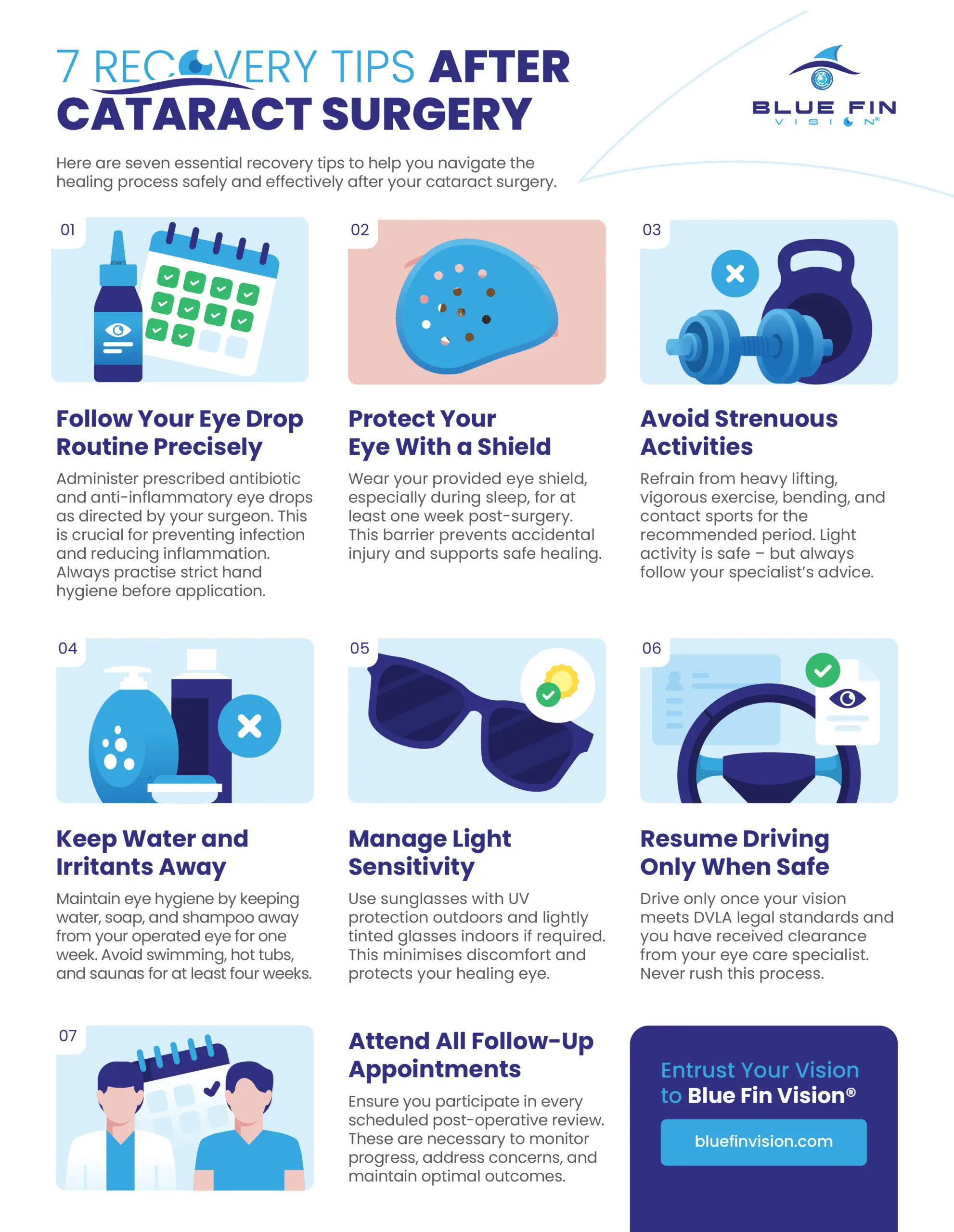
Wear an Eye Shield at Night
Use a protective eye shield while sleeping for the first five to seven days to prevent accidental rubbing. After that, most patients can stop unless your surgeon advises otherwise.
Avoid High-Risk Activities
For at least one to two weeks, avoid rubbing your eye, swimming or hot tubs, heavy lifting, and eye makeup. These increase infection risk and can disrupt healing.
Use Prescribed Eye Drops
Follow your drop schedule exactly. They prevent infection, reduce inflammation, and support healing. Wash hands before applying and never use over-the-counter redness relievers unless approved.
Watch for Warning Signs
Mild light sensitivity is normal, but seek immediate care if you experience increasing eye pain, worsening redness or discharge, sudden vision loss, flashing lights or new floaters, or nausea with eye pain. These could signal serious complications like endophthalmitis, retinal detachment, or elevated eye pressure.
Key Takeaways for Sunglass Use After Cataract Surgery

Wearing sunglasses after cataract surgery is about more than comfort. It protects your healing eye and preserves your vision long-term. The critical timeline is: wear sunglasses outdoors at all times for the first week, continue as needed through week four, then transition to routine outdoor use.
UV400 protection is non-negotiable regardless of lens color or price. Wraparound frames offer the best coverage, and polarized lenses help with glare. Make sunglasses a permanent part of your outdoor routine. Your eyes have never seen so clearly. Protect that clarity with the right protection.
Frequently Asked Questions About Wearing Sunglasses After Cataract Surgery
Can bright light damage my eyes after surgery?
Normal daylight won’t cause permanent damage, but it can cause significant discomfort. UV-protective sunglasses reduce strain and support healing during recovery.
Should I wear sunglasses indoors?
Generally no, beyond the first one to two days. If fluorescent lights or screens bother you, try light-tinted lenses or blue-light filters instead of dark sunglasses.
When can I stop wearing sunglasses?
There’s no official end date. Most surgeons recommend at least four weeks of consistent use, then lifelong daily wear for UV protection whenever you’re outdoors.
Do I need wraparound sunglasses?
Not mandatory, but highly recommended, especially in the first two weeks. They offer better coverage than standard frames by blocking peripheral light and debris.
Can I wear my regular prescription sunglasses?
Yes, if they have UV400 protection and fit well. If your prescription changed after surgery, non-prescription sunglasses can be worn over your glasses.
Are photochromic lenses okay after cataract surgery?
Yes. They’re convenient for frequent indoor-outdoor transitions and provide full UV protection when darkened. They automatically adjust to light conditions.