Ever wonder how night vision goggles transform pitch-black darkness into a visible green-hued world? Whether you’re a security professional, outdoor enthusiast, or simply curious about military technology, understanding how night vision goggles work reveals the remarkable engineering that turns night into day. These devices don’t create light—they capture and amplify the faint photons already present in your environment, sometimes boosting illumination by as much as 35,000 times. By the end of this guide, you’ll know exactly what happens inside those goggles when you flip them on, why they glow green, and which technology actually works in complete darkness.
Why Light Amplification Needs at Least Starlight to Function
Contrary to popular belief, most night vision goggles can’t operate in absolute darkness—they require some ambient light to work. When you activate your device under starlight conditions (about 0.001 lux), here’s what happens inside the housing:
Your goggles’ objective lens immediately begins collecting those scarce photons from the environment. These photons travel through the lens and strike a photocathode plate, where the photoelectric effect converts them into electrons. This critical conversion happens at lightning speed—within nanoseconds of light hitting the surface.
How the Microchannel Plate Creates an Electron Avalanche

The real magic happens inside the microchannel plate (MCP), where your night vision achieves its incredible amplification. As electrons from the photocathode enter the MCP’s millions of microscopic channels (each just 5-10µm in diameter), they collide with the channel walls coated in special materials. Each collision releases secondary electrons, creating a cascading effect.
This electron multiplication process boosts the original signal by 100-1,000 times per channel. With millions of channels working simultaneously, the total amplification reaches 10,000× to 35,000×—turning a nearly invisible scene into something your eyes can clearly interpret. Without this MCP component introduced in Gen 2 technology, practical night vision would be impossible.
Why Your Night Vision Goggles Glow Green (And White Phosphor Alternatives)
After amplification, those multiplied electrons strike a phosphor screen, creating the characteristic glow you see through the eyepiece. Most military and consumer devices use P-43 phosphor, which emits green light for two critical reasons:
- The human eye can distinguish more shades of green than any other color
- Green phosphor causes significantly less eye fatigue during extended use
However, newer white phosphor (P-45) models are gaining popularity because they provide better contrast and more natural-looking images. When comparing night vision goggles, you’ll notice white phosphor displays appear black-and-white rather than green, which many users find easier for extended operations.
Thermal Imaging: The Only Technology That Works in Total Darkness
While light amplification needs some ambient light, thermal imaging works when it’s completely dark—no moonlight, no starlight, nothing. This technology detects heat signatures rather than visible light, making it invaluable for search-and-rescue operations or detecting hidden threats.
How Thermal Sensors Detect Temperature Differences as Small as 0.04°C
Your thermal night vision system contains a specialized focal plane array (FPA) detector that measures infrared radiation in the 7.5-13.5 µm wavelength range. Every object above absolute zero emits this radiation, and the detector measures even minute temperature variations:
- Infrared radiation from your environment focuses through special germanium lenses
- Vanadium oxide (VOx) microbolometers in the detector array heat up slightly when struck by IR
- These temperature changes alter electrical resistance, which the system measures
- Sophisticated algorithms convert these measurements into a detailed thermogram
Military-grade thermal imagers can detect temperature differences as small as 40 millikelvins (0.04°C), allowing them to spot a human target against a cool background from over 1,000 meters away.
What Happens When Bright Light Hits Your Night Vision Goggles
A sudden burst of light—like car headlights or a flashlight—could permanently damage older night vision systems. Modern Gen 3+ and Gen 4 goggles solve this problem with critical protective technology:
How Autogating Prevents Permanent Damage from Light Sources
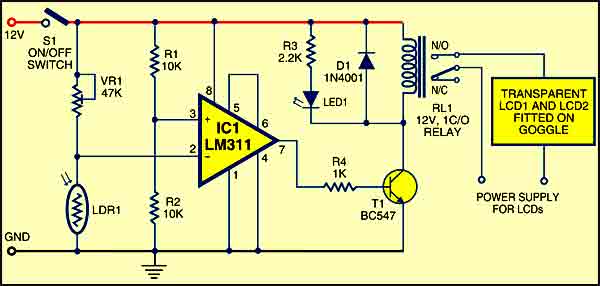
When bright light strikes your night vision goggles, an autogating circuit reacts in just 1-50 microseconds—faster than the blink of an eye. This technology works by:
- Instantly reducing the voltage across the image intensifier tube
- Limiting electron flow to prevent sensor overload
- Maintaining image clarity while protecting sensitive components
Without autogating, exposure to bright lights would cause “blooming” (temporary blindness) or even permanent damage to the image intensifier tube. This feature is why modern military NVGs can handle urban environments with mixed lighting conditions.
Gen 3 vs. Gen 4 Night Vision: What Actually Matters for Performance

The generational labels can be confusing marketing hype, but specific technical differences directly impact your real-world performance. Understanding these distinctions helps you avoid paying for features you don’t need.
Decoding Signal-to-Noise Ratio (SNR) for Real-World Performance

When shopping for night vision goggles, SNR is the single most important specification affecting image quality in low-light conditions:
- Gen 2: SNR of 10-16 (usable under quarter-moon conditions)
- Gen 3: SNR of 21-28 (works under starlight conditions)
- Gen 3 Filmless: SNR of 30+ (best performance in extremely low light)
Higher SNR means less “grain” in the image and better target recognition at longer ranges. For every 1-point increase in SNR, you gain approximately 10% more usable range in challenging lighting conditions.
Why Resolution Matters Less Than You Think
While manufacturers emphasize resolution (measured in line pairs per millimeter), it’s less critical than SNR for most applications:
- Gen 2: 45-50 lp/mm
- Gen 3: 64-72 lp/mm
- Gen 4 prototypes: 80+ lp/mm
In practical terms, the difference between 64 lp/mm and 72 lp/mm is barely noticeable to most users. You’ll gain more from a higher SNR rating than marginal resolution improvements.
How Military Night Vision Goggles Achieve 10,000-Hour Lifespans
Quality night vision represents a significant investment, so understanding maintenance practices that extend tube life is crucial. The average Gen 3 tube lasts 10,000 hours—about 11 months of continuous use—but proper care can maximize this lifespan.
Essential Maintenance Practices for Night Vision Longevity
Follow these specific practices to protect your investment:
- Always use lens caps when not actively using the device—dust and scratches degrade image quality
- Store in a dry environment with desiccant packs to prevent internal fogging
- Limit continuous operation to 40 hours with standard batteries to prevent overheating
- Never expose to bright light while powered on, even with autogating protection
- Clean lenses properly using only approved microfiber cloths and lens cleaner
The most common cause of premature failure is moisture damage, so always let your goggles acclimate to temperature changes before use to prevent internal condensation.
Choosing the Right Night Vision Technology for Your Needs
Not all night vision applications require military-grade equipment. Understanding your specific use case prevents overspending on unnecessary features.
When Thermal Imaging Outperforms Light Amplification
Choose thermal imaging if you need to:
– Detect people or animals through smoke, fog, or light foliage
– Operate in pitch-black conditions with zero ambient light
– Identify recently used vehicles or equipment by residual heat
– See through complete darkness where light amplification fails
Light amplification remains superior for:
– Reading signs or identifying facial features at close range
– Navigating in partially lit environments
– Situations requiring natural depth perception
– Longer battery life (thermal systems consume significantly more power)
How to Test Night Vision Performance Before You Buy
Before investing thousands in night vision technology, conduct these practical field tests:
- Starlight test: Evaluate performance under natural starlight (no moon)
- Resolution check: Look for fine details like tree branches against the sky
- Peripheral vision assessment: Check for edge distortion or “halo” effects
- Battery life verification: Time actual operational duration
- Weight distribution test: Wear for 15 minutes to assess comfort
The best night vision feels almost invisible during extended use—any significant discomfort will become debilitating during real operations.
Final Note: Understanding how night vision goggles work transforms you from a passive user into an informed operator who can maximize the technology’s capabilities. Whether you’re choosing your first pair or optimizing existing equipment, focus on signal-to-noise ratio over marketing hype, protect your investment with proper maintenance, and select the right technology (light amplification or thermal) for your specific needs. With this knowledge, you’ll see more clearly in the dark—and make better decisions when visibility matters most.