Picture yourself hiking through a moonless forest, where even your flashlight would compromise your night vision. Suddenly, your night vision goggles reveal deer grazing 50 yards away—no magic, just physics transforming near-invisible light into that signature green glow. At the heart of this technology lies the image intensifier tube, a marvel that amplifies starlight or moonlight up to 30,000 times. Understanding how night vision goggles work demystifies everything from military operations to wildlife observation, revealing why that green-hued world appears so clearly when your naked eyes see only blackness.
This process isn’t about creating light but supercharging existing photons—particles you can’t see—into a detailed image. Modern goggles achieve this through three critical stages: capturing faint light, multiplying its signal, and converting it to visible green light. Whether you’re a security professional, hunter, or curious tech enthusiast, knowing these mechanics helps you choose the right device and avoid common pitfalls like accidental exposure to bright lights. Let’s break down exactly how photons become pictures.
Capturing and Amplifying Light Through the Image Intensifier Tube
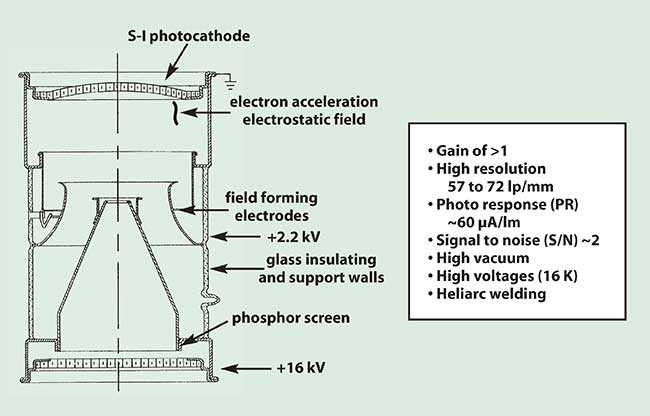
Your night vision goggles start working the moment photons enter the objective lens. These particles—whether from starlight, distant streetlights, or ambient city glow—strike a photocathode plate made of gallium arsenide. Here’s where the photoelectric effect kicks in: each photon’s energy releases a single electron. Think of it like raindrops hitting a drumhead—every drop (photon) creates a tiny vibration (electron). Without this step, there’d be nothing to amplify in near-total darkness.
How the Microchannel Plate Multiplies Signals 1,000x
That single electron gets rocketed through a 5,000–7,000-volt electric field toward the microchannel plate (MCP). This wafer-thin disc contains 10 million microscopic glass tubes, each acting like a particle accelerator. When the electron hits a tube wall, it triggers a cascade: one electron becomes dozens, then hundreds, as secondary electrons ricochet off the channel walls. This multiplication is why NVGs work in starlight—a single photon’s signal explodes into thousands of electrons, creating a usable electronic “shadow” of the scene. Skip this component, and you’d get a dim, useless image like early Generation 1 goggles.
Why Your Goggles Glow Green: The Phosphor Screen Conversion
The amplified electron swarm then slams into a phosphor screen coated with zinc sulfide. This collision converts electron energy back into visible light—but why green? Human eyes detect green wavelengths (500–570 nm) more sharply than other colors in low light. The phosphor’s P45 compound emits this specific green hue, maximizing detail recognition. What emerges is a real-time, high-contrast image you view through the eyepiece. Critical note: A damaged phosphor screen shows black spots or streaks—never ignore these, as they indicate tube failure.
Infrared Illuminators and Autogating: Solving Total Darkness and Bright Lights
Even the best image intensifier tube fails in absolute darkness, like inside a cave or sealed building. That’s where the infrared (IR) illuminator saves the day. Mounted near the objective lens, this built-in “flashlight” floods the scene with near-infrared light (700–1,000 nm wavelength), invisible to unaided eyes but easily amplified by the photocathode. Warning: Using this in tactical scenarios risks detection—other NVG users will spot your IR beam like a beacon. Reserve it for controlled environments like property patrols.
How Autogating Prevents Tube Damage from Sudden Light
Imagine stepping from a dark woods into a lit cabin. Without protection, that burst of light would fry the intensifier tube. Autogating solves this by cycling power on/off 10,000 times per second. When bright light hits, the circuit instantly “closes the gate,” shielding the MCP. This also lets you see muzzle flashes or car headlights without temporary blindness. Pro tip: Manual gain control (on higher-end models) lets you dim the image during urban use—crucial for preserving natural night vision when transitioning between lit and dark zones.
Night Vision vs. Thermal Imaging: Stop Confusing These Technologies
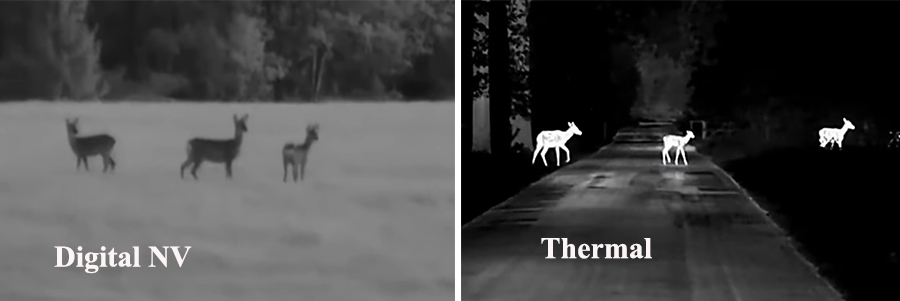
Critical distinction: Night vision goggles amplify light; thermal imagers detect heat. If a suspect hides behind bushes, thermal shows their body heat as a bright blob, while NVGs only reveal dark foliage. Thermal works in total darkness and through smoke but costs 3–5x more and lacks fine detail (you’ll see a “heat blob,” not facial features). NVGs need some ambient light but deliver recognizable images—ideal for navigation or reading terrain. Never assume NVGs “see body heat”; that’s a Hollywood myth.
Decoding Night Vision Specs: What Actually Matters for Buyers
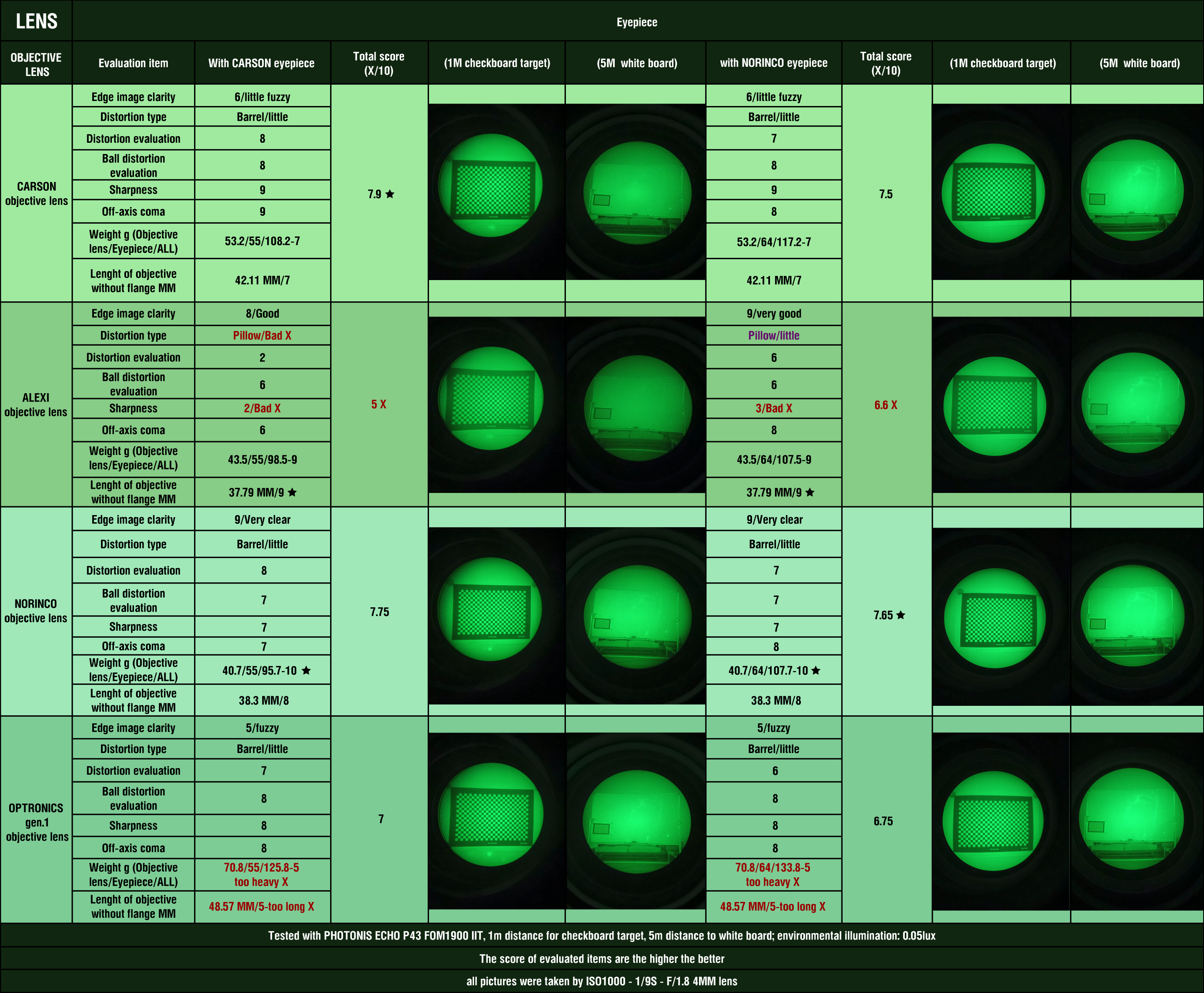
Don’t fall for “Generation 3” marketing hype alone. Two Gen 3 tubes can perform wildly differently based on these specs:
- Signal-to-Noise Ratio (SNR) > 25: The #1 predictor of image clarity. Below 20, expect grainy “snow” in low light.
- Figure of Merit (FOM) > 1,600: Calculated as SNR × resolution. FOM 2,000+ = military-grade detail.
- EBI < 1.0: Lower values mean darker backgrounds (0.2 is exceptional; >2.0 looks washed out).
- Halo size < 1.0mm: Smaller halos let you see details near light sources like campfires.
Red flag: Sellers advertising “Gen 3” without SNR/FOM values are likely selling low-tier tubes. Demand a spec sheet—reputable brands like L3Harris provide one.
Real-World Limitations You’ll Face With NVGs
Even top-tier goggles have unavoidable constraints:
– “Toilet paper tube” vision: Typical 40° field of view (vs. 210° natural vision) forces constant head swiveling.
– Zero depth perception: Binocular models (two tubes) help slightly, but judging distances under 10 feet remains risky.
– Peripheral vision loss: Housing blocks 60%+ of side vision—turn your whole body, not just your eyes.
– Eye strain: Green phosphor causes fatigue after 2+ hours. Take 10-minute breaks every hour.
– Fogging: Humid environments condense moisture on lenses. Use anti-fog wipes before deployment.
Choosing Your Night Vision Goggles Based on Real Needs
For casual stargazing or backyard security, a Gen 2+ monocular (one-eye unit) suffices—expect $2,000–$4,000. But if you’re hunting in dense forests or conducting night patrols, invest in Gen 3 binoculars (two tubes). The $8,000–$15,000 price jump delivers:
– 30% better low-light detail (SNR 30+ vs. Gen 2+’s 20–25)
– No “halo” blooming around lights
– 10,000+ hour tube lifespan (vs. Gen 2+’s 2,500 hours)
Avoid these mistakes:
– Skipping diopter adjustment (causes blurry images)
– Using IR illuminators unnecessarily (exposes your position)
– Ignoring head/neck strain (opt for helmet-mounted vs. handheld for extended use)
Final Maintenance Tips to Extend Your Goggles’ Life
Protect your investment by following these field-tested rules:
1. Never expose to bright light while powered—cover lenses before dawn or near vehicles.
2. Store in a vacuum-sealed bag with silica gel to prevent moisture damage.
3. Clean lenses only with microfiber cloths—alcohol wipes degrade coatings.
4. Test IR illuminators monthly to ensure functionality in emergencies.
Understanding how night vision goggles work transforms them from mysterious gadgets into reliable tools. Remember: they’re light amplifiers, not heat detectors, and their green glow exists purely because your eyes see green best in the dark. Prioritize SNR and FOM over generation labels, respect their physical limitations, and you’ll navigate the night with confidence. For deeper technical insights, explore military field manuals on image intensifier tube maintenance—your goggles’ longevity depends on it.