That tiny wood chip flying toward your eye during a home project? The chemical splash you didn’t see coming in your garage workshop? These split-second incidents cause over 2,000 eye injuries daily in the U.S. alone—most preventable with one simple action: wear safety goggles. Yet too many people rely on regular glasses or skip eye protection entirely, risking irreversible vision loss. When metal shards, chemical mists, or UV radiation strike unprotected eyes, damage occurs faster than your blink reflex. This guide reveals exactly when and why you must wear safety goggles, how to choose the right pair for your task, and the life-altering consequences of skipping this critical gear. You’ll learn to identify hidden hazards you’ve probably ignored and implement foolproof protection in under 60 seconds.
Every year, preventable eye injuries cost employers $300 million in workers’ compensation—while victims face permanent vision impairment, corneal scarring, or total blindness. Safety goggles aren’t just “recommended”; they’re your last physical barrier against hazards moving at 100+ mph. Whether you’re sanding furniture, mixing cleaners, or welding in your garage, understanding which goggles to wear—and when—separates a close call from catastrophe. Let’s dive into the specific scenarios where skipping safety goggles risks your sight forever.
When Wood Chips or Metal Shavings Force You to Wear Safety Goggles Immediately
Woodworking and metal fabrication generate projectiles moving at bullet-like speeds. A single errant shard from a router bit or angle grinder can penetrate standard glasses in 0.003 seconds—the blink reflex takes 0.1 seconds. Safety goggles stop these threats through polycarbonate lenses 10x stronger than glass and a sealed wraparound design that blocks debris from all angles.
How a 1mm Wood Fragment Can Blind You During Sanding
During routine sanding, wood particles become airborne projectiles traveling 70+ mph. Unlike safety glasses, goggles create a full seal with foam padding that prevents fine dust from entering through side gaps. When a particle hits unprotected eyes, it embeds in the cornea within milliseconds—causing infections like fungal keratitis that require corneal transplants. In 2022, OSHA cited a cabinetmaker for failing to enforce goggle use after a 0.5mm oak sliver caused permanent vision loss in one eye.
The Critical 3-Second Rule for Grinder and Router Protection
Metalworking creates even deadlier hazards: grinding steel produces particles at 250+ mph. At these speeds, standard glasses shatter on impact. Safety goggles rated ANSI Z87.1+ withstand 150-foot-pound impacts—tested by firing 0.25-inch steel balls at 150 mph. If you’re operating power tools for more than 3 seconds without sealed goggles, you’re gambling with vision. Pro tip: Look for indirect vents (small channels that curve inward) to prevent dust entry while reducing fogging during extended use.
Why Labs and Chemical Cleaners Demand Tight-Seal Safety Goggles

Household cleaners like bleach and ammonia release vapors that cause chemical burns within seconds. In home labs or garage workshops, splashes from drain cleaners or pool chemicals can blind you before you reach for a towel. Regular glasses offer zero protection—chemicals flow through side gaps and pool under the lenses. Only goggles with a continuous rubber seal create a liquid-tight barrier.
Real Cases: Vinegar and Baking Soda Causing Emergency Room Visits
Even “safe” DIY mixtures create dangerous reactions. Combining vinegar and baking soda produces peracetic acid vapor that burns corneas on contact. In 2023, a homeowner suffered third-degree eye burns after this mixture splashed during drain cleaning—because he wore safety glasses instead of sealed goggles. The ER report noted chemicals had seeped through ventilation holes. Always wear goggles marked “Z87.1+ D3” (indicating chemical splash resistance) when handling any liquid cleaner.
How to Test Your Goggles for Chemical Protection in 10 Seconds
Press goggles firmly against your face without straps. Pour lukewarm water along the top edge. If any liquid trickles toward your eyes, the seal is inadequate. Proper chemical-splash goggles use indirect vents (visible as L-shaped channels) that block liquids while allowing airflow. Replace foam seals every 6 months—they degrade from chemical exposure, creating invisible gaps.
Construction Dust: The Invisible Reason You Must Wear Safety Goggles Daily
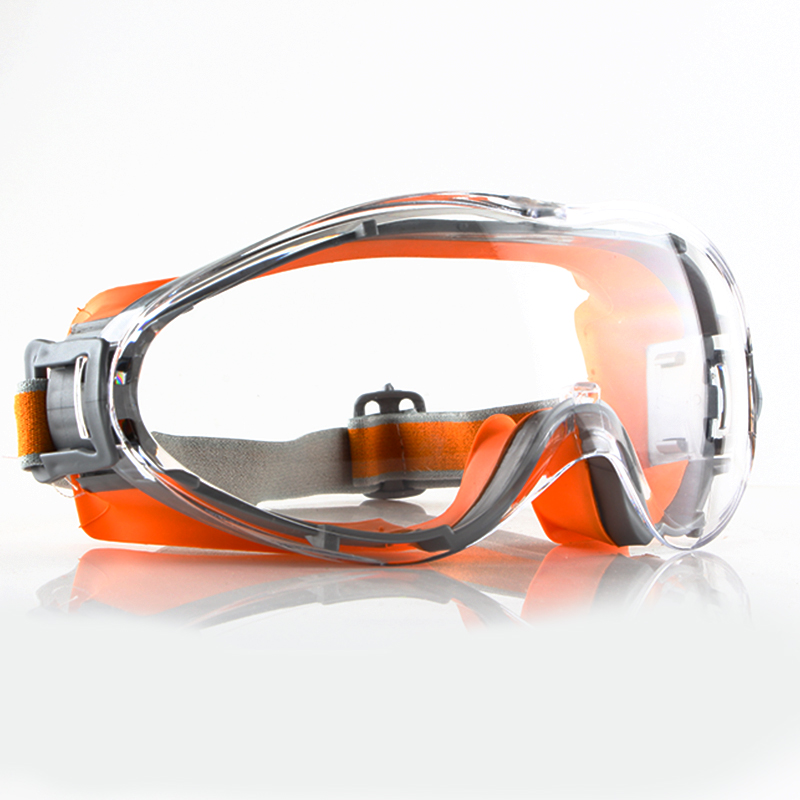
Sawdust and drywall particles seem harmless until they embed in your eyes. Unlike larger debris, these microscopic particles (<10 microns) bypass safety glasses through ventilation gaps and cause chronic dry eye syndrome—leading to permanent corneal scarring. Wood dust alone contains over 4,000 compounds, including carcinogens like formaldehyde that absorb through eye membranes.
Why Safety Glasses Fail Against Drywall Dust in 2 Minutes
Drywall sanding releases respirable crystalline silica—a known carcinogen. Standard glasses have top/side gaps where silica enters at 50+ mph. Within 120 seconds of exposure, particles coat the eye surface, causing micro-abrasions that invite infections. OSHA requires sealed goggles for all drywall work after a 2021 case where a contractor developed silicosis of the eye (permanent clouding) from “just 15 minutes” of sanding without proper gear.
Choosing Goggles That Beat Fogging During Long Projects
Indirect-vented goggles prevent dust entry but fog in humid conditions. Combat this with:
– Dual-pane lenses: Inner anti-fog coating + outer scratch-resistant layer
– Forced airflow: Battery-powered fans (like UVEX Speed Vent)
– DIY hack: Rub lens with baby shampoo—creates hydrophilic layer that disperses moisture
Never wipe fogged lenses with clothing—that scratches coatings. Keep a microfiber cloth in your goggle case.
Decoding Safety Goggle Labels: ANSI Z87.1 vs. EN 166 Standards

Fake safety goggles flood online marketplaces—60% fail basic impact tests. Real certified goggles permanently etch standards on lenses/frames. Without these marks, you’re wearing costume glasses.
What “Z87+” Really Means for Your Eye Protection
- Z87: Basic impact resistance (drops 1″ steel ball from 50″)
- Z87+: High-mass impact (17.6-lb pointed wedge from 50″) AND high-velocity (0.25″ steel ball at 150+ mph)
- Z87.1+ D3: Adds chemical splash resistance
Check for “+” after Z87—without it, goggles fail high-speed tests. European EN 166 “F” rating indicates same high-velocity protection.
How to Spot Fake Safety Goggles in 30 Seconds
- Scratch test: Rub lens with fingernail—real polycarbonate won’t scratch
- Weight check: Authentic goggles weigh 1.5–2.5 oz (fakes are lighter)
- Mark verification: Etched marks must be permanent (not stickers)
If buying online, only purchase from certified vendors like Grainger or Uvex—not Amazon third-party sellers.
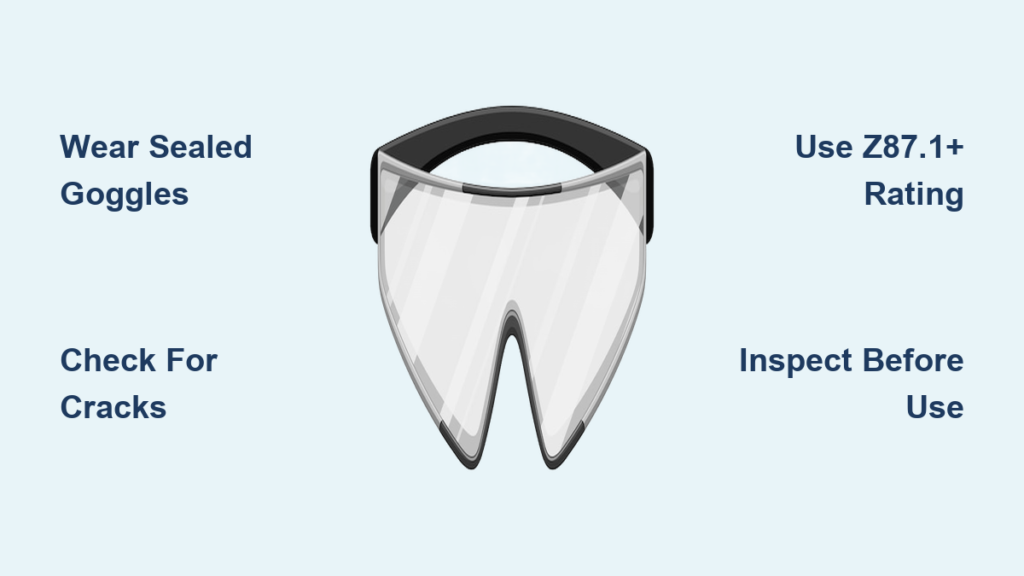
The 30-Second Safety Goggle Check Before Every Use
A cracked lens or loose strap turns safety gear into a liability. Yet 78% of users skip pre-use inspections.
Inspecting for Micro-Cracks That Compromise Impact Protection
Hold goggles 6 inches from a bright light. Rotate slowly—hairline cracks appear as dark lines. Even 1mm fractures reduce impact resistance by 70%. Replace immediately if you spot:
– Hazing: Cloudiness from chemical exposure
– Deep scratches: Longer than 2mm on lens surface
– Stretched straps: Loses >25% elasticity
Cleaning Safety Goggles Without Damaging Critical Coatings
Never use paper towels, acetone, or household cleaners—they strip anti-fog coatings. Instead:
1. Rinse lenses under lukewarm water to remove debris
2. Apply 1–2 drops of neutral-pH lens cleaner (e.g., Zeiss Lens Wipes solution)
3. Gently wipe with microfiber cloth in circular motions
4. Air-dry vertically (never lay flat)
Store in a hard-shell case—never toss in toolboxes where lenses get scratched.
Final Note: Skipping safety goggles risks permanent vision loss in less time than it takes to put them on. In woodworking, labs, construction, or even DIY cleaning, sealed ANSI Z87.1+ goggles are non-negotiable. Implement the 30-second pre-use inspection, choose task-specific venting (indirect for dust/chemicals), and replace gear showing any wear. Your eyes can’t regenerate—but one pair of properly maintained safety goggles protects 20,000+ hours of vision. Make wear safety goggles your automatic first step, not an afterthought. The next time you reach for tools, remember: no project is worth your sight.