Ever wondered how a sleek pair of sunglasses transforms from a sketch into your go-to sun-blocking essential? The answer lies in a precision-driven process that blends fashion, engineering, and advanced manufacturing. How are sunglasses made? It’s not just about style, it is a multi-stage journey involving material science, digital design, automated production, and rigorous quality control. Whether you are wearing $20 shades or a $500 designer pair, each undergoes a carefully orchestrated sequence of steps to ensure UV protection, durability, and comfort. In this guide, we will walk through every phase of sunglass production, from concept to case, revealing how brands turn raw materials into iconic eyewear.
Concept and Design Development
The creation of sunglasses begins long before any material is cut. Designers study fashion trends, cultural movements, and consumer behavior to shape new collections. Inspiration comes from sources like vintage military aviators, architectural curves, nature’s organic forms, and celebrity styles. Teams create mood boards, which are collages of colors, textures, and silhouettes, that define the emotional tone of a line.
From Sketch to Digital Model
Initial ideas become hand-drawn or digital sketches exploring frame shapes like aviator, cat-eye, round, or oversized. Designers consider facial ergonomics across face types, proportions for balance and comfort, and brand positioning whether luxury, sport, or everyday fashion. These sketches are functional blueprints that anticipate how the frame will sit on the face.
Sketches evolve into 3D models using CAD software like SolidWorks or Rhino. Engineers use these models to set exact measurements including lens width, bridge size, and temple length. They define the base curve typically six to eight for facial wrap and optical alignment, simulate fit on digital head models, and ensure lens groove depth matches lens thickness. CAD modeling allows rapid design tweaks without physical prototypes, saving time and cost.
Rapid Prototyping and Design Review
Before mass production, high-resolution 3D printers create physical prototypes from CAD files. These models test fit on real or mannequin faces, evaluate hinge movement and temple flexibility, and present to stakeholders for approval. 3D printing supports complex geometries impossible with traditional tooling, enabling innovation in custom and performance frames.
A formal design review confirms frame symmetry, hinge placement, logo positioning, and material compatibility. Final technical drawings with precise dimensions become the master guide for tooling and manufacturing.
Frame Material Selection
The material chosen for sunglass frames directly impacts durability, weight, comfort, and price. Each material offers distinct advantages suited to different market segments and use cases.
Cellulose Acetate: The Fashion Standard
Cellulose acetate, derived from cotton or wood pulp, is the gold standard for fashion frames. It offers rich, layered colors and patterns like tortoiseshell and marbled finishes. The material is hypoallergenic, durable, and takes a high polish finish beautifully. Bio-acetate, used by eco-brands like Dick Moby, replaces petroleum with plant-based plasticizers and is industrially compostable.
Polycarbonate and TR90: Performance Plastics
Polycarbonate is ideal for sports sunglasses, kids eyewear, and budget-friendly models. It is lightweight, shatter-resistant, and perfect for injection molding. TR90 is a nylon-based thermoplastic that is heat-resistant, lightweight, and flexible under stress. This material is common in active lifestyle and driving sunglasses.
Metal Alloys: Strength and Elegance
Several metal options exist for premium frames. Stainless steel is corrosion-resistant and sleek, used in wireframes. Titanium is ultra-light, strong, and hypoallergenic, favored in luxury and medical-grade frames. Nickel-silver and TPEE are used for flexible temple cores. Hybrid frames combining acetate front with metal temples offer style and function.
Frame Manufacturing Methods
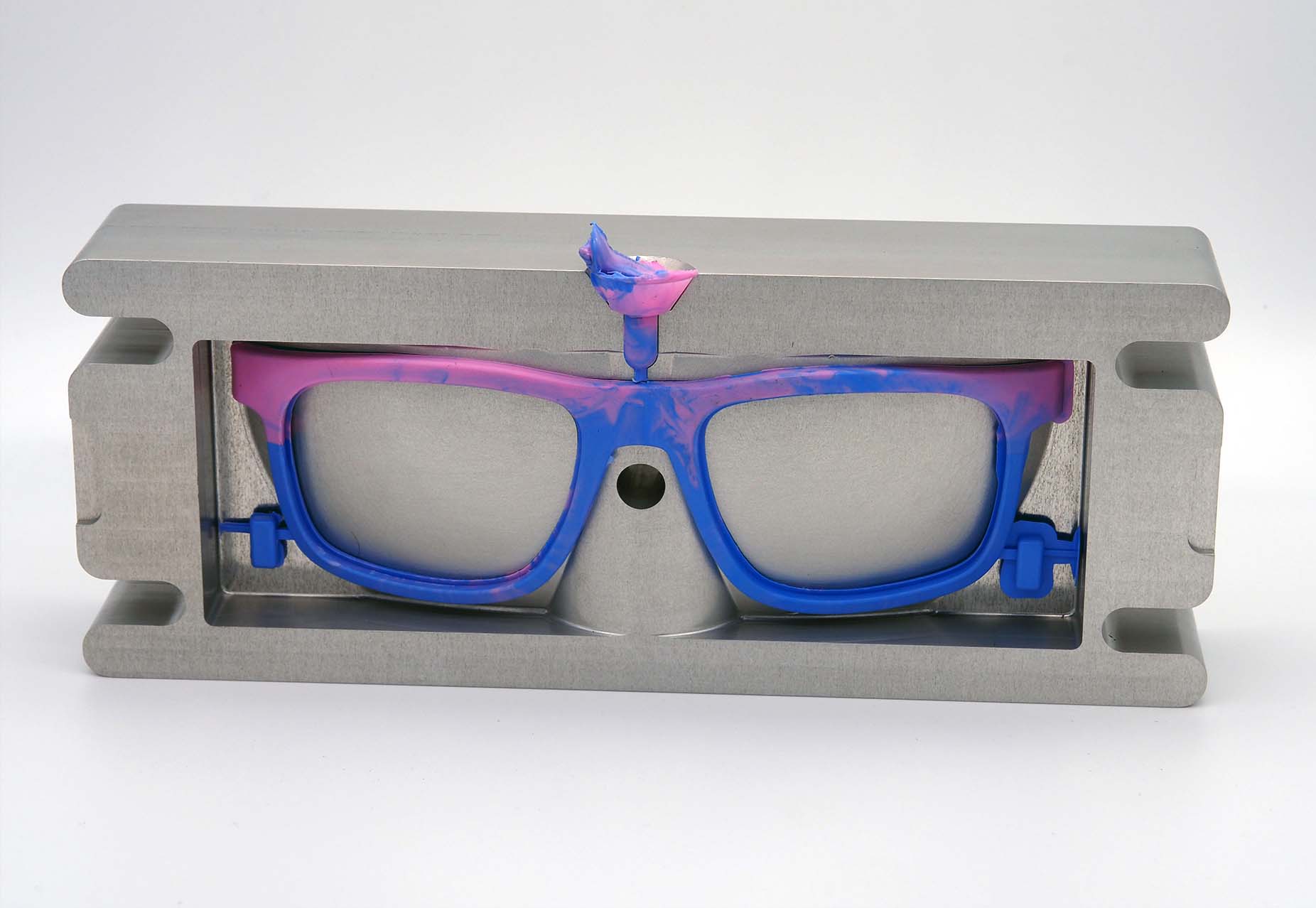
The production method depends on the frame material and quality level. Each approach offers different advantages in precision, cost, and finish.
Injection Molding for Mass Production
Used for polycarbonate, TR90, and TPEE frames, the injection molding process works as follows. Pellets are mixed with pigments and heated to 200 to 300 degrees Celsius. Molten material is injected into steel molds under high pressure. Frames cool and eject in seconds. This method delivers high volume, low cost, and plus or minus 0.05 mm accuracy. It is ideal for sports and children’s sunglasses.
CNC Machining for Premium Frames
Luxury brands like Ray-Ban and Persol use CNC machining for acetate and titanium. Acetate sheets are cut into blanks, then computer-controlled cutters shape lens openings, hinges, and profiles. This achieves micron-level precision at plus or minus 0.01 mm. After machining, blanks dry for several weeks to prevent warping.
Frame Shaping, Curving, and Finishing
Flat frames are curved to fit the face through a specific process. Frames are heated to 70 to 120 degrees Celsius, then pressed over curved metal blocks to achieve the desired base curve. They are cooled to lock in the shape. This ensures proper wrap and optical alignment.
Acetate temples require a steel wire core insertion for strength. Temple tips are heated, and a textured steel wire is shot through pneumatically. This allows user-adjustable temple angles and prevents breakage.
Frames then enter rotating barrels with wood pegs, bamboo chips, and polishing compounds like cerium oxide. This tumbling process lasts 24 to 72 hours, removing burrs and preparing for final polish.
Surface Finishing and Branding

The surface treatment defines the visual appeal and durability of the final product. Different techniques serve different materials and quality levels.
Hand Polishing for Luxury Shine
Artisans use buffing wheels with wax to create a glass-like gloss on acetate. This step focuses on edges, front, and temples. It requires skill to avoid warping and defines premium quality. This hand craftsmanship distinguishes luxury eyewear from mass-produced alternatives.
Surface Coating Technologies
Various coating types serve different purposes across materials. PVD, or Physical Vapor Deposition, creates durable, scratch-resistant color finishes on metal frames like gold and gunmetal. Rubberized spray provides soft-touch, anti-slip surfaces for sports TR90 frames. Matte finish delivers non-reflective, modern looks for minimalist designs.
Hinge Installation Techniques
Acetate frames use heat-set hinges where metal hinges are pressed into softened acetate, forming seamless, durable joints. Metal frames use laser welding that fuses hinges without visible seams, ensuring smooth movement. Spring hinges are common for comfort and fit. Persol’s Mafleto hinge is a patented example of precision engineering.
Lens Manufacturing Process
Lenses are optical precision components requiring multiple manufacturing stages to achieve clarity, UV protection, and visual performance.
Lens Material Options
Three primary materials serve different needs. Polycarbonate is impact-resistant, lightweight, and blocks 100% UV naturally, making it ideal for sports and everyday use. CR-39 offers high clarity and lightweight properties but requires UV coating for protection. Optical glass provides superior clarity and scratch resistance but is heavier and more fragile, used in vintage and luxury models.
Lens Production Steps
The lens manufacturing involves several critical stages. First, liquid monomers are poured into glass molds and cured with heat or UV light, producing round lens blanks. Next, blanks are soaked in heated dye baths where darkness is controlled by time, with light tint requiring five to ten minutes and dark tint requiring 20 to 60 minutes. Gradient tints are created by dipping the top half slowly.
In vacuum chambers, lenses receive multiple coating layers. Anti-reflective coating reduces glare. Hydrophobic coating repels water. Oleophobic coating resists fingerprints. Hard coat prevents scratches. Polarizing film, a stretched PVA film treated with iodine, blocks horizontal glare from water, roads, and snow. Typically six to eight coating layers are applied for full performance.
UV Protection Standards
All compliant sunglasses must block 100% of UVA and UVB rays up to 400 nm. Testing ensures polycarbonate lenses are inherently compliant while CR-39 lenses require coating for UV protection.
Precision Lens Edging
CNC edgers cut round blanks into frame-specific shapes using CAD data. Edges are chamfered to prevent chipping during insertion.
Assembly and Alignment
The assembly phase brings together frames and lenses through precise techniques ensuring structural integrity and comfort.
Heat-Fit Lens Insertion
For acetate and TR90 frames, rims are heated to 60 to 80 degrees Celsius with hot air. The plastic expands slightly, allowing lenses to snap into the groove. The frame cools, locking the lens in place. Tension-fit designs use slightly oversized lenses for secure hold. Rimless frames require lenses to be drilled and attached directly to metal components using screws or rivets.
Temple Attachment and Truing
Temples connect via hinges, and technicians use precision tools to balance spring tension, ensure smooth opening and closing, and align temples symmetrically. Final symmetry checking places sunglasses on a flat glass table to detect wobble. Technicians adjust hinges, nose pads, and temple angles. The goal is no pressure points and perfect balance. Misaligned units are reworked or scrapped.
Quality Control and Testing
Rigorous quality control at every stage ensures safety, performance, and brand standards are met.
In-Process Quality Checks
Inspections occur throughout production. Material thickness and color are verified. Lens opening accuracy is measured. Hinge alignment and groove depth are checked. Polishing uniformity and logo clarity are inspected. Defects are caught early to reduce waste.
Final Product Testing
UV protection verification uses UV spectrometers confirming 100% UVA/UVB blockage up to 400 nm, required for FDA, CE, and AS/NZS compliance. The drop ball test drops a 16g steel ball from 127 cm, requiring the lens to not crack, shatter, or dislodge, complying with ANSI Z80.3 and ISO 12312-1 standards.
Visual inspection under bright light checks for micro-scratches, color variation, logo defects, lens clarity, and frame warping. Functional testing verifies temple movement smoothness, screw tightness, lens retention under stress, and nose pad stability.
Branding and Packaging
The final presentation reinforces brand identity and protects the product through distribution.
Logo Application Methods
Various methods apply logos based on material and durability needs. Silk screen printing works on flat surfaces with moderate durability. Pad printing suits curved arms with moderate durability. Laser engraving on metal and acetate provides high durability. Metal inlay offers very high durability for luxury frames. Embossing creates subtle branding on acetate.
Chrome Hearts uses sterling silver inlays and hand-engraving, treating eyewear like jewelry. Personalization options include serial numbers for limited editions, custom engravings for names or dates, and signature motifs like gothic crosses.
Premium Packaging Components
High-end sunglasses include hard-shell cases made of leather or recycled materials, branded microfiber cloths safe for coated lenses, authenticity cards and warranty documents, display boxes for collectors, and hang tags with UV and material details.
Innovation and Sustainability Trends
The industry continues evolving with new technologies and eco-conscious practices.
3D Printing and Smart Manufacturing
Brands like ZAS use 3D printing for custom-fit frames and anti-fog and blue-light filtering lenses. Luxottica uses AI-powered vision systems and robotic arms for precision assembly, real-time defect detection, and mass customization.
Sustainable Materials and Practices
Bio-acetate is biodegradable under industrial composting. Recycled metals and plastics reduce environmental impact. Take-back programs let brands recycle old frames. Sustainable packaging uses recycled cardboard and bioplastics. Dick Moby leads in transparent, eco-friendly production.
Cost Factors in Sunglass Production
Multiple factors influence the final price of sunglasses. Material quality matters significantly, as titanium, optical glass, and bio-acetate raise prices. Labor intensity adds cost when hand-polishing occurs in Italy or Japan. Engineering complexity increases value through patented hinges and polarized lenses. R&D investment supports new coatings and materials. Brand heritage contributes to luxury status and exclusivity.
A $20 pair uses injection molding and basic lenses. A $300 pair may involve CNC machining, hand-finishing, and polarized technology.
Final Steps: Cleaning and Distribution
The last phase prepares sunglasses for retail. Final cleaning wipes away fingerprints and dust with microfiber. Tagging applies UV stickers, compliance labels, and brand tags. Packaging inserts the product into cases with cloths and documents. Dispatch ships the finished products via global logistics to retailers or directly to consumers.
Each pair delivers style and 100% UV protection, ready for its owner.
Frequently Asked Questions About Sunglass Manufacturing
How long does it take to manufacture a pair of sunglasses?
The complete process from design to distribution typically spans several weeks to months. Design and prototyping take two to four weeks. Frame manufacturing, including CNC machining and drying time, requires two to four weeks. Surface finishing and lens production add another one to two weeks. Assembly, quality control, and packaging take about one week. Mass production runs can produce thousands of units per day once established.
What is the difference between expensive and cheap sunglasses?
Expensive sunglasses typically use premium materials like titanium, high-quality acetate, or bio-acetate. They feature hand-finishing, precision CNC machining, and advanced lens technologies like polarized coatings and multi-layer anti-reflective treatments. Cheap sunglasses often use injection-molded polycarbonate, basic lenses without advanced coatings, and automated mass production with less quality control depth.
Why do some sunglasses cost hundreds while others cost twenty dollars?
The price difference stems from material quality, manufacturing method, lens technology, brand heritage, and R&D investment. Luxury brands use handcrafted components and premium materials. They invest in patented mechanisms and advanced lens coatings. Brand positioning and exclusivity also drive prices higher.
Can sunglasses be recycled?
Many components can be recycled, though the process is complex. Metal frames from stainless steel and titanium are highly recyclable. Acetate frames can be ground and reprocessed into new products. Some brands like Dick Moby use industrially compostable bio-acetate. Many companies now offer take-back programs to recycle old frames responsibly.
What makes polarized lenses special?
Polarized lenses contain a stretched polyvinyl alcohol film treated with iodine that blocks horizontal light waves. This eliminates glare from reflective surfaces like water, roads, and snow. The technology improves visual comfort and clarity in bright conditions. It is particularly valuable for driving, fishing, and outdoor sports.
How do manufacturers ensure UV protection?
Manufacturers use UV spectrometers to test lens materials. Polycarbonate inherently blocks 100% of UVA and UVB rays. CR-39 requires clear UV-blocking coatings to achieve protection. All compliant sunglasses must block rays up to 400 nm wavelength. Testing ensures compliance with FDA, CE, and AS/NZS standards before products reach consumers.
Key Takeaways for Understanding Sunglass Production
Sunglass manufacturing is a sophisticated fusion of art, engineering, and science. The process begins with trend analysis and design development, using CAD software and 3D printing for precision prototyping. Material selection ranges from cellulose acetate for fashion frames to titanium for luxury eyewear, each requiring different manufacturing approaches like CNC machining or injection molding. Surface finishing, including hand polishing and PVD coatings, defines the visual quality. Lens production involves molding, tinting, vacuum coating, and UV protection verification. Rigorous quality control testing ensures every pair meets safety standards for UV protection and impact resistance. Whether mass-produced or handcrafted, each step ensures performance, safety, and aesthetic excellence. The next time you put on your sunglasses, you will appreciate the complex journey they underwent from concept to your face.