Imagine stepping outside on a bright, sunny day without sunglasses. Your eyes squint against the glare, and you might dismiss the discomfort as temporary. But beneath the surface, harmful ultraviolet rays are silently attacking delicate eye tissues. The effects of not wearing sunglasses extend far beyond momentary irritation, leading to cataracts, macular degeneration, eye cancers, and painful conditions like photokeratitis that accumulate over time.
Sunglasses are essential protective equipment, not fashion accessories. The cornea, lens, and retina all absorb UV radiation, and once damage occurs, it often cannot be reversed. From children playing outdoors to adults commuting or working outside, everyone faces daily UV exposure even on cloudy days. This guide breaks down the immediate and long-term consequences of skipping sunglasses, debunks common myths, and shows you exactly how to choose real protection.
Immediate Eye Damage from UV Exposure
Photokeratitis: Sunburn of the Eye
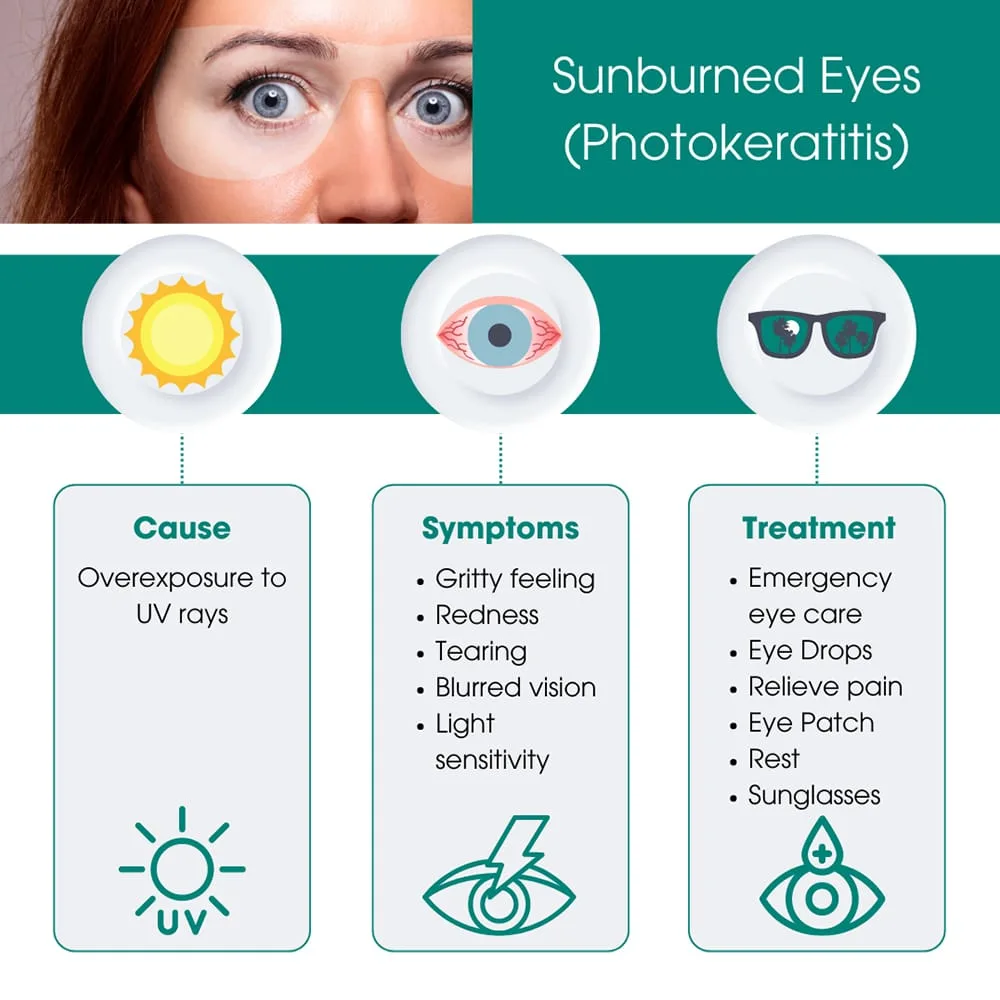
Photokeratitis is a painful, acute condition caused by intense UVB exposure. It essentially creates a sunburn on the surface of your eye, commonly occurring in high-glare environments like snowfields, beaches, or water surfaces.
Symptoms appear 6 to 12 hours after exposure and include:
- Severe eye pain and redness
- Sensitivity to bright light
- Excessive tearing and blurred vision
- Gritty sensation resembling sand in your eyes
- Swelling around the eyes
While symptoms typically resolve within 24 to 48 hours, repeated episodes can lead to chronic dry eye, corneal scarring, or increased vulnerability to infections. Snow reflects up to 80% of UV rays, making skiers and snowboarders particularly vulnerable without proper eye protection.
Treatment focuses on relief: apply cold compresses, use lubricating eye drops, and stay indoors until healing occurs. Avoid rubbing your eyes and wear UV-protective sunglasses during recovery to prevent re-injury.
Glare and Visual Discomfort
Even without sunburn, bright light causes immediate functional problems that affect daily activities. Glare reduces contrast and depth perception, making it harder to see clearly while driving, cycling, or walking in open areas.
Common high-glare environments include:
- Water surfaces and swimming pools
- Pavement and concrete
- Sand and beach areas
- Snow-covered landscapes
When you move between light and shadow, such as walking from sunny sidewalks into shaded areas, your pupils constantly adjust, causing eye strain and fatigue. Over time, this constant squinting can contribute to facial wrinkles around the eyes and tension headaches.
Wearing sunglasses with proper tint helps stabilize vision and reduces the need for constant squinting. The right lenses block harmful rays while maintaining visual clarity for everyday activities.
Long-Term Vision Threats from UV Exposure
Cataracts Caused by UV Radiation
Cataracts involve the clouding of the eye’s natural lens, leading to progressively blurred vision and potential blindness if untreated. The eye lens absorbs UV radiation, particularly UVB, which triggers oxidative stress that damages proteins.
Over time, these damaged proteins clump together and create cloudy patches that obstruct vision. Approximately 20% of cataracts are directly linked to UV exposure, according to clinical research. The risk increases with age, but early and consistent UV protection can delay onset by years.
Key facts about cataracts:
- They are the leading cause of blindness worldwide
- Surgery is currently the only treatment option
- Early protection significantly slows progression
Wearing UV400 sunglasses daily preserves clear vision longer and reduces your risk of developing this vision-stealing condition.
Macular Degeneration Risk Increases
Age-related macular degeneration destroys central vision by damaging the macula, the part of the retina responsible for sharp, detailed sight. While aging and genetics play roles, chronic UV exposure accelerates retinal damage.
UVA rays penetrate deeper into the eye and reach the retina. Over time, they generate free radicals that harm retinal cells, promote drusen buildup, and increase inflammation and oxidative stress. AMD has no cure, and in advanced stages, reading, driving, and recognizing faces become impossible.
Wearing sunglasses that block 100% of UVA and UVB helps reduce cumulative damage and may lower your risk of developing AMD earlier in life.
Pterygium Development Explained
Pterygium, often called “surfer’s eye,” is a fleshy, triangular growth that starts on the white of the eye and can spread across the cornea. It is strongly linked to prolonged UV exposure, dry windy environments, and outdoor occupations like farming or construction.
Signs of pterygium include:
- Redness and persistent irritation
- Gritty or foreign body sensation
- Blurred vision if the growth covers the pupil
Mild cases are managed with artificial tears or anti-inflammatory drops, but surgical removal becomes necessary if the growth interferes with vision. Recurrence is common without ongoing UV protection after surgery.
Wraparound sunglasses and wide-brimmed hats reduce risk significantly, making prevention the most effective strategy.
Eye and Eyelid Cancer Risks
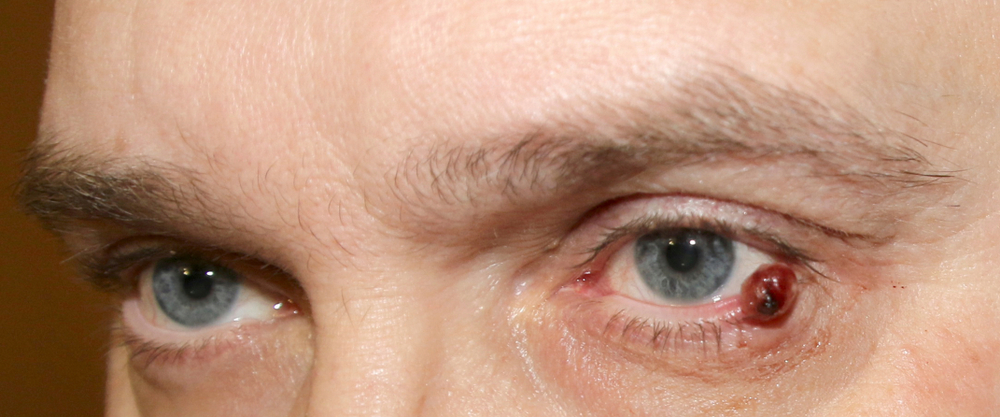
Basal Cell Carcinoma on Eyelids
Basal cell carcinoma is the most common type of eyelid cancer, accounting for about 90% of malignant eyelid tumors in high-sun regions. It typically appears on the lower eyelid or inner corner as a pearly bump, open sore, or scar-like lesion, often mistaken for a stye or chalazion.
UV radiation is the primary cause. Because sunscreen should not be applied to the eyelid area due to irritation risk, sunglasses and hats are your best defense against this aggressive skin cancer.
Treatment involves surgical excision, but removal can affect appearance and eyelid function. Early detection through regular eye exams dramatically improves outcomes.
Ocular Melanoma and UV Exposure
Melanoma can develop in the eye, not just on the skin. Types include eyelid melanoma, conjunctival melanoma, and uveal melanoma forming inside the eye.
Eyelid and conjunctival melanomas are directly linked to UV exposure and behave similarly to skin melanoma. Uveal melanoma has a less clear connection to UV but remains suspected as a contributing factor.
Ocular melanoma is rare but serious. It often shows no early symptoms and can metastasize to the liver or lungs. Survival rates drop sharply once it spreads beyond the eye.
Minimizing UV exposure with quality sunglasses may reduce risk, especially for those with light-colored eyes who are more susceptible to UV-related eye damage.
Dangers of Fake or Poor Sunglasses
Why Non-UV Sunglasses Are Worse
Many cheap fashion sunglasses have dark lenses but no real UV protection. This creates a dangerous illusion. Your pupils dilate due to the tint, letting in more UV radiation than if you wore no sunglasses at all.
The result is increased exposure to the lens and retina, accelerating cataract and macular degeneration risks. Never assume dark lenses mean protection.
Always check for these indicators:
- UV400 label on the frame or lens
- 100% UVA and UVB blocking statement
- Certification from reputable optical suppliers
Polarized vs UV Protection
A common misconception is that polarized lenses block UV rays. They do not. Polarization only reduces glare from reflective surfaces like water, roads, or snow, which is excellent for driving or fishing but offers zero UV filtering unless paired with proper coating.
Always confirm both features in your sunglasses:
- Polarized: reduces glare from horizontal surfaces
- UV400: blocks harmful ultraviolet rays
Many high-performance sunglasses combine polarization with full UV protection. Look for labels stating both.
Lens Tint and Darkness Myths
Tint color affects visual performance, not UV safety. Understanding which tints work best helps you make informed choices.
Best tints for UV protection:
- Grey: provides true color perception, ideal for bright days
- Brown or amber: enhances contrast, good for variable light conditions
- Green: offers balanced color and glare reduction
Tints to avoid for sun protection:
- Yellow: minimal UV blocking, best for low-light conditions
- Blue or rose: can increase glare and distort vision
Remember: darkness does not equal protection. A lightly tinted lens with UV400 is far safer than pitch-black lenses without proper UV blocking.
Choosing Effective Sunglasses
UV400: The Minimum Standard
The single most important feature in sunglasses is UV400 protection, meaning the lenses block all light up to 400 nanometers, covering the full spectrum of UVA and UVB rays.
UV400 protection is found in both inexpensive and designer models. It is not dependent on price. Many affordable drugstore sunglasses offer complete protection if properly labeled.
Always verify the label rather than relying on packaging claims alone. If you are unsure, ask an optician to test the lenses with a UV meter.
Wraparound and Large Frames for Full Coverage
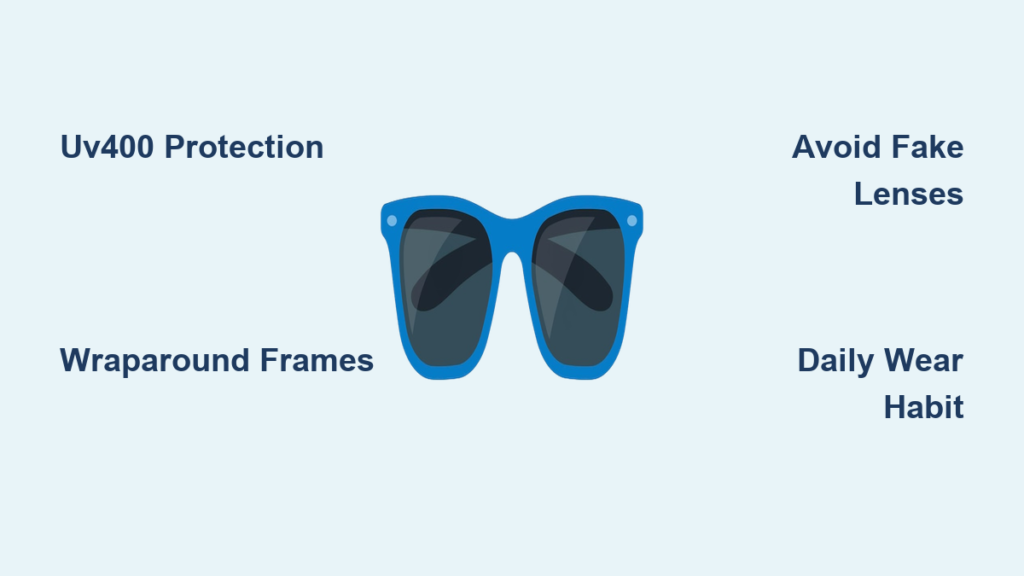
Standard frames leave gaps on the sides, allowing UV rays to enter from angles. Wraparound or oversized styles block peripheral light, protect delicate skin around the eyes, and reduce risk of eyelid cancers and pterygium.
These styles are ideal for outdoor athletes, drivers, and anyone spending extended time in bright conditions. The additional coverage provides meaningful protection beyond just the lenses.
Photochromic and Prescription Options
For people who wear prescription glasses, photochromic lenses offer convenience and protection. They automatically darken in sunlight and provide full UV blocking when activated, working both indoors and outdoors without switching glasses.
Ensure your provider confirms UV protection in all states, as some older models lose effectiveness over time. Prescription sunglasses are also available with polarization, tint options, and UV400 filters tailored to your specific vision needs.
Daily Protection Habits That Work
Wear Sunglasses Every Day
UV rays are present 365 days a year, even when it is cloudy. Up to 80% of UV radiation penetrates cloud cover, making daily protection essential regardless of weather.
Make sunglasses part of your daily routine, like brushing your teeth. Whether you are walking the dog, commuting to work, or running errands, your eyes are exposed to damaging rays.
Habit tip: Keep a pair in your car, bag, or coat pocket so you are never unprepared for unexpected sunlight.
Combine with Hats and Shade
A wide-brimmed hat blocks about 50% of UV rays before they reach your eyes. Paired with sunglasses, this layered approach offers superior protection.
Additional strategies:
- Avoid outdoor activities during peak UV hours (10 a.m. to 4 p.m.)
- Seek shade whenever possible
- Use umbrellas or canopies at the beach or park
This combination dramatically cuts cumulative exposure and reduces your long-term risk of UV-related eye damage.
Schedule Regular Eye Exams
Many UV-related conditions develop silently. You may not notice changes until vision is already impaired.
Annual eye exams allow your optometrist to detect early signs of cataracts, AMD, or pterygium, spot suspicious lesions on the eyelid or conjunctiva, and monitor changes over time. Early diagnosis means earlier intervention and better long-term outcomes.
Frequently Asked Questions About Sunglasses and UV Protection
Can I get eye damage from UV rays on cloudy days?
Yes, up to 80% of UV radiation penetrates cloud cover. UV rays are present year-round, regardless of weather conditions. Wearing sunglasses daily protects your eyes even when the sun is not visible.
Do expensive sunglasses provide better UV protection than cheap ones?
Price does not determine UV protection. Many inexpensive drugstore sunglasses offer the same UV400 protection as designer brands. Always check for the UV400 or 100% UV protection label regardless of cost.
Can wearing sunglasses cause pupil dilation that increases UV damage?
Non-UV-protective sunglasses cause this problem. Dark lenses without UV filtering make your pupils dilate, allowing more harmful rays to enter. Always verify UV protection before relying on any sunglasses.
How long does it take for UV damage to cause cataracts?
Cataracts develop gradually over years of cumulative UV exposure. The 20% of cataracts attributed to UV exposure result from decades of unprotected eye exposure. Early and consistent protection delays onset significantly.
Are polarized lenses enough for sun protection?
No, polarization and UV protection are separate features. Polarized lenses reduce glare but do not block UV rays unless they also carry a UV400 label. Always check for both features.
Key Takeaways for Protecting Your Eyes from UV Damage

The effects of not wearing sunglasses are serious, progressive, and often irreversible. From painful sunburns of the eye to lifelong vision loss and cancer, the risks are real but preventable. UV400-protected sunglasses block all harmful UVA and UVB rays and represent the minimum standard for eye protection.
Choosing the right sunglasses requires checking for proper labeling rather than relying on darkness or price. Polarized lenses reduce glare but do not replace UV protection. Wraparound frames provide superior coverage by blocking peripheral light that standard frames miss.
Make sunglasses a daily habit, not just a beach accessory. Combine them with wide-brimmed hats and seek shade during peak UV hours. Schedule regular eye exams to catch problems early before irreversible damage occurs.
Start protecting your eyes today. Keep a pair handy, verify the UV400 label, and make eye protection a non-negotiable part of your daily routine.