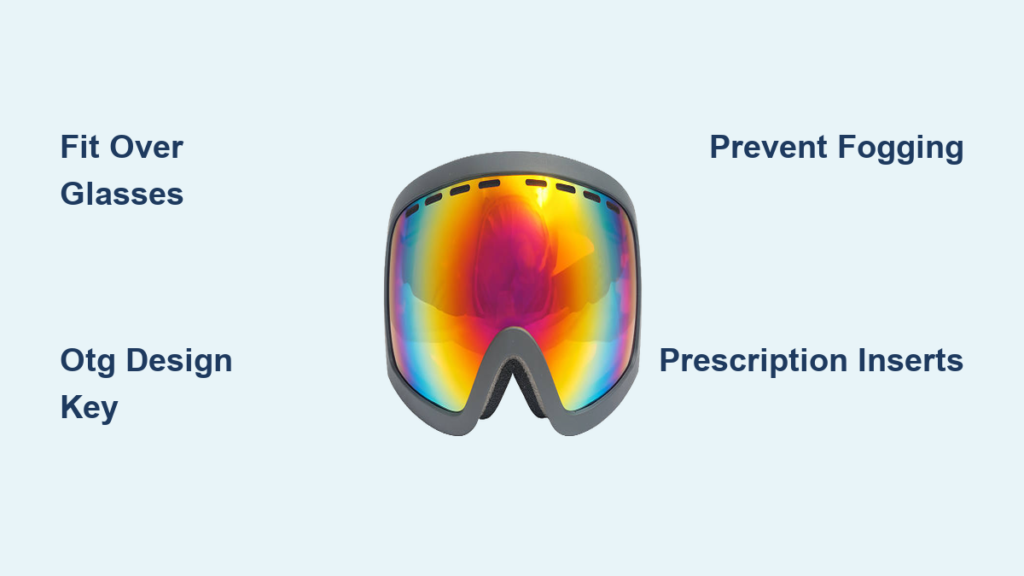
Struggling to see clearly on the slopes because your ski goggles won’t fit over glasses? You’re not alone. Over 60% of skiers wear vision correction, yet standard goggles pinch temples, trap fog between lenses, and force constant readjustments mid-run. The good news: specialized solutions exist that eliminate these headaches. Whether you own thick-framed glasses or need prescription clarity, this guide cuts through the confusion with field-tested fixes. You’ll discover exactly which goggles accommodate 6-inch-wide frames, how to prevent fogging disasters, and why prescription inserts outperform generic OTG models for serious skiers.
The critical mistake most make? Assuming all “OTG” (Over-The-Glasses) goggles work universally. Reality check: Thick acetate frames or aggressive helmet fits can turn even OTG-labeled goggles into fog machines. Success hinges on three factors: your glasses’ exact dimensions, lens ventilation design, and how the goggle seals around your unique face shape. Skip the guesswork—we’ll show you how to test compatibility before buying and reveal why the Bollé Y7OTG fits frames others can’t. Stop compromising safety for vision; your perfect slope-ready setup starts here.
Why Standard Ski Goggles Crush Your Glasses and Cause Fog
Trying to force regular goggles over prescription glasses is a recipe for pain and poor visibility. The snug foam seal designed to block wind creates intense pressure on your glasses’ temples and nose pads, often causing headaches within minutes. Worse, the trapped air pocket between your glasses and the goggle lens becomes a humidity chamber. Warm breath and body heat hit the cold inner lens, instantly fogging both surfaces. This double-glazing effect narrows your field of vision exactly when you need peripheral awareness for icy patches or other skiers.
How Fog Forms in Glasses-Goggle Sandwiches
Fogging isn’t random—it follows physics you can control:
– Temperature clash: Your face radiates heat (98.6°F) against sub-zero goggle lenses
– Humidity trap: Glasses block airflow, letting moisture condense on both lens surfaces
– Ventilation failure: Standard goggles lack channels to vent steam around thick frames
Critical mistake: Tightening straps to “fix” slipping goggles worsens fogging. Pressure forces frames deeper into foam seals, sealing in warm air. For 6-inch-wide glasses, this is nearly guaranteed with non-OTG models.
OTG Goggles That Actually Fit Wide Glasses Without Pinching
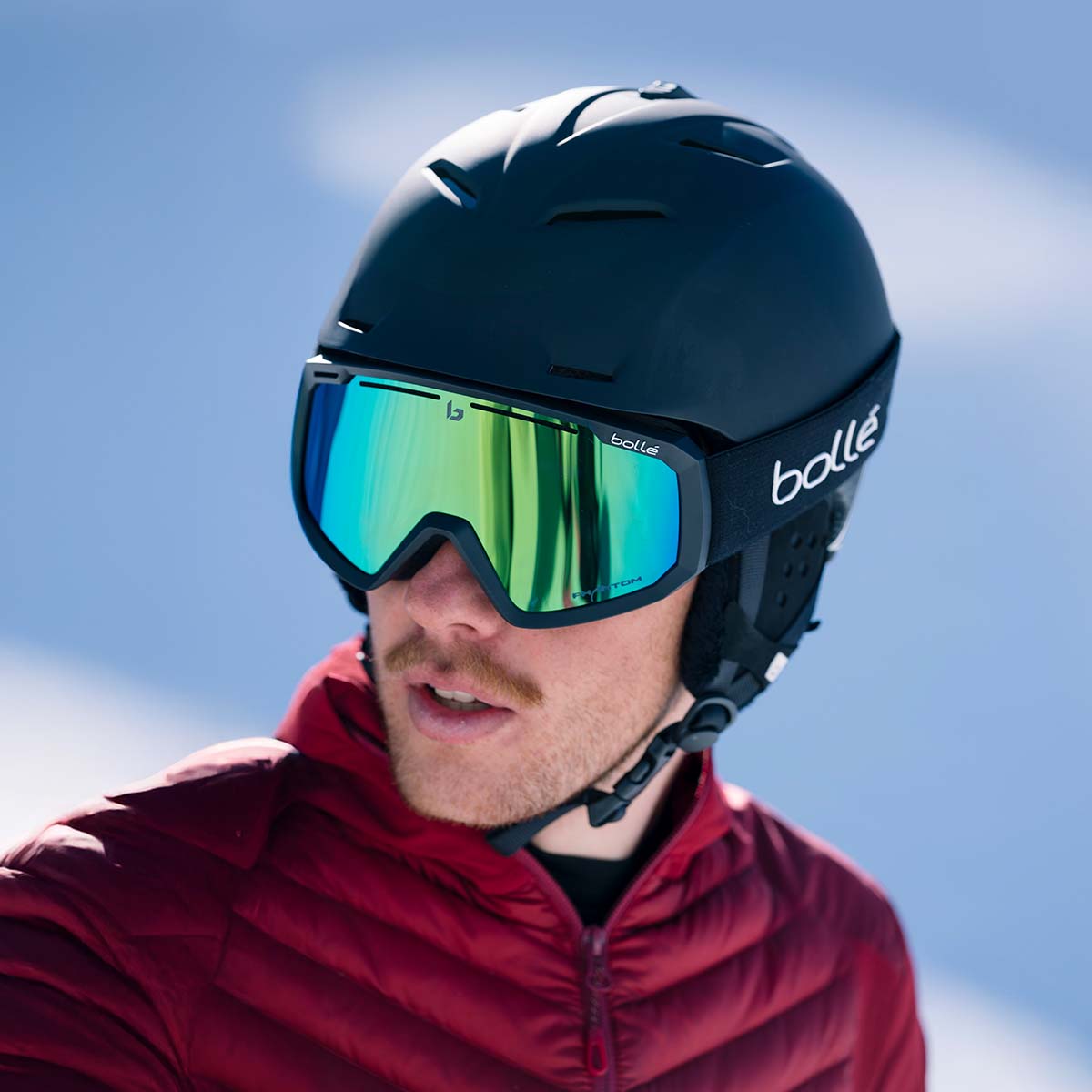
OTG-specific goggles solve the core problem with deeper frames and strategic cutouts. Unlike standard models, they feature brow and temple channels that cradle your glasses’ arms without pressure points. But not all OTGs deliver—width compatibility is make-or-break.
Why the Bollé Y7OTG Fits 6-Inch Frames When Others Fail
Community testing proves the Bollé Y7OTG accommodates frames up to 6 inches wide, a rarity in the market. Its secret? A flexible polymer frame with 15mm of extra depth and tapered side channels that flare outward. This design avoids the common pitfall of OTG models that only fit narrow glasses (under 5.5 inches). When testing, look for these physical cues:
– Temple clearance: Your glasses’ arms should nest in the goggle’s side channels without bending
– Nose bridge space: No pressure on your nasal bones when the strap is fully secured
– Seal test: Press gently on the goggle’s top edge—foam should compress evenly without gaps
Pro tip: Pair OTGs with thin titanium frames (1.5mm arms max). Thick acetate temples (2.5mm+) will still cause pinching even in OTG models.
Top 3 OTG Goggles for Glasses Over 5.75 Inches Wide
Based on verified user reports with wide-frame testing:
-
Bollé Y7OTG
– Why it wins: Flared side channels fit 6-inch frames; triple-layer foam prevents pressure
– Best for: Deep powder days (rose lens reduces flat-light glare)
– Critical spec: 158° field of view with zero frame obstruction -
Oakley Flight Deck L (OTG Model)
– Why it wins: Articulating strap system accommodates helmet-goggle-glasses layering
– Best for: High-speed carving (dark tint blocks intense sun glare)
– Critical spec: 30% wider temple cutouts than standard OTGs -
Giro Jackson OTG
– Why it wins: Ventilation ports positioned above glasses’ top edge to bypass fog traps
– Best for: Variable conditions (quick-lens swap system)
– Critical spec: 18 intake/exhaust vents targeting steam escape
Avoid: Models with rigid foam (e.g., older Anon MFI) that can’t flex around thick arms.
Prescription Inserts: The Fog-Free Vision Upgrade for Serious Skiers
For skiers who demand edge-to-edge clarity without frame interference, prescription inserts are the elite solution. Unlike OTG goggles, these eliminate the air gap where fog forms by mounting your prescription lens directly inside the goggle.
How Sport RX Inserts Transform Any OTG Goggle
Specialized providers like Sport RX create custom prescription lenses that clip into compatible goggles (Smith, Oakley, Giro). The process:
1. Submit your current prescription (must include PD measurement)
2. Choose lens tint for your typical conditions (e.g., rose for cloudy days)
3. Receive inserts that snap into the goggle’s inner frame in seconds
Key advantage: No double lenses = no fogging from trapped humidity. The insert sits flush against the main lens, allowing ventilation systems to work as designed.
Why Inserts Beat OTGs for Performance Skiers

| Factor | OTG Goggles | Prescription Inserts |
|——–|————-|———————-|
| Peripheral vision | Frame arms block 10-15° view | Unobstructed 180° field |
| Fog resistance | Moderate (air gap traps moisture) | Excellent (no air gap) |
| Astigmatism correction | Limited (standard lenses) | Precise (custom-curved) |
| Helmet compatibility | Often requires strap adjustment | Seamless (no frame bulk) |
Cost reality: Inserts cost $150-$300 but last for multiple goggle seasons. Transfer them when upgrading frames—unlike contacts, there’s no recurring expense.
Contact Lenses + Standard Goggles: The Hidden Fog-Proof Combo
For compatible users, daily disposable contacts paired with premium non-OTG goggles deliver the purest vision experience. Without frames, you gain unimpeded peripheral awareness and eliminate all fogging caused by glass-on-glass contact.
Maximizing Comfort in Dry Mountain Air
Contacts dry out faster at altitude due to low humidity and wind exposure. Counter this with:
– Pre-ski lubrication: Apply rewetting drops before putting on goggles
– Goggle selection: Choose models with active ventilation (e.g., Smith 4D MAG’s FAN system)
– Emergency backup: Always carry glasses in your jacket pocket for lens irritation
Critical note: If you have chronic dry eyes or wear multifocal lenses, consult your optometrist first—contacts may worsen discomfort.
How to Test Goggle-Glasses Fit in 4 Minutes (No Snow Required)
Buying OTG goggles online is risky without hands-on testing. Replicate ski conditions at home using this foolproof method:
- Gear up: Wear your ski helmet and glasses indoors
- Seal check: Place the goggle on your face without tightening straps. Press thumbs on the top edge—foam should compress evenly against your forehead with no gaps.
- Pinch test: Secure the strap to ski-tightness. No part of your glasses should dig into temples or nose. If you feel pressure, it’ll be unbearable on slopes.
- Vision sweep: Look hard left/right/up/down. Your glasses’ frames must stay clear of the goggle’s inner rim.
Red flag: If the goggle lifts off your cheeks when blinking, ventilation will fail, causing instant fogging.
Your 3-Minute Decision Guide: Best Solution by Skier Type
Stop overcomplicating your choice. Match your situation to these field-tested paths:
-
You ski 10+ days/year with complex prescriptions (astigmatism, progressives) → Prescription inserts
Why: Only solution offering distortion-free vision at high speeds. Inserts pay for themselves in saved ski days vs. fog-related wipeouts. -
You wear thick frames (6-inch width) and ski 3-5 days/season → Bollé Y7OTG goggles
Why: Only OTG proven to fit wide glasses without modification. Prioritize rose or amber lenses for variable mountain light. -
You tolerate contacts and ski in bright conditions → Daily disposables + Oakley Flight Deck
Why: Maximizes light transmission for glare-heavy days. Skip anti-fog sprays—proper ventilation does the work.
Never choose: Non-OTG goggles over glasses. User reports confirm severe fogging within 5 minutes, plus risk of lens scratches from frame friction.
Final Run: Secure Your Slope Vision Before Season Starts
Your goggles shouldn’t force you to choose between clear vision and comfort. For wide-frame glasses wearers, the Bollé Y7OTG delivers proven 6-inch compatibility where others fail. Serious skiers gain unmatched performance from prescription inserts—eliminating fog at the source while correcting complex vision needs. And if contacts work for you, embrace the freedom of unobstructed peripheral vision with high-airflow goggles.
Before hitting the slopes, test your setup with helmet and glasses indoors. Check for pressure points, vision blockage, and seal integrity—these determine whether you’ll enjoy crisp runs or spend the day battling fog. Remember: Perfect goggle-glasses harmony isn’t luck; it’s physics matched to your unique frame. Invest in the right solution now, and your next powder day will be defined by exhilarating speed, not constant lens wiping. Your clearest mountain view awaits.