You pull out your favorite sunglasses, only to find flaky patches, cloudy bubbles, or spiderweb cracks on the lenses. No amount of cleaning helps. This isn’t dirt, it’s sunglasses lens peeling, a common but serious issue that compromises both vision clarity and UV protection. Whether you own Oakleys, Ray-Bans, or budget shades, lens peeling can happen to anyone.
This guide covers exactly why lens peeling happens, how to identify it early, what not to do, and how to protect your next pair. You’ll learn the truth behind heat damage, sweat corrosion, and why even careful storage isn’t always enough.
Identify Lens Peeling Before It Gets Worse
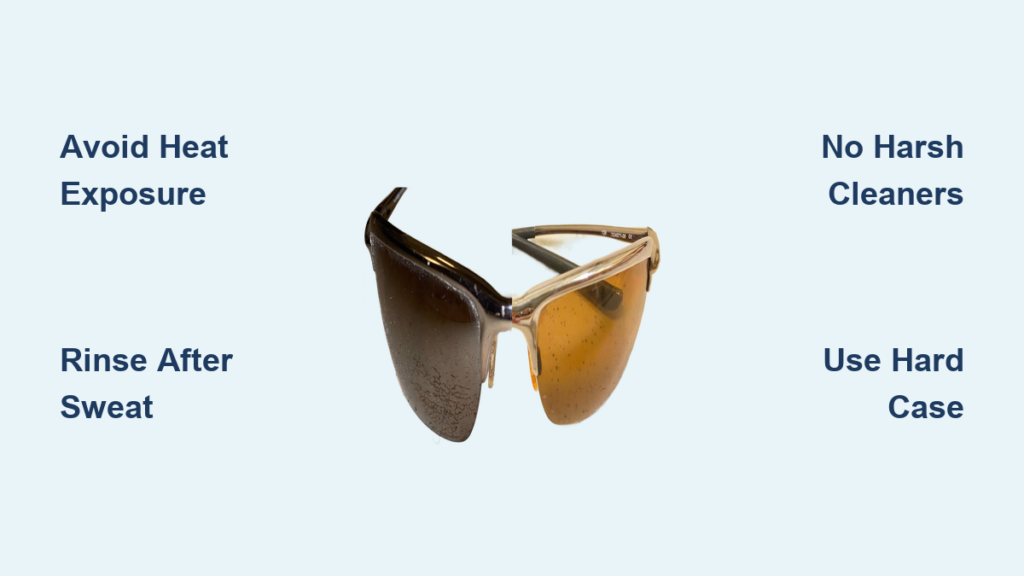
Lens peeling often starts subtly, making early detection critical. Look for flaky edges where the coating lifts like old paint, bubbles or cloudiness under the surface indicating delamination, spiderweb-like cracks across the lens from heat crazing, and an oily-looking haze that won’t wipe off no matter how much you clean.
These aren’t smudges or dirt. Peeling means the lens layers are failing structurally. If cleaning doesn’t fix it, the damage is permanent. Check this diagnostic guide to distinguish peeling from residue.
| What You See | Likely Cause | Action |
|---|---|---|
| Wipe-off film | Sunscreen, sweat, salt | Clean gently with water and mild soap |
| Flaking clear layer | Coating peeling | Stop wiping; consider replacement |
| Fine crack network | Heat crazing | Replace if vision distorted |
| Central haze | Internal delamination | Replace lenses or sunglasses |
Misdiagnosis leads to further damage. Never scrub aggressively, as peeling isn’t dirt.
Why Heat Destroys Sunglass Lenses
Leaving sunglasses on a car dashboard is the number one cause of peeling. Interior car temperatures can hit 150°F (65°C), enough to weaken lens adhesives. Polycarbonate expands faster than coatings, creating stress that cracks or separates layers.
Even short exposures add up over time. Always store sunglasses in a case away from direct sun. Never leave them in the car, especially during summer months.
High heat from saunas, grills, or kitchens causes thermal cycling, repeated expansion and contraction that fatigues materials. This leads to crazing and delamination. Never place sunglasses near heat sources.
How Sweat and Saltwater Damage Coatings

Salty sweat corrodes lens coatings, especially during exercise. Sweat contains sodium chloride that eats away at hydrophobic and oleophobic layers. It pools at the top edge where the lens meets your forehead, and over time, it strips away protection.
Sweat left to dry on lenses strips the coating when it evaporates. Athletes and outdoor workers face high risk. Rinse lenses after heavy sweating to prevent this damage.
Saltwater and chlorine leave behind corrosive residues. As they dry, crystals form and degrade surface integrity. Always rinse with fresh water after swimming or beach use. Failure to rinse leads to edge seepage, moisture entering micro-channels and causing internal delamination.
Chemical Products That Ruin Lens Coatings
Everyday products contain solvents that dissolve lens adhesives. Perfume and hairspray attack hydrophobic layers, oil-based sunscreen leaves residue that stresses coatings, and insect repellent contains DEET which degrades plastics.
Remove sunglasses before applying any personal care products. If contact occurs, rinse immediately. Even products you wouldn’t expect can cause damage. One user was told hair gel caused peeling despite being bald, showing how customer service often blames chemicals without proof.
Avoid harsh cleaners like alcohol wipes, ammonia-based glass cleaners such as Windex, and household disinfectants. These strip functional layers permanently. Stick to lens-specific cleaners or mild dish soap.
Clean Your Lenses Without Causing Damage
Improper cleaning causes premature peeling. Follow this routine every time. Rinse under lukewarm water first to remove grit, then apply a drop of mild soap without moisturizers. Gently rub with your fingertips, rinse thoroughly, and dry with a clean microfiber cloth.
Avoid paper towels, T-shirts, or tissues. These scratch coatings and create micro-abrasions. Never wipe lenses when dry, as spreading microscopic dust causes damage. If lenses are dry, breathe on them to create moisture before gentle wiping.
Use warm water and normal soap. Dry with a clean microfiber cloth. This simple routine prevents most cleaning-related damage.
Physical Damage and Storage Mistakes
Even minor impacts can cause invisible fractures at the lens edge. These openings let moisture seep between layers, accelerating delamination. Handle sunglasses carefully and avoid tossing them into bags or pockets.
Soft cases offer no protection against compression or impact. A hard-shell case prevents scratches and pressure damage. You need a hard case to protect them from shocks. Store your sunglasses in a clean, dry hard case every time.
Oakley Lens Peeling: Why It Happens So Often
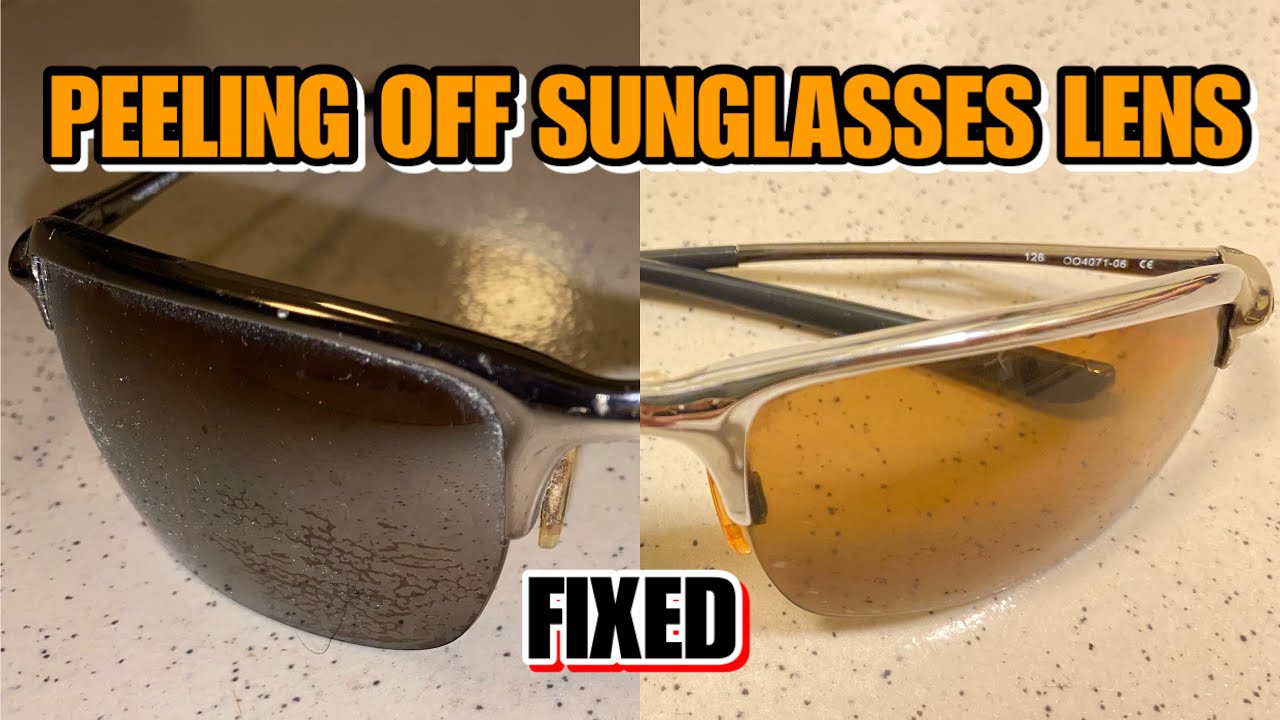
Oakley users report high rates of peeling, especially in Gascan, Radar, Flak series, Juliet, Radar EV Path, and Prizm models. While Oakley uses durable polycarbonate, its layered construction increases delamination risk.
One user reported having 20 pairs of Oakleys with 50% experiencing peeling. Prizm lenses enhance color contrast but peel at edges after heat exposure, and Iridium coating frequently flakes off. The Prism logo often remains even after coating removal, proving partial adhesion.
Post-2007 models show more peeling than vintage Oakleys, suggesting changes in material sourcing or coating processes after Luxottica acquired the brand.
Can You Fix Peeling Sunglass Lenses?

Once delamination or coating separation starts, it’s irreversible. No polish, glue, or cleaner can restore the lens. Once it starts, there is no going back. Attempting to fix it often makes the damage worse.
Common mistakes to avoid include scrubbing with paper towel which spreads damage, using alcohol or Windex which dissolves coatings, peeling off loose film which causes optical distortion, and polishing with toothpaste which removes functional layers. Peeling isn’t a scratch, so don’t treat it like one.
Tape Method for Removing Flaking Coating
If only the top coating is lifting, a tape removal method can salvage the lens. This works only for surface peeling, not bubbles, haze, or internal delamination.
You’ll need Scotch tape, masking tape, or cellophane tape, plus a microfiber cloth.
Press tape firmly onto the peeling area and rub with your finger to ensure adhesion. Peel slowly at a low angle and repeat with fresh tape until clean. For stubborn spots, leave tape on for 10 to 15 seconds before peeling. Dampen tape slightly if residue remains, then finish with a microfiber wipe.
The result is a coating-free but usable lens. No glare reduction remains, but clarity stays intact.
Replace Lenses or Buy New Sunglasses
If the frame is intact, replace just the lenses. It’s cheaper and more eco-friendly. Oakley Gascan and Radar aftermarket lenses cost $25 to $50. Opticians can install new lenses or recommend suppliers. Balenciaga, Ray-Ban, and other brands also offer replacements.
Replace if peeling is in central vision, the frame is bent or damaged, lenses are heavily crazed or bubbled, or you want better UV or polarization technology. Use this as a chance to upgrade to more durable models.
Prevent Lens Peeling With These Proven Habits

Always store in a hard case away from heat. Keep cases out of direct sunlight, away from car interiors, and in a cool dry place. No exceptions, even short exposures matter.
Clean after every harsh exposure. After swimming, sweating, or beach use, rinse with fresh water, wash with mild soap, dry with microfiber, and ensure fully dry before storing. Moisture trapped in the case causes slow delamination.
Avoid chemical contact. Remove sunglasses before applying sunscreen, perfume, hairspray, or insect repellent. If contact happens, rinse immediately with mild soap and water.
Choose Durable Sunglasses for Long-Term Use
Pick the right lens material. Polycarbonate has high peeling risk but excellent impact resistance, best for sports. Trivex has low peeling risk with high clarity and coating adhesion. Nylon offers low peeling risk with excellent outdoor durability. Glass has very low peeling risk but poor impact resistance, best for style not sports.
Look for clearly labeled coatings including UV400 protection, polarization, hydrophobic, oleophobic, scratch-resistant, and anti-reflective. Named coatings mean better quality control.
Check warranty and support. Some brands replace lenses no questions asked. Walked into an Oakley store and they replaced the lens, no receipt needed. Even without a formal policy, goodwill replacements happen. Choose brands with responsive service.
Final Thoughts on Preventing Sunglasses Lens Peeling
Peeling isn’t always user error. Some peeling happens even in perfect conditions. One user stored their glasses climate-controlled and they still peeled after 3 years. Material instability, especially in polycarbonate layers, plays a big role.
Replacement is the only real fix. Tape removes flakes but doesn’t restore function. New lenses bring back performance. New sunglasses offer the best long-term value. Choose your next pair based on the failure pattern that killed your old pair.
If heat caused peeling, avoid dashboard storage. If sweat was the issue, rinse after every use. Prevention starts with awareness. With the right habits, your next pair can last years longer.
Frequently Asked Questions About Sunglasses Lens Peeling
Can sunglasses lens peeling be repaired at home?
No. Once peeling or delamination starts, it’s permanent. No polish, glue, tape method, or cleaner can restore the lens to its original condition. The tape method only removes flaking coating but doesn’t restore functionality.
Why do Oakley lenses peel more than other brands?
Oakley uses polycarbonate for impact resistance, but its layered construction increases delamination risk. Post-2007 models show more peeling than vintage Oakleys, possibly due to changes in material sourcing or coating processes.
How do I know if it’s peeling or just residue?
Clean the lens gently with water and mild soap. If the haze, bubbles, or flaking remain after cleaning, it’s likely peeling. Residue comes off; structural damage does not.
Does warranty cover lens peeling?
Typically no. Most warranties don’t cover peeling, even with minimal use. However, some users report successful goodwill replacements by contacting customer service directly.
How long do sunglass lenses typically last before peeling?
With proper care, lenses last 2 to 5 years. Heat exposure, sweat, and chemicals can cause peeling much sooner. Some users report peeling in under a year with poor storage habits.
Can I prevent lens peeling entirely?
You can’t guarantee prevention, but you can dramatically reduce risk. Store in a hard case away from heat, clean gently with microfiber, avoid chemical contact, and rinse after sweat or saltwater exposure.