Choosing the wrong ski goggle lens colour can turn a dream powder day into a dangerous whiteout struggle. Your lens isn’t just tinted plastic—it’s a precision optical tool engineered to manipulate light, enhance terrain visibility, and prevent eye fatigue during critical moments. When flat light erases shadows on the slope, the right high-VLT yellow lens reveals hidden moguls; under blinding bluebird sun, a silver-mirrored gray lens transforms glare into crisp contrast. This ski goggles lens colour guide cuts through marketing hype to deliver actionable science-backed choices that directly impact your safety, performance, and enjoyment on every run.
Most skiers don’t realize that lens colour selection affects more than comfort—it’s a critical safety decision. Incorrect tints cause missed terrain features, delayed reaction times, and accelerated eye strain that shortens your day. The wrong lens on a stormy day might render icy patches invisible, while overly dark lenses in variable light create dangerous vision lag when moving between sun and shade. This complete ski goggles lens colour guide decodes the technology behind VLT ratings, tint science, and mirror coatings so you can match optics to conditions with confidence. You’ll discover exactly which lenses to grab for bluebird bowls, stormy tree runs, and everything in between—plus avoid costly mistakes that compromise mountain safety.
Visible Light Transmission (VLT) Explained: Your Lens Brightness Blueprint
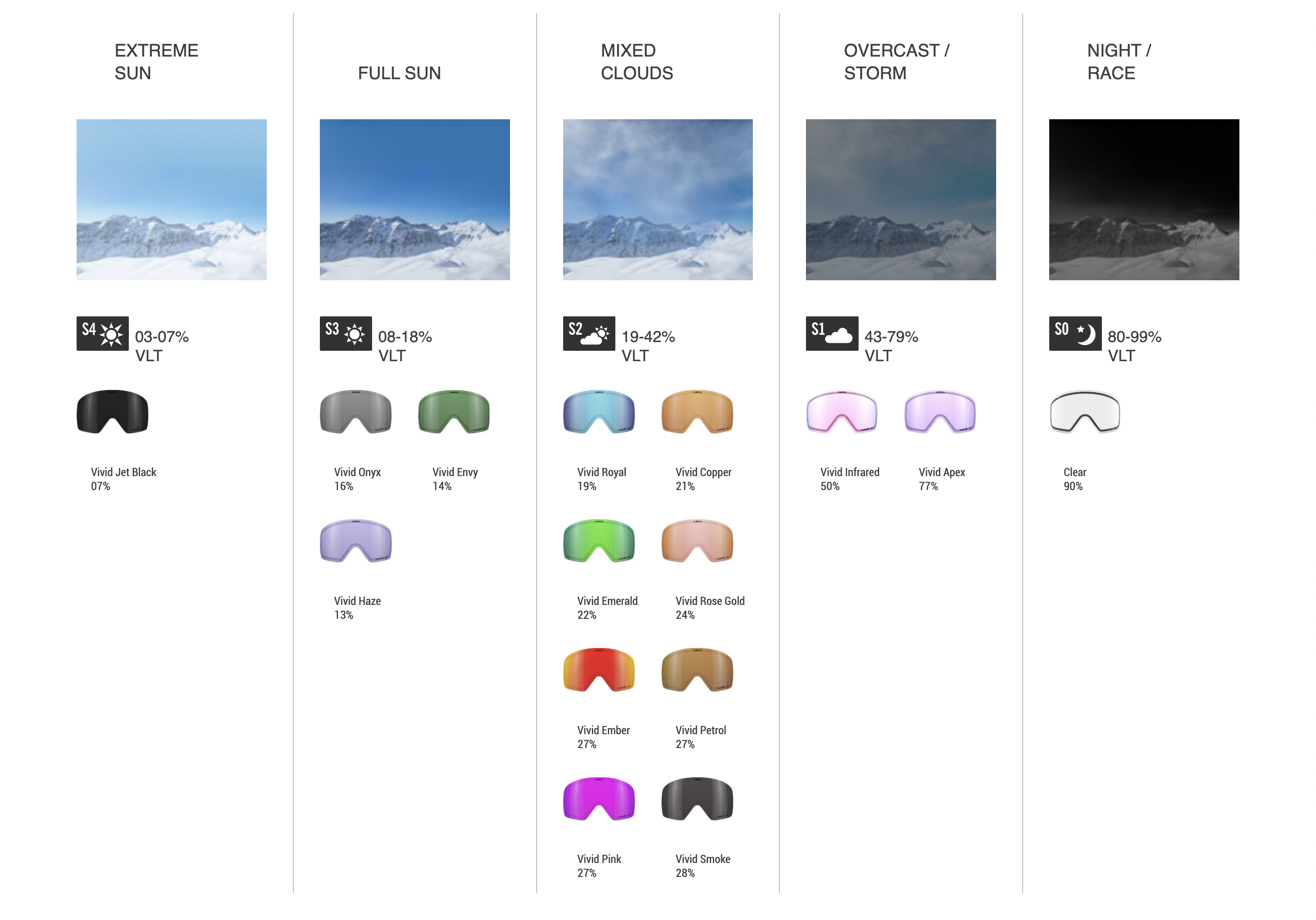
VLT percentage is the single most crucial specification determining your lens performance—not its colour name or mirror finish. This metric measures exactly how much visible light passes through your lens, directly controlling brightness and terrain definition. A lens with 10% VLT blocks 90% of incoming light, making it essential for intense sun, while an 80% VLT storm lens transmits nearly all available light for flat-light survival. Understanding this scale prevents dangerous mismatches: wearing 12% VLT lenses during a whiteout creates near-total blindness, whereas 75% VLT lenses on a sunny glacier cause painful glare and snow blindness.
How to Match VLT to Mountain Conditions Instantly
- 8-20% VLT (Dark Lenses): Mandatory for cloudless bluebird days above treeline. Blocks blinding glare on glaciers and wide-open bowls.
- 20-50% VLT (Medium Lenses): Your versatile all-mountain workhorse. Handles partly cloudy days, forested runs, and spring corn snow perfectly.
- 50-90% VLT (Light Lenses): Non-negotiable for storm days, fog, or dawn/dusk skiing. Reveals terrain texture when shadows vanish.
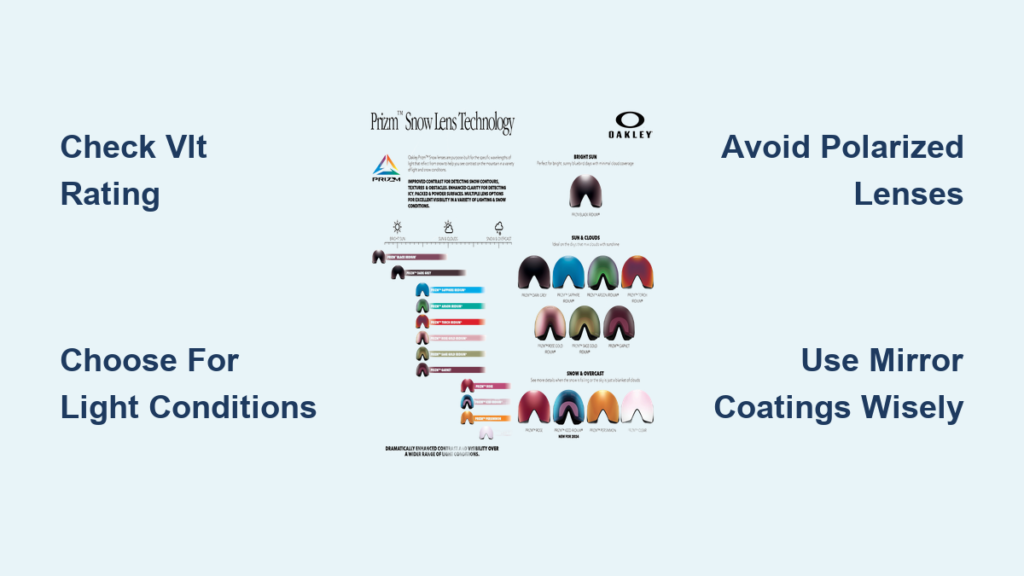
Critical mistake to avoid: Never judge lens suitability by colour alone. A “rose” lens could be 30% VLT (ideal for variable sun) or 75% VLT (storm-day specialist)—always check the manufacturer’s VLT rating printed on the lens.
Gray and Silver Mirror Lenses: Bluebird Day Glare Annihilators

When the sun bakes endless powder fields into a glare factory, gray base lenses with silver mirror coatings are your only defense. These lenses maintain true colour perception while aggressively reducing brightness—critical for spotting subtle wind slabs or ice patches on sunny slopes. The mirror coating reflects infrared heat before it penetrates the lens, preventing that uncomfortable “hot face” feeling during long lift rides. Unlike coloured tints, gray provides neutral contrast without distorting terrain hues, giving you accurate visual feedback when carving high-speed turns.
Why Copper Lenses Dominate Variable Light Conditions
Copper and amber tints are the undisputed champions for mornings with lingering shade, afternoon cloud breaks, and tree skiing where light shifts constantly. These lenses selectively filter harsh blue light wavelengths (the primary cause of snow glare) while amplifying warmer red/orange tones in the snow surface. The result? Enhanced definition of bumps, ruts, and ice patches even as clouds roll in. For spring skiing when sun melts the surface, copper lenses cut through the “washed out” look of sun-affected snow, revealing hidden obstacles that gray lenses might miss. Pro tip: Pair copper with a light mirror coating (25-40% VLT) for the most adaptable all-mountain setup.
Yellow and Orange Lenses: Flat Light Lifesavers for Storm Days
During whiteout conditions when the sky and snow blend into a featureless void, high-VLT yellow or orange lenses become your terrain radar. Operating at 60-90% VLT, these lenses maximize light transmission while strategically boosting contrast in the blue-light spectrum—exactly where flat light causes visual failure. Yellow lenses excel in dense fog or heavy snowfall by cutting haze, while vibrant orange (vermilion) tints provide superior definition on overcast days with minimal precipitation. Never confuse these with fashion tints: true storm lenses have VLT ratings above 60% and lack mirror coatings that would block precious low-light.
Critical Warning: Avoid These Storm Lens Mistakes
- Using lightly mirrored lenses – Mirror coatings reject light you desperately need in flat conditions
- Choosing rose over yellow/orange – Rose provides less contrast boost in extreme low-light
- Assuming all light lenses work – Some “low-light” tints are actually 40% VLT, still too dark for true whiteouts
Visual cue: Hold your storm lens toward a window. If you can’t clearly see text through it, its VLT is too low for serious flat-light conditions.
Photochromic Lenses: The Changing Light Chameleon Solution
Photochromic ski goggle lenses dynamically adjust tint darkness as UV exposure changes—darkening on sunny ridge lines and lightening in forested shade within minutes. This eliminates frantic lens swaps during rapidly shifting conditions like spring storms or high-alpine days with cloud surges. Modern ski-specific photochromics react faster to visible light (not just UV) for responsive performance when clouds obscure the sun. While not matching dedicated lenses in extreme conditions, they provide remarkable versatility for skiers encountering 3+ light scenarios in one day.
When Photochromics Fail: Three Critical Limitations
- Extreme cold – Below -15°C (5°F), molecular reaction slows significantly, causing delayed darkening
- Inside gondolas/cars – UV-blocking glass prevents activation, leaving lenses too light for bright exits
- Deep storm days – May not lighten sufficiently for true whiteout conditions without supplemental lighting
Time-saver: For most resorts, a medium-base photochromic (20-50% VLT range) handles 80% of conditions. Add a dedicated high-VLT storm lens only if you frequently ski in heavy snow.
UV Protection Truth: Why Lens Darkness Doesn’t Equal Sun Safety
All premium ski goggle lenses from reputable brands (Smith, Oakley, Anon, Giro) provide 100% UVA/UVB protection regardless of tint darkness—a non-negotiable industry standard. This critical safety feature comes from molecular UV absorbers embedded during lens manufacturing, not from colour or VLT. A crystal-clear lens can offer full UV blocking just like a pitch-black one. Never assume darker lenses provide more UV protection; conversely, bright yellow storm lenses aren’t “unsafe” in sun—they simply transmit more visible light while still blocking 100% of harmful rays. This is why UV certification matters more than tint choice for eye health.
Interchangeable Lens Strategy: Build Your Mountain Quiver
Dedicated skiers maximize performance with a two- or three-lens system tailored to home mountain conditions:
- Essential Pair: Silver-mirrored gray (10-15% VLT) for sunny days + high-VLT orange (70%+) for storms
- Pro Upgrade: Add copper (30% VLT) as your variable-light workhorse between extremes
- Quiver Killer: High-quality photochromic (15-45% VLT range) as your primary lens with storm backup
Cost-saving tip: Buy goggles with magnetic lens systems (like Smith’s MAG) for faster swaps with gloves on—critical when conditions change mid-mountain. Always store spare lenses in an insulated case to prevent fogging.
Mirror Coatings Decoded: Beyond the Cool Factor
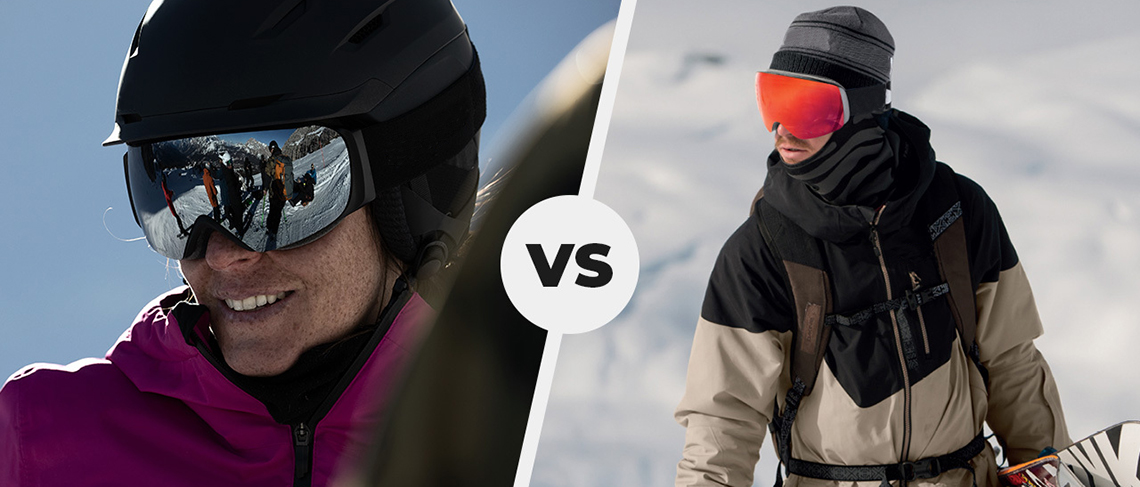
Mirror coatings aren’t cosmetic—they’re functional thermal reflectors that bounce solar energy away before it heats your face. Silver mirrors reflect broad-spectrum light for maximum glare reduction on intense days, while gold mirrors specifically target blue light (ideal for high-altitude skiing). Crucially, mirror strength operates independently from base tint darkness. A light rose lens with strong silver mirror performs like a medium-dark lens, while a dark gray lens with no mirror feels hotter on sunny days. Pro insight: Mirror coatings degrade over time—peeling or scratching significantly reduces their heat-reflective benefits, signaling replacement time.
Polarization Pitfalls: Why Most Skiers Should Avoid It
While polarized lenses excel at cutting water glare on boats, they create dangerous limitations on snow. By blocking horizontally reflected light, they inadvertently obscure critical snow texture variations—making ice patches and wind crusts nearly invisible. Most professional ski instructors and racers avoid polarized lenses specifically because they reduce terrain definition. If you ski variable conditions, polarization creates vision gaps when moving between sunny/slick areas and shaded/rough zones. Reserve polarized lenses only for pure bluebird days on groomed runs if you must use them.
Your perfect ski goggles lens colour choice isn’t about preference—it’s physics meeting mountain reality. Grab silver-mirrored gray lenses for glacier days, copper for your all-mountain workhorse, and high-VLT orange when the storm hits. Always verify VLT percentages rather than trusting colour names, and remember that UV protection comes standard on quality lenses regardless of tint. For most skiers, a photochromic lens paired with a dedicated storm lens covers 95% of conditions. Now that you’ve mastered this ski goggles lens colour guide, your next gear check will be a precision operation—not a guessing game. Before heading up, snap a photo of your lens’ VLT rating and store it in your phone for instant condition-matching all season.