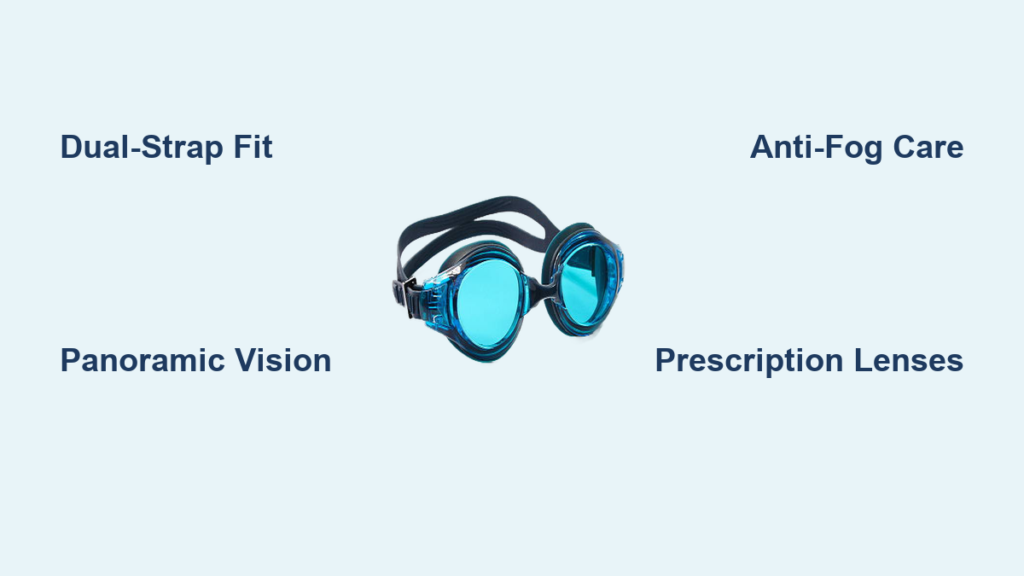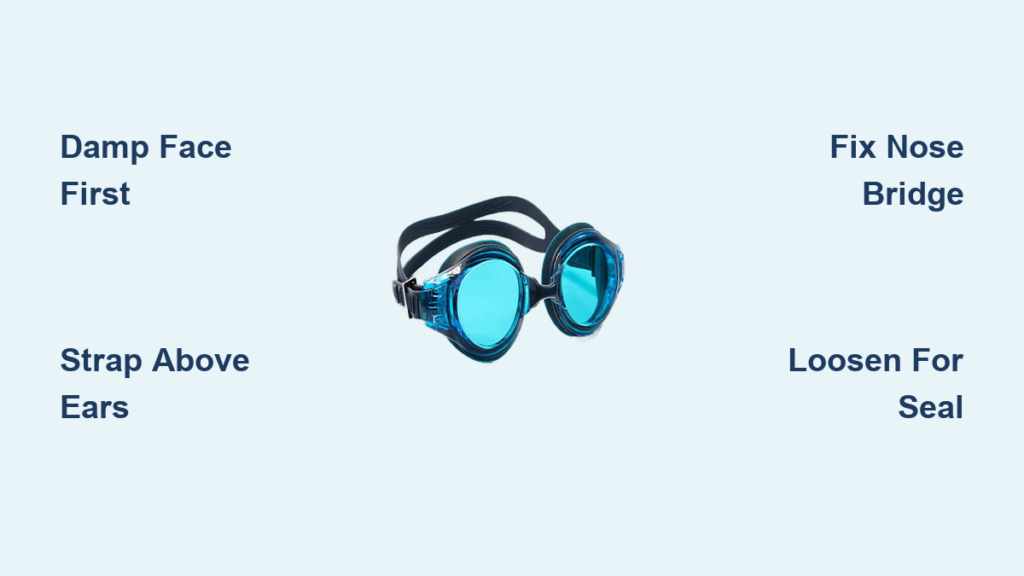
You’ve just hit the pool deck, excited for your swim, only to have your goggles flood within seconds. That familiar frustration of constant adjustments and stinging eyes ruins your rhythm and focus. Properly wearing swimming goggles isn’t just about strapping them on—it’s mastering the delicate balance between seal, strap tension, and facial anatomy. When done right, you’ll experience crystal-clear vision, zero leaks, and no painful “goggle rings” around your eyes. This guide reveals the exact techniques competitive swimmers use to wear swimming goggles for immediate comfort and watertight performance, whether you’re doing laps or open-water crossings.
Why Your Swimming Goggles Leak (and How to Fix the Seal)
The critical mistake 90% of swimmers make? Relying on the strap to create the seal. Your goggle’s silicone gasket must form an airtight vacuum against your eye sockets before the strap comes into play. If water seeps in during your first stroke, the strap is compensating for a failed foundation.
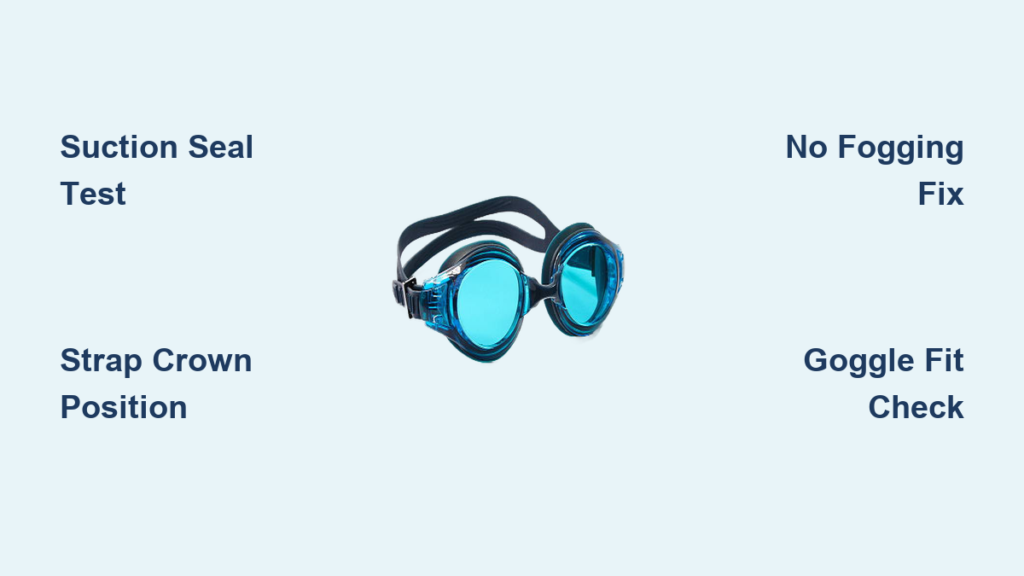
The Suction Seal Test: Press the lenses gently against your eyes without the strap. Release your hands—if they stay suctioned for 2-3 seconds, you’ve got a viable seal. If they fall immediately, the gasket shape doesn’t match your orbital bone structure. Never force a seal by tightening the strap excessively; this causes headaches and skin bruising. Instead, rotate the goggles slightly upward or downward to find the natural socket contour where suction holds. Your face shape—not brand prestige—determines success: narrow-set eyes need low-profile frames, while prominent cheekbones require deeper gaskets.
How to Position Goggles for Instant Suction
- Dry your eye area with a towel—moisture breaks the vacuum seal.
- Tilt your head back slightly and press lenses upward into the orbital rim (not downward toward cheeks).
- Blink firmly once to settle the gasket against bone structure—this mimics underwater pressure.
- Check for gaps by running a fingertip around the gasket edge; any unevenness means repositioning.
How to Adjust Swimming Goggles for a Perfect Fit

Strap tension is where most swimmers sabotage their experience. The strap’s sole job is to maintain the pre-established seal—not create it. Over-tightening distorts the gasket, while under-tightening lets water invade.
Crown Placement Rule: Slide the strap to the flattest part of your skull—halfway between hairline and ear tops. This high anchor point prevents slippage when diving or flipping. If your goggles slide down during breaststroke kicks, the strap has migrated too low. To reset:
– Push hair under the strap to eliminate bunching
– Secure swim cap over the strap (not under) for hydrodynamic hold
– Tighten incrementally: one click at a time while shaking your head side-to-side
Avoiding “Goggle Head” Pressure Pain
That throbbing headache after 20 minutes? Caused by strap tension exceeding 1.5 pounds of pressure. Test this:
– After initial placement, press your thumb against the gasket near the temple.
– If the seal breaks instantly, the strap is too loose.
– If your thumb barely moves the gasket, it’s dangerously tight.
The sweet spot: goggles stay put when you shake your head vigorously but leave no red marks after removal. For long swims, loosen the strap 10% after the first 5 minutes as facial tissues swell slightly in water.
Fixing Common Swimming Goggle Problems on the Fly
Leaks and slippage mid-swim sabotage your pace. These fixes take 10 seconds but require understanding the root cause—not just cranking the strap tighter.
Why Your Goggles Flood During Flip Turns
This classic issue happens when water forces under the gasket during rotation. Don’t blame the goggles—it’s technique-related:
– Problem: Goggles positioned too low on nose bridge
– Fix: Before diving, press lenses upward toward forehead while exhaling sharply through nose. This reseals the top gasket edge vulnerable during turns.
– Pro Tip: Practice flip turns without goggles first to perfect body rotation—excessive head movement breaks seals.
Stop Fogging Without Touching Lenses
Wiping fogged lenses destroys anti-fog coatings. Instead:
1. Pre-swim: Rinse goggles in fresh water (chlorine degrades coatings)
2. Mid-swim fog: Dip face underwater and blow air through nose while goggles are on. The moisture clears in 3 seconds.
3. Post-swim: Store in a hard case away from direct sun—UV rays bake off anti-fog properties.
How to Wear Different Goggle Types Correctly
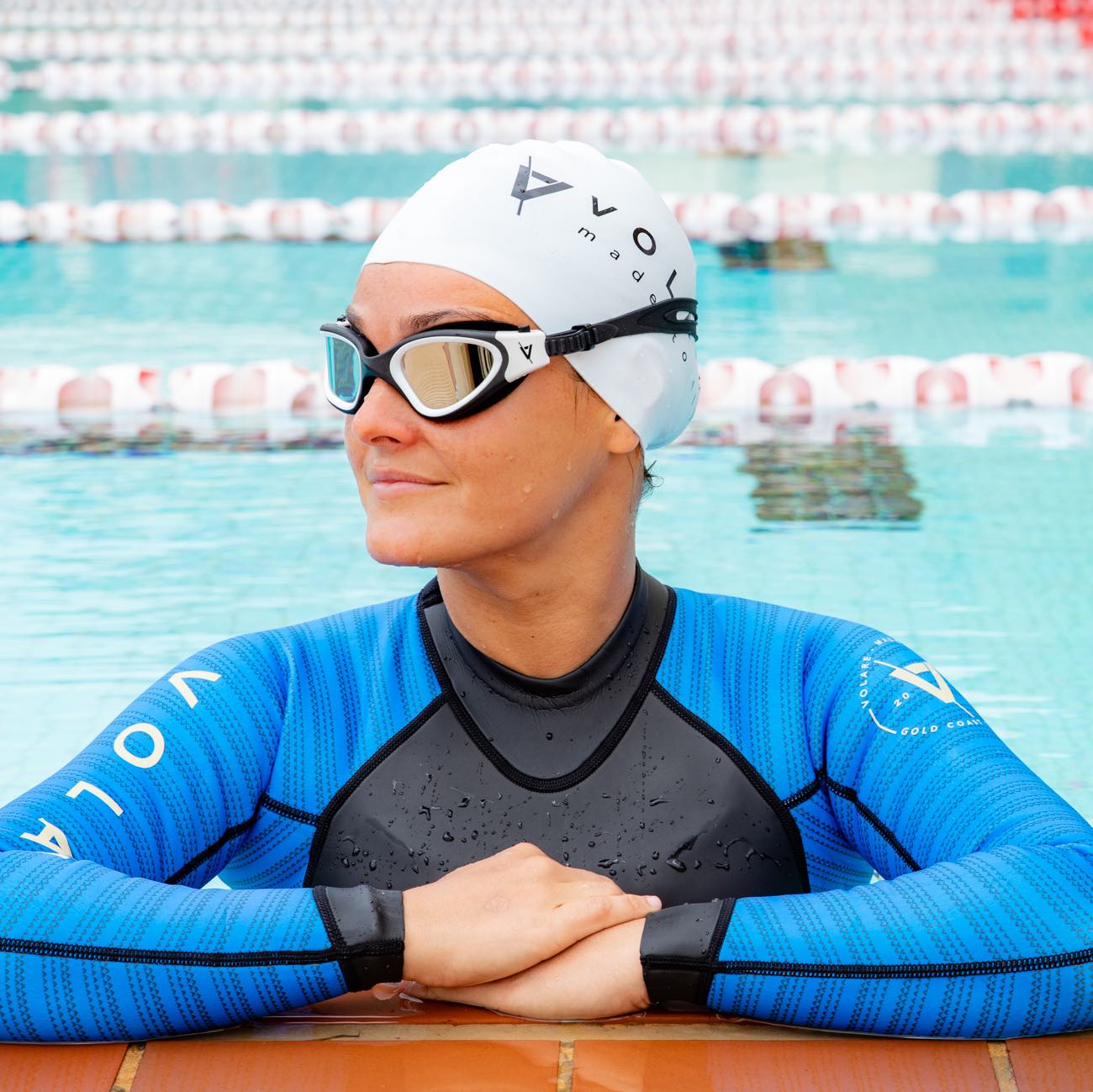
Not all goggles follow the same fitting rules. Using the wrong technique for your model guarantees leaks.
Swedish Goggles: The Elite Swimmer’s Secret
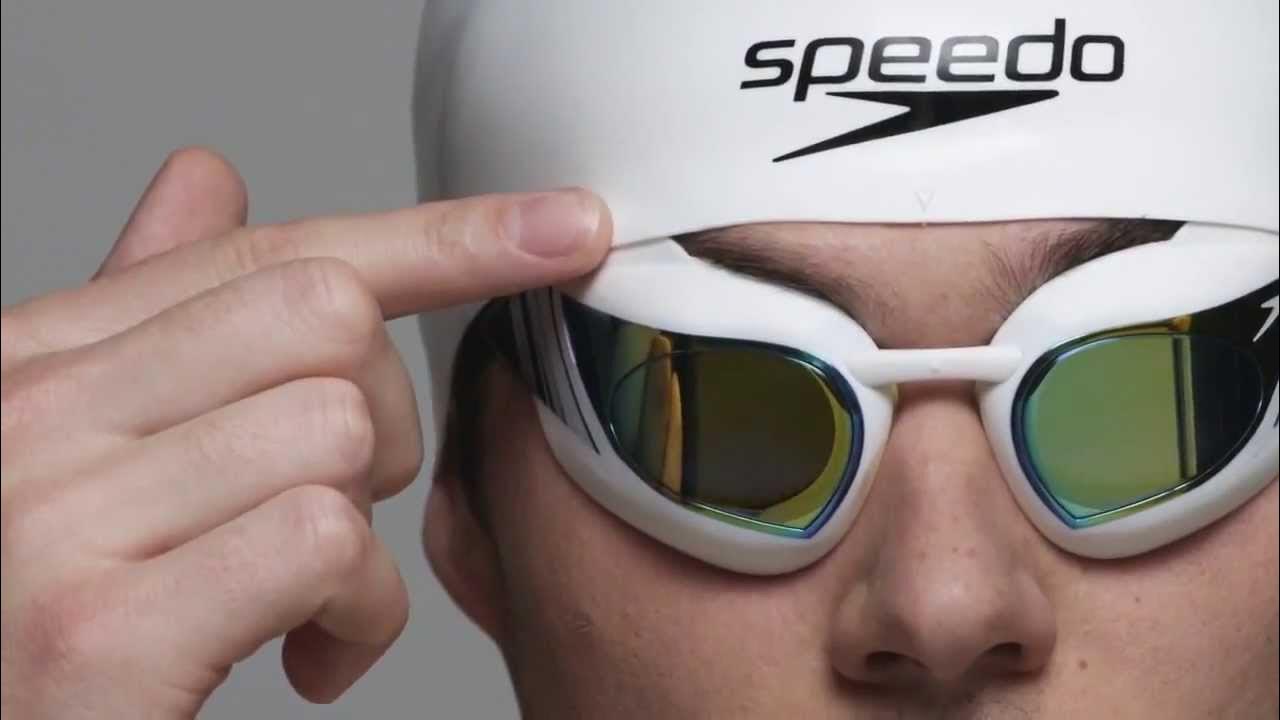
These minimalist, gasket-free lenses (like Speedo’s Kaiman) sit directly on orbital bones—not soft tissue. Most beginners fail here:
– Critical Error: Placing lenses too low on nose bridge
– Correct Fit: Position lenses so the inner corner touches the tear duct while outer edges align with cheekbones.
– String Tension: Pull the connecting string until lenses feel “locked” against bone—no suction test needed. If they fall off when jumping in, tighten the string before adding the head strap. Competitive swimmers use a barrel knot for micro-adjustments.
Open Water Goggles: Sighting Without Leaks
For ocean swims, mirrored lenses reduce glare, but wider fields of vision require special fitting:
– Problem: Peripheral leaks during sighting (lifting head to see buoys)
– Solution: Angle goggles slightly downward on your face. This redirects water flow away from the top gasket edge when lifting your head. Test by simulating sighting motions on deck—any seepage means repositioning.
Essential Lens and Maintenance Tips for Long-Lasting Goggles
Your goggles’ lifespan hinges on post-swim care. Chlorine and saltwater degrade seals within weeks if neglected.
Lens Selection by Lighting Condition
| Water Environment | Lens Type | Why It Works |
|---|---|---|
| Indoor Pools | Clear or light blue | Maximizes contrast in flat lighting |
| Sunny Outdoor Pools | Mirror-coated | Reflects 90% of surface glare |
| Open Ocean | Amber/polarized | Cuts haze while enhancing buoy visibility |
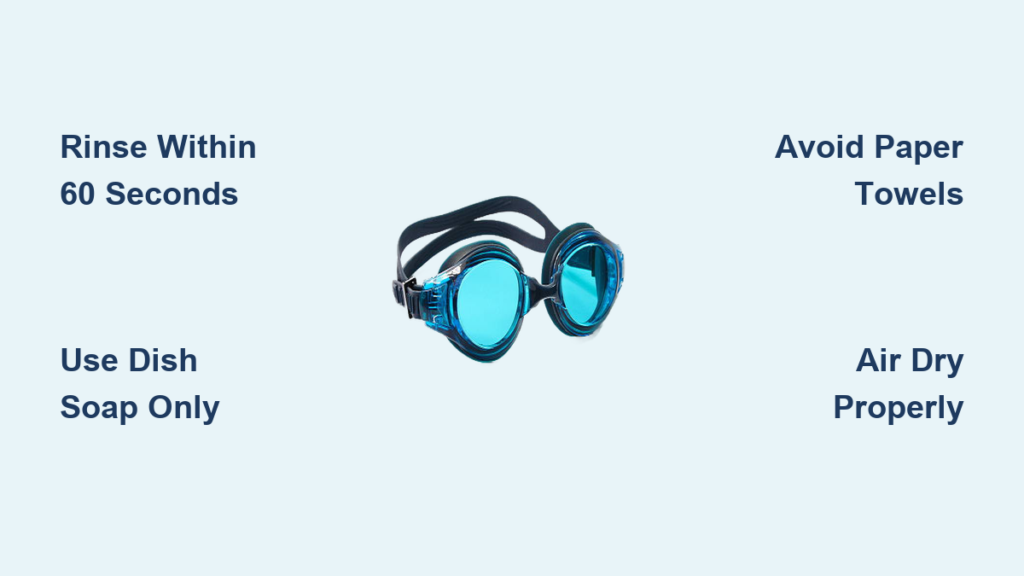
Never store goggles while damp—this breeds mold inside gaskets. After rinsing in fresh water, air-dry face-down on a towel (lenses up) for 2 hours. For stubborn fog, use baby shampoo: one drop inside lenses, swish in water, rinse. Harsh chemicals strip coatings.
When to Replace Your Goggles
Even perfect fitting fails when materials degrade. Replace immediately if:
– Silicone gaskets feel stiff or develop micro-tears (check by stretching gently)
– Lenses show “spiderweb” cracks near the frame
– Anti-fog requires reapplication more than once per swim
A well-maintained pair lasts 6-12 months with daily use. Keep a backup pair for race day—unexpected seal failures ruin taper weeks.
Mastering how to wear swimming goggles transforms frustrating pool sessions into smooth, focused swims. Remember: the seal comes from bone contact, not strap pressure. Start every swim with the suction test, position straps high on your crown, and never wipe fogged lenses. Within three uses, these adjustments become automatic—freeing you to chase splits instead of fixing leaks. For open-water swimmers, dedicate 5 minutes pre-swim to angle-testing your goggles during sighting motions. Your eyes (and race times) will thank you. When in doubt, revisit the suction test: if it fails on deck, it’ll fail in deep water. Properly fitted goggles shouldn’t feel “tight”—they should feel invisible. That’s when you know you’ve truly mastered how to wear swimming goggles.