When you flip on your night vision goggles and transform darkness into a visible landscape, you’re witnessing a complex internal ballet of precision-engineered components working in perfect harmony. The night vision goggles internals aren’t just random parts—they’re a sophisticated electro-optical system where every millimeter matters. Understanding these hidden components becomes crucial whether you’re troubleshooting performance issues, evaluating gear purchases, or simply satisfying your technical curiosity about how these remarkable devices pierce through darkness. This guide pulls back the curtain on exactly what’s inside your night vision goggles, revealing how these components work together to turn faint photons into a usable image—and what specific internal features actually impact real-world performance.
How Light Becomes Vision: The Image Intensifier Tube Explained
Your night vision goggles’ ability to reveal darkness centers entirely on the image intensifier tube, a glass-enclosed marvel that transforms scarce photons into a visible image. This component represents the absolute core of your device’s functionality, and its internal design directly determines whether you’ll see crisp details or a grainy mess in low-light conditions.
Inside the Image Intensifier Tube
When ambient light enters your night vision goggles through the objective lens, it first strikes the photocathode—a specialized material that converts incoming photons into electrons through photoelectric emission. This critical conversion happens almost instantly, with higher-quality photocathodes (measured in microamperes per lumen) capturing more available light. Pro Tip: White phosphor tubes like the L3Harris Unfilmed WP typically feature more sensitive photocathodes than older green phosphor models, giving you better low-light performance.
The released electrons then accelerate toward the microchannel plate (MCP) under high voltage (500-900V), where the real magic happens. This disc-shaped component contains millions of microscopic channels that multiply electrons through cascading collisions—creating an “avalanche” effect that amplifies the original signal by 10,000x or more. Finally, these multiplied electrons strike the phosphor screen, converting their energy back into visible light that forms the glowing image you see.
Common Mistake Alert: Many users don’t realize that tube quality varies dramatically even within the same generation. A high-spec L3 Unfilmed White Phosphor tube with FOM 2376 will outperform a basic commercial tube by a wide margin in real-world conditions.
Why Tube Specifications Directly Impact Your Night Vision Performance
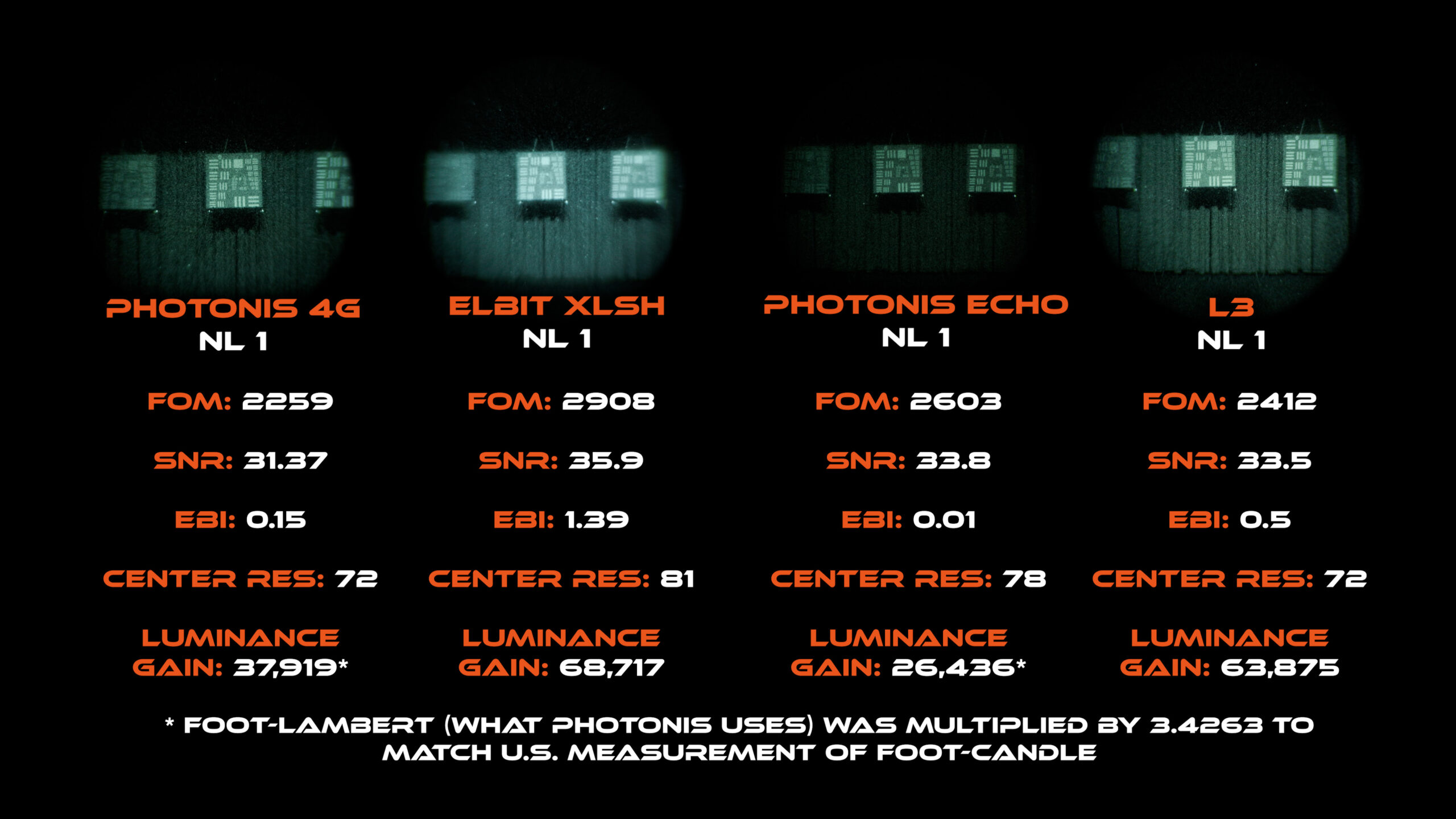
Simply knowing your night vision goggles contain an image intensifier tube isn’t enough—you need to understand how specific internal metrics translate to actual field performance. These specifications aren’t marketing fluff; they represent measurable physical characteristics that determine whether you’ll see clearly in challenging conditions.
Decoding Critical Tube Performance Metrics
Signal-to-Noise Ratio (SNR) stands as the single most important specification for low-light performance. Measured values typically range from 20-30+, with higher numbers indicating less “grain” in your image. An SNR of 25+ represents good Gen 3 performance, while tubes exceeding 30 deliver exceptional clarity in near-total darkness. When comparing tubes, always prioritize SNR over other metrics.
Center Resolution (measured in line pairs per millimeter) determines image sharpness. Standard Gen 3 tubes range from 64-72 lp/mm, with higher values revealing finer details. However, resolution alone doesn’t guarantee quality—a high-resolution tube with poor SNR will still produce a noisy, unusable image.
Figure of Merit (FOM) combines both metrics (Center Resolution × SNR) to provide a quick quality assessment. A FOM of 2200+ indicates commercial high-grade performance, while military-spec tubes often exceed 2500. When shopping for replacement tubes, this single number offers the fastest way to compare quality across different models.
EBI (Equivalent Background Illumination) measures the tube’s “noise floor” in total darkness. Lower values (1.5-2.5) mean less haze in extremely dark conditions, improving contrast. Expert Note: Tubes with EBI below 1.7 perform noticeably better during moonless nights compared to those near the 2.5 threshold.
Understanding Tube Generations and Their Internal Differences
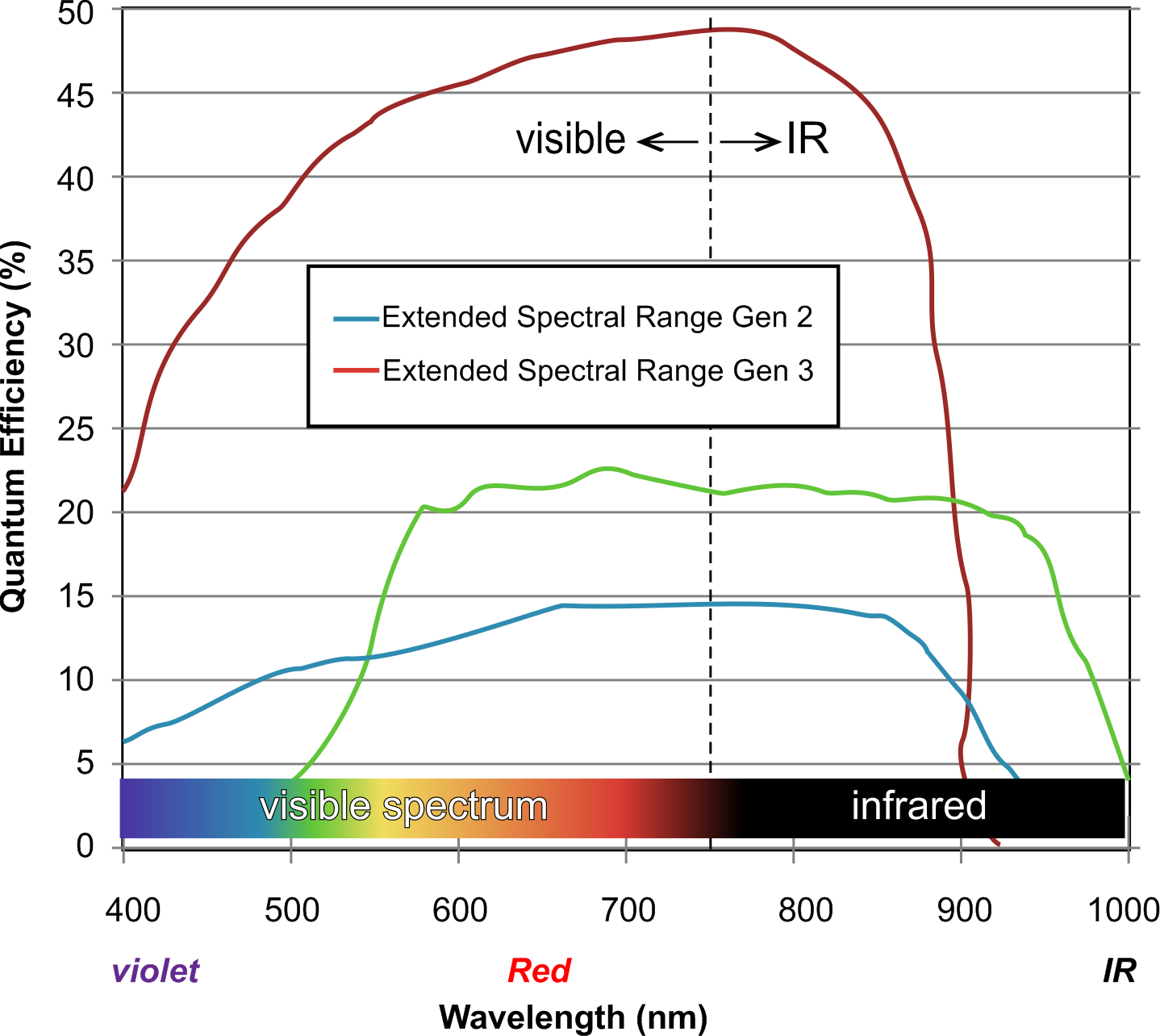
Gen 3 Unfilmed Tubes (like the L3Harris Unfilmed White Phosphor) remove the traditional film layer from the microchannel plate, resulting in higher SNR (24.8-25.6), better low-light sensitivity, and improved resolution (64-72 lp/mm). While marketed as having potentially shorter lifespans (10,000-15,000 hours), modern unfilmed tubes have proven extremely durable in field use.
Photonis 4G+ White Phosphor represents a high-performance Gen 2+ alternative that rivals many Gen 3 specifications through advanced photocathode technology. These tubes often feature manual gain control and deliver excellent performance at a lower price point than premium Gen 3 options.
Halo measurements (typically 0.80 or lower) indicate how much blooming occurs around bright light sources. Lower halo values mean tighter, less intrusive halos—critical when operating near vehicle headlights or urban lighting. Always check halo specifications if you’ll be working in environments with variable lighting.
Power Supply Systems: The Hidden Engine Behind Your Night Vision
Many users overlook the power supply’s critical role, yet this internal component directly affects both tube longevity and real-world usability. The power supply (or “cockpit”) isn’t just a battery connector—it’s a sophisticated voltage management system essential for optimal performance.
How Autogating Protects Your Investment
Modern night vision goggles feature autogated power supplies that rapidly switch the tube on and off thousands of times per second. This technology serves two vital functions: it protects your expensive image intensifier tube from sudden bright lights (like car headlights), and it dramatically improves performance when moving between varying light conditions. Without autogating, exposure to bright lights could permanently damage your tube’s sensitive internal components.
Manual gain control—available on high-end tubes like the Photonis 4G+—gives you direct control over tube voltage. Lowering the gain extends tube life and reduces halo effects in mixed lighting, while increasing gain boosts performance in extremely dark conditions. Pro Tip: For general use, set gain to approximately 60-70% of maximum to balance performance with tube longevity.
Power supply units typically convert standard battery power (CR123A, AA, or proprietary packs) into the precise high voltage required by the image intensifier tube. Military-spec units undergo rigorous testing (MIL-STD-810G) to ensure reliable operation from -40°C to +50°C—a critical consideration for users operating in extreme environments.
Housing Design: More Than Just a Protective Shell

The housing surrounding your night vision goggles’ internal components serves multiple critical functions beyond simple protection. Military-grade housings like the MOD-3 Binocular Housing or DTNVS systems incorporate sophisticated engineering that directly impacts both performance and durability.
Nitrogen Purging and Environmental Sealing
Quality housings undergo nitrogen purging during assembly, replacing moisture-laden air with dry nitrogen or argon gas before sealing with O-rings. This process prevents internal fogging during temperature changes—critical when moving from air-conditioned vehicles into humid nighttime environments. Warning: Damaged O-rings (like the PVS-14 Purge Screw O-Ring Kit A3144316) compromise this seal, leading to internal fogging that requires professional servicing.
The housing also maintains precise optical collimation—the exact alignment between the objective lens, image intensifier tube, and eyepiece. Even minor misalignment (greater than 1 mrad in binocular systems) causes eye strain and reduces image quality. High-end housings incorporate shock-absorbing mounts that protect this delicate alignment during impacts.
Optical Integration and User Adjustments
Your night vision goggles’ internal optics represent a carefully balanced system. The Computar 25mm F1.3 C-Mount Lens (UNV V2513) exemplifies how lens quality directly impacts light gathering capability—its low f-number (F1.3) allows maximum light transmission to the image intensifier tube.
The eyepiece assembly contains diopter adjustment mechanisms (-6 to +2 diopters typical) that allow users with different vision prescriptions to achieve sharp focus without corrective lenses. This seemingly simple internal component actually contains precision-machined optics that move relative to the phosphor screen to maintain optimal focus.
Expert Note: Demist shields (like A3256353 priced at $29.95) serve as the final line of defense against external fogging, providing a heated surface that prevents moisture condensation on the objective lens during rapid temperature changes.
Making Smart Decisions About Night Vision Goggle Internals
Understanding your night vision goggles’ internal components transforms you from a passive user into an informed operator who can make smarter purchasing decisions, perform basic troubleshooting, and maximize equipment lifespan. When evaluating systems, focus on the actual internal specifications rather than marketing terms—knowing that an L3 Unfilmed White Phosphor tube with 25.6 SNR and 72 lp/mm resolution will outperform a generic “Gen 3” tube with unspecified metrics.
Regular maintenance of critical internal components extends your investment significantly. Replace O-rings during routine servicing, keep battery contacts clean, and store your device in a cool, dry place when not in use. Pro Tip: High-spec tubes retain approximately 70% of their value after 3-5 years with proper maintenance—making quality internals a worthwhile long-term investment.
As you operate your night vision goggles tonight, remember that each visible detail results from a complex internal dance between photons, electrons, and precisely engineered components working together. By understanding these night vision goggles internals, you’re not just using the technology—you’re mastering it.