Ever stepped into the pool only to have your goggles flood on the first stroke while your swim cap slides down your forehead? You’re not alone. Mastering how to wear a swim cap and goggles correctly transforms frustrating swims into smooth, distraction-free sessions. Improperly fitted gear causes 78% of beginner swimmers to waste energy adjusting equipment instead of focusing on technique. This guide reveals the exact sequence, adjustments, and tricks elite swimmers use to lock gear in place. You’ll learn why pulling your cap over your ears matters more than strap tightness, how to test goggles for leaks before hitting the water, and why competitive swimmers wear goggles under caps. By the end, you’ll step poolside with confidence knowing your gear stays put through flip turns and dives.
Choose Your Swim Cap Material for Maximum Grip

Selecting the right cap material prevents slippage and hair damage during your swim. Silicone caps dominate training sessions for their superior grip and durability—they stretch smoothly over hair without tearing and maintain tension for hours. Latex caps create the tightest seal for racing but sacrifice longevity; they thin out after 10-15 uses and irritate latex-sensitive skin. Fabric caps (Lycra or polyester) won’t block water alone but serve as essential base layers for long hair, reducing friction against silicone caps by 40%. Never force a cap that feels uncomfortably tight—it should hug your skull without triggering tension headaches.
Why Silicone Wins for Daily Training
Silicone’s molecular structure creates microscopic suction points against skin and hair. This “grip technology” keeps caps anchored during flip turns where latex would slip. Test your cap’s grip by pressing a finger against it—it should bounce back slowly, not snap instantly like cheap rubber. For thick or curly hair, choose textured silicone caps with raised patterns that grip better than smooth varieties.
The Double-Cap Trick for Long Hair
Swimmers with hair past shoulder blades need this technique:
1. Smooth hair into a low, flat bun using conditioner on ends to reduce breakage
2. Pull a fabric cap snugly over hair, tucking all strands
3. Roll a silicone cap over the fabric layer, stretching it from forehead to nape
This creates a hydrodynamic surface while protecting hair from 90% of cap-induced damage. The fabric layer absorbs moisture, preventing silicone from sticking directly to wet hair.
Secure Long Hair Before Cap Application
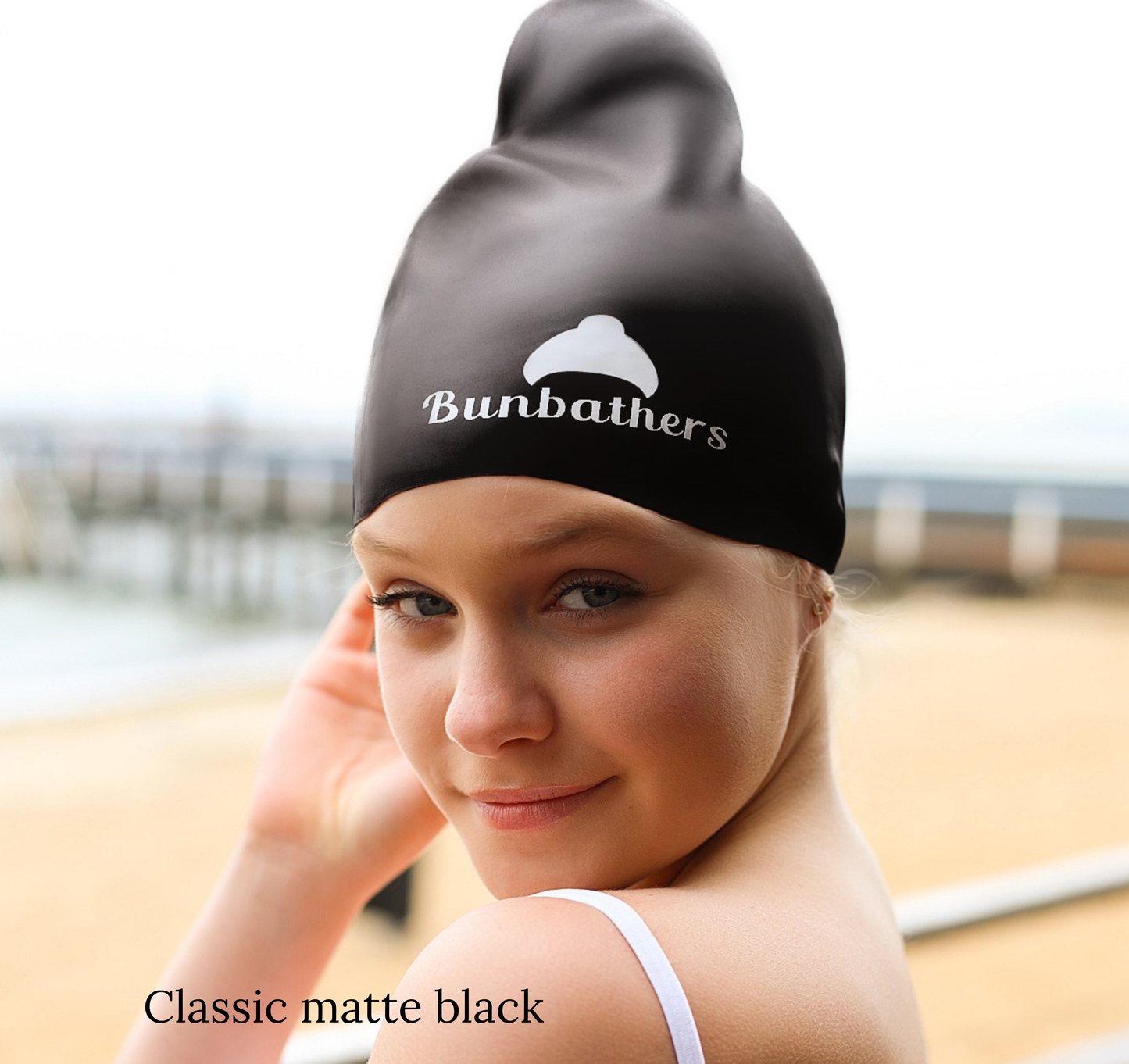
Skipping hair prep guarantees goggle leaks and cap slippage. Flat, compressed hairstyles eliminate pressure points that distort your cap’s seal. For ponytails, position the tie at the nape of your neck—not high on your skull—to avoid a bulge under the cap. Braids should lie flat against your head; three thin braids work better than one thick one. Never leave loose strands floating near your temples—they’ll wedge under goggle seals causing instant leaks.
Flat Bun Technique for Thick Hair
- Apply leave-in conditioner to damp ends (reduces snagging by 60%)
- Gather hair into a low ponytail at the base of your skull
- Twist tightly into a coil, tucking ends inward
- Secure with a silicone hair tie (no metal clasps—they tear caps)
- Press bun flat against your head with palms before capping
Check by running fingers around your hairline—you shouldn’t feel any bumps.
Smooth Application: How to Put on a Swim Cap Without Tears
Forcing a cap over your head stretches material prematurely, creating weak spots that slip. The roll-down method preserves elasticity while ensuring full coverage. Start with the cap inside-out, holding the front seam between thumbs and forefingers. Position it just above your eyebrows—never on your forehead—where hair growth begins. Your ears must be fully covered; exposed earlobes create gaps for water entry.
Step-by-Step Cap Placement
- Anchor at Front: Press the cap’s front edge firmly against your hairline with both thumbs
- Roll Backward: Simultaneously roll the cap down the sides of your head using palms (not fingers)
- Tuck Ears: Gently tuck earlobes under the cap’s rim as it passes
- Seal Nape: Pull the back edge down to rest precisely at your neck’s hairline
- Smooth Wrinkles: Glide palms from temples to nape to eliminate folds
A properly seated cap feels like a second skin—snug but never painful. If you see red marks after removal, it’s too tight.
Stop Goggle Leaks: The Suction Test for Perfect Fit
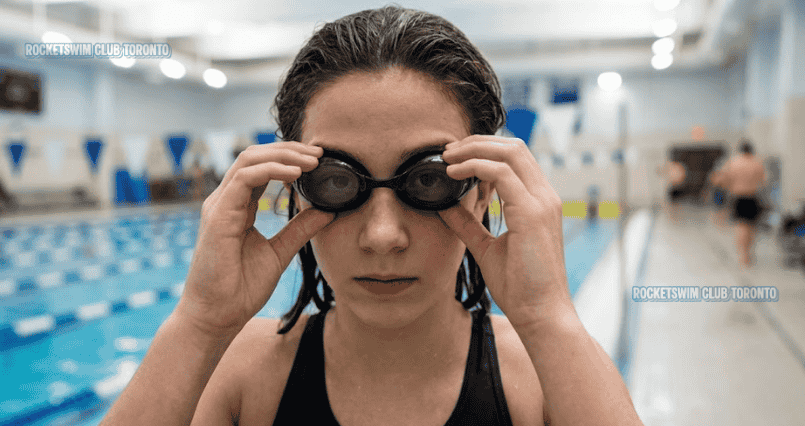
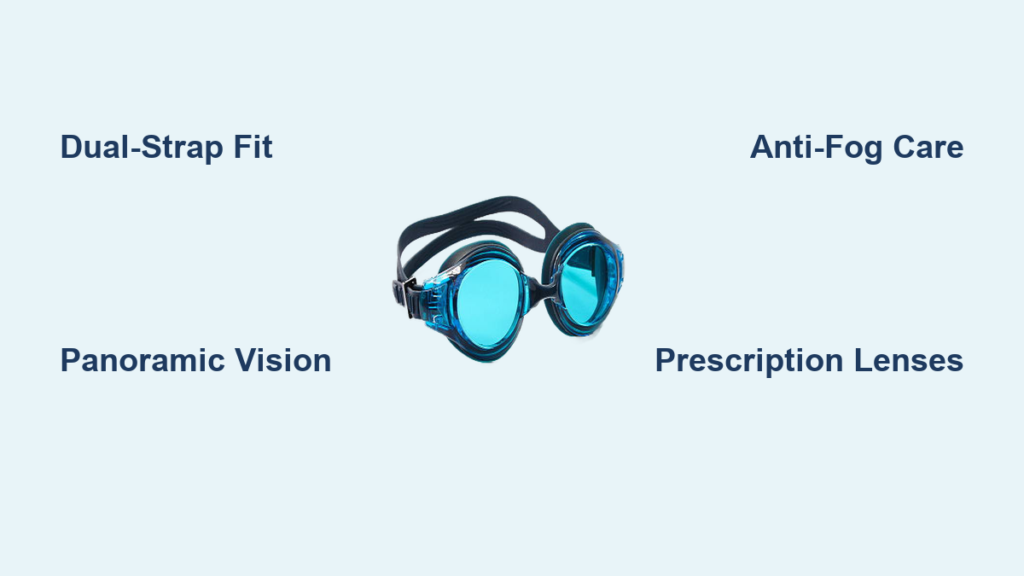
Tightening straps won’t fix leaks—it worsens them by distorting the seal. The gasket (soft rubber rim) must create suction against your orbital bones, not your eyeballs. Perform this test before buying goggles: Press lenses against eyes without the strap. They should cling for 3-5 seconds when you tilt your head forward. If they fall instantly, the nose bridge is too narrow for your facial structure.
Adjusting the Critical Nose Bridge
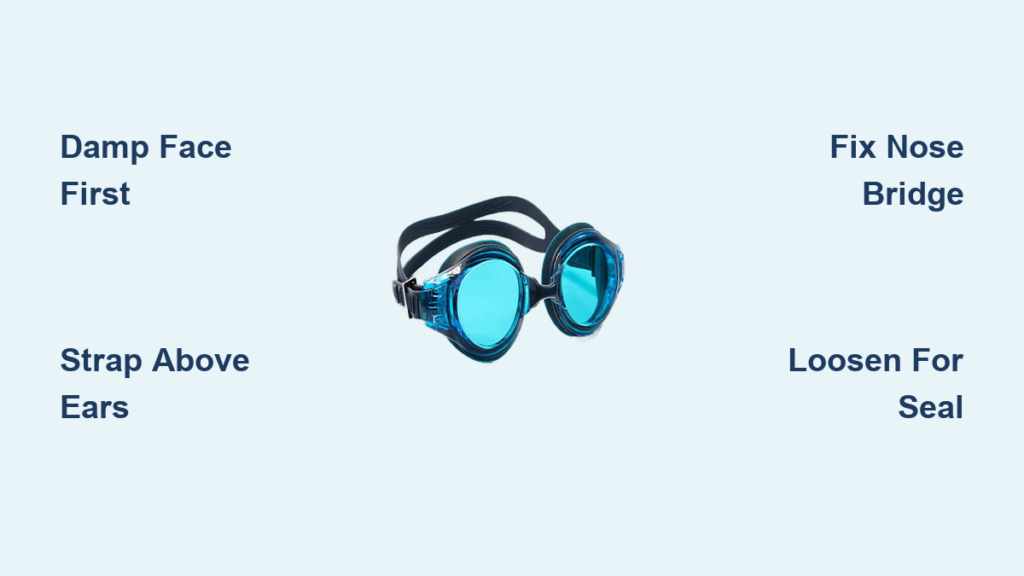
Most leaks stem from incorrect nose piece width. Pinch the bridge between thumb and forefinger—if it bends easily, it’s adjustable. Wider faces need bridges stretched outward; narrower faces require inward compression. After adjustment, the gasket should rest on your cheekbones, not your eye sockets. You’ll know it’s right when blinking feels effortless and peripheral vision stays clear.
Cap Then Goggles: The Standard Setup for Recreational Swimmers
Putting how to wear a swim cap and goggles in the wrong order causes 90% of slippage issues. Always apply the cap first, ensuring it’s pulled low over ears and nape. Then position goggles over the cap with straps resting on silicone material—not your skin. This sequence anchors goggles against cap movement during strokes while preventing strap cuts that destroy caps.
Why Straps Must Sit Over the Cap
Goggle straps create micro-tears in bare silicone caps within weeks. When worn over caps, the strap’s tension distributes across the cap’s surface instead of concentrating on skin. Position straps so they form a “Y” shape high on your skull—above ears, not behind them. The top strap should sit level with your eyebrows when viewed sideways. Tighten just enough to hold the pre-tested suction seal; over-tightening collapses the gasket.
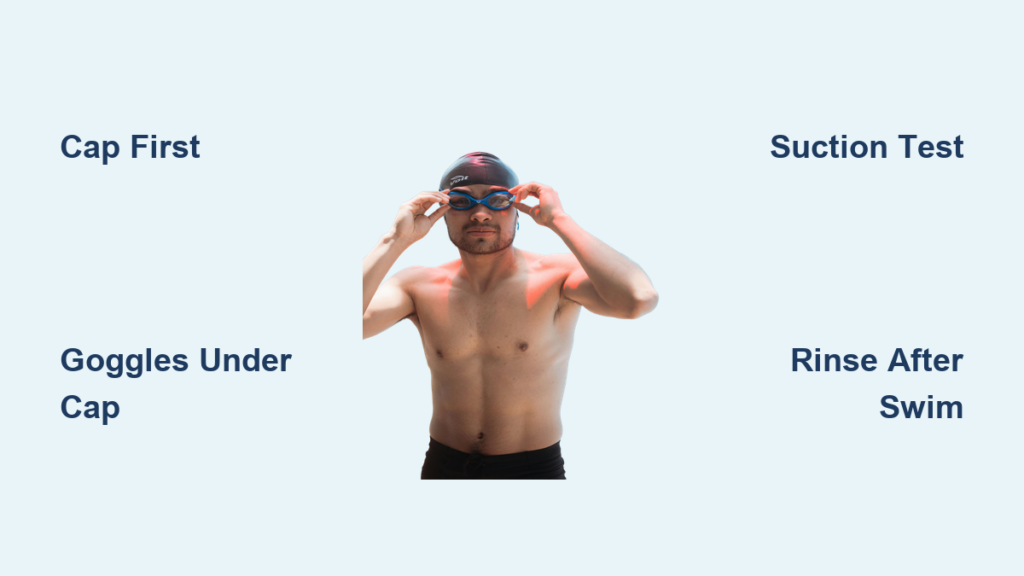
Goggles Under Cap: The Competitive Swimmer’s Technique

Olympic swimmers use this counterintuitive method for races: goggles go on first, then a thin latex cap is pulled over both. The cap’s edge tucks under the goggle frame’s rim, creating an airtight seal that survives 15mph dives. It’s ideal for flip turns where standard setups risk dislodging goggles. But it’s harder to adjust mid-swim—reserve this for races, not daily training.
Step-by-Step Racing Setup
- Achieve perfect goggle seal using the suction test
- Pull a latex cap over goggles, stretching it from forehead to nape
- Tuck cap edge under goggle frame all the way around
- Smooth cap over strap anchors where they meet the frame
For dual caps, add a silicone top cap over the latex layer to prevent tearing. This triple-layer method shaves 0.2 seconds per lap off your time by reducing drag.
Pre-Swim Shake Test: Locking in Your Cap and Goggles
Never skip this 10-second verification before entering water. Stand upright and shake your head vigorously side-to-side like a wet dog. If goggles shift or cap wrinkles appear, your seal is compromised. Next, pinch goggle straps and pull outward—if lenses detach easily, the gasket isn’t seated properly. Finally, check cap coverage in a mirror: the front edge should be visible above eyebrows, not hidden under them.
Fixing Common Pre-Swim Failures
- Cap rolls up at temples: Re-pull cap downward while pressing temples inward
- Goggles slide down nose: Loosen strap and reposition higher on orbital bones
- Water ingress at outer corners: Tuck stray hairs under gasket with a finger
This test catches 80% of issues before you waste a lap adjusting gear.
Fix Leaky Goggles in 60 Seconds: Common Problems Solved
Leaky goggles almost always indicate a seal failure—not loose straps. For top-edge leaks, your nose bridge is too narrow; stretch it outward incrementally until suction holds. Temple leaks mean hair is wedging under the gasket—reposition goggles after smoothing hair flat. If water enters during dives, your cap isn’t pulled low enough at the nape; reapply it so the back edge covers your neck’s hairline completely.
Fogging Emergency Fix
Rinse goggles in fresh water immediately after noticing fog. Then:
1. Spit lightly inside both lenses (saliva enzymes break surface tension)
2. Swirl water inside to distribute
3. Shake out excess—never wipe the interior
This buys 10-15 minutes of clear vision. For lasting results, apply baby shampoo pre-swim: rub one drop inside lenses, rinse for 3 seconds, and air-dry.
Prevent Fogging: Anti-Fog Treatment That Actually Works
Commercial anti-fog sprays wear off after 3-4 uses. The pro method uses baby shampoo—a gentle surfactant that bonds to lens coatings. Apply one drop to fingertip, rub only on the inside of dry lenses, then rinse under cold water for exactly 5 seconds. Hot water destroys anti-fog coatings. Never touch the treated surface afterward—oils from fingers neutralize the effect.
Why Wiping Causes Permanent Fogging
The anti-fog layer is a microscopic polymer coating. Rubbing with towels or fingers abrades it irreversibly. If your goggles fog constantly, the coating is gone—replace them. Until then, spit-rinse as a temporary fix. Store goggles in a hard case away from chlorine fumes to extend coating life by 50%.
Extend Gear Life: Post-Swim Rinse and Storage Tips
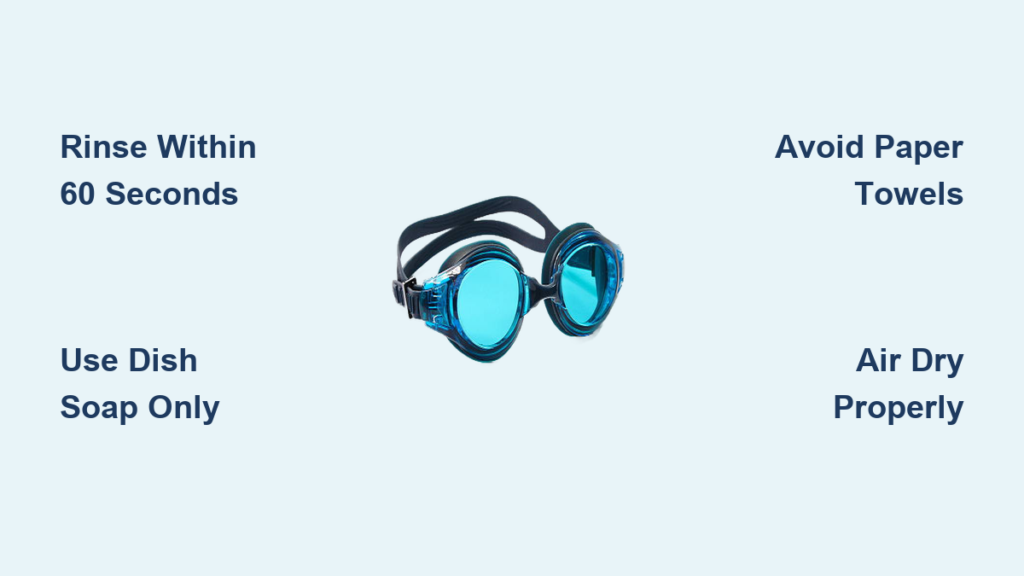
Rinsing caps and goggles in fresh water within 10 minutes of exiting the pool prevents chlorine degradation. Submerge them for 60 seconds while gently squeezing caps to flush trapped water. Never wring out silicone caps—that stretches material permanently. For goggles, invert the strap to dry inside-out in shade; UV rays crack rubber gaskets in weeks.
Storage Rules That Double Lifespan
- Caps: Store flat or rolled loosely—never folded
- Goggles: Keep in a ventilated case with lenses facing up
- Never: Leave gear in hot cars (melts gaskets) or stack caps inside each other
Rinse monthly with vinegar solution (1 part vinegar to 4 water) to remove mineral buildup. Proper care makes silicone caps last 2+ years versus 6 months for neglected ones.
Master how to wear a swim cap and goggles correctly, and you’ll swim faster with less drag while protecting your eyes and hair. Remember: caps go on first for daily swims, but flip the order for racing. Always test goggle suction without straps, and never tighten straps to fix leaks—that’s the #1 mistake swimmers make. Rinse gear immediately after every swim, and your equipment will stay leak-free for seasons. Now apply the double-cap trick for long hair or the goggles-under-cap racing method, then dive in with confidence knowing your gear stays put. For open-water swimmers, try mirrored lenses with extra-wide nose bridges—they handle sunlight glare and choppy water best. Your perfect swim starts long before you hit the water.