Your swim goggles flooding mid-lap isn’t just annoying—it shatters your focus and wastes precious training time. When the strap slips or stretches out, water rushes in, forcing you to stop and adjust instead of nailing your splits. The culprit? Almost always a poorly installed or degraded strap. But here’s the fix: properly attaching a bungee strap creates a custom, pressure-free seal that stays locked in place even during flip turns. This guide delivers step-by-step instructions for installing both standard and bungee straps, troubleshooting slipping issues, and achieving a leak-proof fit in under 10 minutes. You’ll learn exactly how to thread anchors, adjust tension for comfort, and prevent the #1 problem swimmers face—straps that migrate up your head mid-swim.
Why Standard Straps Fail & How Bungee Systems Fix It
Most swimmers struggle with traditional non-elastic straps because they create pressure points that distort the goggle seal. When you tighten these straps to stop leaks, they dig into your temples and compress the silicone gasket unevenly—guaranteeing water intrusion. Bungee systems solve this with elastic cord that maintains consistent, gentle pressure across your entire face. The magic happens through silicone stoppers that lock your custom fit: stretch the cord snugly around your head, slide the stopper against the frame, and it grips the cord without pinching. Unlike rigid straps, bungee systems self-adjust when you put on a swim cap or move your jaw, eliminating the need for constant readjustment. If your goggles leave deep red marks or slide down your nose during breaststroke kicks, your strap system is fundamentally flawed—not just “too loose.”
Must-Have Tools for Flawless Strap Installation
Skip generic “tools you’ll need” lists—here’s exactly what to grab for a professional-grade install:
- 2mm braided bungee cord (1 meter/3-foot length)—critical for chlorine resistance
- Silicone cord stoppers (2 included in most kits)—never use rubber bands alone
- Fine-tipped pliers—for gripping tiny goggle anchors
- Lighter or matches—to seal cord ends
- Small scissors—sharp enough for synthetic fibers
Pro Tip: Measure your head circumference over a swim cap before cutting cord. Subtract 2 inches (5 cm) from this measurement to determine your ideal cord length—this ensures the bungee has slight tension when installed. Never eyeball this step; an oversized loop guarantees slippage.
Step-by-Step Bungee Strap Installation That Won’t Slide
Thread the Bungee Through Goggle Anchors Correctly
Most swimmers thread bungee cords wrong on the first attempt. Here’s the fail-proof method:
1. Remove old strap completely—tug gently until anchors pop out of frame slots.
2. Melt cord ends with a lighter for 2 seconds to prevent fraying (creates a smooth bead).
3. Feed cord through left anchor from outside to inside the frame. Pull 3 inches (7.5 cm) through.
4. Tie an overhand knot on the inside of the frame—this anchors the cord permanently.
5. Repeat for right side, but don’t tie the knot yet. Leave 8 inches (20 cm) of slack for adjustment.
Visual Cue: The knotted end should sit flush against the frame with no cord protruding inward. If you see cord inside the goggle cup, it’ll irritate your eyes.
Create the Adjustable Loop in 3 Minutes
This is where 90% of swimmers fail—improper loop setup causes slippage:
1. Hold goggles to your head and pull the free cord end until tension feels snug but comfortable (you should fit one finger between strap and skull).
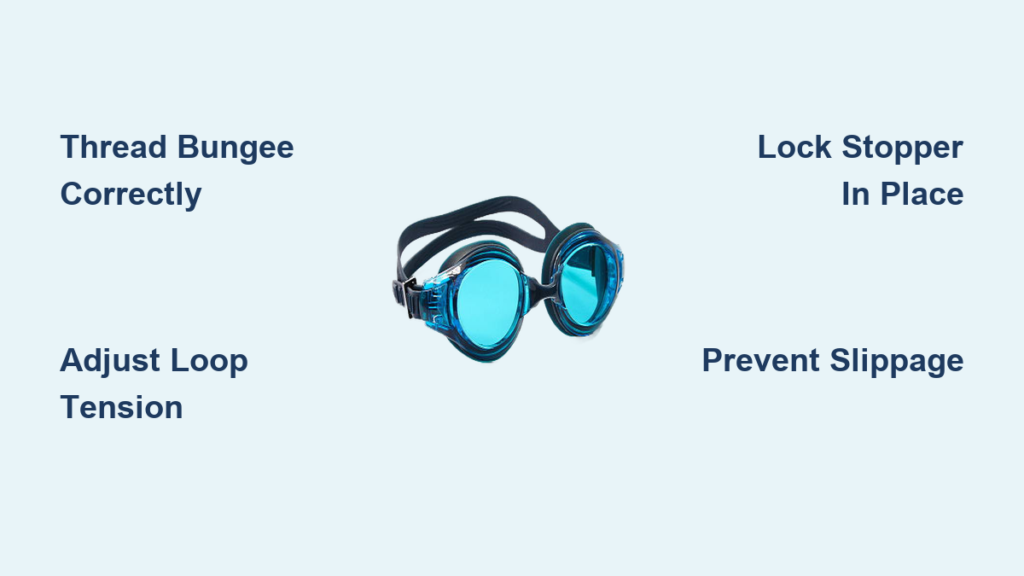
2. Thread both cord ends through a silicone stopper from front to back.
3. Pull ends tight to close the loop—the stopper should now grip the cord firmly.
4. Slide stopper against goggle frame until it clicks into the anchor point. This compression lock is what prevents slippage.
Time-Saver: Test fit by opening your mouth wide. If goggles stay sealed, the tension is perfect. If they loosen, slide the stopper 1/8 inch (3 mm) closer to the frame.
Lock the Fit Permanently (No More Mid-Lap Adjustments)
Your stopper will slip if you skip this critical step:
1. Dry the cord thoroughly where the stopper sits—moisture reduces grip.
2. Squeeze stopper hard against the frame with pliers for 10 seconds.
3. Apply a tiny drop of cyanoacrylate gel superglue only on the knot (not the cord)—this secures the anchor without brittleness.
4. Trim excess cord to 1 inch (2.5 cm) beyond the stopper, then melt the tip.
Warning: Never glue the cord itself—this makes it stiff and prone to snapping. Only secure the knot.
Fixing the #1 Problem: Straps That Migrate Up Your Head

If your goggles ride up toward your hairline during backstroke, it’s not about tightness—it’s anchor slippage. Here’s the emergency fix poolside:
Rubber Band Anchor Lock (30-Second Fix)
- Cut a 1-inch (2.5 cm) segment from a small rubber band.
- Slide it onto the bungee cord where it enters the goggle frame.
- Push the band flush against the frame—this creates friction to stop sliding.
- Repeat on the other side.
Why It Works: The rubber compresses against the frame hole, eliminating play. This buys time until you can implement the permanent knot solution below.
Permanent Knot Solution for Loose Goggle Holes
When frame holes are too large (common in older goggles):
1. Untie the anchor knot on the inside of the frame.
2. Tie a double overhand knot 1/4 inch (6 mm) from the cord end.
3. Pull the knot tight against the frame—this physical stopper prevents pull-through.
4. Seal the knot with superglue gel as described earlier.
Pro Tip: For plastic frames, melt the knot slightly with a lighter to fuse it permanently (use extreme caution).
Child-Specific Strap Setup for Young Swimmers

Kids’ goggles fail faster due to rough handling and rapid head growth. Adapt these key steps:
- Use neoprene strap covers—slip these over bungee cords to prevent hair snagging and distribute pressure.
- Set looser tension—kids need room for growth; aim for two fingers between strap and head.
- Avoid metal buckles—opt for full silicone stoppers that won’t pinch during capsizing drills.
- Pre-cut cords shorter—measure head circumference without a cap for children under 10.
Critical Check: Have your child shake their head vigorously while wearing goggles. If straps stay put, the fit is race-ready.
Maintenance That Doubles Strap Lifespan
Most swimmers ruin straps through improper care—not wear and tear. Extend bungee life with these steps:
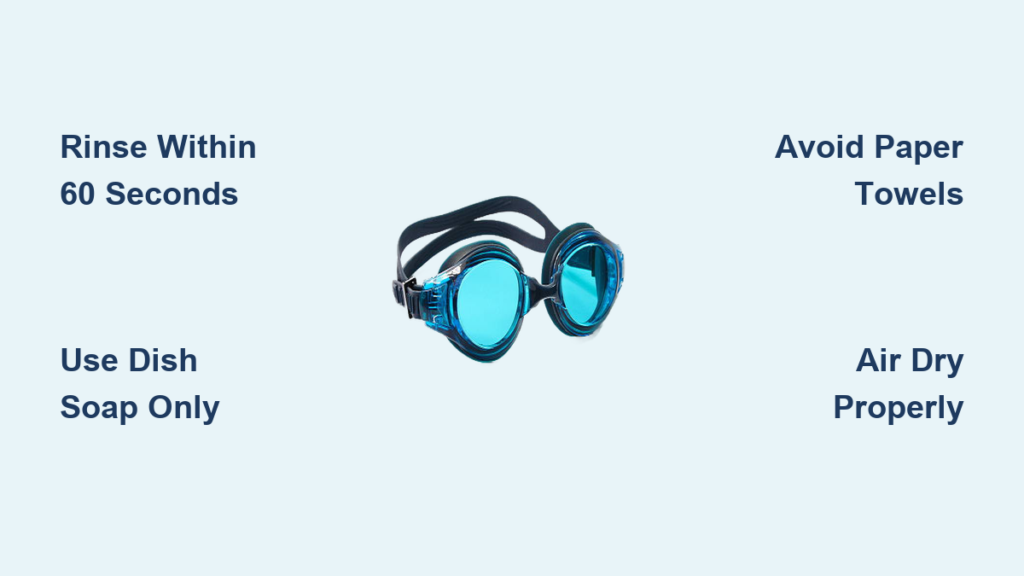
- Rinse immediately post-swim—submerge in fresh water for 60 seconds to remove chlorine.
- Air-dry away from UV light—store goggles in a mesh bag inside your swim bag (never in direct sun).
- Inspect monthly—look for “mushrooming” (bulbous ends) or permanent stretching—replace if present.
- Never store wet—dampness breeds mildew that degrades elastic fibers.
Time Estimate: Proper care adds 6+ months to strap life versus standard handling.
Troubleshooting Common Fit Failures
| Problem | Real Cause | Instant Fix |
|---|---|---|
| Goggles leak when diving | Strap too tight | Loosen 1/8 inch (3 mm); bungee should stretch slightly when jaw opens |
| Strap leaves red marks | Pressure points from uneven tension | Slide stoppers to center the strap on your occipital bone |
| Cord frays at anchors | Untreated cut ends | Melt ends with lighter; apply clear nail polish to seal |
| Stoppers won’t grip | Chlorine-slicked cord | Clean cord with alcohol wipe before repositioning stopper |
Pro Tip: If leaks persist after strap adjustment, the issue is likely a warped gasket—not the strap. Press goggles firmly against your face without the strap for 10 seconds to reseal the silicone.
Final Note: A perfectly installed bungee strap should feel “invisible” during your swim—no pressure points, no slippage, and zero leaks. The key is locking the silicone stoppers against the frame with enough force to compress the cord, not overtightening the strap itself. For competitive swimmers, repeat the headshake test before every race: if goggles stay sealed while shaking vigorously, you’ve nailed the fit. Remember to rinse and dry your strap after every use—this simple habit prevents 80% of premature failures. When it’s time for replacement, invest in a pre-made bungee kit with 2mm braided cord; the $15 upgrade saves countless frustrating laps. Now dive in with confidence knowing your vision stays clear from start to finish.