Nothing ruins a perfect powder day faster than fogged lenses or impaired vision on the slopes. Knowing how to choose ski goggles that match your specific needs transforms your mountain experience from frustrating to phenomenal. The right pair delivers crystal-clear vision in changing conditions while keeping your eyes protected from wind, snow, and harmful UV rays.
Many skiers grab the first stylish pair they see without considering critical performance factors. But the difference between mediocre and exceptional goggles comes down to lens technology, proper fit, and anti-fog systems tailored to your typical skiing conditions. Whether you’re carving groomers on bluebird days or navigating stormy tree runs, this guide reveals exactly what to look for when selecting your next pair of ski goggles.
Why Your Current Ski Goggles Might Be Failing You on the Mountain
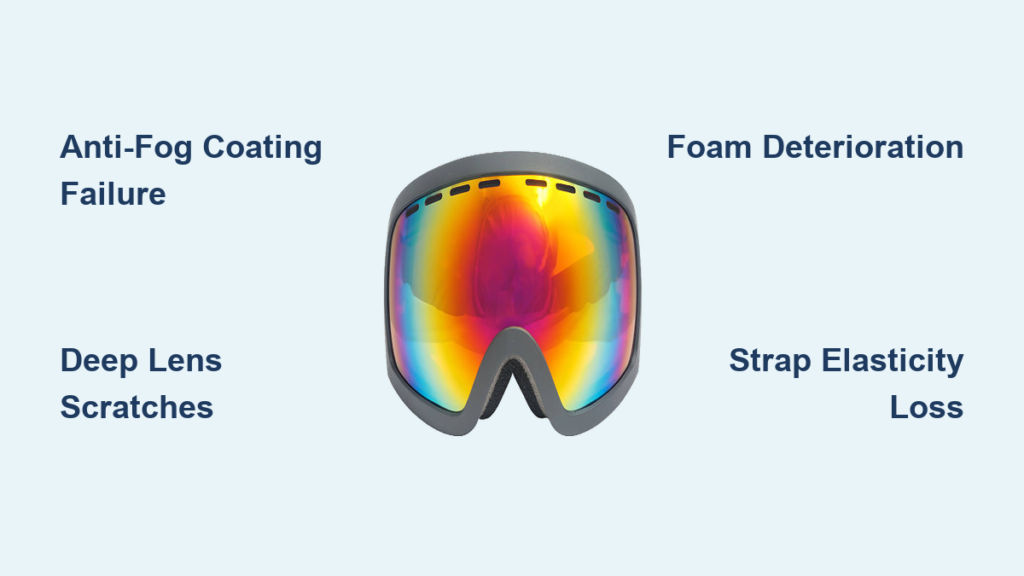
Most skiers don’t realize their goggles are compromised until they’re halfway up the lift. Fog buildup during intense runs, distorted peripheral vision, or uncomfortable pressure points can turn a dream day into a nightmare. Understanding the specific failure points helps you avoid these common pitfalls when learning how to choose ski goggles that actually perform.
How VLT Ratings Dictate Your Visibility in Different Conditions
Visible Light Transmission (VLT) percentage is the single most important factor when you’re trying to figure out how to choose ski goggles for specific weather. This measurement determines how much light passes through your lenses, directly affecting your ability to see terrain features.
For blinding sunny days with intense glare, select lenses with less than 25% VLT. These dark tints (typically gray, brown, or mirrored) protect your eyes while enhancing contrast on bluebird days. Look for EN 174 S3 or S4 category lenses that meet European safety standards for bright conditions. Pro tip: Mirrored coatings on dark lenses provide extra glare protection but scratch more easily—consider them a fair-weather option.
When facing flat light conditions that make snow surfaces appear featureless, reach for 25-50% VLT lenses in amber, copper, or rose tints. These “all-mountain” lenses boost contrast dramatically, revealing subtle terrain changes that could mean the difference between smooth turns and unexpected bumps. This is the most versatile range for skiers who encounter mixed conditions throughout the season.
For storm days with limited visibility or night skiing, you need maximum light transmission with 75%+ VLT lenses. Bright yellow, orange, or high-contrast pink tints brighten everything, making white-on-white conditions readable. These lenses transform flat light days from dangerous to navigable by enhancing shadow definition in low-contrast environments.
Photochromic and Polarized Lens Tradeoffs You Must Know
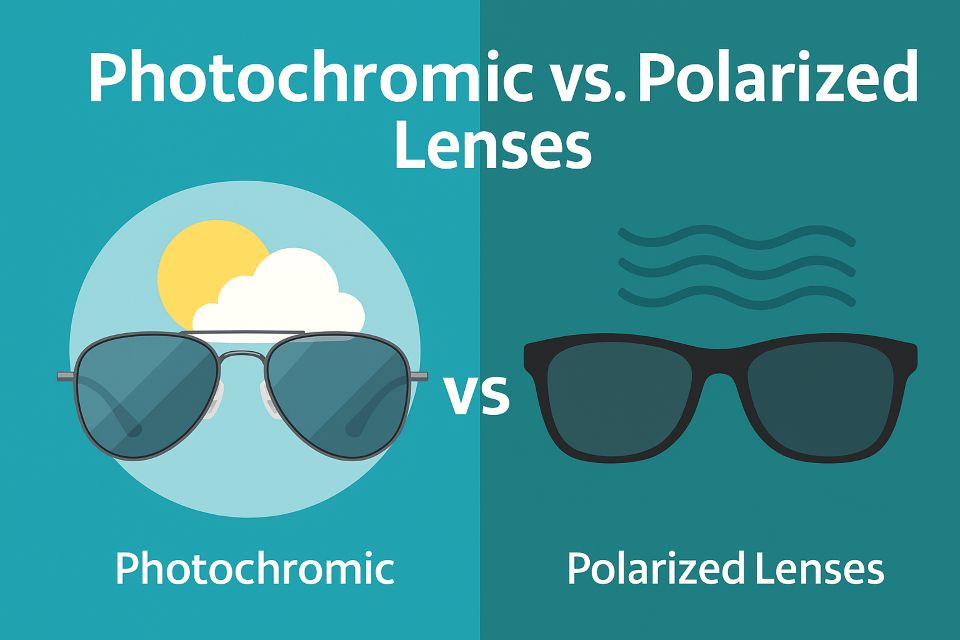
Photochromic lenses automatically adjust tint based on changing light, making them ideal for skiers who struggle with how to choose ski goggles for variable mountain weather. These adaptive lenses eliminate the need to carry multiple lenses but typically cost 20-30% more than standard options. They work best in moderate temperature ranges—extreme cold can slow their transition speed.
Polarized lenses effectively reduce glare reflecting off icy patches but come with a critical drawback: they can obscure important snow texture details. Many expert skiers avoid polarization because it hides subtle ice patches and snow variations that non-polarized lenses reveal. If you frequently ski on icy conditions, this tradeoff makes polarization less ideal despite its glare-reducing benefits.
Secure Helmet Integration: The Hidden Factor in Goggle Performance

Your ski goggles must work seamlessly with your helmet—any gap creates cold air channels that cause fogging and let snow inside. When learning how to choose ski goggles for your specific setup, always test them together before purchasing. The goggle strap should sit snugly under your helmet’s chin strap without creating pressure points.
How to Test for a Perfect Face Seal Before Buying
Place the goggles on your face without tightening the strap—they should create gentle suction indicating a proper seal. Run your fingers around the perimeter to check for uneven pressure points that could cause leaks. High-quality foam padding compresses comfortably without pinching, maintaining consistent contact even when you move your head. Critical mistake to avoid: Don’t size goggles based solely on appearance—many skiers choose frames that are too large, compromising the essential face seal.
Anti-Fog Systems That Actually Work in Real Mountain Conditions
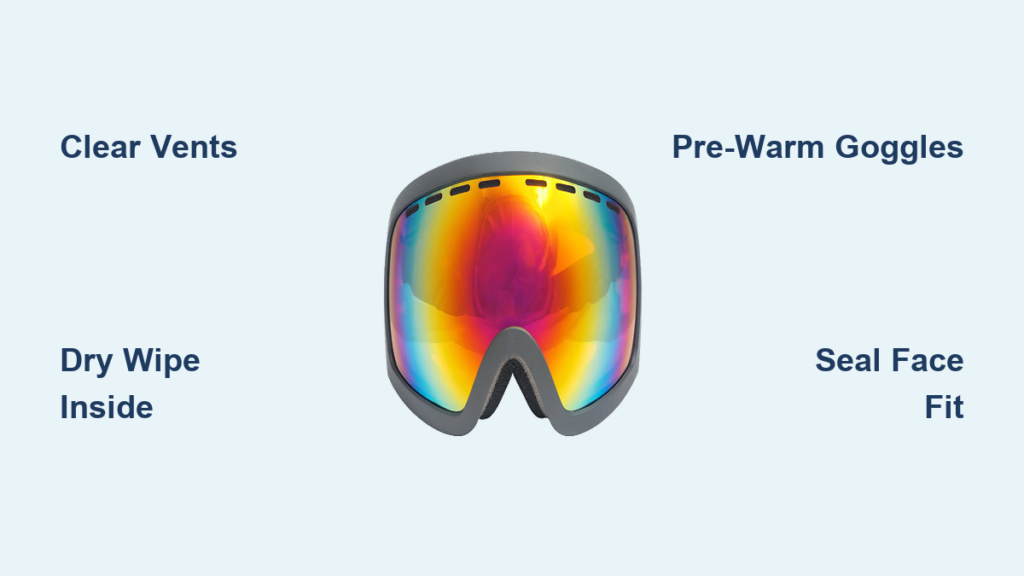
Double-lens construction with an air gap between lenses is non-negotiable for serious skiers. This thermal barrier prevents your body heat from meeting cold outer lenses—the primary cause of fogging. Premium models add anti-fog coatings on both inner and outer lens surfaces for maximum effectiveness.
Strategic Vent Placement That Prevents Fog Buildup
Look for multiple vent channels along the top and bottom frame edges—these create airflow pathways that pull moisture away from the lens. The best systems incorporate moisture-wicking foam that actively draws sweat from your face. Some high-end models feature manual vent controls that let you adjust airflow during different activities (open for touring, closed for high-speed runs).
Frame Technology: Why Lens Shape Matters More Than You Think
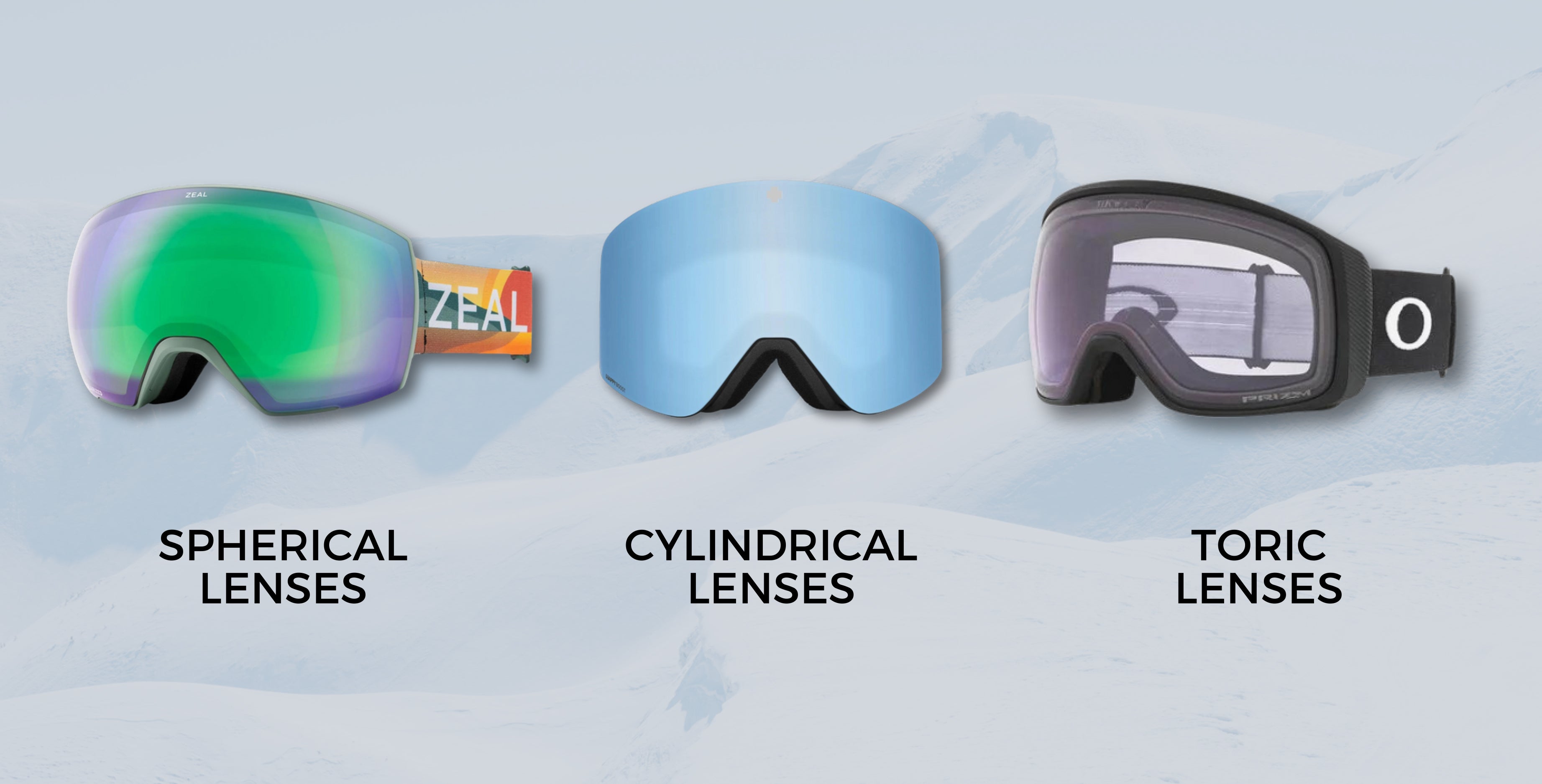
The difference between cylindrical and spherical lenses dramatically impacts your peripheral vision and visual accuracy. Cylindrical lenses curve in one direction only (horizontally), offering decent vision at a lower price point but creating noticeable distortion at the edges.
Spherical lenses curve in two directions (like a contact lens), providing wider, more natural vision with minimal distortion across your entire field of view. This becomes especially important at high speeds when peripheral awareness affects your reaction time. While more expensive, spherical lenses deliver superior optical clarity that’s worth the investment for serious skiers.
Prescription Solutions That Don’t Compromise Performance
If you wear glasses, knowing how to choose ski goggles requires special considerations. Standard OTG (Over-The-Glasses) models feature deeper frames with cutout sections for temple arms, but many create uncomfortable pressure points and reduce effective field of vision.
For optimal performance, prescription inserts provide the cleanest solution. These custom-molded frames clip inside your goggles, positioning lenses at the ideal distance from your eyes without compromising the critical face seal. Though requiring an initial investment, they deliver superior vision clarity and comfort compared to OTG alternatives.
Critical Features Skiers Overlook When Selecting Goggles
When determining how to choose ski goggles, most skiers focus solely on lens color while ignoring equally important factors:
- Strap technology: Silicone-backed straps stay securely positioned under helmet straps without slipping
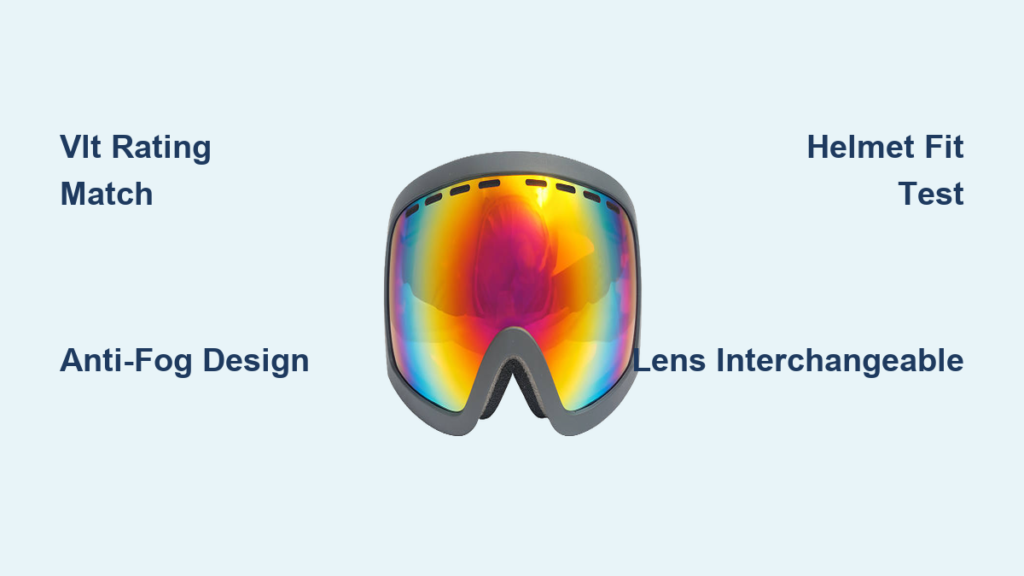
- Lens interchangeability: Magnetic systems let you swap lenses in seconds without tools
- Peripheral vision: Look for minimal frame obstruction at the temples
- UV protection: Ensure 100% UV-A and UV-B blocking regardless of lens tint
- Compatibility: Verify helmet compatibility before purchasing
Time-saving tip: Carry a microfiber bag for lens storage—never stuff goggles in your pocket where they’ll get scratched.
How to Match Goggle Features to Your Specific Skiing Style
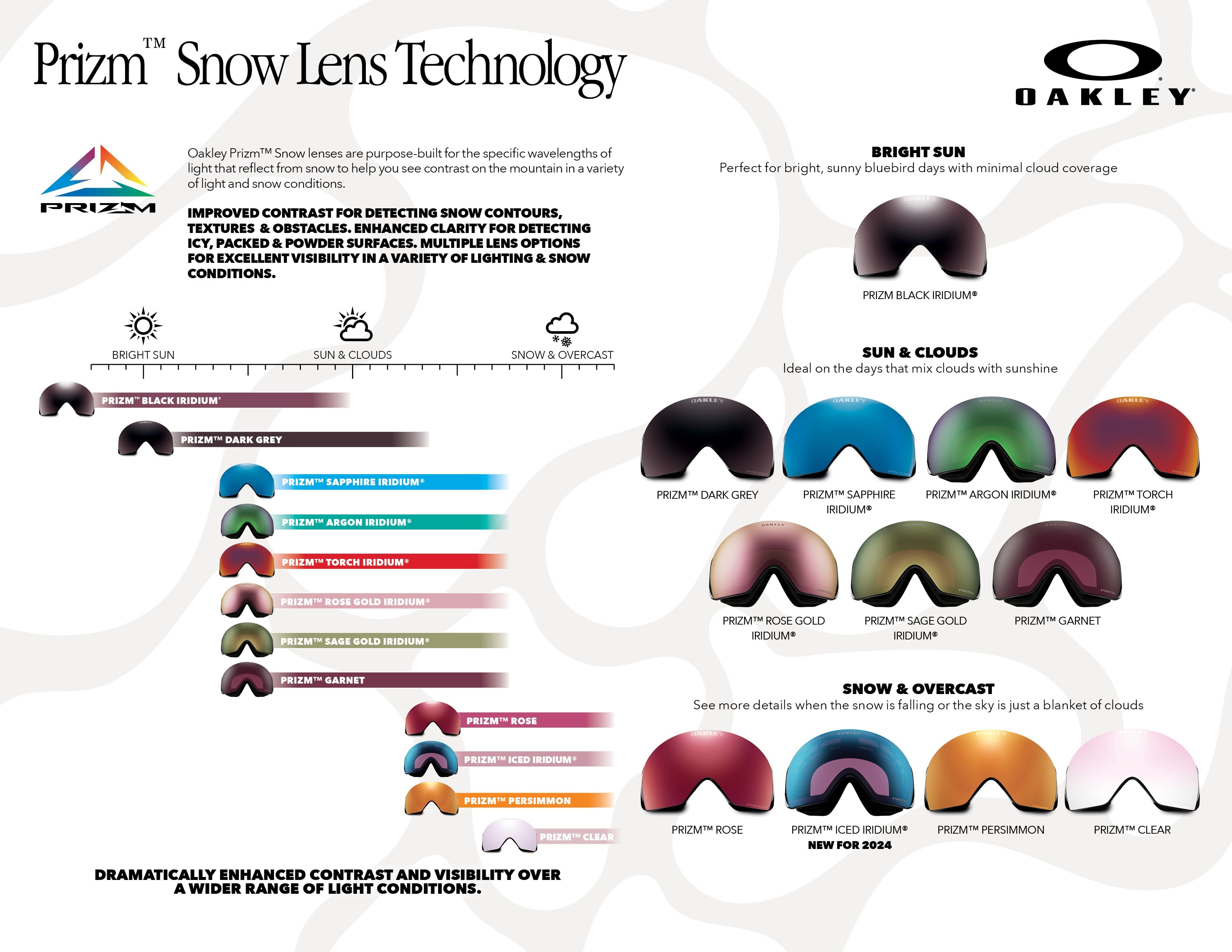
Beginner and intermediate skiers benefit most from versatile amber or rose-tinted lenses (25-50% VLT) that handle most conditions. Focus on comfort and fog resistance rather than premium features. Look for models with generous field of view that help maintain spatial awareness while learning.
Advanced and expert skiers need specialized lenses matching their typical conditions. If you chase powder in stormy conditions, prioritize high-VLT lenses with maximum contrast enhancement. For glacier skiing or high-altitude resorts, invest in dark mirrored lenses with maximum glare protection. Serious freeriders should consider interchangeable lens systems to handle rapidly changing mountain weather.
Final Checklist Before You Buy Your Next Ski Goggles
Before purchasing, verify these non-negotiable elements to ensure you’ve mastered how to choose ski goggles that deliver performance:
- Test with your helmet to confirm seamless integration
- Check face seal without strap tension
- Verify lens clarity by looking through peripheral areas
- Confirm compatibility with your typical skiing conditions
- Assess strap comfort with multiple adjustments
The perfect ski goggles disappear on your face while transforming your vision on the mountain. When you know how to choose ski goggles based on technical performance rather than just style, you’ll experience dramatically improved safety, comfort, and enjoyment every time you hit the slopes. Remember that the best goggles match your specific conditions, fit your face perfectly, and feature reliable anti-fog technology—everything else is secondary.