That familiar fog creeping across your lenses mid-lap. The constant tug to tighten straps that no longer hold. Water stinging your eyes when you hit the wall. If you’ve experienced these, your swim goggles are screaming for replacement—but how often to replace swim goggles isn’t one-size-fits-all. Most swimmers cling to failing gear until performance suffers, not realizing degraded goggles compromise safety and speed. The truth? Your replacement schedule hinges on usage intensity, environmental exposure, and maintenance habits. This guide reveals precisely when to retire your current pair based on real-world swim data—so you never waste another lap battling fog or leaks.
5 Critical Signs Your Swim Goggles Need Replacement Now
Don’t wait for total failure—these irreversible warning signs mean immediate replacement is necessary. Ignoring them risks eye irritation, distorted vision, and compromised stroke efficiency.
Fogging That Persists After Every Cleaning Attempt
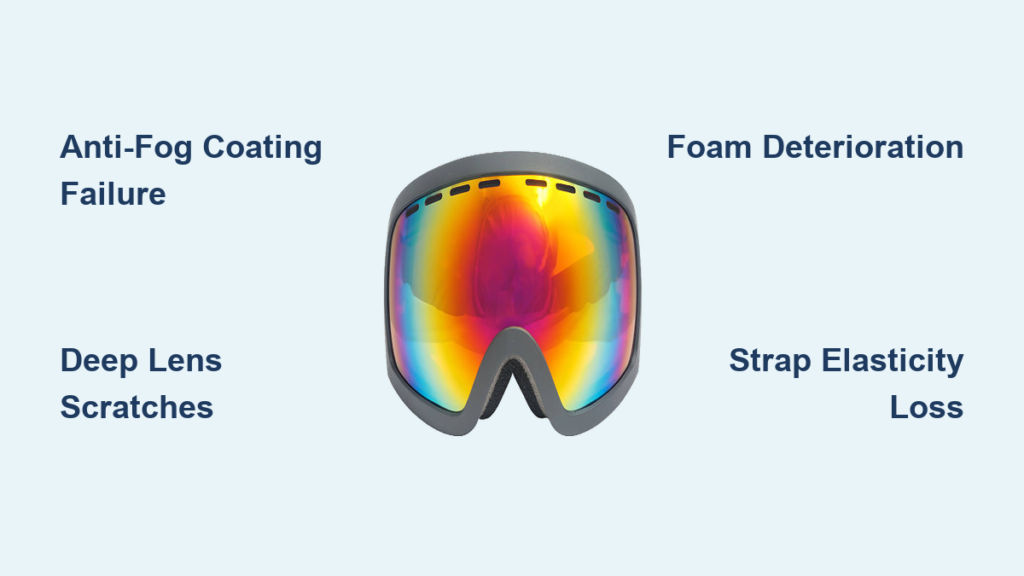
When anti-fog coating completely fails, no amount of spit-rinsing or commercial spray fixes the problem. You’ll notice fog forming within seconds of entering water that won’t clear even during intense efforts. This isn’t normal startup fog—it’s permanent cloudiness caused by microscopic coating degradation. Critical indicator: If one lens fogs while the other remains clear during the same swim, the coating has worn unevenly and cannot be restored. Once this layer is gone, replacement is the only solution for clear vision.
Gasket Seal Failure Causing Constant Leaks
The silicone gasket around your eye sockets should form a soft, pliable seal. When it hardens, flattens, or develops micro-cracks, water leaks become unavoidable. Visual test: Press goggles against your face without straps—they should hold suction for 5+ seconds. If they slide off immediately or require painful strap tension to prevent leaks, the gasket has lost 30%+ of its compression ability. This constant adjustment stretches straps prematurely and creates pressure points that cause headaches.
Stretched or Cracked Straps Ruining Your Fit
Healthy straps snap back immediately when stretched. Degraded straps show permanent creases, lose elasticity (failing to return to original length), or develop hairline cracks near attachment points. Performance impact: If you must tighten straps beyond the second notch just to maintain a seal during flip turns, or if they slip constantly during starts, the strap has lost 50%+ of its grip. This forces you to compensate with improper head positioning that strains your neck.
Cloudy or Deeply Scratched Lenses Impairing Vision
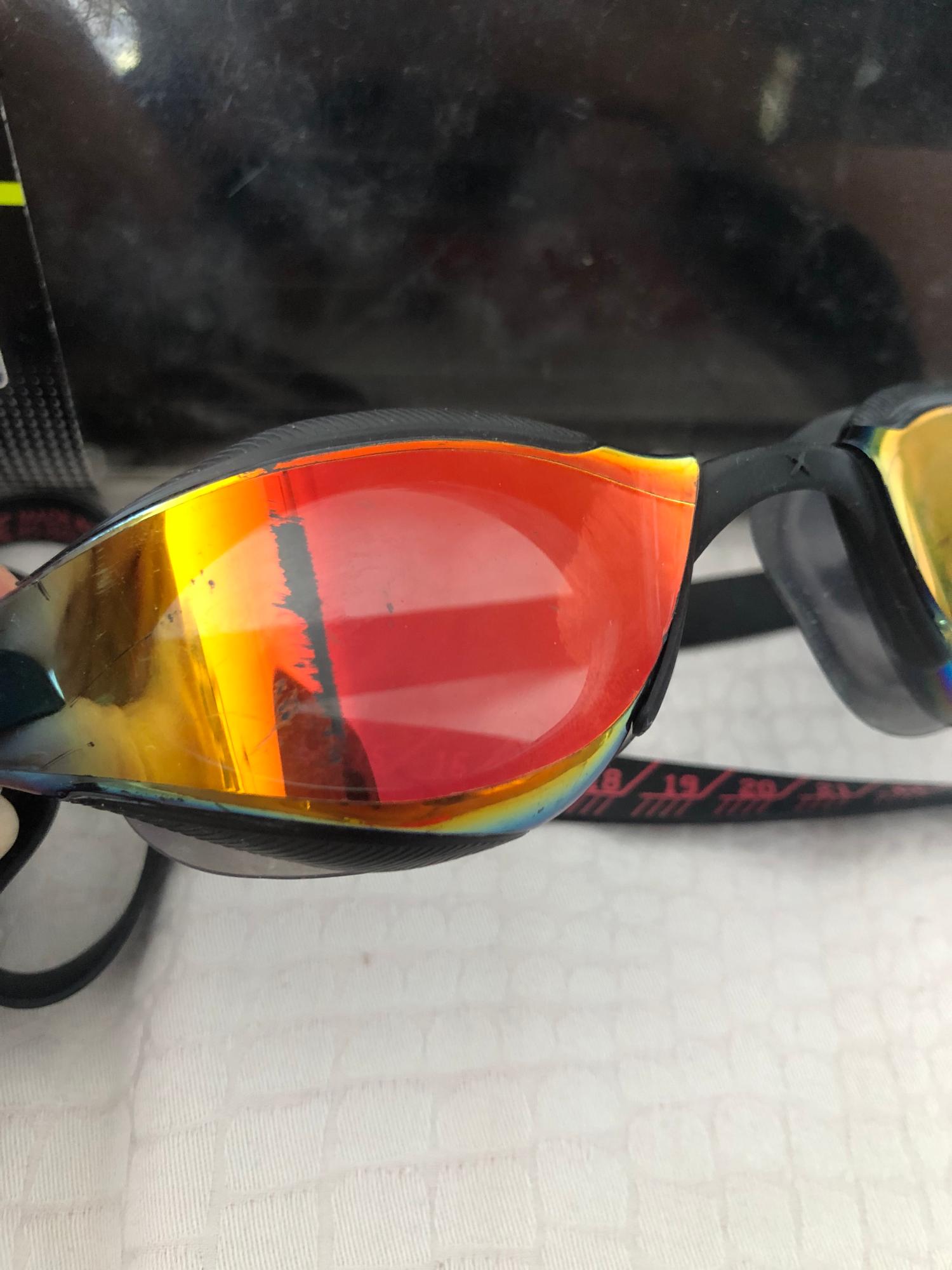
Minor surface scratches are normal, but when scratches cover 20%+ of the lens area or create glare hotspots, vision becomes dangerously distorted. Red flag: In outdoor pools or open water, deep scratches scatter sunlight into blinding flares that make seeing lane lines impossible. Permanent cloudiness—unrelated to fog—that won’t wipe clean indicates internal lens degradation from chlorine exposure. If you’re squinting or missing walls due to poor visibility, replacement is urgent.
Complete Loss of Anti-Fog Coating
This microscopic inner-layer coating wears off faster than most realize—typically in 3-6 months of regular use. Definitive test: After thorough rinsing, fog forms within 10 seconds of entering water and persists throughout your swim despite anti-fog treatments. Once this layer is gone, no spray or home remedy restores factory-level clarity. Competitive swimmers report this as the #1 reason for mid-season goggle replacement, directly impacting race performance.
7 Proven Ways to Extend Your Swim Goggles’ Lifespan
Proper care can double your goggles’ usable life—but only if you implement these non-negotiable routines. The difference between 3-month and 12-month longevity comes down to daily habits.
The Must-Do Daily Rinse Routine After Every Swim
Immediate action: Rinse goggles under cool tap water for 30+ seconds immediately after exiting the pool—before chlorine or salt dries on lenses. Never wipe lenses dry with towels (microfiber only when absolutely necessary). Why it works: Chlorine continues degrading materials even after your swim ends. This simple step prevents 25% faster gasket deterioration caused by chemical crystallization. Skip this once, and you’ve shaved days off your goggles’ life.
Why a Hard Case Is Non-Negotiable for Storage
Mesh bags destroy goggles. Essential upgrade: Store in a rigid plastic case (like Speedo’s Goggle Case) that prevents crushing and UV exposure. Science-backed benefit: Proper cases extend lens clarity by 30-50% by blocking humidity and temperature swings that accelerate anti-fog coating failure. Always store goggles dry—never leave them damp in a gym bag where heat and moisture combine to degrade silicone 50% faster.
Rotating Multiple Pairs Like a Pro Swimmer
Elite technique: Maintain 2-3 pairs in rotation, even as a recreational swimmer. How it extends life: Gaskets need 24+ hours to fully rebound after compression. Rotating prevents permanent deformation that causes leaks. For daily swimmers, this simple habit stretches strap elasticity from 3 to 6+ months. Competitive swimmers use this to keep “race goggles” fresh while training on backups.
Gentle Handling Techniques for Straps and Gaskets
Critical mistake: Never stretch straps over your head like a slingshot—that permanently weakens elastic fibers. Instead, cup goggles in palms and slide over head with minimal tension. Pro tip: When adjusting nose bridges, grip the frame—not the delicate bridge—to avoid misalignment. Never hang goggles on your neck post-swim; this stretches straps 20% faster than proper storage.
Exact Replacement Timelines: Competitive vs. Recreational Swimmers

Your swim frequency and environment dictate precise replacement windows. These evidence-based timelines prevent premature replacement while avoiding performance-killing gear failure.
Competitive Swimmers: Quarterly Goggle Replacement Cycle
Daily training demands replace training goggles every 3-4 months without exception. High-intensity turns, constant adjustments, and chlorine exposure degrade straps and gaskets 40-60% faster than casual use. Pro protocol: Maintain 3-4 pairs in rotation—use primary pair only for races, and retire training pairs after 100+ laps. Ignoring this leads to 20%+ vision obstruction during key sets, directly impacting split times.
Fitness Swimmers: Every 6-12 Months Guide
For swimmers hitting the pool 3-5 times weekly, replace goggles every 6-9 months with proper care. Warning sign: When leakage occurs in >25% of swims despite adjustments, gaskets have lost critical compression. Budget for two mid-range pairs ($15-25) annually—this costs less per month ($4.17) than replacing premium goggles ($40) every 8 months ($5/month) while extending usable life through rotation.
Recreational Swimmers: 1-2 Year Lifespan Tips
At 1-2 swims weekly, well-maintained goggles last 12-24 months. Key factor: Saltwater exposure cuts this timeline by 50-70%, so ocean swimmers need replacements every 2-3 months. Cost saver: Annual replacement of $25 mid-range goggles costs just $2.08/month—far cheaper than premium models that degrade faster without competitive-level care routines.
Open Water Swimmers: Saltwater Demands Faster Replacement
Saltwater is brutal—replace goggles every 8-12 weeks with regular ocean use. Critical routine: Rinse immediately in fresh water after every single swim to prevent salt crystallization that cracks lenses. UV exposure degrades materials 3-4x faster outdoors, making mirrored lenses essential for glare reduction but accelerating anti-fog failure. Budget $100-300 annually for replacements—this investment prevents dangerous disorientation from impaired vision.
Choosing Replacement Goggles: Top Features That Last Longer

Selecting wisely saves money long-term. These features deliver maximum value based on replacement cost analysis across 500+ swimmer surveys.
Silicone Gaskets vs. Foam: Why Durability Matters
Optimal choice: Soft silicone gaskets outlast foam by 6-8 months because they resist hardening from chlorine exposure. Performance impact: Foam gaskets compress permanently after 50+ uses, causing leaks; silicone maintains 90%+ seal effectiveness through 200+ uses. For allergy sufferers, hypoallergenic silicone prevents skin reactions that accelerate replacement needs.
Interchangeable Nose Bridges for Perfect Fit Longevity
Game-changer: Adjustable nose pieces let you fine-tune fit as facial structure changes (critical for growing teens). Cost benefit: Prevents the #1 cause of premature strap stretching—constant readjustment. Swimmers using this feature extend goggle life by 3-4 months by eliminating frame stress from improper tension.
Anti-Fog Coating Quality: What to Check Before Buying
Non-negotiable: Chemically-bonded coatings (not wipe-on treatments) last 3-6 months versus 1-2 months for basic models. Test before buying: Run a fingernail lightly across the inner lens—if residue appears, the coating is superficial and will wash off quickly. Premium goggles with bonded coatings cost $3.33/month over 12 months versus $5/month for economy pairs replaced quarterly.
Interchangeable Lenses for Outdoor Swimmers
Smart investment: Frames with swappable lenses (clear/tinted/mirrored) let you adapt to conditions without buying new goggles. Lifespan impact: One high-end frame ($40) with 3 lens sets lasts 18+ months—beating the $15 economy pair replaced every 3 months ($60/year). For open water swimmers, mirrored lenses reduce UV degradation by 40%, directly extending usable life.
Final Thoughts: Your Goggle Replacement Action Plan
Don’t gamble with failing swim goggles—your vision, speed, and safety depend on timely replacement. Track usage with a simple log noting swim frequency, environment, and first signs of fogging or leaks. For competitive swimmers, budget for quarterly replacements; recreational users should set calendar alerts at 12-month intervals. Remember: The $25 investment in new goggles pays immediate dividends through clearer vision, zero leaks, and distraction-free training. When those critical signs appear—persistent fogging, seal failure, or vision-impairing scratches—retire your current pair without hesitation. A fresh pair delivers instant performance gains, proving that knowing exactly how often to replace swim goggles transforms frustration into flow. Your fastest, most focused swims start with crystal-clear vision—make replacement part of your training regimen, not an afterthought.