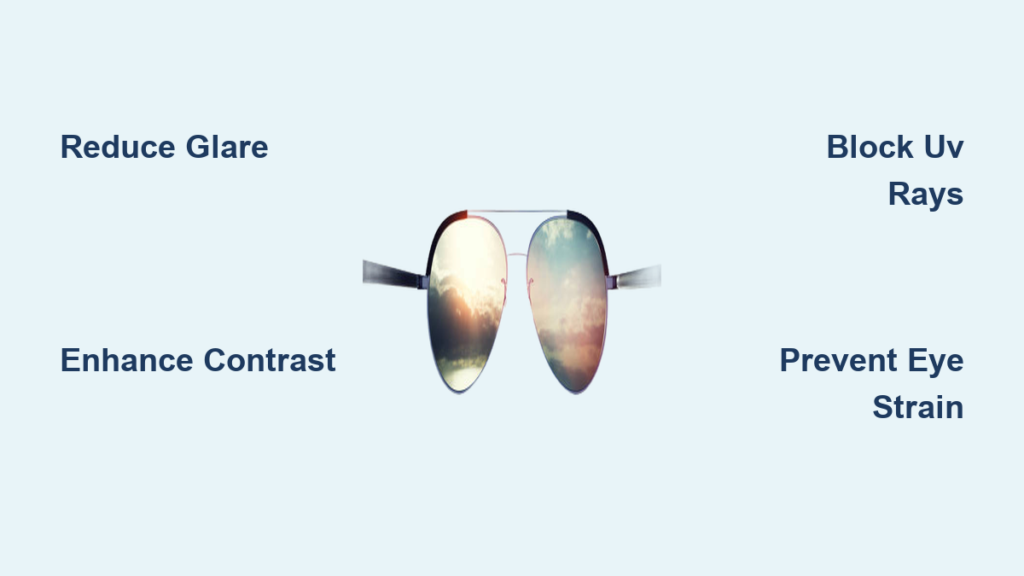
If you’ve ever squinted into blinding glare while driving, fishing, or spending time outdoors, polarized sunglasses could be the game-changer you didn’t know you needed. Unlike regular tinted shades, polarized sunglasses reduce glare from flat, reflective surfaces like water, roads, snow, and glass, making your vision sharper, clearer, and more comfortable in bright light.
The key benefit is eliminating blinding reflections that distort your view and strain your eyes. But that’s just the beginning. These lenses enhance contrast, improve depth perception, and often include 100% UV protection for long-term eye health. Whether you’re behind the wheel, on the slopes, or casting a line, polarized sunglasses deliver visual upgrades that go beyond simple sunblock.
In this guide, you’ll learn exactly how they work, who benefits most, and when to choose a different type plus how to pick the best pair for your lifestyle.
How Polarized Lenses Actually Work
The Vertical Filter That Blocks Horizontal Glare
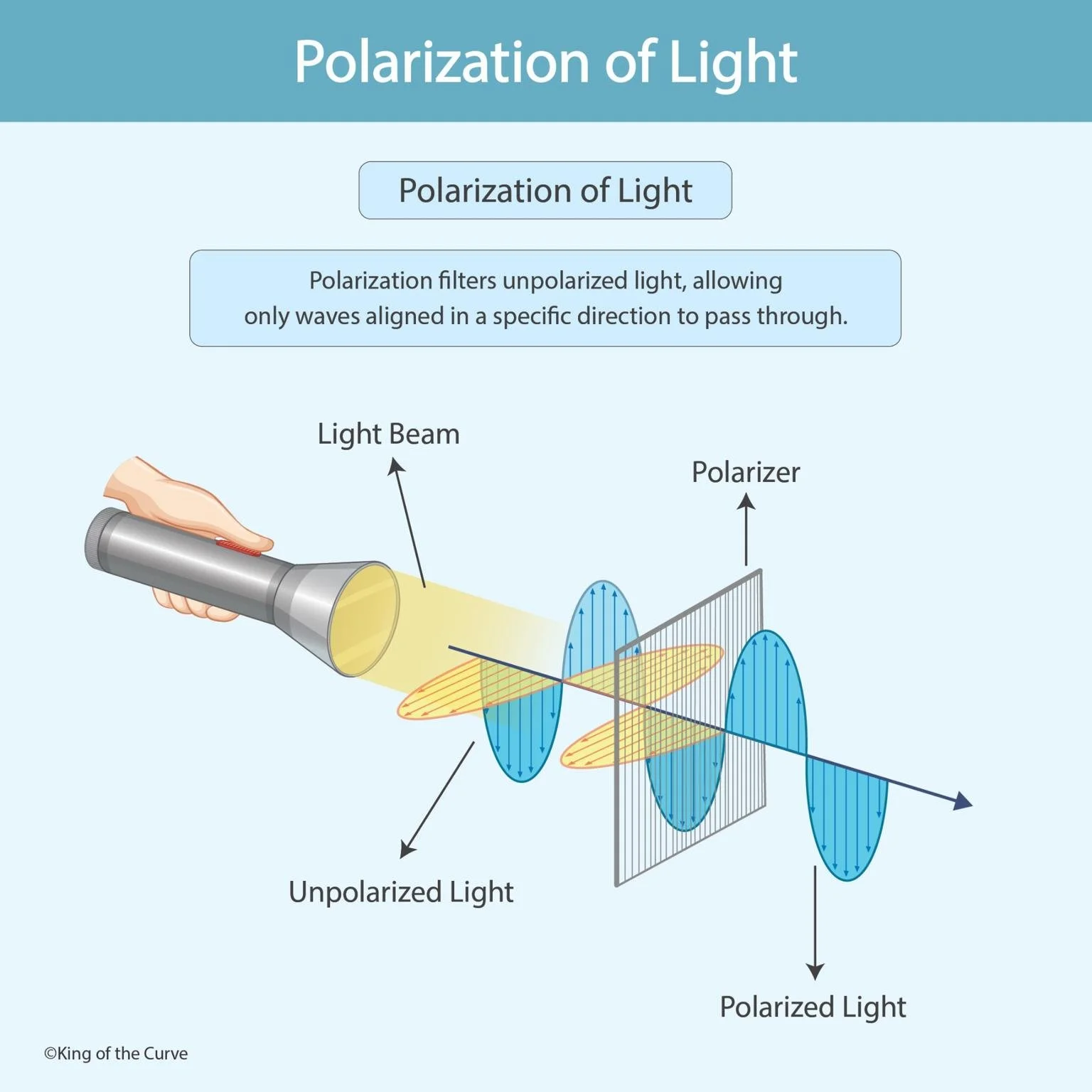
Sunlight scatters in all directions, but when it bounces off a flat surface like water, pavement, or a car hood, it becomes horizontally polarized. This concentrated light creates intense glare that overwhelms your eyes and obscures what you’re trying to see.
Polarized lenses contain a special vertical filter layer, usually made of iodine crystals or dichroic dyes aligned vertically. Think of it like a window blind: it blocks horizontal light waves while letting vertical ones pass through. The result is that harsh glare gets cut without dimming everything else in your field of vision.
You don’t lose brightness—you lose only the chaotic, reflected light that hurts clarity and causes eye strain.
Quick Test to Verify Your Lenses Are Polarized
Not all sunglasses labeled “polarized” deliver real performance. Here’s how to verify the real thing:
- Hold your sunglasses in front of an LCD screen (phone, tablet, or laptop)
- Slowly rotate them about 60–90 degrees
- If the screen darkens or turns black at certain angles, your lenses are genuinely polarized
This works because LCDs emit polarized light. When the lens filter is perpendicular to the screen’s polarization, it blocks the light. Another method involves overlapping two polarized lenses and rotating one—when they’re at 90 degrees, the view should go nearly black.
Superior Glare Reduction in Real Conditions

Where Polarized Lenses Make the Biggest Difference
Standard sunglasses reduce overall brightness. Polarized lenses go further by targeting reflected glare at its source. They’re especially effective on calm lakes and ocean surfaces, wet or glossy roads, snowfields and icy terrain, car hoods and windshields, and glass buildings and windows.
For example, fishermen can finally see beneath the water’s surface, spotting fish and underwater structures previously hidden by glare. Drivers experience fewer blinding flashes from wet asphalt, especially during sunrise or sunset when the sun hits low on the horizon.
Skiers and snowboarders benefit too. Snow reflects up to 80% of UV light, and polarized lenses reduce the blinding white glare that causes significant eye fatigue on the slopes.
Enhanced Visual Clarity and Contrast
See Colors and Details More Sharply
By filtering out scattered light, polarized lenses boost contrast sensitivity, making objects stand out clearly against their background. Users consistently report richer, more vibrant colors, sharper details on terrain, water, and roads, smoother transitions between light and shadow, and less visual noise from sudden glare bursts.
This is crucial in environments with dappled sunlight, like forest trails or city streets lined with glass buildings. Your eyes don’t have to constantly adjust, so your vision feels more stable and natural.
Brown or copper-tinted polarized lenses are especially effective at enhancing contrast, making them ideal for golfers reading greens or drivers spotting road hazards.
Reduced Eye Strain and Visual Fatigue
Prevent Headaches and Discomfort
Constant glare forces your eyes to work harder, leading to squinting, headaches, dry or tired eyes, and migraine triggers (especially for light-sensitive individuals). Polarized sunglasses stabilize light input, reducing the flicker and flash of reflections that strain your visual system.
This makes them a top choice for people with photophobia (light sensitivity), those prone to ocular migraines, and anyone spending hours outdoors on water, roads, or trails.
Many users notice immediate relief during long drives or days on the boat, where unfiltered glare would normally cause fatigue by midday.
Improved Safety and Depth Perception
React Faster in High-Glare Environments
With polarized lenses, you gain sharper depth perception, improved spatial orientation, and faster reaction times. For drivers, this means spotting potholes, road markings, and oncoming traffic more easily, especially on wet roads where glare can mask danger.
Cyclists and hikers benefit too. Rocks, roots, and elevation changes become easier to detect, reducing fall risks. In winter sports, skiers can distinguish soft snow from icy patches more reliably, improving control and safety.
The enhanced contrast also helps boaters and off-road drivers navigate complex terrain with greater confidence.
Full UV Protection for Long-Term Eye Health
Shield Eyes from Harmful Rays
Here’s a critical point: polarization is not UV protection. They’re separate features. Polarization handles glare reduction, while UV protection defends against UVA and UVB rays.
But most quality polarized sunglasses include 100% UV protection or UV400 filtering, blocking all light up to 400 nanometers—the full spectrum of harmful ultraviolet radiation. This prevents photokeratitis (sunburn of the eye) and reduces risk of cataracts, macular degeneration, and pterygium.
Always check the label. If it doesn’t say “100% UVA/UVB” or “UV400,” don’t assume it’s protected. Cheap, unlabeled sunglasses may even worsen damage by dilating your pupils without blocking UV.
Who Benefits Most from Polarized Sunglasses
Outdoor Enthusiasts and Athletes
Certain activities demand the clarity and comfort polarized lenses provide. Fishers and boaters can see beneath water surfaces, spot fish, and avoid submerged obstacles. Drivers reduce blinding reflections from cars, roads, and wet surfaces. Brown or copper tints enhance road contrast and depth, ideal for highways and mountain drives.
Skiers and snowboarders combat intense snow glare that fatigues eyes and hides icy patches. UV400 protection is non-negotiable at high altitudes. Golfers and cyclists enjoy better green reading and trail awareness thanks to improved contrast and reduced glare off grass, sand, and pavement.
People with Light Sensitivity
Individuals with migraines, chronic photophobia, or conditions like keratoconus often find polarized lenses reduce symptom triggers. The filtering of harsh, scattered light can mean fewer headaches and more time outdoors.
When to Avoid Polarized Sunglasses
Digital Screen Interference
Polarized lenses can darken or black out LCD and LED screens, including smartphones and tablets, car dashboards and GPS units, ATM and kiosk displays, aircraft instruments, and camera monitors.
This happens because both the screen and the lens use polarization filters. When they cross at 90 degrees, visibility drops. Pilots should avoid polarization completely. Drivers with digital dashboards, photographers checking camera screens, and office workers stepping outside briefly may want alternatives.
Use non-polarized sunglasses with anti-reflective coating for screen-heavy environments.
Night and Low-Light Conditions
Polarized lenses reduce overall light transmission, making them unsuitable for night driving or low-light situations. Wearing them after dark or in overcast, shaded areas can impair depth perception, reduce contrast, and increase accident risk.
They’re designed for bright, sunny days, not dusk, dawn, or cloudy weather.
Hazardous Surface Detection
In some cases, glare serves as a warning. Polarized lenses may hide icy patches on roads or wet spots on pavement by removing their reflective sheen. This can be dangerous for drivers and skiers in cold climates.
Similarly, operators of heavy machinery with polarized control panels may miss critical readouts.
Choosing the Right Lens Tint

Match Tint to Your Activity
Different colors enhance specific visual needs. Gray tint provides neutral color perception and works well for driving, beach, and general use. Brown or copper tint boosts contrast and blocks blue light, ideal for driving, fishing, and golf.
Green tint offers balanced clarity and comfort, best for water sports and variable light conditions. Amber or yellow tint increases brightness and enhances contrast for overcast days and skiing in flat light.
Important warning: Amber and yellow tints should not be worn in bright sunlight because they let in more light and aren’t ideal for glare reduction.
Tint darkness doesn’t equal better protection. Even light tints can offer full UV and polarization.
Buying Tips for Maximum Benefit
Get the Right Features
Always verify both polarization and UV protection. Look for “100% UVA/UVB” or “UV400” labeling, and use the LCD test to confirm authentic polarization. Don’t rely on price or brand alone.
Opt for larger or wraparound lenses to block more peripheral glare. Consider prescription options if you need vision correction—you can get polarized prescription sunglasses in single-vision, bifocal, or progressive designs.
Look for durable coatings including anti-scratch coating for longevity, hydrophobic layer to shed water, and oleophobic coating to resist oils and fingerprints.
Test before you buy. If buying online, check return policies and use the LCD rotation test upon arrival to confirm polarization is real.
Frequently Asked Questions About Polarized Sunglasses
Do polarized sunglasses block UV rays?
Not automatically. Polarization and UV protection are separate features. You need to verify that your polarized sunglasses explicitly state “100% UVA/UVB” or “UV400” protection. Many quality brands include both, but you should always check the label.
Can polarized sunglasses help with driving?
Yes, polarized sunglasses significantly improve driving comfort by reducing glare from wet roads, vehicle surfaces, and the sun low on the horizon. However, they may interfere with some digital dashboards. Brown or copper tints enhance road contrast and depth perception.
Why do polarized sunglasses make it hard to see phone screens?
LCD and LED screens emit polarized light. When your polarized lenses are at a 90-degree angle to the screen, they block the light, causing the display to darken or go black. This affects smartphones, tablets, car dashboards, and camera monitors.
Are polarized sunglasses worth the extra cost?
For people who spend time near water, snow, or on roads, polarized sunglasses offer substantial benefits including reduced eye strain, better visibility, and improved safety. The cost is justified for outdoor enthusiasts, drivers, and anyone sensitive to glare. However, non-polarized sunglasses may be better for screen-heavy environments.
How do I know if my sunglasses are truly polarized?
Use the LCD screen test. Hold your sunglasses in front of a phone or laptop screen, then rotate them 60–90 degrees. If the screen darkens or turns black, your lenses are polarized. You can also overlap two pairs of polarized lenses and rotate one—at 90 degrees, the view should go nearly dark.
Can I wear polarized sunglasses at night?
No. Polarized sunglasses reduce overall light transmission and should never be worn in low-light conditions including night driving, dusk, dawn, or overcast weather. They can impair depth perception and increase accident risk.
Key Takeaways for Choosing Polarized Sunglasses
Polarized sunglasses offer unmatched glare reduction, visual clarity, and eye comfort in bright, reflective environments. The key benefits include eliminating glare from water, snow, roads, and glass, enhancing contrast and color vibrancy, reducing eye strain and fatigue, improving safety through better depth perception, and providing 100% UV protection when properly labeled.
However, they’re not right for every situation. Avoid polarization when viewing LCD screens, driving at night, or needing to detect icy or wet surfaces. Consider owning two pairs: one polarized for outdoor activities and one non-polarized for urban and screen use.
Always verify both polarization and UV protection before purchasing. Look for ANSI Z80.3 or ISO 12312-1 compliance standards, and test your lenses upon arrival. When paired with 100% UV protection, polarized sunglasses are one of the best investments you can make for your eye health and outdoor performance.