
You grab a pair of $5 sunglasses from a gas station, slip them on, and instantly feel like you have beaten the sun’s glare. But behind those trendy lenses could be a serious threat to your eyes, one that is worse than wearing no sunglasses at all. Cheap sunglasses can be dangerous, not because they are inexpensive, but because many lack UV400 protection, the critical shield against harmful ultraviolet radiation.
When dark lenses dilate your pupils but fail to block UV rays, they allow more damaging radiation to reach your retina than if you were unprotected. This dangerous paradox is why experts from the American Academy of Ophthalmology, American Optometric Association, and World Health Organization warn that UV protection, not price, tint, or style, should be your top priority when choosing sunglasses.
The Pupil Dilation Danger: Why Dark Lenses Harm Your Eyes

Dark sunglasses cause your pupils to dilate, widening to let in more light. This is a natural reflex. But if the lenses do not block UV radiation, that dilation becomes a liability. Your eyes are now absorbing more UVA and UVB rays than they would in full sunlight without any eyewear.
This phenomenon, known as the darkness fallacy, means your eyes are more vulnerable to UV damage, the lens and retina receive higher radiation doses, and your risk of cataracts, macular degeneration, and photokeratitis increases. Dr. Praveena Gupta of the University of Texas Medical Branch warns that wearing sunglasses that do not provide enough UV protection may be as harmful as not wearing any at all.
Real-World Consequences of Non-UV-Blocking Shades
Imagine wearing non-UV-blocking shades at the beach. Sand reflects 15% of UV, water reflects 20%, and sunlight pours in from all angles. With dilated pupils and zero UV filtering, your eyes endure intensified exposure with no pain or immediate symptoms. The damage accumulates silently, often for years, until vision problems emerge.
Fake UV Protection: How Labels Lie to You

Many cheap sunglasses carry labels like UV protection, blocks harmful rays, UV380, or fashion use only. These terms are not regulated and are often misleading or false. UV protection may mean only partial blocking, UV380 leaves the 380 to 400 nm UVA band unblocked, and shade only means zero UV defense.
Only UV400 or 100% UV protection guarantees full coverage across the entire 280 to 400 nm spectrum. The 380 to 400 nm gap is not safe. Some manufacturers claim UV380 is close enough, but research shows the 380 to 400 nm band contains biologically active UVA rays that penetrate deep into the retina. The SPIE analysis confirms this range holds 45% more UV energy than 280 to 380 nm, making full-spectrum blocking essential.
How to Spot Unsafe Sunglasses Before Buying
Check for Missing or Vague Labels
If the sunglasses do not clearly state UV400, 100% UV protection, or blocks 100% of UVA and UVB, assume they offer no UV defense. Unlabeled eyewear is a major red flag. Always verify the label before purchasing.
Perform the Tile Floor Test
Poor optical quality causes visual distortion, leading to headaches, eye strain, dizziness, and impaired depth perception. This is especially dangerous while driving. To perform the tile floor test, hold the sunglasses at arm’s length and look through them at a straight line like a tile edge or door frame. Move the glasses side to side. If the line bends, wiggles, or distorts, the lenses are defective and you should not buy them.
Test Frame Quality
Cheap sunglasses often have thin, brittle frames that snap easily, lenses that scratch in days, and hinges that loosen after minimal use. Test the hinges by opening and closing the arms 10 to 20 times. If they feel loose or gritty, skip them.
What Makes Sunglasses Actually Safe
UV400: The Only Standard That Matters
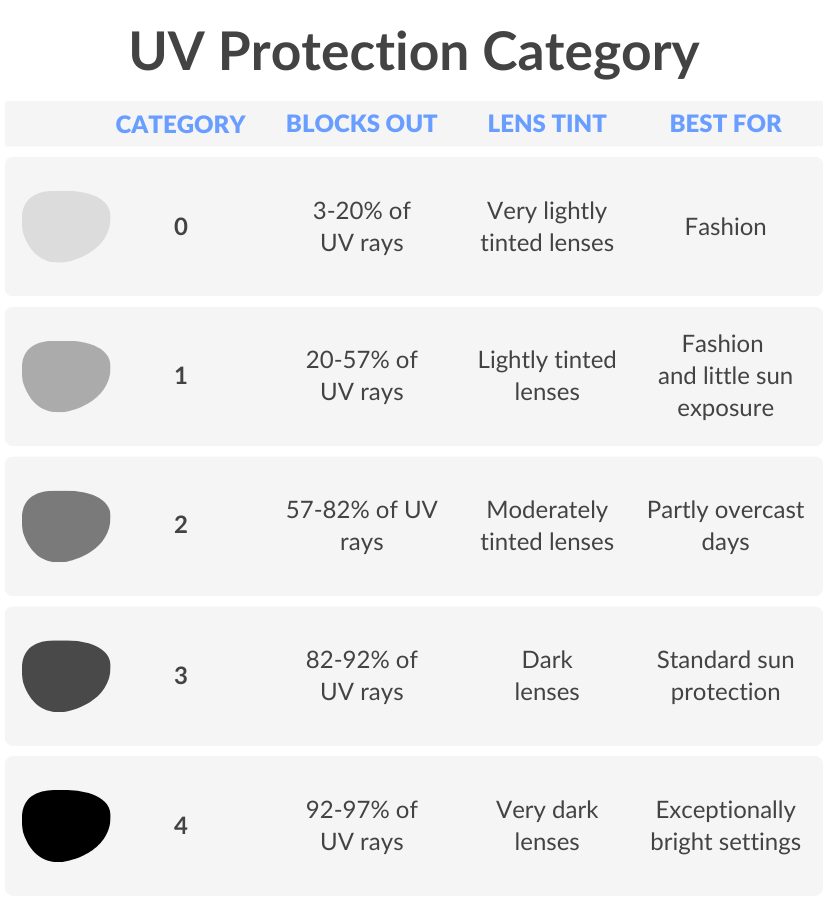
UV400 means the lenses block all UVA and UVB rays up to 400 nanometers. This is the medical gold standard endorsed by the FDA, American Academy of Ophthalmology, American Optometric Association, and VSP. Anything less is inadequate and puts your eyes at risk.
Lens Materials That Provide Real Protection
Polycarbonate lenses naturally block 100% UV without requiring a coating. They are 10 times more impact-resistant than standard plastic and are lightweight and durable, making them ideal for kids and sports. Trivex lenses offer built-in UV protection with superior clarity and strength, though they are slightly more expensive. CR-39 plastic does not block UV naturally and requires a coating that can degrade over time. Glass lenses can be coated for UV protection but shatter on impact and are not recommended for active use.
Polarization Does Not Mean UV Protection
Many people assume polarized equals UV protected, but these are completely separate features. Polarization reduces glare from water, roads, and snow. UV protection blocks invisible radiation that damages eye tissue. A lens can be polarized without UV blocking, which is dangerous, or UV-protected without polarization, which is safe but less comfortable in bright conditions.
Always verify both features separately. Look for products that specifically state polarized plus UV400 or 100% UV protection. Think of polarization as vertical slats in a fence blocking horizontal glare, while UV protection is the invisible shield behind the fence stopping harmful rays. You need both for full defense.
Frame Design: Coverage Protects Your Eyes
Even with UV400 lenses, peripheral light leakage can expose your eyes to UV from the sides, top, and bottom. A 3D modeling study found mid-sized frames often provide the least protection. Wraparound styles, oversized frames, and close-fitting designs block stray UV and reduce exposure from reflective surfaces.
The thin skin around your eyes is also prone to skin cancers like basal cell carcinoma and melanoma. Wraparound sunglasses help shield this area, just like sunscreen for your face.
Impact Resistance: The Hidden Safety Feature
All sunglasses sold in the U.S. must pass the FDA impact resistance test, known as the drop ball test. A 5/8-inch steel ball is dropped from 50 inches, and the lens must not fracture. This prevents shattering during minor impacts, which is critical for safety.
A 2011 PubMed study found 22.7% of online-ordered glasses failed this test. While focused on prescriptions, it highlights risks in unregulated markets where most cheap sunglasses originate. Polycarbonate lenses exceed the standard, making them the safest affordable choice.
Price Versus Protection: The Truth About Cheap Sunglasses
Cheap does not mean unsafe. Affordable sunglasses can be safe if they meet standards. Many drugstore brands and outdoor retailers sell UV400-protected polycarbonate models under $20. Expensive is not always better either. Some luxury fashion brands prioritize style over function, and a $300 pair without UV400 is just as dangerous as a $5 pair.
The most dangerous sunglasses come from gas stations, street vendors, unbranded online sellers, and souvenir shops. These often lack certification, labeling, or quality control. Always verify protection, not price.
Who Faces the Highest Risk From Unsafe Sunglasses
Children Need Maximum Protection
Kids spend more time outdoors and have more transparent lenses, allowing greater UV penetration. The WHO estimates 80% of lifetime UV exposure happens before age 18. Always choose UV400, shatter-resistant polycarbonate sunglasses for children.
Outdoor Workers Face Daily Exposure
Landscapers, construction workers, and farmers face prolonged daily exposure. UV intensity increases 10 to 12% per 1,000 meters in elevation, making mountain workers particularly vulnerable.
Water and Snow Enthusiasts Need Extra Defense
Snow reflects 80% of UV, water reflects 20%, and high-altitude skiing or boating demands maximum protection. Choose wraparound, polarized, UV400 sunglasses for these environments.
How to Choose Safe, Affordable Sunglasses
Check the label first. It must say UV400, 100% UV protection, or blocks 100% of UVA and UVB. No label means no protection, so walk away.
Pick the right lens material. Polycarbonate offers the best built-in UV and impact resistance at affordable prices. Avoid uncoated CR-39 or unlabeled plastic.
Verify polarization separately. Do not assume a polarized lens blocks UV. Confirm both UV400 protection and polarization if you want glare reduction.
Test optical clarity using the tile floor test. No distortion means good optics.
Assess frame quality. Choose wraparound or oversized styles with sturdy hinges and a comfortable, secure fit.
Buy from trusted sources like optical shops, drugstores, certified online retailers, and outdoor brands. Avoid street vendors and unverified online sellers.
Debunking Common Sunglasses Myths
Darker lenses do not mean better protection. Tint has no relation to UV blocking. Clear polycarbonate can block 100% UV.
Colored lenses do not protect more. Color affects glare and contrast, not UV absorption.
All store-bought sunglasses do not have UV protection. Many fashion models offer shade only.
Wearing any sunglasses is not always better than none. Non-UV dark lenses increase retinal exposure due to pupil dilation.
Price does not guarantee quality. Always check UV400, not the price tag.
When to Replace Your Sunglasses
Replace sunglasses every 2 to 3 years, or sooner if lenses are scratched, hazy, or cracked, frames are loose or broken, you have had intense sun exposure like skiing or beach vacations, or UV coating may have degraded, especially on CR-39 lenses. Damaged lenses distort vision and compromise UV protection.
Talk to Your Optometrist About Eye Protection
Ask your eye doctor these questions. Do my current sunglasses provide 100% UV protection? What lens materials do you recommend for my lifestyle? Are photochromic or polarized options right for me? Can I get prescription sunglasses with UV400? Your eye doctor can test UV protection levels and recommend safe, affordable brands.
Key Takeaways for Protecting Your Vision
Cheap sunglasses are dangerous, but only if they lack UV400 protection. The danger is not the price. It is the false sense of security that dark lenses without UV filtering create. They dilate your pupils and invite more radiation inside, accelerating long-term damage.
However, affordable does not mean unsafe. You can find safe, UV400-protected sunglasses under $20, especially with polycarbonate lenses from reputable brands.
UV400 is non-negotiable. Dark lenses without UV protection are worse than none. Polarization does not equal UV protection. Frame coverage and optical clarity matter. Price does not guarantee safety. Verify the label.
Your Vision Is Worth Protecting
Think of sunglasses as sunscreen for your eyes. Would you trust a fake SPF 50 lotion from a gas station? Then do not risk your vision with substandard eyewear. Never sacrifice UV protection for price. Invest in verified, high-performance sunglasses because your eyesight is not a bargain-bin item.
Frequently Asked Questions About Cheap Sunglasses Dangers
Can cheap sunglasses actually cause more eye damage than wearing no sunglasses at all?
Yes. When dark lenses lack UV protection, they cause your pupils to dilate while allowing more harmful radiation to enter your eyes. This paradox means your eyes absorb more UV damage than if you were completely unprotected.
What should I look for on a sunglasses label to ensure real UV protection?
Look for explicit statements like UV400, 100% UV protection, or blocks 100% of UVA and UVB. Vague terms like UV protection or fashion use only are not reliable indicators.
Are polarized sunglasses automatically UV protected?
No. Polarization and UV protection are separate features. A lens can be polarized without blocking any UV radiation. Always verify both features independently.
Where is the safest place to buy affordable sunglasses?
Trusted sources include optical shops, drugstores like CVS or Walgreens, certified online retailers like EyeBuyDirect or Zenni, and outdoor brands like Costa, Smith, or Oakley. Avoid gas stations, street vendors, and unverified online sellers.
How often should I replace my sunglasses for optimal eye protection?
Replace sunglasses every 2 to 3 years, or immediately if lenses are scratched, hazy, cracked, or if frames are damaged. UV coatings can degrade over time, especially on CR-39 plastic lenses.
Are expensive designer sunglasses always safer than cheap ones?
No. Price does not guarantee UV protection. Some luxury brands prioritize style over function and may lack proper UV filtering. Always verify UV400 labeling regardless of price.