You have probably seen people wearing sunglasses from morning until night, indoors and out. While they look stylish and reduce glare, a growing question emerges: could wearing sunglasses too often actually harm your eyes and overall health? The short answer is nuanced. Not all sunglass use is harmful, but overuse, poor quality, or wearing them in the wrong conditions can create problems.
This guide cuts through the confusion by combining medical research, Ayurvedic wisdom, and circadian biology. You will learn exactly when sunglasses protect your vision and when they may be doing more harm than good. By the end, you will have a clear, actionable roadmap for balancing eye protection with the natural light your body needs.
When Sunglasses Actually Protect Your Vision
Sunglasses serve a vital protective function when UV exposure is high. Understanding when to wear them helps you avoid genuine eye damage.
Blocking UV Rays That Cause Cataracts
Ultraviolet radiation from the sun damages delicate eye tissues over time. UVA and UVB rays penetrate the cornea and lens, accelerating oxidative stress that leads to cataracts, a clouding of the eye’s natural lens. Research confirms that cumulative UV exposure increases cataract risk significantly, especially in people who spend long hours outdoors without protection.
High-quality sunglasses that block 100 percent of UVA and UVB radiation dramatically reduce this risk. The World Health Organization estimates that up to 20 percent of cataracts may be caused or worsened by UV exposure, making proper eyewear essential in sunny climates or at high altitudes.
Key facts about UV and altitude include:
- UV intensity increases by 10 to 12 percent per 1,000 meters of elevation
- Mountain hikers and skiers face far greater ocular UV exposure than city dwellers
- Snow reflects up to 80 percent of UV radiation, creating double exposure
Preventing Pterygium and Photokeratitis
Pterygium, a fleshy growth on the conjunctiva, is strongly linked to chronic sun, wind, and dust exposure. Often called surfer’s eye, it can spread across the cornea and impair vision if left untreated. Wraparound sunglasses create a physical barrier that reduces environmental irritation and UV penetration.
Polarized lenses add extra defense by cutting glare from water, sand, and snow, surfaces that reflect substantial UV radiation. For outdoor workers, athletes, and beachgoers, this protection is essential.
Photokeratitis, essentially a sunburn of the eye, occurs from intense short-term UV exposure, commonly in snowy environments. Symptoms include severe eye pain, redness, tearing, light sensitivity, and a feeling of grit in the eyes. This temporary but painful condition is completely preventable with UV-protective sunglasses in bright, reflective conditions.
The Circadian Problem: Blocking Morning Light
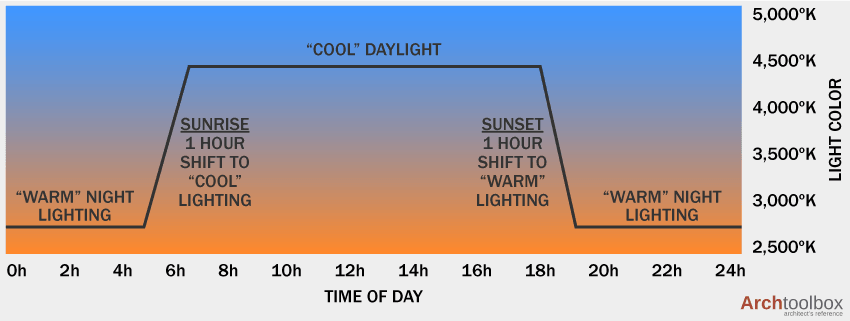
Your eyes are not just for seeing. They function as biological sensors that regulate your entire circadian system. Specialized cells in the retina called intrinsically photosensitive retinal ganglion cells detect sunlight and signal your brain’s master clock to control sleep, hormones, and energy levels.
How Sunglasses Disrupt Your Body Clock
Morning sunlight is especially powerful for circadian regulation. Exposure within the first hour of waking suppresses melatonin, boosts alertness, and sets a strong rhythm for deep sleep that night. When you wear sunglasses during this critical window, even on cloudy days, you dull this vital signal.
Researcher Russel J. Reiter notes that outdoor daylight can be 1,000 times brighter than indoor lighting, and that brief regular exposure is key to robust melatonin production at night. Chronic sunglass use in low-glare conditions may contribute to poor sleep quality, low energy, mood imbalances, and circadian misalignment.
Consequences of blocking natural light include:
- Reduced beta-endorphin release, affecting mood and pain perception
- Lower dopamine and serotonin production
- Disrupted melatonin rhythm affecting sleep and immune function
- Potential hormonal imbalances over time
The Mood and Endorphin Connection
Sunlight entering the eyes triggers the release of beta-endorphins, brain chemicals that improve mood, reduce pain, decrease cravings, and counteract addictive behaviors. Blocking this light with constant sunglass use may limit endorphin production, potentially worsening conditions like depression or fatigue.
Ayurvedic medicine refers to this imbalance as Tamas Guna, a state of dullness and inertia caused by lack of light. In contrast, Sattva Guna, representing clarity and vitality, is cultivated through open, unfiltered exposure to natural daylight.
How Overusing Sunglasses Weakens Your Eyes
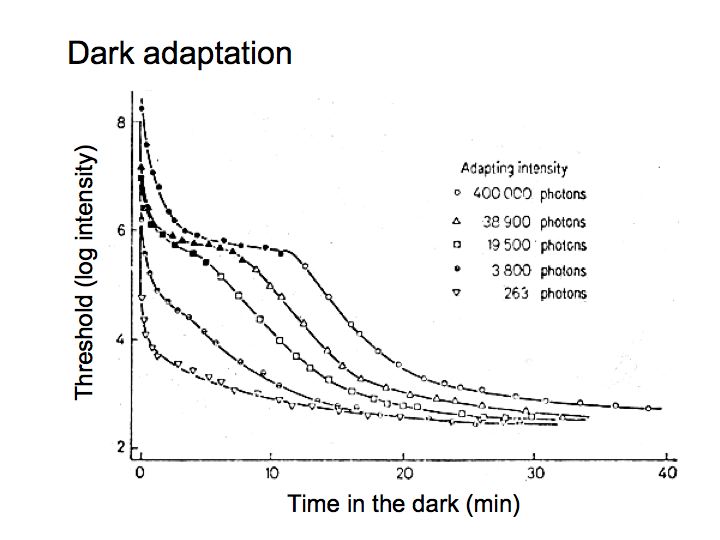
Many people wear sunglasses not because of UV danger, but because their eyes have become overly sensitive. Years of indoor living under artificial lighting, especially blue-rich LEDs and screens, desensitize the eyes to natural brightness.
The Vicious Cycle of Light Sensitivity
This leads to photophobia, discomfort in daylight that makes people reach for sunglasses even on overcast days or in mild sun. But wearing shades in these conditions creates a problematic cycle:
- Eyes adapt to dim, artificial light environments
- Natural light feels uncomfortably bright
- Sunglasses are worn more frequently
- Eyes receive less natural stimulation
- Light sensitivity worsens further
Light adaptation expert Star Freud explains that those who feel the need to wear sunglasses all the time have likely adapted to artificial light, so when going outdoors, it feels extremely glary. The solution is gradual re-exposure to sunlight without filters.
The Ayurvedic Perspective on Eye Sense Misuse
Ayurveda teaches that disease arises from misuse of the senses, including three types of imbalance:
- Atiyoga: Excessive use, like staring at screens for hours
- Hinayoga: Deficient use, like never seeing sunlight
- Mithyayoga: Perverse or inappropriate use, like wearing sunglasses when unnecessary
When Sunglasses Become Mithyayoga
Wearing sunglasses in low-glare conditions is Mithyayoga, a misuse that weakens the eyes’ natural ability to adapt. It is similar to wearing earplugs indoors: your ears do not go bad, but they become less resilient to normal sound levels.
Avoiding sunlight altogether, whether from fear of UV or living indoors, is Hinayoga. This deprives the eyes of essential light signals, leading to poor circadian regulation, low melatonin, mood disorders, and weakened ocular muscles.
Ayurveda emphasizes daily sun exposure without sunglasses, especially in the morning, to maintain Sattva Guna and prevent Tamas Guna.
When to Wear Sunglasses (And When Not To)
Understanding the right context for sunglass use is essential for protecting your eyes without sacrificing your health.
Wear Sunglasses in These High UV Situations
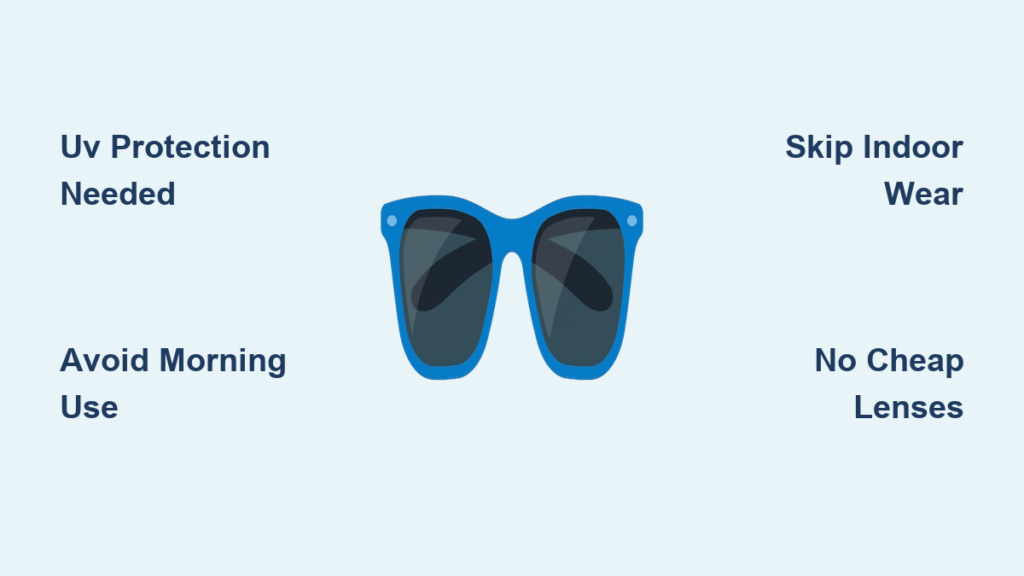
You should definitely wear sunglasses when the sun is strong between 10 AM and 4 PM, when you are near water, snow, or sand where UV reflection is high, at high altitudes where UV intensity increases significantly, and after eye surgery when temporary light sensitivity occurs.
In these cases, UV-protective wraparound styles offer the best defense by blocking rays from all angles and preventing peripheral damage.
Skip Sunglasses in These Low-Glare Conditions
The best time to go without sunglasses is early morning before 10 AM. The sun is lower, UV levels are mild, and the light spectrum is rich in red and infrared wavelengths that support healing and circadian resetting.
Even on cloudy days, up to 80 percent of UV radiation penetrates clouds, but the brightness is low enough that your eyes can safely adapt. Wearing sunglasses here is usually unnecessary and counterproductive.
Recommended approaches include:
- Try 10 to 15 minutes of morning sun gazing with open eyes, not staring directly
- Let the light flood your retinas to reset your internal clock
- Increase natural light tolerance gradually over weeks
Why Cheap Sunglasses Are Dangerous

Not all sunglasses are safe. Dark lenses without UV protection are actually dangerous because they cause your pupils to dilate while letting in more harmful radiation without any filtering.
This can accelerate retinal damage, making cheap sunglasses worse than wearing no sunglasses at all. Consultant Ophthalmologist Mr. Alex Day warns that not all sunglasses are created equal, so always choose those from reputable brands with 100 percent UV protection.
Always look for these labels:
- UV400, which blocks wavelengths up to 400nm
- 100 percent UVA and UVB protection
- Polarized for glare reduction, though this does not replace UV protection
Signs You Are Wearing Sunglasses Too Much
Recognizing the warning signs helps you correct the problem before it worsens.
You Are Sensitive to Normal Daylight
If you squint or feel discomfort in moderate outdoor light, your eyes may have lost adaptive capacity. This commonly affects people who work indoors under artificial light, wear sunglasses daily, and avoid direct sun exposure.
Your eyes evolved to handle natural sunlight. If they cannot, it is likely due to lifestyle factors, not inherent weakness.
You Wear Them Indoors or at Night
Wearing sunglasses inside or after sunset may indicate severe light sensitivity, migraine or neurological condition, or over-dependence on visual filtering. Medical experts warn that indoor sunglass use may increase light sensitivity over time, creating dependency.
You Never Go Without Them in Daylight
If you cannot imagine stepping outside without sunglasses, even on cloudy mornings, you may be over-filtering natural light. This blocks essential biological signals and weakens your eyes’ ability to self-regulate.
Healthy Alternatives for Eye Protection
Beyond sunglasses, several strategies support both eye health and overall well-being.
Practice Morning Sun Exposure
Start your day with 10 to 30 minutes of unfiltered sunlight by stepping outside after waking, facing the sun with eyes open without staring, and breathing deeply while relaxing. Benefits include circadian rhythm resetting, boosted melatonin at night, enhanced mood and focus, and support for vitamin D synthesis through the skin.
Wellness expert Liz Earle practices morning light exposure before checking any screens, a powerful habit for hormonal balance.
Use Blue-Blocking Glasses at Night
To protect melatonin production, wear amber or red-tinted glasses after sunset. These block blue light from phones, televisions, and LEDs, preventing melatonin suppression and improving sleep quality.
Support Eyes with Nutrition and Eye-Nourishing Nutrients
Add these nutrients to support eye health:
- Lutein and zeaxanthin from leafy greens and eggs protect the macula
- Omega-3s from fatty fish reduce dry eye symptoms
- Vitamin A from carrots and liver supports night vision
Ayurvedic herbs include Triphala as a traditional eye cleanser and tonic, Amla for its high vitamin C and antioxidant content, and Saffron studied for retinal support.
The Morning Sunlight Practice
Establishing a morning sunlight routine reaps significant benefits for your eyes and overall health.
How to Start Safely
Begin with 5 minutes of morning sun exposure and increase daily by 1 to 2 minutes. Avoid screens right after waking. Get regular eye checkups to monitor your progress.
This gradual approach retrains your eyes to process natural light again, reducing dependency on artificial filters while supporting your circadian health.
Can Sunglasses Increase Cancer Risk?
A controversial theory suggests that wearing sunglasses may increase cancer risk by disrupting internal UV signaling.
The Proposed Mechanism
The hypothesis suggests that sunglasses block UV from the eyes, the retina detects less UV, the pineal gland reduces melanin signaling, the skin produces less protective melanin, and cancer risk increases. Additionally, reduced melatonin means weaker antioxidant and anti-cancer defense.
Historical observations note that Dr. Albert Schweitzer reportedly saw no cancer in African natives when he first arrived, but cases rose after they adopted sunglasses as fashion items.
What Science Actually Says
Melatonin is a well-documented anti-cancer agent with potent antioxidant and immune-modulating properties. Night shift workers with disrupted melatonin have approximately twice the breast cancer risk. However, no large study proves that sunglass wearers have higher cancer rates.
The pathway is plausible but not confirmed. UV eye protection still outweighs these theoretical risks.
Key Takeaways for Smart Sunglass Use
Sunglasses are not inherently bad. Misuse is the problem. Use them wisely by protecting your eyes from real UV danger while letting natural light in when it is safe.
Do This: Wear Quality Sunglasses When Needed
- Choose 100 percent UV protection labeled UV400
- Opt for wraparound or close-fitting frames
- Use polarized lenses near water or roads
- Replace worn or scratched lenses promptly
Do Not Do This: Misuse Sunglasses
- Never wear non-UV-rated dark lenses
- Avoid indoor use unless medically necessary
- Do not wear them all day, every day
- Skip them in morning and evening low-glare light
Retrain Your Eyes Gradually
- Start with 5 minutes of morning sun exposure
- Increase daily by 1 to 2 minutes
- Avoid screens right after waking
- Get regular eye checkups
Balance is the key to lifelong eye and systemic health.
Frequently Asked Questions About Sunglasses and Eye Health
Can wearing sunglasses all the time damage your eyes?
Wearing sunglasses constantly, especially in low-light conditions, can weaken your eyes’ natural ability to adapt to brightness. This creates a cycle where your eyes become increasingly light-sensitive, making you reach for sunglasses more often. The solution is gradual re-exposure to natural light without filters.
Are cheap sunglasses worse than no sunglasses at all?
Yes, cheap sunglasses without UV protection are potentially dangerous. Dark lenses cause your pupils to dilate, allowing more harmful UV radiation to enter your eyes than if you wore no sunglasses at all. Always choose sunglasses labeled UV400 or 100 percent UVA/UVB protection.
Does wearing sunglasses affect melatonin production?
Wearing sunglasses during daylight hours can reduce the amount and spectrum of light reaching your retina, potentially altering circadian signals. However, occasional use during bright conditions does not significantly disrupt melatonin. Chronic use in non-glare conditions may reduce circadian entrainment over time.
Should I wear sunglasses on cloudy days?
On cloudy days, UV radiation still penetrates clouds, but the overall brightness is low enough that your eyes can safely adapt without protection. Wearing sunglasses on cloudy days is generally unnecessary and may contribute to light sensitivity over time.
How long should I expose my eyes to sunlight without sunglasses?
Aim for 10 to 30 minutes of morning sunlight exposure daily, preferably within the first hour of waking. Start with 5 minutes and gradually increase. Do not stare directly at the sun; simply allow the light to enter your eyes while going about your morning routine.
Can sunglasses cause cancer?
The theory that sunglasses may increase cancer risk by disrupting UV detection and reducing melatonin is intriguing but unproven. While melatonin has documented anti-cancer properties, no large epidemiological study confirms that sunglass wearers have higher cancer rates. UV eye protection benefits still outweigh theoretical risks.