You’re standing at the top of the run, snow swirling around you, but your vision is painfully flat and gray. That expensive Oakley goggle feels useless because you grabbed the wrong lens for stormy conditions. Or maybe you’re squinting through blinding glare on a bluebird day because you didn’t switch to a high-VLT lens. Choosing improperly between Oakley’s dozens of lens options isn’t just inconvenient—it directly impacts your safety, reaction time, and enjoyment on the mountain. This Oakley goggle lens guide cuts through the marketing confusion with actionable, condition-specific recommendations verified by Oakley’s own technology specs. You’ll learn exactly which lens to grab for tomorrow’s forecast before you even leave the lodge.
Why Your Oakley Lens Choice Makes or Breaks Your Ride
Grabbing the wrong Oakley lens isn’t just a comfort issue—it actively hinders your ability to read terrain. On flat-light days, a dark lens turns subtle snow variations into dangerous traps. In intense sun, a light lens causes eye fatigue that slows reaction times by 200 milliseconds—enough to miss that hidden ice patch. The key is Visible Light Transmission (VLT), which measures the percentage of light passing through your lens. A 10% VLT lens (like 24K Iridium) blocks 90% of light for blinding sun, while an 80% VLT lens (HI Yellow) maximizes light in storms. Forget matching lens color to the sky—match VLT percentages to predicted conditions using Oakley’s engineering data.
Stop Guessing: Low-Light Lens Solutions That Actually Work
When snow turns featureless and gray, your lens must maximize contrast without distortion. These aren’t just “yellow lenses”—they’re engineered light amplifiers.
- HI Yellow Iridium (78-81% VLT): Your emergency lens for whiteout conditions. When other riders are stopping due to zero visibility, this transmits nearly 80% of available light. Look for the signature gold mirror coating—it’s not cosmetic. The Iridium layer specifically filters blue spectrum light that causes flat-light blindness, making tree trunks and snow texture suddenly “pop” in near-zero visibility.
- HI Persimmon (~55% VLT): The tactical choice for variable storm days. Its amber base cuts through flat light while the Iridium coating manages sudden sun breaks. Unlike cheaper amber lenses, Oakley’s version maintains true depth perception—critical when navigating tight trees in mixed conditions. If you only ski in storms, this is your one-lens solution.
- Persimmon (54-62% VLT): The workhorse for overcast days. Notice how it renders snow as textured rather than flat? That’s the rose tint filtering out 40% of blue light—the primary culprit behind “snow blindness” on cloudy days. Avoid this if sun breaks are likely; it lacks the Iridium coating for glare spikes.
All-Mountain Lenses That Handle Real-World Conditions
Most mountain days aren’t textbook bluebird or whiteout—they’re shifting clouds, changing light, and surprise storms. These lenses adapt when conditions flip hourly.
- Sapphire Iridium (22-30% VLT): The secret weapon for high-altitude bluebird days. While standard gray lenses wash out terrain, Sapphire’s blue base actively enhances shadow definition on snow. The mirrored coating isn’t just for looks—it reflects infrared heat that causes eye fatigue during long lift rides. Test it on groomers: ice patches become visible 30 feet earlier than with neutral tints.
- Jade Iridium (12-17% VLT): Why this is Oakley’s top-selling all-mountain lens. Its neutral green base provides true color perception (no color distortion like rose or yellow tints) while the Iridium coating manages glare spikes from sudden sun. It works from 9 AM to 3 PM across 80% of North American resorts. If you own one lens, this is it—no Prizm needed.
- Fire Iridium (12-16% VLT): Engineered for variable spring conditions. The copper base enhances contrast on corn snow and ice, while the high-reflectivity mirror handles sun glare bouncing off melt pools. Warning: Avoid this for early morning—it’s too dark for low light, causing dangerous depth perception loss until 10 AM.
Conquer Blinding Sun With Precision High-Altitude Lenses
At 10,000 feet, snow glare isn’t just uncomfortable—it’s physically painful. These lenses aren’t “darker” versions of standard tints; they’re engineered light shields.
- 24K Iridium (10% VLT): The only lens you need above timberline on clear days. Its gold mirror reflects 90% of infrared radiation—reducing eye temperature by 5°F compared to standard dark lenses. Critical detail: The coating is applied to the outer lens surface, preventing internal reflections that cause “halo” effects around skiers ahead of you.
- Dark Grey Polarized (21% VLT): For spring corn snow or icy lakes. Polarization cuts horizontal glare from flat surfaces, but Oakley’s version uses a unique filter angle that preserves snow texture perception—unlike cheap polarized lenses that flatten terrain. Only use this on open slopes; it reduces contrast in trees.
- Fire Iridium Polarized (10% VLT): The elite choice for glacier travel. Combines Fire Iridium’s terrain-enhancing copper base with polarization that specifically targets snow-reflected glare wavelengths. Warning: Never use polarized lenses for lift rides—they interfere with LCD displays on modern chairlifts.
Oakley’s Secret Tech Decoded: More Than Just Tints

Don’t confuse marketing terms with actual performance features. These technologies solve specific snow problems.
- Iridium® Coating: This isn’t paint—it’s a 5-layer molecular film fused to the lens. The mirror effect reflects specific light wavelengths (not just visible light) that cause eye strain. On bright days, it reduces perceived brightness by 35% compared to non-mirrored lenses of identical VLT. Always clean with a microfiber cloth only—alcohol wipes destroy the coating.
- Prizm® Snow Technology: Forget “enhanced colors.” Prizm lenses work by blocking specific blue wavelengths (450-490nm) that scatter in snow, causing flat-light blindness. The result? Snow texture becomes visible because Prizm amplifies the 550-600nm spectrum where snow detail exists. Prizm Storm Rose is 22% more effective in flat light than standard amber lenses.
- Polarization Reality Check: Polarized lenses cut glare from horizontal surfaces (like ice), but they also reduce contrast on textured snow. For most all-mountain riding, high-contrast non-polarized lenses like Fire Iridium give faster terrain reaction times. Reserve polarization for high-glare spring conditions or lake crossings.
Diagnose Tomorrow’s Conditions Like a Pro
Stop wasting time swapping lenses at the lodge. This field-tested decision system takes 10 seconds using free weather apps.
Match Your Lens to the Hourly Forecast
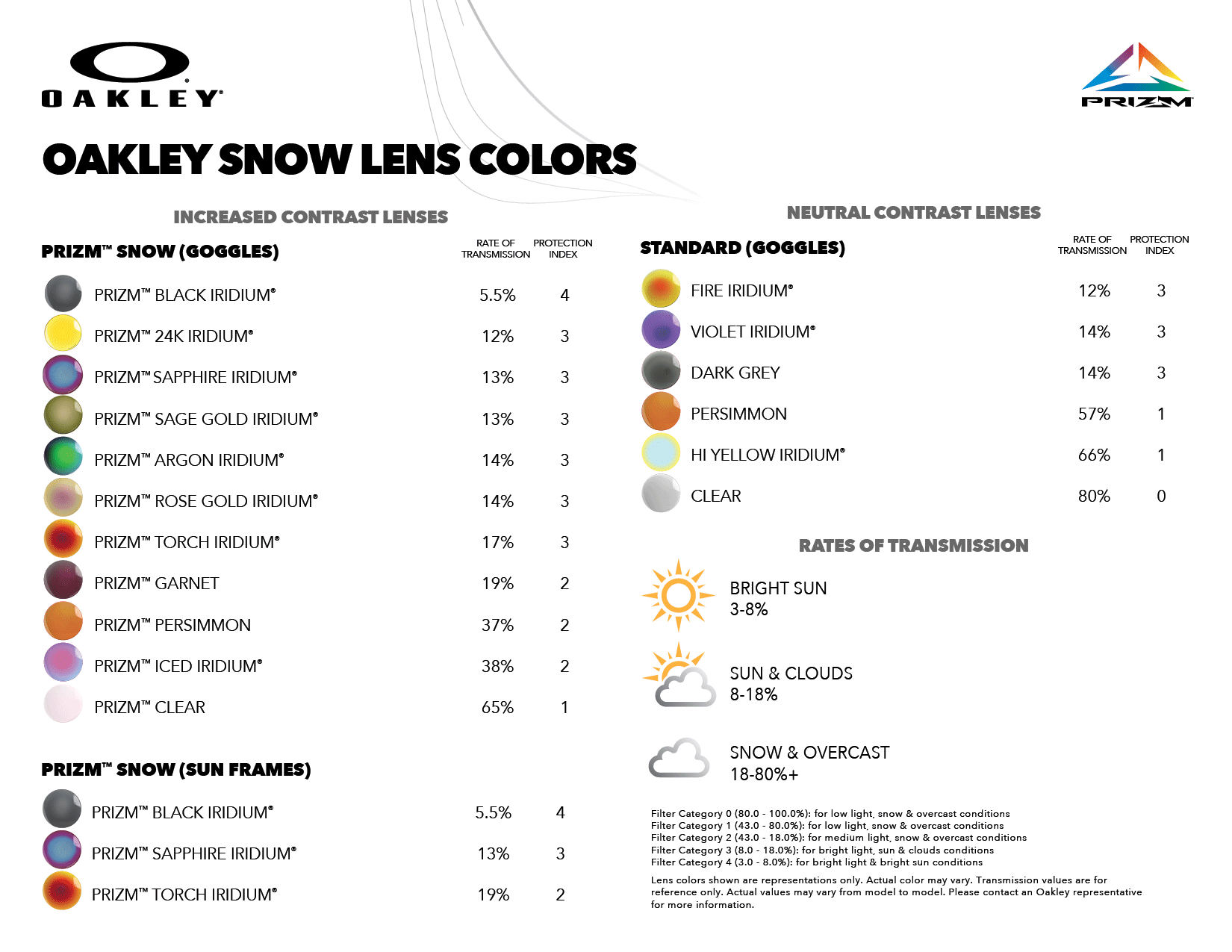
- “Bluebird but Bright” (Sunny, 30°F+): Grab 24K Iridium or Dark Grey. Check the UV index—if it’s above 8, these are non-negotiable. Warning: Sapphire Iridium works until 11 AM, but becomes uncomfortable by noon at high altitude.
- “Partly Cloudy Rollercoaster” (Shifting sun/clouds): Jade Iridium is your only lens needed. Its 15% VLT handles everything from 9 AM clouds to 1 PM sun. If you have Prizm Snow, it outperforms standard tints here by maintaining contrast during rapid light changes.
- “Flat Light Bomb” (Overcast, <20°F, snow falling): HI Persimmon immediately. If visibility drops below 1/4 mile, switch to HI Yellow. Never use polarized lenses here—they make flat light worse by reducing already-low contrast.
- “Spring Corn Glare” (50°F+, wet snow): Fire Iridium Polarized. The polarization cuts glare from meltwater without sacrificing terrain detail. Standard Fire Iridium works too, but you’ll need frequent squint breaks.
Build Your Lens Quiver Like a Guide
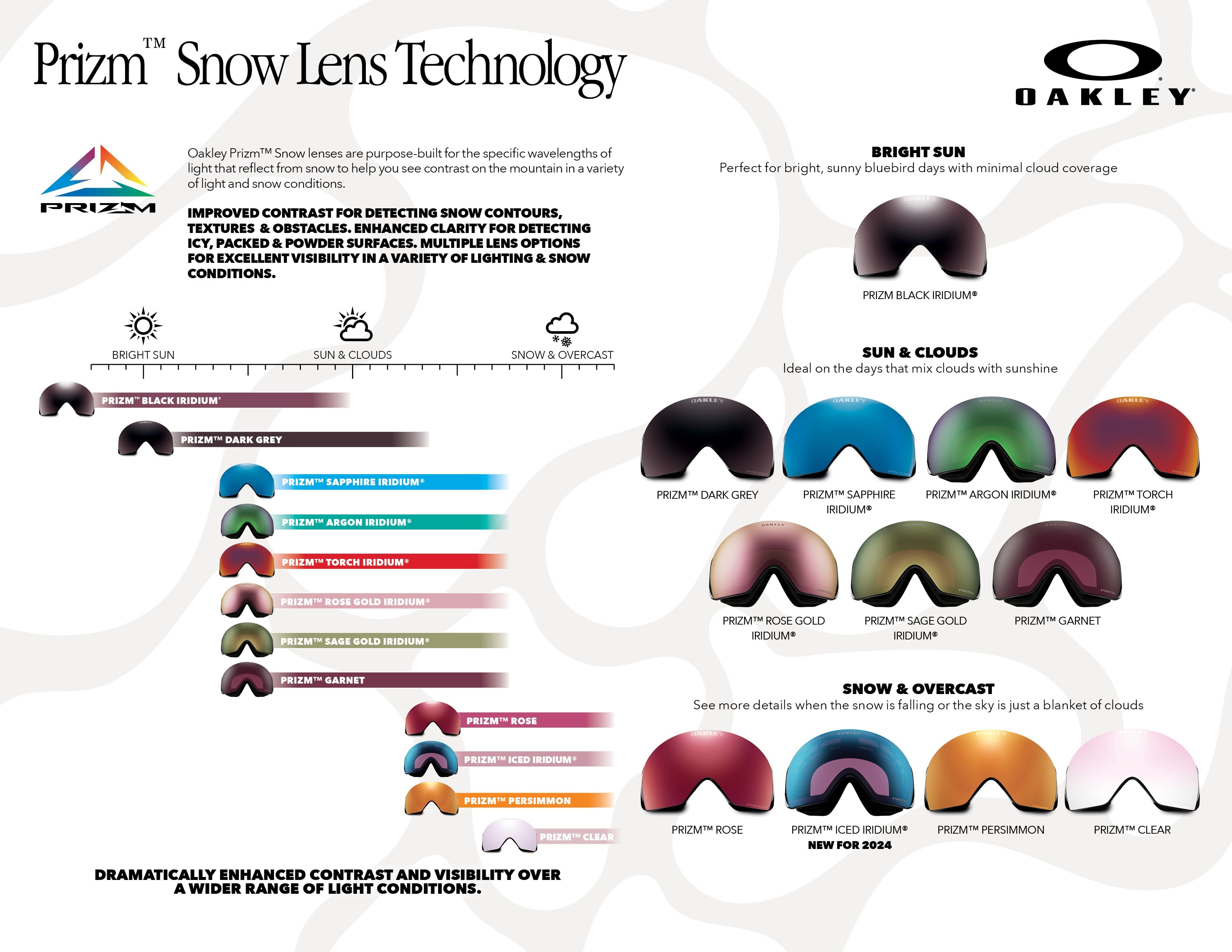
- One-Lens Riders (Resort Pass Holders): Jade Iridium covers 90% of conditions. Sacrifice nothing on bluebird days, and still function in light storms. Skip Prizm—it adds $50 with minimal real-world benefit for casual riders.
- Two-Lens Pros (Serious Skiers/Riders): Pair Fire Iridium (sunny) with HI Persimmon (flat light). This combo handles everything from Alaskan storms to Colorado bluebirds. Store lenses in separate soft cases—never stack them—to prevent micro-scratches that ruin optical clarity.
- Three-Lens Specialists (Backcountry/Competitors): Add Prizm Storm Rose to the two-lens quiver. Its engineered spectrum outperforms HI Yellow in whiteout conditions by enhancing subtle wind features in snow. Critical: Never use polarized lenses for avalanche beacon viewing—they distort LCD displays.
Emergency Lens Care Protocol for Mountain Days
A single scratch can ruin your lens optics. Follow these field-tested protocols:
- Fogging Crisis: Never wipe the inside surface. Blowing gently across the lens activates the anti-fog coating. If fog persists, store goggles upside-down in your jacket for 60 seconds—body heat evaporates moisture without damaging coatings.
- Snow Removal: Tap lenses outward from the center to dislodge snow. Never brush snow off—micro-abrasives in snow scratch coatings. For packed snow, hold goggles 6 inches from your face and breathe warm air across the lens for 10 seconds.
- Scratch Prevention: Store lenses in the original microfiber bag—never loose in your pack. If you drop goggles, inspect the lens edge for micro-chips; these spread into cracks during temperature changes.
Your Action Plan for Perfect Vision Tomorrow
If you take only one thing from this Oakley goggle lens guide: Jade Iridium is the undisputed king of versatility. For 90% of riders, it’s the only lens needed across all but the most extreme conditions. But if you face true flat-light storms (like Pacific Northwest powder days), add HI Persimmon to your quiver—it transforms near-zero visibility into rideable terrain. Crucially, avoid polarized lenses for general mountain use; they solve glare but create dangerous contrast loss on textured snow. Before your next trip, check Oakley’s website for your specific model’s VLT specs—some “Fire Iridium” lenses vary from 10-16% VLT by year. With these condition-specific strategies, you’ll stop guessing and start seeing every bump, ice patch, and powder stash with surgical precision. Your lens isn’t just gear—it’s your most critical safety tool on the mountain.