If you rely on corrective lenses, struggling to see clearly in bright sunlight is more than just inconvenient. It can be unsafe when driving, hiking, or simply walking outside on a sunny day. Regular sunglasses will not correct your vision, leaving you squinting or risking eye strain.
This guide walks you through exactly how to get prescription sunglasses step by step. You will learn what you need before buying, how to choose the right lenses and frames, where to shop, and how to save money using FSA or HSA funds.
Get a Valid Eyeglass Prescription First
Before you can buy prescription sunglasses, you need one essential thing: a current eyeglass prescription from a licensed optometrist or ophthalmologist.
What Your Prescription Must Include
Your prescription contains specific measurements that ensure your lenses correct your vision properly:
• Sphere (SPH) corrects nearsightedness or farsightedness
• Cylinder (CYL) and Axis correct astigmatism
• Add power provides reading or progressive lens correction
• Pupillary Distance (PD) ensures lenses align with your pupils
Contact lens prescriptions are not interchangeable with eyeglass prescriptions due to differences in lens positioning and power calculations.
How Long Is a Prescription Valid
Most prescriptions remain valid for one to two years, depending on your eye health and local regulations. Even if your vision feels stable, annual exams help detect early signs of conditions like glaucoma or macular degeneration.
Always request a copy of your prescription after an exam. You have a legal right to it, and having it on file gives you the freedom to shop anywhere.
Choose the Right Lens Features
Prescription sunglasses are not one-size-fits-all. The right lens technology enhances clarity, comfort, and safety in bright conditions.
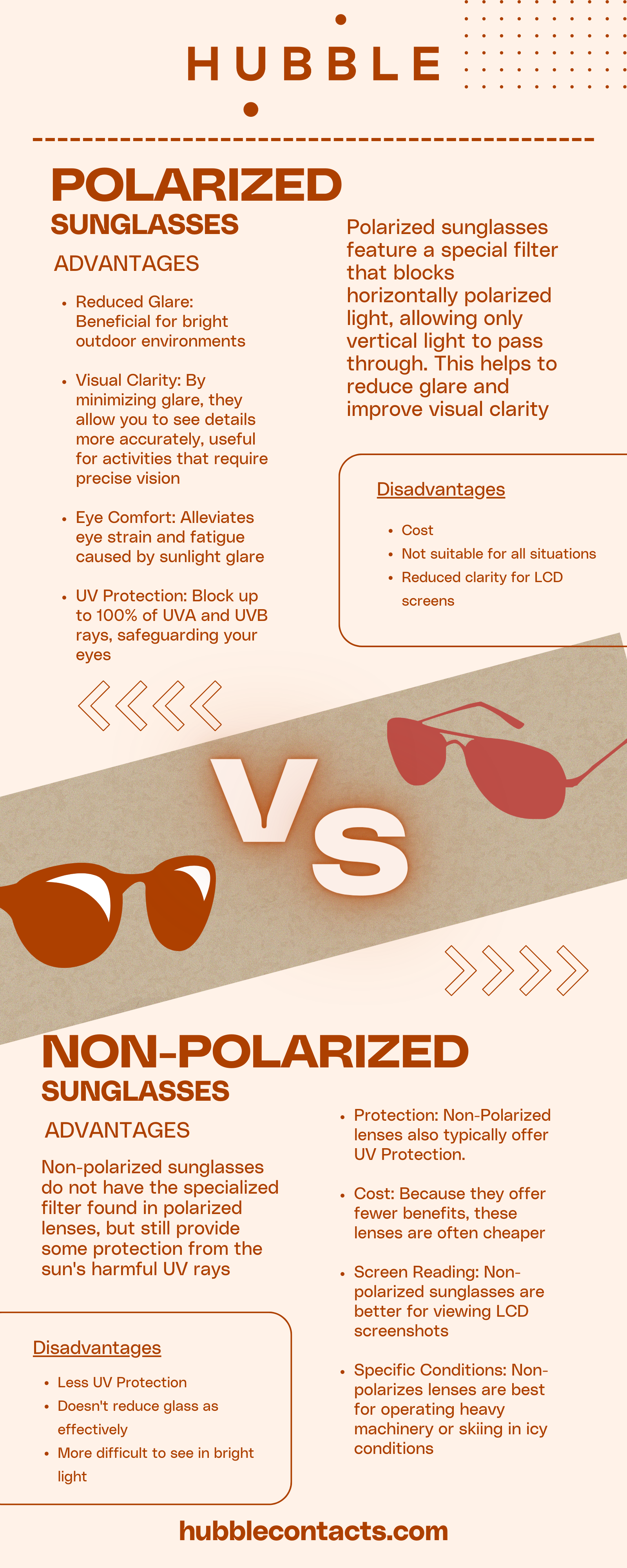
Polarized Lenses Reduce Glare
Polarized lenses filter horizontal glare from reflective surfaces like water, snow, and roads. They improve visual clarity and reduce eye strain during outdoor activities.
These lenses work best for driving, fishing, skiing, and beach days. However, polarized lenses may make it harder to see LCD screens like car dashboards and ATMs at certain angles.
UV Protection Is Non-Negotiable
All quality prescription sunglasses must block 100% of UVA and UVB rays. This protects your eyes from long-term damage like cataracts and macular degeneration.
Dark lenses without UV protection can actually be more dangerous. They dilate your pupils, letting in more harmful UV light than wearing no sunglasses at all.
Photochromic Lenses Offer Convenience
Photochromic lenses automatically darken in sunlight and clear up indoors. They eliminate the need to carry two pairs of glasses.
These lenses may not darken fully inside cars due to UV-blocking windshields. They also react more slowly in extreme heat or cold.
Pick the Right Tint for Your Needs
Different lens colors serve different purposes. Gray provides true color perception for general daytime wear. Brown or amber enhances contrast and works well for driving. Green offers balanced clarity and comfort. Yellow or orange increases visibility in low light but should not be used in bright sunlight. Gradient tints darken at the top while remaining lighter at the bottom, making them ideal for driving.
Select the Best Lens Material
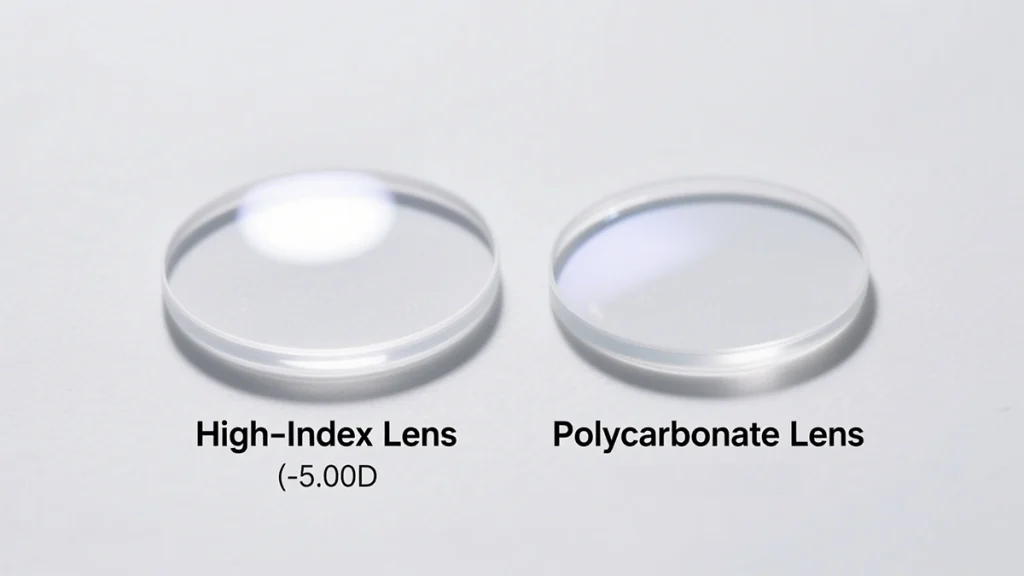
Your prescription strength determines the best lens material for thinness, weight, and optical clarity.
Polycarbonate for Most People
Polycarbonate lenses are lightweight and impact-resistant. They work well for everyday use and sports activities. This is the standard material for most prescription sunglasses.
High-Index for Strong Prescriptions
If your prescription is ±4.00 diopters or higher, high-index lenses reduce thickness and minimize the “bug-eye” distortion effect. These lenses come in 1.67 and 1.74 indexes.
Pair high-index lenses with aspheric design and smaller frames for the best results.
Trivex for Superior Clarity
Trivex offers excellent optical quality and great clarity for sensitive vision. It is slightly thicker than polycarbonate but provides superior visual performance.
Add Essential Lens Coatings
Coatings enhance performance and extend the life of your sunglasses.
Anti-reflective coating reduces back-glare and improves night vision. Scratch-resistant coating protects against daily wear and tear. Mirror coating adds style while reducing light transmission. Blue light filter provides minor benefit in sunglasses but is more useful for indoor lenses.
Many retailers bundle UV protection, scratch-resistant coating, and anti-reflective coating into their base pricing.
Choose Frames That Fit and Flatter
The frame affects both comfort and optical accuracy, especially with strong prescriptions.
Frame Materials Comparison
Acetate offers style, color variety, and durability. Metal provides a sleek look with adjustable hinges. Titanium delivers lightweight comfort and hypoallergenic properties. Nylon or propionate works well for sporty, flexible frames.
Match Frame Shape to Face Shape
Round faces suit angular frames like squares and rectangles. Square faces look best in round or oval frames. Oval faces can pull off most frame styles. Heart-shaped faces benefit from cat-eye or bottom-heavy designs.
Use virtual try-on tools available at retailers like GlassesUSA, Target Optical, and Warby Parker to preview how frames look on your face before buying.
Nose Bridge Fit Matters
Universal fit works for average bridge height. Adjustable nosepads allow customization for high or low bridges. High bridge fits accommodate elevated nasal profiles common in Asian facial structures. Low bridge fits suit flatter noses.
Poor fit causes eye strain and blurred vision.
Know Your Prescription Complexity

Not all prescriptions are easy to fit. Strong prescriptions require special planning.
Low vs. High Prescription Ranges
Low prescriptions range from ±0.25 to ±3.00 diopters. Medium prescriptions fall between ±3.00 and ±6.00 diopters. High prescriptions exceed ±6.00 diopters.
For high prescriptions, use high-index lenses, choose aspheric designs to reduce edge distortion, and pick smaller frames to minimize lens bulge.
Measure Your Pupillary Distance
PD ensures your lenses’ optical centers align with your pupils for clear vision.
How to Get Your PD
Check your prescription or an old glasses receipt. Measure manually using a ruler and mirror. Use a smartphone app for estimation. Use a webcam-based tool like FusLenses.com offers for free.
Some prescriptions list separate values for each eye, such as OD: 32mm and OS: 30mm. The total PD equals the average of both eyes.
A tolerance of ±2mm is acceptable, but precise PD improves comfort, especially for strong prescriptions.
Where to Buy: Online vs. In-Store
You have three main options: in-store providers, online retailers, or retrofitting existing frames.
In-Store Shopping: Try Before You Buy
Target Optical, LensCrafters, and Warby Parker offer professional fitting and adjustments. You can try frames immediately and receive expert advice. Many locations provide same-day pickup for online orders.
Target Optical carries designer brands including Ray-Ban, Oakley, Coach, and Ralph Lauren. They offer up to 50% off select Coach and Ralph Lauren frames and 10% off lenses with AI glasses or Oakley Meta purchases.
Online Retailers: Affordable and Convenient
GlassesUSA.com offers over 1,500 styles starting at $39. They provide free virtual try-on, accept FSA and HSA cards directly at checkout, and include a 60-day return window with a 365-day warranty.
FusLenses.com specializes in retrofitting prescription lenses into your existing frames. If you love your Oakley or Ray-Ban sunglasses, send them in and receive them back with new prescription lenses. They offer polarized, photochromic, and AMP color-enhancing options.
Use FSA or HSA Funds
Prescription sunglasses qualify for FSA and HSA spending. You can use your FSA or HSA debit card at checkout or submit receipts for reimbursement. These accounts cover frames, lenses, coatings, and shipping.
Keep documentation for tax and audit purposes.
Care for Your Investment
Proper care keeps your sunglasses clear and functional.
Clean Safely
Rinse lenses with lukewarm water. Wash with mild soap. Dry with a microfiber cloth. Store in a hard case when not in use.
Avoid Common Mistakes
Do not use paper towels or clothing, which scratch lenses. Avoid alcohol-based cleaners that damage coatings. Never leave sunglasses in hot cars, which warps frames and loosens lenses.
Frequently Asked Questions About Getting Prescription Sunglasses
Can I use my contact lens prescription to buy prescription sunglasses?
No. Contact lens prescriptions are not interchangeable with eyeglass prescriptions. They differ in vertex distance and power calculations. You need a separate eyeglass prescription for sunglasses.
How long does it take to get prescription sunglasses?
Custom lens production typically takes 7 to 14 business days. Online orders may add shipping time. In-store purchases with same-day pickup can be faster for basic prescriptions.
Are prescription sunglasses covered by insurance?
Standard vision insurance often covers a portion of the cost, but coverage varies by plan. FSA and HSA funds can be used for prescription sunglasses regardless of insurance coverage.
Can I get prescription sunglasses with bifocal or progressive lenses?
Yes. Most retailers offer progressive lenses that combine distance and reading vision in one lens. These work well for prescription sunglasses if you need correction for multiple distances.
What happens if my prescription sunglasses do not fit properly?
Check the retailer’s return policy before purchasing. GlassesUSA.com offers a 60-day return window. Target Optical provides a 90-day return window. Many online retailers will remake lenses or issue refunds for fit or prescription errors.
Key Takeaways for Getting Prescription Sunglasses
Getting prescription sunglasses involves securing a valid eyeglass prescription first. Understanding lens options like polarization, UV protection, and tint helps you choose features that match your lifestyle. Selecting the right frame material and fit ensures comfort and optical accuracy.
Whether you shop online or in-store, take advantage of virtual try-on tools, FSA or HSA savings, and return policies. With the right preparation, you can find prescription sunglasses that deliver clear vision, full UV protection, and style.
Start by scheduling an eye exam if you do not have a current prescription. Then explore your options using the tools and tips in this guide.