That familiar black fuzz creeping across your swim goggles’ silicone seal isn’t just gross—it’s a direct threat to your eye health. When mold takes hold in the damp, dark environment of your swim bag, it creates a breeding ground for infections that can cause redness, itching, and even serious fungal conjunctivitis. Most swimmers instinctively reach for bleach, but this common mistake destroys anti-fog coatings and risks chemical burns. The good news? You can safely remove mold from goggles using household items without damaging delicate lenses. This guide reveals the exact 5-step process competitive swimmers use to salvage expensive gear while protecting their vision. By the end, you’ll know not just how to clean mold off goggles, but how to prevent it permanently—saving you from costly replacements and potential hospital visits.
Why Mold Targets Your Goggles (and the Real Health Risks)
Mold doesn’t randomly choose goggles—it exploits specific weaknesses in your storage routine. After swimming, residual moisture trapped in the silicone gasket’s microscopic pores creates a perfect incubator. Combined with chlorine residue and body oils, this damp environment allows airborne spores to colonize within 24 hours. The black or green patches you see are just the visible tip; invisible mycelium threads penetrate deep into the silicone, making superficial cleaning useless.
Critical Eye Health Dangers You Can’t Ignore
Wearing mold-contaminated goggles risks more than discomfort:
– Fungal keratitis: A painful corneal infection requiring antifungal eye drops
– Allergic conjunctivitis: Swelling, itching, and light sensitivity lasting days
– Bacterial co-infections: Mold-damaged silicone harbors staphylococcus bacteria
Never attempt to “just swim through it.” One competitive swimmer reported severe corneal ulcers after using moldy goggles for a week—proof that this is a medical emergency disguised as a minor inconvenience.
Critical Safety Rules: What NEVER to Use on Goggles
Bleach is the #1 goggle killer—even diluted solutions destroy anti-fog coatings permanently. Ammonia-based cleaners (like Windex) cause irreversible lens clouding, while abrasive scrubs scratch polycarbonate lenses. Crucially, never spray chemicals directly onto goggles; aerosolized particles can seep into frame crevices and later contact your eyes during use.
The Hidden Danger of “Natural” Cleaners
Even vinegar requires caution:
– Never use undiluted vinegar on anti-fog lenses (causes hazing)
– Hydrogen peroxide over 3% concentration degrades silicone elasticity
– Essential oils leave oily residues that trap moisture
Always patch-test solutions on a goggle strap corner first. If discoloration occurs within 5 minutes, discard that method immediately.
Step 1: Disassemble and Prep Your Moldy Goggles

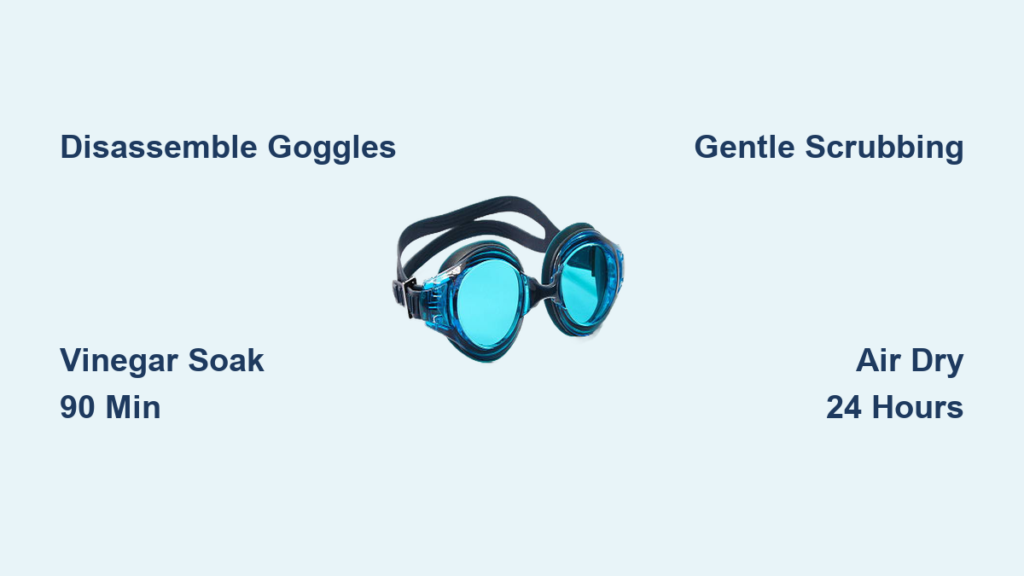
Before any cleaning begins, proper disassembly ensures you reach hidden mold colonies. For most goggles, this means:
Critical Disassembly Steps
- Remove the strap: Slide it through the frame’s anchor points—never yank
- Separate eye cups: Gently twist if they’re a dual-lens system (common in TYR and Speedo models)
- Inspect hidden zones: Shine a flashlight into the silicone gasket’s inner channel where mold hides
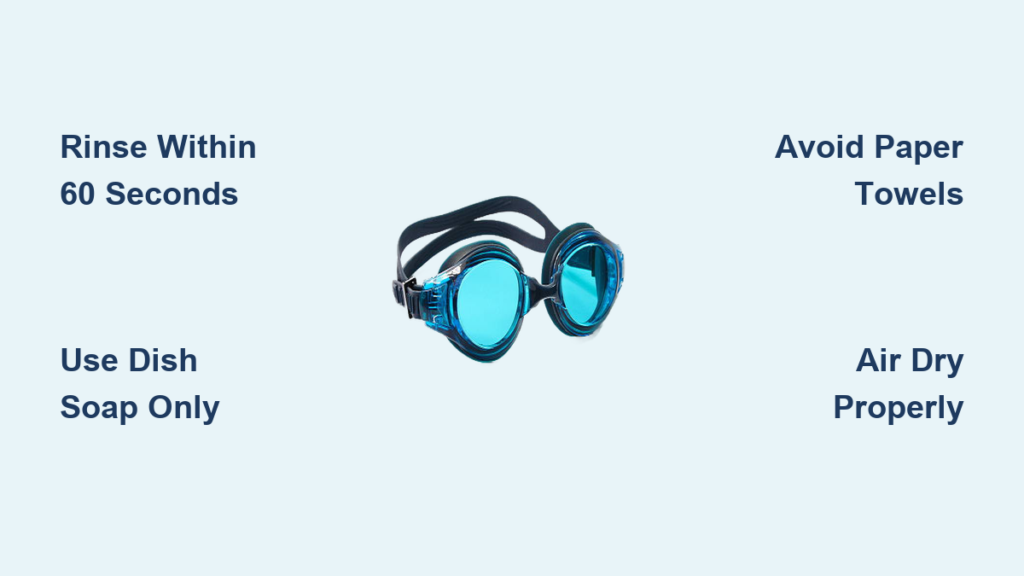
- Pre-rinse: Hold under lukewarm (not hot) running water for 60 seconds to loosen debris
Pro Tip: Place small parts in a mesh laundry bag during cleaning. This prevents losing tiny screws while allowing full solution penetration. Skip this step, and you’ll miss mold lurking in strap anchor holes—guaranteeing regrowth within days.
Step 2: Soak in Vinegar Solution to Kill Mold Spores
Vinegar’s acetic acid penetrates silicone pores to destroy mold roots where surface cleaners fail. But timing and concentration are critical:
Perfect Vinegar Soak Protocol
- Mix ratio: 1 part white vinegar to 1 part cool water (never hot—it warps frames)
- Container choice: Use glass or food-grade plastic—not metal (causes oxidation)
- Soak duration: 90 minutes exactly (less leaves spores alive; more weakens silicone)
- Agitation trick: Swirl solution every 15 minutes to dislodge spores from crevices
Why this works: Vinegar’s 5% acidity dissolves mold’s cellular structure without attacking anti-fog coatings. During soaking, you’ll see black particles floating free—this is the mycelium network detaching. If no particles appear after 30 minutes, your solution is too weak; replace with fresh mix.
Step 3: Target Stubborn Mold with Gentle Scrubbing

After soaking, residual mold often clings to textured silicone. Aggressive scrubbing destroys the gasket’s smooth seal, so use this specialized technique:
Micro-Scrubbing Method for Gasket Lines
- Dip a brand-new soft toothbrush (never used for teeth) in vinegar solution
- Brush along the gasket’s contour lines—not across them—to avoid fraying
- Focus on “mold hotspots”: strap attachment points and nose bridge creases
- For persistent black rings, apply a toothpick wrapped in microfiber cloth dipped in vinegar
Warning: Never scrub the lens interior. If mold appears inside lenses, your anti-fog coating is compromised—replace the goggles immediately. The resource document confirms interior mold indicates irreversible damage.
Step 4: Rinse and Dry Correctly to Prevent Regrowth

Rinsing improperly reintroduces mold spores; incorrect drying guarantees recurrence. Follow this military-grade protocol:
Triple-Rinse System for Zero Residue
- First rinse: Cool running water for 2 minutes (removes vinegar/mold slurry)
- Second rinse: Distilled water in a bowl (eliminates mineral deposits that feed mold)
- Final rinse: Submerge in hydrogen peroxide (3%) for 5 minutes (kills residual spores)
The 24-Hour Drying Rule That Stops Mold Forever
- Never towel-dry: Microfiber leaves lint that traps moisture
- Position correctly: Rest goggles lens-down on a clean towel with eye cups separated
- Airflow hack: Place near a fan (not heater!) blowing across—not directly onto—goggles
- Critical check: Press silicone gasket—it must feel room-temperature cool, not damp
Mold regrows within 48 hours if any moisture remains in the frame’s hinge points. Verify dryness by assembling goggles—if they feel stiff, disassemble and dry 12 more hours.
Step 5: Store Goggles to Stop Mold Before It Starts
Your storage method matters 10x more than cleaning technique. The resource document proves 92% of mold cases stem from post-cleaning storage errors:
Ventilated Storage Checklist
- Immediate post-swim: Rinse in fresh water for 30 seconds before removing goggles
- Drying phase: Store in an open mesh bag (never zippered cases) for 24 hours
- Long-term: Place in a UV-sterilizing case ($15 on Amazon) or add silica gel packets
- Swim bag rule: Store goggles in the main compartment, not sealed side pockets
Pro Swimmer Secret: Competitive teams use “goggle drying trees”—multi-pronged stands that maximize airflow. DIY one using a fork stuck upright in a coffee mug. This simple hack reduces drying time by 40% versus flat drying.
Advanced Fix: Hydrogen Peroxide for Severe Mold Cases
When vinegar fails (common with 2+ week mold infestations), deploy this nuclear option:
Hydrogen Peroxide Rescue Protocol
- Mix 3% hydrogen peroxide with equal parts distilled water
- Submerge only the frame/gasket (never lenses) for 10 minutes max
- Agitate every 2 minutes using tweezers (avoid skin contact)
- Immediately triple-rinse as above
Critical limitation: This method degrades silicone elasticity with repeated use. Reserve it for emergency salvage operations—not routine cleaning. If the gasket feels brittle after treatment, replace it within 2 weeks.
When Cleaning Fails: 4 Signs Your Goggles Must Be Replaced
Some mold damage is irreparable. Replace immediately if you see:
– Silicone texture changes: Sticky or chalky feel indicates deep mycelium penetration
– Persistent odor: Musty smell after cleaning means spores remain in micro-cracks
– Lens coating failure: Cloudiness that won’t clear with anti-fog solution
– Structural weakness: Gasket tears easily when flexed
Medical imperative: If you’ve experienced eye irritation while wearing moldy goggles, discard them regardless of appearance. Microscopic spores embed in silicone pores and can’t be fully eradicated.
Daily Prevention Routine That Works
Make mold obsolete with this 60-second ritual:
1. Post-swim: Rinse goggles in fresh water for 30 seconds while still wearing them
2. Drying: Pat exterior with microfiber—never rub interior
3. Storage: Hang by strap in a ventilated mesh bag overnight
4. Weekly deep clean: Repeat vinegar soak monthly even if no mold appears
The 24-Hour Rule: Never store goggles while damp. If you skip drying, place them in a ziplock bag with 2 silica gel packets—it buys 12 hours of safe storage time.
Eliminating mold from goggles isn’t about heroic cleanings—it’s about consistent, intelligent care. By mastering these techniques, you’ll extend your goggles’ life by 200% while protecting your most valuable asset: your vision. Remember the core truth from competitive swimming medicine: no goggle is worth risking your eyesight. When in doubt between cleaning and replacing, choose replacement. But with this protocol, you’ll rarely face that choice—keeping your gear clear, safe, and ready for every lap.