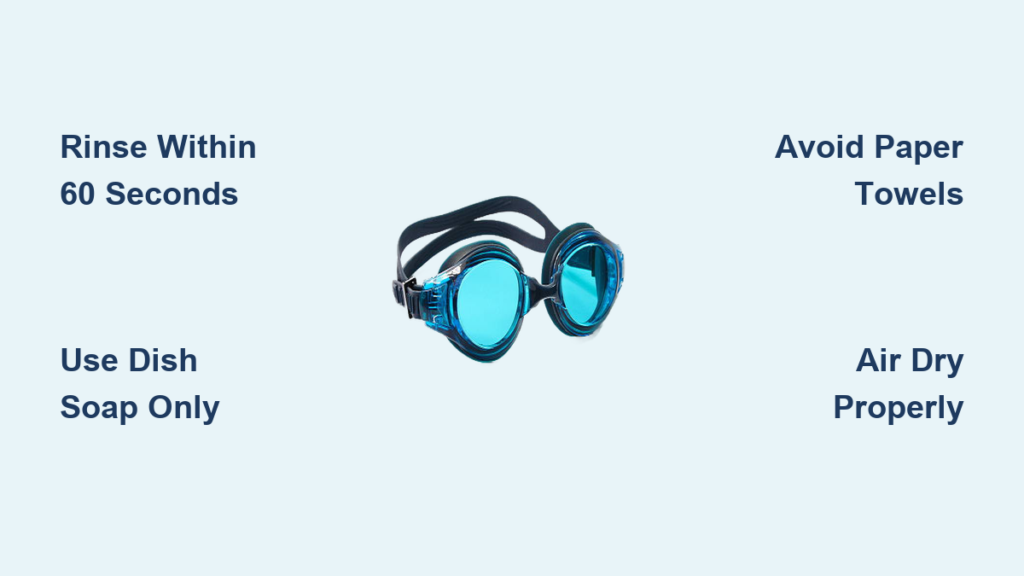
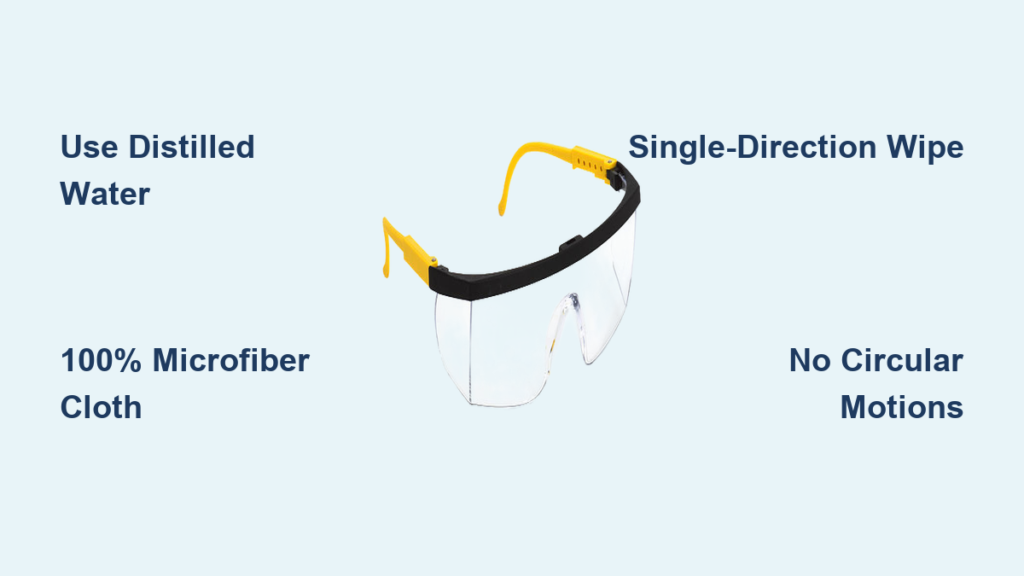
Your goggles are streaked with sunscreen, fogged from sweat, and smudged from frantic adjustments. You grab your shirt to wipe them clear—only to hear that dreaded scritch sound. Within seconds, fine scratches permanently cloud your vision. This isn’t just annoying; it’s dangerous whether you’re swimming laps, skiing moguls, or working a construction site. The harsh truth? 90% of scratches happen during cleaning, not from impact. But here’s the good news: using the exact techniques professional athletes and safety officers rely on, you can clean your goggles without a single scratch in under a minute. This guide reveals the precise materials, step-by-step protocol, and critical mistakes to avoid—backed by lens manufacturer standards.
Why Your Current Cleaning Method Is Ruining Your Goggles
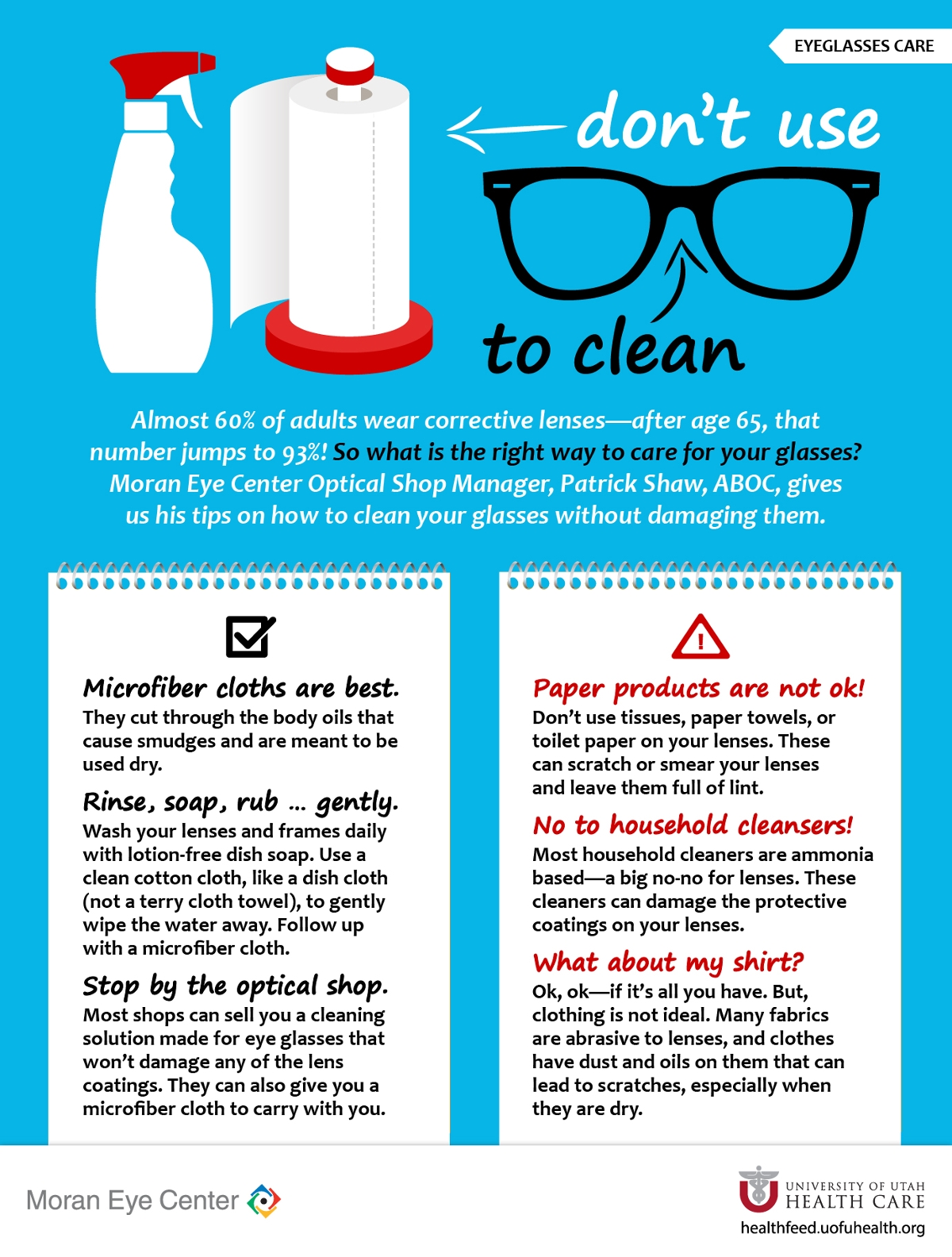
Most people unknowingly sabotage their goggles with everyday items that feel soft but are secretly abrasive. Paper towels, tissues, and cotton shirts contain wood fibers and rough weaves that act like sandpaper on delicate lens coatings. Household cleaners like Windex strip anti-fog treatments in seconds, while circular wiping motions grind grit into microscopic grooves. Even tap water leaves mineral deposits that become scratch traps when dried. The result? Hazy vision, reduced performance, and replacing expensive goggles months prematurely. Stop these destructive habits now to make your current pair last years longer.
The Distilled Water Difference: Why Tap Water Causes Invisible Damage
Tap water seems harmless, but its minerals create a hidden time bomb. When tap water dries on lenses, it leaves behind calcium and magnesium crystals. These microscopic deposits catch grit during wiping, turning your cloth into a polishing wheel. Distilled water eliminates this risk—it’s purified to remove 99.9% of minerals. For quick cleanups, keep a spray bottle of distilled water with a single drop of baby shampoo (tear-free formula only). Never use dish soap with moisturizers or degreasers—these dissolve anti-fog coatings. Fill a small container with lukewarm distilled water for deeper soaks, but never submerge goggles with silicone seals for more than 30 seconds to avoid seal damage.
Why Your Microfiber Cloth Must Be 100% Pure (And Where to Find It)
Not all “microfiber” cloths are safe. Blends with polyester or nylon fibers create abrasive surfaces. Demand 100% microfiber labeled “for optics or lenses”—these use ultra-fine 0.3 denier fibers (thinner than silk). Inspect your cloth by holding it against light; if you see visible threads thicker than a human hair, discard it. Always wash microfiber cloths separately in cold water with fragrance-free detergent—no fabric softener, which clogs fibers. Store it in a sealed plastic bag when not in use to prevent dust contamination. Pro tip: Assign one cloth only for goggles; using it on phones or cameras transfers abrasive particles.
The 4-Step Scratch-Free Cleaning Protocol (Tested by Olympic Swimmers)
Follow this sequence exactly—deviating by even one step risks micro-scratches. This method works for swim, ski, safety, and cycling goggles with anti-fog or UV coatings.
Step 1: Pre-Rinse Under Gentle Running Water (15 Seconds Max)
Hold goggles by the strap or frame (never touch lenses!), and rinse both sides under lukewarm tap water for exactly 10-15 seconds. Use low pressure—high pressure forces grit into coating pores. Tilt lenses downward so water flows from nose bridge to temple. This flushes away 95% of abrasive particles like sand or salt crystals. Critical check: If water beads up excessively on the outside lens, your hydrophobic coating is degrading—skip soap and use distilled water only.
Step 2: Apply Solution to Cloth—Never Directly on Lenses
Spray your distilled water/baby shampoo mix onto the microfiber cloth—not the lens. Spraying directly can force moisture into gasket seals, causing internal fogging. Dampen just one corner of the cloth. For heavy sunscreen residue, dip the cloth corner into the solution, then wring it out until almost dry. A damp cloth lifts grime; a wet cloth spreads oils.
Step 3: Wipe with Single-Direction Strokes (No Circles!)
Place the damp cloth corner on the lens center. Wipe in one straight line from top to bottom, applying zero pressure—let the cloth’s fibers do the work. Lift the cloth completely after each stroke. Never reuse the same cloth section; rotate to a clean area after 2-3 wipes. Stop immediately if you hear scratching—rinse again to remove trapped grit. For inside lenses, use one light stroke max; anti-fog coatings can’t withstand repeated contact.
Step 4: Final Rinse and Air-Dry—No Touching!
Rinse under cool distilled water for 5 seconds to remove soap residue. Shake vigorously 3 times to dislodge water droplets. Place goggles lens-up on a clean towel in a dust-free area. Never pat dry the inside lens—residual moisture evaporates harmlessly, but wiping it removes anti-fog coating. Outside lenses can be dabbed once with a dry microfiber section. Full drying takes 10 minutes; rushing this step traps minerals.
Inside Lens Emergency Protocol: Saving Fogged Goggles Without Destroying Coatings
The inside lens is coated with a water-attracting layer thinner than a soap bubble. One wrong move permanently kills anti-fog performance. If your vision fogs mid-swim or snow, never wipe it—this grinds sweat acids into the coating. Instead:
The 30-Second De-Fog Rescue
- Rinse goggles under cool water (10 seconds)
- Apply one drop of commercial anti-fog solution (like J&J Pure Sport) to the inside lens
- Rub solution in with a clean fingertip using tiny circles for 5 seconds
- Rinse thoroughly under distilled water (15 seconds)
- Air-dry for 5 minutes
Critical warning: Baby shampoo de-greases but removes anti-fog coating after 2-3 uses. Reserve it for when commercial spray isn’t available. Never use spit—saliva’s pH (6.2-7.6) degrades coatings 3x faster than water. If fogging persists after cleaning, your coating is gone; replace goggles.
5 Deadly Cleaning Mistakes (And How to Fix Them)

Why Paper Towels Guarantee Scratches Within Minutes
Paper towels contain lignin—a natural wood fiber that’s 3x more abrasive than lens plastic. One wipe creates 10-50 microscopic scratches visible under magnification. Fix: Keep a microfiber cloth in your gear bag. If caught without one, rinse lenses and air-dry—never improvise with paper.
The Hidden Danger of “Lens Cleaner” Sprays
Many sprays contain ammonia or alcohol that dissolves anti-fog polymers. Fix: Check labels for “alcohol-free” and “for coated lenses.” Better yet, use your distilled water/baby shampoo mix—it’s 100% coating-safe.
How Storing Goggles Loose in Your Bag Causes 80% of Scratches
Keys, zippers, and even fabric weave scratch lenses in seconds. Fix: Always use a hard-shell case with microfiber lining. No case? Store goggles in a clean sock inside your bag.
Why Circular Wiping Creates Spiderweb Scratches
Circular motions trap grit in cloth fibers, dragging it across the same spot repeatedly. Fix: Adopt the single-stroke method—wiping top-to-bottom like a windshield wiper.
The Tap Water Trap You Can’t See
Hard water leaves “water spots” that feel smooth but contain sharp mineral crystals. Fix: Always finish with distilled water rinse. Keep travel-sized distilled water bottles at poolside.
Long-Term Lens Preservation: Storage and Handling Rules
Your cleaning routine is useless if storage ruins everything. Always store goggles lens-up in a rigid case—never lens-down where dust settles. Before storage, ensure lenses are 100% dry; trapped moisture breeds mold that etches coatings. For ski/snow goggles, never leave them in a hot car—the heat warps frames and bubbles coatings. At pools, hang goggles by straps to air-dry overnight; never stuff damp goggles into gear bags where chlorine fumes accelerate coating decay. Replace microfiber cloths every 3 months—they lose effectiveness as fibers break down.
Final Takeaway: Cleaning goggles without scratches isn’t about being gentle—it’s about using the exact right materials in the exact right sequence. Distilled water, 100% microfiber, and single-direction wiping transform a 30-second chore into bulletproof lens protection. Do this consistently, and your $200 goggles will deliver crystal clarity for seasons, not months. Your next clear-vision swim, ski run, or worksite starts with one action: grab that microfiber cloth right now and rinse your goggles under distilled water. No excuses, no scratches—just perfect vision exactly when you need it.