Ray-Ban sunglasses are more than just eyewear. They represent a cultural phenomenon that began with a military problem in the 1920s and evolved into one of the most recognizable fashion accessories globally. Understanding the Ray-Ban sunglasses history reveals how a practical solution for pilots transformed into a symbol of cool across generations. The journey from World War II aviators to Hollywood blockbusters showcases a brand that has masterfully balanced function with fashion.
This comprehensive guide explores every chapter of the Ray-Ban story. You will discover how military needs sparked innovation, which iconic models defined different eras, and why Ray-Ban remains relevant today through smart glasses and strategic brand evolution.
The 1929 Military Problem That Started It All
Pilot Vision Issues at High Altitudes
In 1929, U.S. Army Air Corps Lieutenant General John A. MacCready identified a serious issue affecting military pilots. Flying at high altitudes exposed aviators to intense sunlight that caused severe headaches and visual strain. At those elevations, unfiltered solar radiation created glare impairing visibility during critical flight operations. The military needed sunglasses reducing brightness without distorting color or compromising clarity for instrument reading and navigation.
MacCready approached Bausch & Lomb, a Rochester, New York optical company founded in 1853, to solve this challenge. The company had expertise in precision lenses and ophthalmic innovation, making it ideal for developing specialized aviation eyewear.
Development of the First Ray-Ban Lens
By 1936, Bausch & Lomb engineers created a prototype featuring green-tinted G-15 lenses. These lenses filtered 85% of visible light while blocking harmful ultraviolet and infrared radiation. Unlike early sunglasses that distorted colors, the G-15 maintained true color balance, essential for pilots reading instrument panels and identifying terrain.
The name Ray-Ban emerged from this function: to ban the sun’s rays. It directly reflected the product’s purpose of optical protection through intelligent lens technology. The brand officially launched in 1937 following the patent of the RB3 lens system, marking the birth of Ray-Ban as a distinct eyewear line.
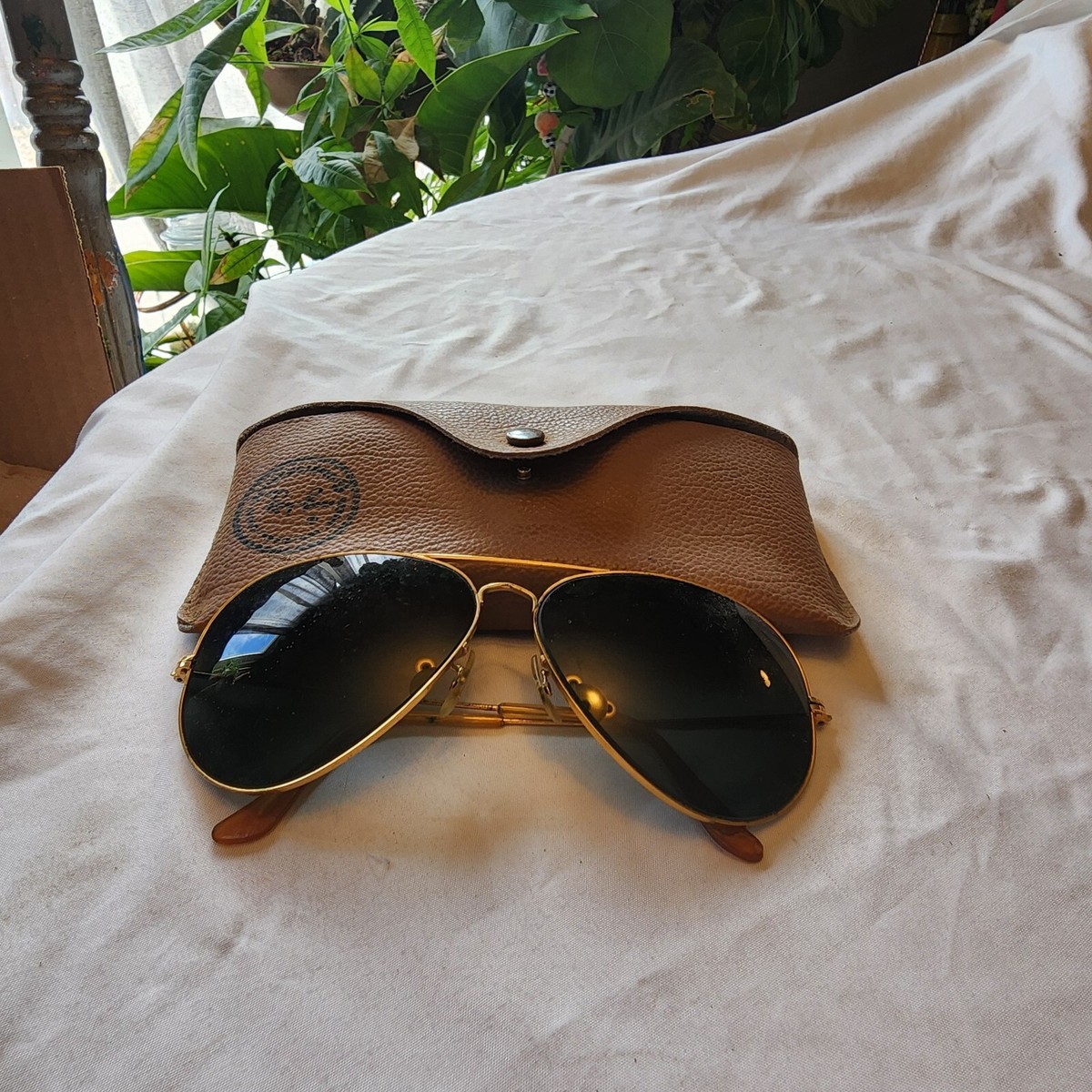
The Aviator: Military Origins and Enduring Design
Why Aviators Were Not Polarized
A common misconception suggests better sunglasses must be polarized. However, Ray-Ban deliberately avoided polarization in early Aviators. Polarized lenses eliminate all horizontal reflections, including critical visual cues for pilots such as sunlight bouncing off water or aircraft surfaces. Losing these signals could compromise flight safety. The G-15 lens offered glare reduction without sacrificing situational awareness, making it optimal for military use.
This deliberate design choice explains why authentic Aviator sunglasses remain non-polarized today. Collectors and enthusiasts value this authenticity, understanding the functional reasoning behind the decision.
Aviator Model Variations Over Time
Ray-Ban expanded the Aviator line while preserving its iconic silhouette. The Ray-Ban Aviator Classic RB3025 remains the original and most popular version. The Ray-Ban Aviator Max RB3925 offers larger lens area for enhanced coverage. The Ray-Ban New Aviator RB3625 provides a modernized fit with subtle updates. The Ray-Ban Reverse RBR0101SS features inverted gradient tinting darker at the bottom. The Ray-Ban Old Aviator RB3825 delivers retro styling with vintage detailing.
Each version appeals to different tastes while retaining the core DNA that made the Aviator legendary.
The Wayfarer Revolution of 1952

Design Breakthrough With James Dean
In 1952, Ray-Ban introduced the Wayfarer RB2140, a radical departure from traditional metal frames. Designed by Bausch & Lomb ophthalmic specialist Raymond Stegeman, it featured bold acetate plastic frames, a material rarely used in mass-market sunglasses at the time. Its trapezoidal shape, thick rims, and slightly upswept temples created a modern, architectural look distinct from delicate wire frames.
The Wayfarer’s cultural breakthrough came in 1955 when James Dean wore them in Rebel Without a Cause. His portrayal of teenage angst and rebellion made the sunglasses synonymous with nonconformity and cool. Teenagers across America wanted to emulate Dean’s look, and the Wayfarer became their badge of defiance.
The 1970s Decline and Near-Discontinuation
By the 1970s, consumer tastes shifted dramatically. Buyers favored larger, flashier frames and metal aviators over the angular Wayfarer. Sales plummeted as the model nearly disappeared from production. Bausch & Lomb considered phasing it out entirely, viewing the Wayfarer as a relic of a bygone era.
However, fate and Hollywood had other plans for this iconic design.
Hollywood Rescues Ray-Ban in the 1980s
The Strategic Product Placement Deal
In 1982, Ray-Ban partnered with Unique Product Placement, a marketing firm specializing in film and TV integration. The agreement required Ray-Ban to appear in at least 60 productions annually. This was not random exposure but a calculated campaign positioning Ray-Ban as the ultimate cool accessory.
The strategy exceeded all expectations, transforming Ray-Ban’s fortunes completely.
Risky Business and the Tom Cruise Effect
In 1983, Tom Cruise wore Wayfarers in Risky Business, dancing in his underwear to Old Time Rock and Roll. That scene became one of the most iconic film moments in advertising history. Sales of the Wayfarer jumped by 40% almost overnight. The image of Cruise in those black plastic frames defined 1980s youth culture and made the Wayfarer must-have eyewear.
Ray-Ban capitalized on the momentum, launching targeted advertisements featuring film clips. The Wayfarer transformed from outdated to aspirational within months.
Top Gun and Aviator Resurgence
Two years later, Cruise returned as Maverick in Top Gun, wearing Aviator sunglasses. The film turned military gear into global fashion phenomenon. Demand for Aviators soared with millions of units sold worldwide. The Top Gun effect extended beyond one movie, reigniting interest in Ray-Ban’s entire heritage line. Vintage styles became fashionable again, and Ray-Ban reclaimed its leadership position in sunglass cool.
Ray-Ban Models Beyond Aviators and Wayfarers
The Clubmaster and Its Intellectual Appeal
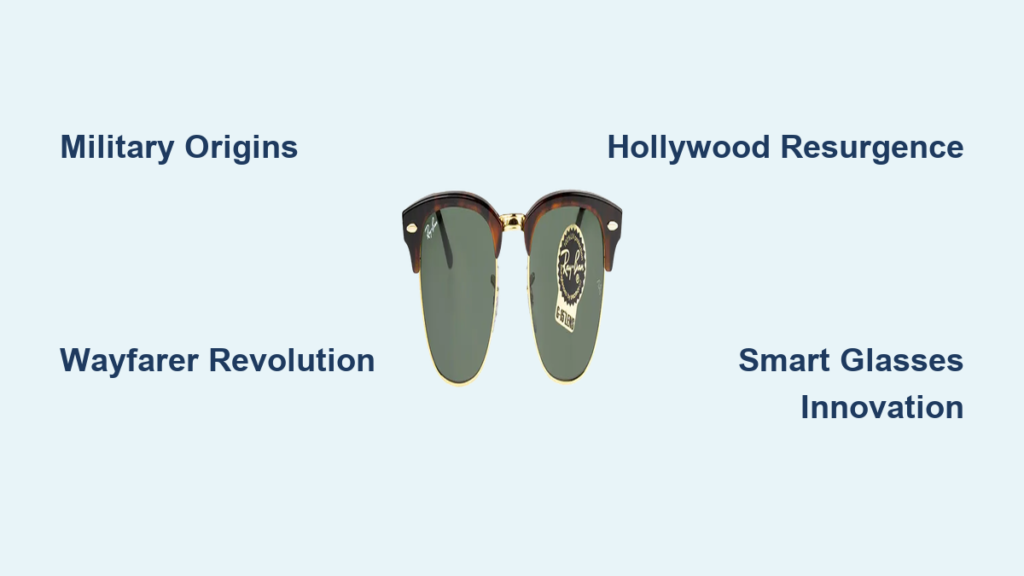
Introduced in the 1980s, the Clubmaster RB3016 combined a metal top bar with acetate lower rims. Its browline design gave it a scholarly, intellectual look. Civil rights leader Malcolm X famously wore this style, linking the frame to activism and intelligence. Today, the Clubmaster appeals to those valuing retro sophistication with modern edge.
Round Sunglasses and Counterculture
The Ray-Ban Round RB3024 gained fame through musicians like John Lennon and Elton John. Associated with 1960s counterculture, its wireframe and circular lenses symbolized peace, artistry, and nonconformity. Though initially niche, the Round found renewed life in the 2000s, embraced by indie musicians and fashion influencers seeking vintage authenticity.
The Caravan for Adventurers
The Caravan RB3108 features a squared-off aviator shape with a more aggressive profile. Favored by adventurers and outdoor enthusiasts, it offers the same UV protection with bolder aesthetics. Its angular frame and durable construction appeal to those seeking a rugged, off-road vibe.
Corporate Evolution: From American to Italian Ownership
The 1999 Luxottica Acquisition
In 1999, Luxottica Group, the Italian eyewear giant, acquired Ray-Ban from Bausch & Lomb for $640 million. This marked a pivotal shift from American-developed optics to Italian-led design and manufacturing. Luxottica owned major brands like Oakley and Oliver Peoples and operated retail chains including Sunglass Hut and LensCrafters. With deep industry reach, Luxottica repositioned Ray-Ban for a new era.
The acquisition brought significant resources to Ray-Ban’s revitalization through heritage reissues, global retail expansion, and sophisticated digital marketing campaigns.
Italian Manufacturing Excellence
While Ray-Ban originated in the United States, all authentic Ray-Bans are now handcrafted in Italy. This shift aligns with the luxury eyewear market’s expectation of European craftsmanship. Italian production emphasizes precision lens cutting, anti-reflective coatings, high-grade acetate, and corrosion-resistant metal alloys. Each pair undergoes multiple inspections ensuring optical clarity, durability, and comfort.
Materials include bio-acetate that is sustainable, richly colored, and hypoallergenic, along with stainless steel and beta titanium that are lightweight, flexible, and long-lasting.
Modern Innovation: Ray-Ban Meta Smart Glasses
Technology Meets Timeless Design
In 2021, Ray-Ban partnered with Meta to launch Ray-Ban Meta Smart Glasses, fusing classic design with wearable technology. Available in Wayfarer, Round, and Headliner styles, these glasses feature HD cameras capable of taking photos and 30-second videos. Open-ear audio through built-in speakers delivers music and calls. Microphones enable voice commands and live transcription. Touch controls on the temple allow easy operation. Meta AI integration provides voice-activated assistant for real-time information.
The 2023 and 2024 updates improved camera resolution, battery life, and AI responsiveness.
Balancing Tradition and Technology
The challenge was clear: adding technology without compromising style. Ray-Ban succeeded by keeping external design nearly identical to classic models. Only subtle cues like a tiny LED light hint at smart capabilities. This approach lets wearers enjoy cutting-edge features while maintaining the timeless look defining Ray-Ban.
Cultural Impact Across Generations
Icons Who Wore Ray-Ban
Ray-Ban has been worn by history’s most influential figures. Presidents John F. Kennedy and Barack Obama favored the Aviator. Michael Jackson made the Wayfarer a pop staple. Rihanna and Harry Styles regularly wear Clubmasters and Rounds. Athletes like Serena Williams and Muhammad Ali sported them beyond the court and ring.
Their presence in music videos, red carpets, and political rallies keeps Ray-Ban culturally relevant across decades.
Symbolism Beyond Fashion
Ray-Ban represents more than style. It symbolizes rebellion through James Dean and punk rockers. It embodies freedom for motorcyclists and travelers. It conveys intellect worn by Malcolm X and academics. It represents innovation embraced by tech entrepreneurs and pilots. The brand transcends age, gender, and geography, uniting wearers through shared attitude.
Why Ray-Ban Remains Timeless
Design Philosophy That Endures
Ray-Ban’s longevity stems from its design philosophy. Function comes first, with every model prioritizing eye protection. Minimal branding features clean, balanced silhouettes without loud logos. Universal fit flatters diverse face shapes. Adaptability allows styles to work with casual, formal, and avant-garde outfits.
This understated elegance ensures Ray-Ban never feels dated regardless of shifting fashion trends.
Premium Positioning and Loyalty
Ray-Ban maintains luxury pricing with classic models ranging from $150 to $200, limited editions exceeding $250, and smart glasses priced at $299 to $349. Despite competition, consumers pay premium prices for authenticity, quality, and heritage. The brand enjoys high repeat purchase rates and strong social media engagement.
Enduring Relevance
From WWII pilots to TikTok influencers, Ray-Ban stays relevant through vintage model reissues, collaborations with designers and artists, and embrace of digital culture through smart glasses. The brand does not chase trends; it sets them.
Frequently Asked Questions About Ray-Ban Sunglasses History
When Were Ray-Ban Sunglasses First Created?
Ray-Ban sunglasses were first created in 1936 when Bausch & Lomb developed prototype green-tinted G-15 lenses for military pilots. The brand officially launched in 1937 following the patent of the RB3 lens system. The name Ray-Ban derives from the function of blocking the sun’s rays.
Why Did James Dean Make Wayfarers Popular?
James Dean made Wayfarers popular by wearing them in the 1955 film Rebel Without a Cause. His portrayal of teenage rebellion and nonconformity made the sunglasses a symbol of youthful defiance. Sales skyrocketed as teenagers emulate their cinematic hero’s cool aesthetic.
How Did Ray-Ban Survive the 1970s Decline?
Ray-Ban survived the 1970s decline through a 1982 product placement deal with Hollywood. The strategic partnership required Ray-Ban appearances in at least 60 films annually. Films like Risky Business in 1983 and Top Gun in 1986 drove massive sales increases, saving the brand from discontinuation.
Who Owns Ray-Ban Today?
Luxottica Group, an Italian eyewear conglomerate, acquired Ray-Ban from Bausch & Lomb in 1999 for $640 million. Today, all authentic Ray-Ban sunglasses are manufactured in Italy, reflecting the company’s shift toward Italian craftsmanship and luxury positioning.
What Makes Ray-Ban Aviators Different From Other Sunglasses?
Ray-Ban Aviators differ through their teardrop-shaped lenses designed originally for military pilots. They feature non-polarized G-15 green lenses that reduce glare without eliminating reflective cues pilots needed. The lightweight metal frame and superior UV protection make them distinctive.
Are Ray-Ban Smart Glasses Worth Buying?
Ray-Ban Meta Smart Glasses, priced at $299 to $349, offer HD camera, open-ear audio, microphones, and Meta AI integration while maintaining classic styling. They appeal to tech enthusiasts wanting wearable innovation without sacrificing timeless aesthetics.
Key Takeaways for Understanding Ray-Ban History
The Ray-Ban sunglasses history demonstrates how military innovation became cultural phenomenon. The brand transformed from solving pilot glare problems in the 1920s to creating iconic designs like the Aviator in 1936 and Wayfarer in 1952. Hollywood product placement in the 1980s rescued the brand from near-extinction, while Italian ownership since 1999 elevated manufacturing quality.
Today, Ray-Ban continues bridging heritage with innovation through smart glasses while maintaining the timeless design principles that made it legendary. Whether you choose classic Aviators, vintage Wayfarers, or cutting-edge Meta smart glasses, you join a legacy spanning nearly a century of defining cool.