You found a pair of Oakley sunglasses online for $20. The deal seemed too good to pass up, but now you are wondering if you got the real deal or a convincing knockoff. With counterfeit Oakleys flooding e-commerce sites and social media marketplaces, learning how to tell if Oakley sunglasses are real is essential for protecting your money and your eye health.
This comprehensive guide covers every authentication detail, from SKU format and lens etching to packaging clues and material integrity. By the end, you will be able to spot fakes with confidence and make informed purchasing decisions.
Price Red Flags: Why $20 Oakleys Are Almost Always Fake
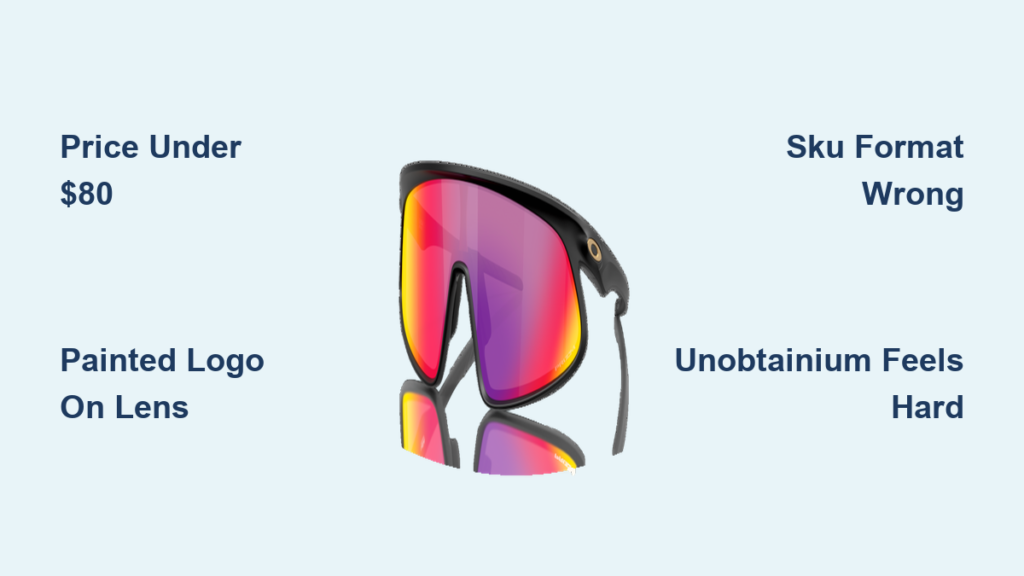
Authentic Oakley sunglasses are premium performance eyewear with retail prices starting at $80 to $115 for standard non-prescription models. Limited editions and specialized frames can exceed $200.
If you are paying under $80 for new Oakleys, especially $10 to $20, you are almost certainly buying counterfeits. Even used pairs in good condition typically sell for $50 to $70. Deep discounts from unknown sellers or third-party marketplaces should raise immediate suspicion.
Counterfeiters rely on impulse buys from deals that seem too good to miss. Sites like Wish, AliExpress, or random Facebook sellers offering “Oakley Holbrook for $15” are selling fakes. Even on eBay, drastically below-market prices from unauthorized sellers warrant caution.
Red flag indicators include prices under $20, claims of “new in box,” and “100% authentic” declarations that seem overly defensive. When the price seems unrealistic, it probably is.
Frame Material: Pre-Dyed O Matter vs Painted Plastic

Genuine Oakley plastic frames are made from O Matter, a lightweight, stress-resistant material that is pre-dyed throughout. This means the color is consistent from the outside to the inside of the frame.
To test this, flip the temple arm over and look at the interior near the hinge. If the inside appears lighter, gray, or white while the outside is black or tortoise, the frame is painted plastic, not genuine O Matter. Counterfeit frames often use cheap plastic coated with paint that chips, scratches, or fades after minimal use.
Authentic Oakleys feel light and balanced. Fakes often feel heavier or uneven due to dense, low-grade plastic. Run your finger along the frame edges. Real Oakleys have smooth, contoured edges with no sharp ridges. Fake frames feel rough, overly sharp, or uneven from poor molding.
On genuine Oakleys, mold seams are virtually invisible and flush with the frame. If you can feel a raised ridge when running your finger over the frame, especially near the hinges, it indicates low-precision manufacturing common in counterfeits.
Logo Verification: Embossed vs Painted Branding

The Oakley “O” logo should be embossed or imprinted, not painted, on the outer temple arm. It must match the official Oakley font and design precisely.
Avoid frames with logos over the nose bridge, as this placement is not standard on models like Holbrook or Frogskin. Extra logos added where they do not belong or misaligned branding are also red flags.
This is a critical rule for lens logos. Real non-prescription Oakley lenses have no painted logos. If you see a large, bold painted “O” on the lens, it is 100% counterfeit.
Authentic lenses may have tiny etched markings, such as “Prizm” or “Polarized” in the corner. Shield-style lenses like M Frames may have “Oakley” etched at the top. Prescription or ballistic lenses may feature a small etched “O”. Any painted logo on the lens indicates a fake.
SKU Format: Decoding the Authentication Code
The SKU is stamped on the left temple arm, usually on the underside or outer edge. Authentic formats include older models using XX-XXX format like 03-609 for Half Jacket, and newer models using OOXXXX-XX format like OO9143-03 for Holbrook.
The “OO” represents the letters O, not zeros. Using numbers instead of letters is a common fake mistake, such as 009143-03. Random strings like “A123B45” or mismatched SKUs, like a Holbrook frame with a Radar EV SKU, are red flags.
Search the SKU on Google. If it leads to a different model or no official listing, the sunglasses are likely fake. New Oakleys must have a legible SKU. On used models, the SKU may be worn off, which is acceptable if the seller does not claim the item is new.
Lens Quality: Polycarbonate vs Tri-Acetate
Authentic Oakley lenses are made from polycarbonate, offering 100% UV protection, high optical clarity, and resistance to shattering. Fakes use cheap tri-acetate, similar to dollar-store sunglasses, resulting in hazy or distorted vision, poor UV filtering, and vulnerability to cracking.
On real Oakleys, engravings are etched into the outer lens surface with sharp, aligned text. Common engravings include “Polarized” or “P” for polarized models. Watch for misspelled text like “Polarised” instead of “Polarized.”
Fake lenses often have etching on the inner surface, blurry or misaligned text, or a “P” sticker with sticky residue. Real static-cling stickers leave no residue when removed. If the “P” is painted on rather than etched or stuck with adhesive, it is fake.
Hinge and Hardware: Precision Engineering Check
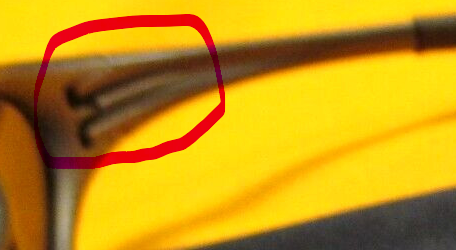
Oakley uses advanced hinge designs like hollowpoint hinges with internal springs and automatic tension, and latch hinges that clip onto clothing with a kick-up mechanism. Not all models have these specific types, but all genuine Oakleys have tight, seamless hinges with no wobble or gap between frame and temple.
Fake red flags include loose or creaky hinges, paint chipping around the hinge indicating painted plastic, and visible gaps when opening or closing the glasses. Poor hinge quality is one of the first things to fail on counterfeit frames.
Packaging Clues: Safety Tab and Micro Bag
Authentic Oakley boxes include a product sticker on the side with model, SKU, and lens information. They feature a hard-to-open safety tab that seals the box. Fake boxes are flimsy, easy to open, and often lack stickers or have incorrect product details.
The Oakley micro bag is made from thick fabric with a stitched logo and model name. Durable drawstrings complete the authentic bag. Fake bags often have thin, shoelace-like strings, glued-on logos that peel, and misspelled text like “High-definition optic” instead of “optics.”
Genuine cases have embossed logos and safety tabs. Instruction cards are multilingual with clear diagrams and polarization charts. Fake cards may only include foreign text or inaccurate technical information. The authentic certificate is called “Certificate of Authenticity” with a one-year warranty, while fakes often claim a two-year “optic warranty” that does not exist.
Unobtainium Components: The Grip Test
Unobtainium is Oakley’s proprietary rubber used in nose pads and temple tips. It increases grip when wet and feels soft, slightly tacky, and rounded for comfort.
Counterfeit versions feel hard, smooth, or abrasive. They are often sharp-edged or slippery and may be painted black instead of molded. Test by wearing the sunglasses while exercising or jogging. If they slip, it is not real Unobtainium.
Model-Specific Authentication Rules
Certain Oakley models are only available in specific materials. The Oil Rig is only made in plastic (O Matter), so any metal version is fake. Juliet is exclusively metal, so any plastic version is counterfeit. Jupiter comes in both plastic (Jupiter Squared) and carbon fiber/metal (Jupiter Carbon), so check the SKU to confirm.
Shield lenses like M Frames may have “Oakley” etched at the top. If a non-shield model like Holbrook has this etching, it is fake. X-Metal models rarely display explicit model numbers, while fakes often stamp random digits that do not match the size or style.
Names like “Fandango” or “Lucho Night” are not Oakley models. If a style does not appear on Oakley.com or authorized retailers, it is likely a knockoff.
What to Do If You Bought Fakes
If you suspect you purchased fake Oakleys, verify the SKU on Oakley.com. Compare packaging to authentic images from authorized dealers. Contact the seller for a refund and document your communication.
Report the seller to PayPal or your credit card company for fraud protection. Consult a licensed optician who can test UV protection levels professionally. Even fake frames can be retrofitted with genuine polycarbonate lenses through custom lens programs like Revant, improving optical quality and UV protection, though the frame remains non-authentic.
Key Takeaways for Verifying Oakley Authenticity
Price is the first red flag. If the deal seems too good to be true, it probably is. Painted logos on lenses mean definitely fake, while etched markings indicate authenticity. SKU must follow OOXXXX-XX or XX-XXX format and match the model exactly.
Frames are pre-dyed, not painted, so color should be consistent inside and out. Packaging is high-quality with safety tabs, stickers, and stitched logos. Made in USA is not required since many real Oakleys are made in Italy or China.
Unobtainium components feel soft and grippy, not hard or smooth. Hinges are tight and seamless with no wobble. Lenses are polycarbonate with etched P for polarized models.
By applying these checks systematically, you will never have to wonder how to tell if Oakley sunglasses are real again. Invest in genuine performance eyewear to protect your vision and ensure lasting quality.
Frequently Asked Questions About Oakley Authentication
How much do real Oakley sunglasses cost?
Authentic Oakley sunglasses typically cost $80 to $115 for standard models, with limited editions reaching $200 or more. Anything under $50 for new pairs is highly suspicious and likely counterfeit.
Can Oakley sunglasses be made in China?
Yes. While Oakley designs products in California, manufacturing occurs globally in Italy, China, and other facilities. Lack of “Made in USA” does not mean fake, though limited editions may still be USA-made.
What does the SKU look like on real Oakleys?
Real Oakleys use OOXXXX-XX format for newer models (letters O, not zeros) and XX-XXX format for older models. Examples include OO9143-03 for Holbrook or 03-609 for Half Jacket.
Do real Oakleys have a serial number?
Most modern Oakleys use SKU only, not serial numbers. Vintage or limited editions may have a 9-digit serial number on the inner left temple. If a “new” pair claims to have a serial number, it is likely fake.
How do I verify if my Oakleys are polarized?
Genuine polarized lenses have a small “P” etched into the lens, usually in the lower corner. Some models include a static-cling “P” sticker that leaves no residue. Painted “P” or adhesive stickers that leave glue behind indicate fakes.
Where should I buy authentic Oakleys?
Purchase from authorized retailers including Oakley.com, Sunglass Hut, LensCrafters, Eyebuydirect, and Revant. Avoid third-party sellers on marketplaces unless verified with a clear return policy.