Picture this: You’re carving fresh powder on a bluebird day, but your vision is washed out by glare. Or you’re navigating through flat light during a storm, struggling to see terrain changes. The difference between an epic day and a frustrating one often comes down to your goggle lenses. Your electric goggle lens guide starts here—because choosing the right lens isn’t just about style, it’s about safety, performance, and maximizing every moment on the mountain. Whether you’re a weekend warrior or a backcountry specialist, understanding Electric’s lens technology will transform your riding experience. This electric goggle lens guide cuts through the confusion to help you select the perfect optics for any condition Mother Nature throws your way.
Why Your Electric Goggle Lens Choice Makes or Breaks Your Ride
Selecting the wrong lens can turn a dream day into a dangerous situation. When visibility drops just 20%, reaction time slows by 30%—a critical difference when you’re hitting jumps or navigating trees. Your electric goggle lens guide must address how specific tints directly impact your ability to read terrain and react to hazards.
Stop Guessing Which Lens Works for Today’s Conditions
Most riders make the mistake of using one “all-purpose” lens year-round, compromising performance in varied conditions. Electric’s specialized tints solve this problem with precision-engineered solutions:
- BRose lenses (24% VLT) deliver balanced contrast across mixed conditions—from dawn patrol to afternoon spring sessions
- BRose Light (47% VLT) transforms storm days by amplifying subtle terrain features that disappear with standard lenses
- Polarized options (10-12% VLT) eliminate blinding glare on high-altitude glacier runs where standard lenses fail
How Photochromic Technology Adapts to Mountain Microclimates
The mountain creates wild light variations within a single run—deep shadows in the trees followed by blinding sun in open bowls. Electric’s photochromic lenses solve this with intelligent adaptation:
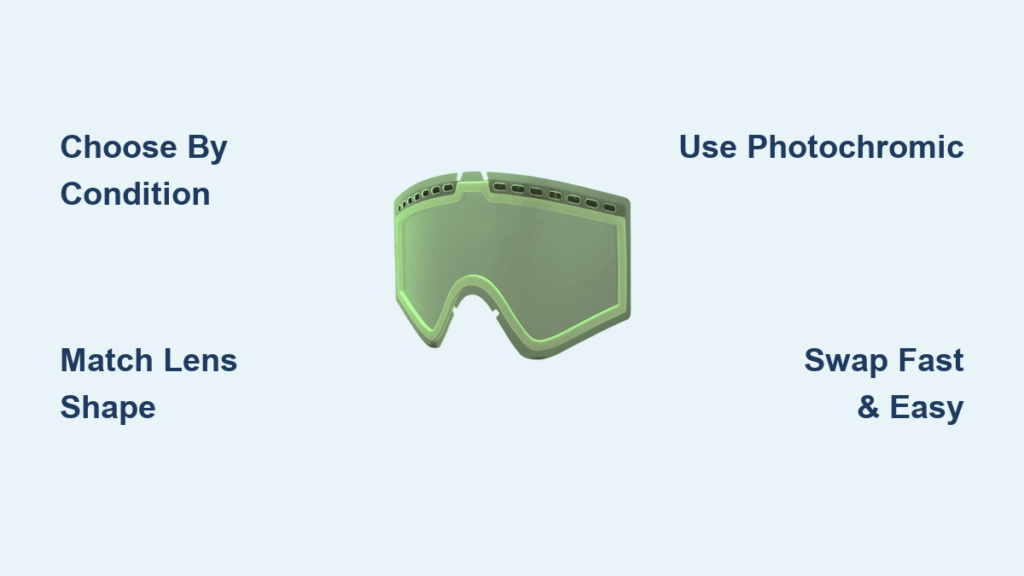
- Photochromic Rose seamlessly shifts from 7% to 33% VLT as you move between light zones
- Photochromic Blue Chrome with its mirror coating adjusts from 12% to 58% VLT while reducing eye strain
- Critical tip: These lenses need direct UV exposure to activate properly—wearing a hat brim can limit their effectiveness
Match Your Lens Shape to Your Riding Style
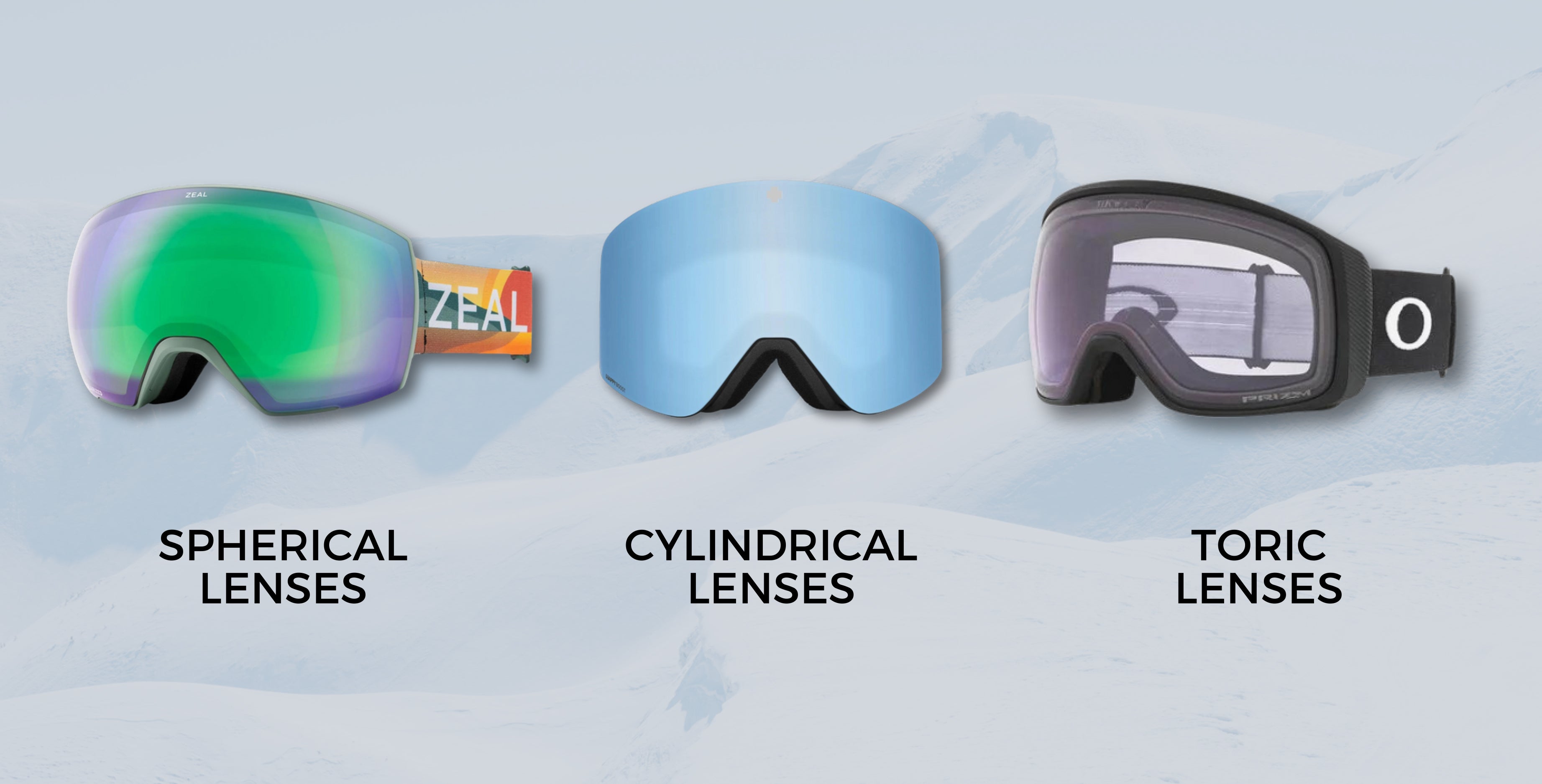
Your goggle’s lens shape determines more than just appearance—it fundamentally affects your visual field and distortion levels. This electric goggle lens guide breaks down which shape delivers optimal performance for your specific riding.
Cylindrical Lenses: The Classic Choice for Precision Riders
If you prioritize clean optics over maximum field of view, cylindrical lenses provide distinct advantages:
- Reduced peripheral distortion creates more accurate depth perception for technical tree runs
- Compatible with: EGX, Electron, Electrolite, Charger, EGV, EGV.K models
- Best for: Park riders who need precise lip judgment and racers who require distortion-free straight-line vision
Spherical Lenses: Ultimate Peripheral Awareness for High-Speed Riding
The curved design of spherical lenses mimics your natural field of view for immersive mountain awareness:
- Wider horizontal vision helps spot incoming skiers before they enter your peripheral awareness
- Reduced refraction means less visual fatigue during long days at speed
- Compatible with: EG3, EG3.5, EG2, EG2.5 models
- Pro tip: These excel for sidecountry explorers who need maximum terrain awareness
Toric Lenses: The Optical Precision Advantage
Electric’s premium toric lenses represent the pinnacle of optical engineering for serious riders:
- Complex curvature matches the natural shape of your eye for distortion-free vision across the entire lens
- Mold-injected construction ensures perfect optical alignment impossible with standard manufacturing
- Exclusive to: EGG model—the only goggle engineered specifically for this advanced lens technology
- Why it matters: Eliminates the “fishbowl effect” that causes eye strain during extended use
How to Choose Your Perfect Lens Combination
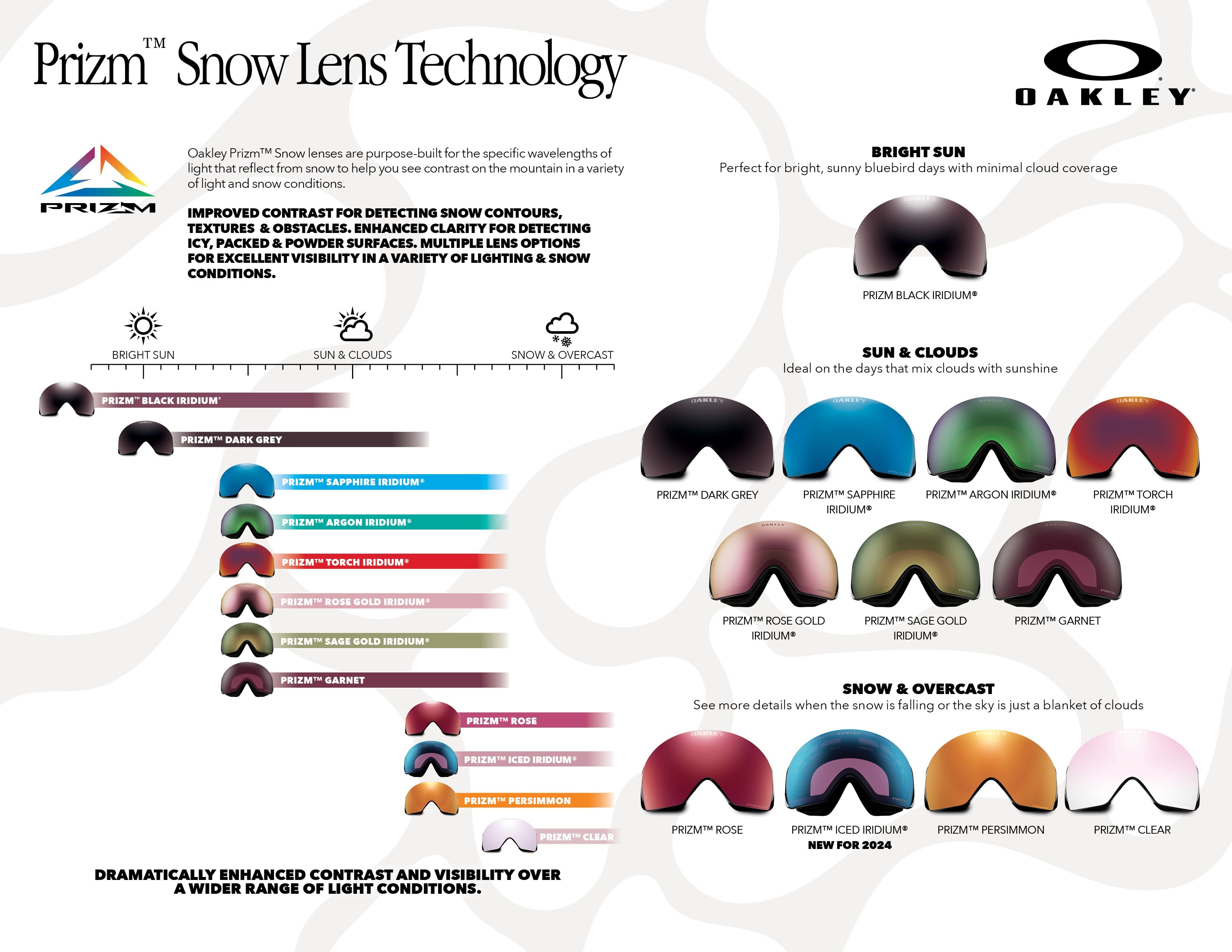
Your ideal setup depends on where you ride most often. This electric goggle lens guide provides a decision framework based on actual mountain conditions.
Bluebird Day Lens Strategy
When the sun is blazing and snow glare is intense:
- Immediate action: Reach for Brown or Grey Polarized lenses (10-12% VLT)
- Why it works: Polarization cuts horizontal glare from snow while maintaining color recognition
- Critical mistake to avoid: Using non-polarized dark lenses that reduce overall light but don’t eliminate dangerous glare
Storm Day Visibility Boost
When flat light hides terrain features and shadows blend together:
- Proven solution: BRose Light (47% VLT) makes subtle snow texture visible
- Alternative: Photochromic Rose starting in its lightest state (7% VLT)
- Expert note: Yellow or amber tints enhance contrast better than clear lenses in true whiteout conditions
The One-Lens Solution for Variable Conditions
For riders who want maximum convenience without compromising performance:
- Top recommendation: Photochromic Blue Chrome for its widest adaptation range (12-58% VLT)
- Secondary option: Standard BRose (24% VLT) for consistent partly cloudy days
- Reality check: No single lens excels in both extreme sun and storm conditions—serious riders carry two lenses
Mastering Lens Changes for Changing Conditions
Knowing your electric goggle lens options means nothing if you can’t swap them quickly when conditions shift.
60-Second Lens Swap Technique
Electric’s tool-free system works best when you follow this sequence:
- Hold goggle frame firmly with both hands
- Release top retention clips by pressing inward
- Gently flex frame while lifting lens out from bottom
- Align new lens with frame markings before insertion
- Snap top clips into place with even pressure
- Test seal by blowing gently against the frame
- Warning: Never force lens removal—excessive flexing can crack the frame
- Pro tip: Practice lens changes at home before needing them on a freezing lift
Protect Your Investment: Lens Care That Actually Works
Most goggle damage happens from improper cleaning—not from mountain abuse. Follow these science-backed care techniques:
The Right Way to Clean Your Electric Lenses
- Immediate action: Rinse away abrasive snow crystals with lukewarm water before wiping
- Cleaning method: Use circular motions from center outward with provided microfiber cloth
- Never do: Wipe dry lenses (causes micro-scratches) or use chemical cleaners (damages coatings)
- Storage solution: Keep goggles in ventilated bag—never sealed plastic which traps moisture
Fog Prevention That Actually Works
Fog happens when warm breath meets cold lens—stop it before it starts:
- Helmet positioning: Ensure goggle strap sits under helmet padding for proper airflow
- Vent maintenance: Clean foam filters monthly with damp cloth to maintain airflow
- Emergency fix: Apply anti-fog solution to outer lens surface only (inner coating is permanent)
Your Electric Goggle Lens Checklist Before Hitting the Slopes
Save this electric goggle lens guide checklist on your phone for quick reference:
- Check the forecast: Sunny? Polarized. Stormy? High-VLT lens. Mixed? Photochromic.
- Verify compatibility: Cylindrical, spherical, or toric—match lens to your specific frame
- Inspect seals: Ensure no gaps between frame and face that cause fogging
- Pack backups: Always carry a second lens for unexpected condition changes
- Test before riding: Confirm clear vision in all directions before leaving the lodge
The right electric goggle lens setup transforms your mountain experience from reactive to proactive. When you can see every subtle contour in the snow, anticipate changing conditions, and maintain clear vision from first chair to last call, you’re not just riding—you’re connecting with the mountain in a whole new way. Your perfect lens combination is out there; this electric goggle lens guide gives you the knowledge to find it. Remember: On the mountain, what you see directly impacts how you ride—make sure you’re seeing everything clearly.