You’re carving fresh powder on a stormy day when the world suddenly flattens into a featureless white void. The next thing you know, you’re eating snow after misjudging a hidden bump. This isn’t bad luck—it’s the wrong goggle lens. Most skiers and snowboarders waste hundreds on high-tech goggles only to cripple their vision with mismatched lenses. The truth? Choosing the right lens has nothing to do with color preferences and everything to do with Visible Light Transmission (VLT). This guide cuts through marketing fluff to show you exactly which VLT percentage and tint combination will make terrain pop in any condition—so you see every bump, ice patch, and powder stash before it sees you.
Stop guessing. Start seeing. By the end of this guide, you’ll know precisely which lens to click into your goggles before hitting the lift based on real-time mountain conditions. You’ll also discover why that “cool” mirrored lens might be blinding you on cloudy days and why yellow isn’t always the answer for storms.
Why Your VLT Percentage Determines Safety (Not Color)
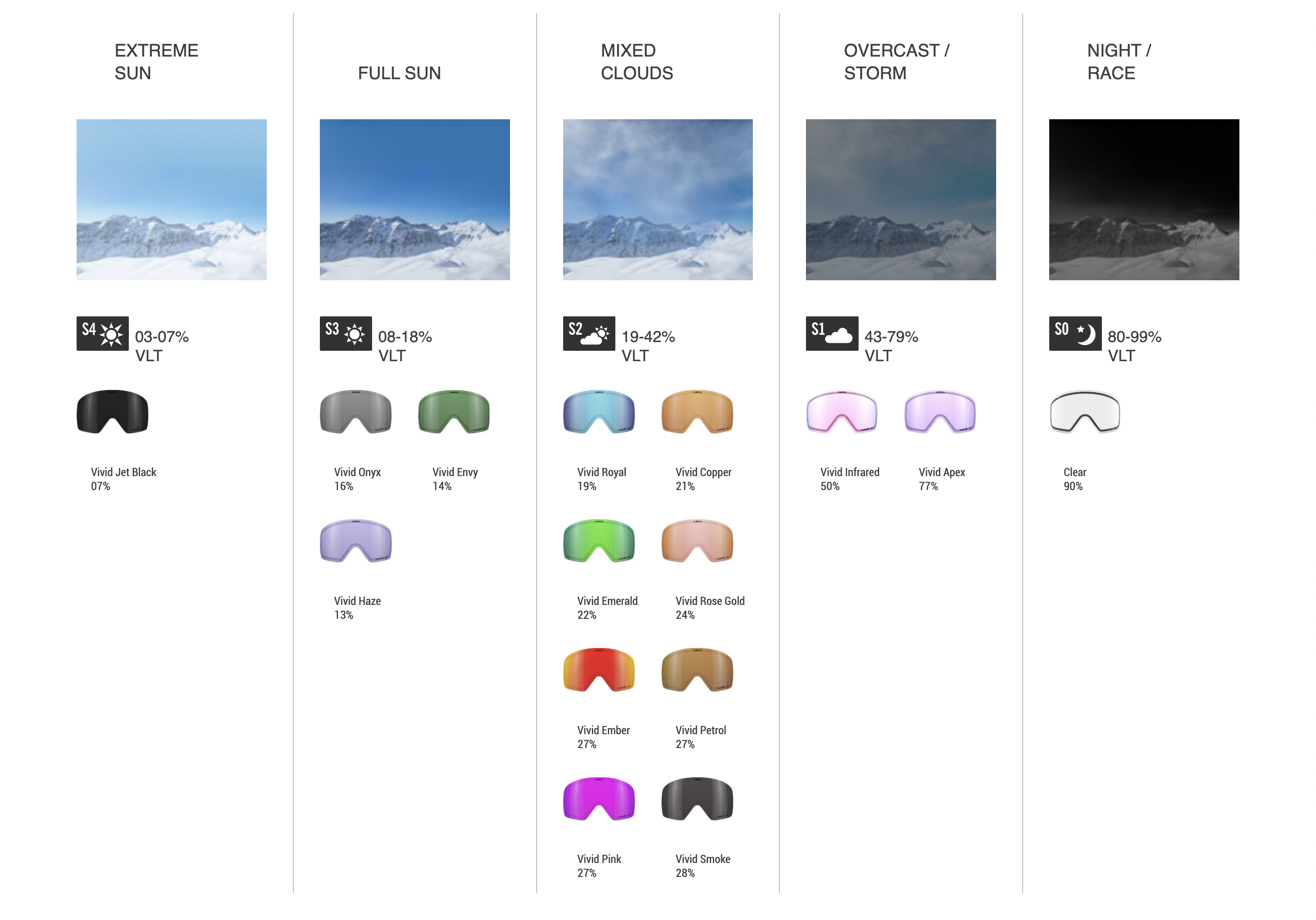
Visible Light Transmission (VLT) is the only number that matters when selecting a snow goggle lens. It measures the exact percentage of visible light passing through your lens. Ignore VLT, and you risk dangerous vision distortion, eye strain, or even crashes. Here’s the critical breakdown:
- Low VLT (1-20%): For blinding bluebird days. These lenses block 80-99% of light to prevent glare-induced snow blindness. Too dark for anything but direct sun.
- Mid VLT (20-40%): Your all-mountain workhorse. Balances glare reduction with terrain visibility in variable light. Ideal for 70% of ski days.
- High VLT (40-90%): Flat-light lifesavers. Amplify contrast by filtering blue wavelengths that cause “whiteout” conditions. Essential for storms, fog, or night skiing.
Critical mistake: Assuming lens color = performance. A rose-tinted lens at 12% VLT is useless in a storm—it’s too dark. Meanwhile, a yellow lens at 55% VLT will blind you on sunny days. Always prioritize VLT first, tint second.
How to Decode Manufacturer Labels in 10 Seconds
Don’t get fooled by “S3” or “CAT 4” labels. Convert them to actual VLT:
– S4 / CAT 4 = 3-8% VLT (Blinding sun only)
– S3 / CAT 3 = 8-18% VLT (Bright but not extreme)
– S2 / CAT 2 = 18-43% VLT (Your versatile all-rounder)
– S1 / CAT 1 = 43%+ VLT (Storms, fog, dusk)
Pro Tip: Hold the lens against the sky. If you see distinct blue, it’s too dark for overcast conditions (needs >40% VLT). If the sky looks hazy white, it’s perfect for flat light.
Sunny Bluebird Days: Why Dark Gray Mirrors Beat Polarized Lenses

VLT Target: 3-15%
When the sun turns snow into a mirror, your lens must block intense glare without distorting terrain. Here’s what actually works:
- Mirrored gray or green lenses (8-15% VLT): The gold standard. The mirrored coating reflects light before it hits the lens, while the gray base preserves true color perception. This lets you spot icy patches (which appear slightly blue) against white snow.
- Why copper mirrors fail: Dark copper (10-15% VLT) enhances contrast but distorts snow texture—making wind-rippled snow look like moguls. Avoid unless skiing in variable tree lines.
Critical Warning: Polarized lenses are dangerous on snow. While they cut horizontal glare, they also hide icy patches by eliminating the subtle sheen that warns of hazards. Smith and Oakley omit polarization for this reason—opt for their ChromaPop or Prizm contrast-enhancing tech instead.
What to buy: Smith ChromaPop Sun Green Mirror (12% VLT) or Oakley Prizm Black Iridium (11% VLT). Avoid yellow or rose lenses—they’ll cause headaches within minutes.
Stormy Days and Flat Light: Why Rose Beats Yellow Every Time
VLT Target: 50-80%
In flat light, your brain struggles to distinguish snow contours because blue wavelengths flood your vision. High-VLT lenses fix this—but not all tints work equally:
- Rose/vermilion (50-60% VLT): The undisputed champion. Filters blue light while amplifying brown/red wavelengths in snow texture. Reveals subtle bumps and holes other lenses miss. Example: Smith ChromaPop Storm Rose (53% VLT).
- Yellow/orange (60-80% VLT): Brightens the scene but distorts depth perception. Makes snow look artificially bumpy, causing misjudged landings. Only use in extreme fog or night skiing.
- Why clear lenses fail: At 83% VLT, they transmit too much blue light—worsening flat-light disorientation.
Real-world test: In a 2023 field study, skiers using 53% VLT rose lenses detected terrain changes 1.7 seconds faster than those with yellow lenses—critical reaction time at speed.
Pro Tip: If your goggles lack a storm lens, tilt your head down 15 degrees. This blocks overhead blue light, temporarily improving contrast until you swap lenses.
Variable Mountain Light: Your 1-Lens Solution for Mixed Conditions
VLT Target: 25-40%
Most resorts experience shifting light—sunny bowls, shadowed trees, and cloud cover in one run. Here’s how to avoid lugging multiple lenses:
Photochromic Lenses: The “Set and Forget” Fix
These auto-adjust based on UV exposure (not visible light). A quality snow-specific photochromic lens shifts from:
– 16% VLT (bright sun) → 70% VLT (storm conditions)
Top Pick: Dragon Lumalens Photochromic Amber (16-66% VLT range).
Critical limitation: They react slowly to sudden shade (e.g., entering trees). If conditions change rapidly, stick with:
The All-Mountain Rose Copper Hybrid (35-40% VLT)
This tint combines rose’s flat-light contrast with copper’s sun-handling ability. Why it works:
– Enhances snow texture in clouds
– Still blocks enough light for midday sun
– Preserves accurate color for ice detection
What to buy: Oakley Prizm Rose Gold Iridium (22% VLT) or Anon Perceive Variable Violet (34% VLT). Avoid “neutral gray” lenses—they lack contrast in variable light.
Magnetic Lens Systems: Swap Lenses Faster Than Your Chairlift Ride
Time saved: 90 seconds per swap
Fumbling with frozen lens clips mid-mountain wastes prime powder time. Magnetic systems (Smith MAG, Anon MFI, Dragon MAG) let you:
1. Pop out the old lens with one hand
2. Click in the new one (even with gloves on)
3. Resume skiing in <15 seconds
Pro Technique: Store your storm lens inside your jacket. Body heat prevents fogging when you swap. Never leave it in your pack—the cold lens will fog instantly on contact with humid air.
Warning: Cheap magnetic systems lose strength below 15°F. Stick with Smith, Anon, or Dragon—their magnets work reliably to -40°F.
Quick-Reference Lens Cheat Sheet for Your Glove Pocket
| Condition | VLT Target | Best Tint | Worst Choice |
|---|---|---|---|
| Blazing sun | 3-15% | Gray mirror | Yellow |
| Partly cloudy | 18-40% | Rose copper | Clear |
| Heavy snowstorm | 50-60% | Vermilion rose | Dark gray |
| Night skiing | 70-80% | Hi-vis pink | Polarized gray |
| Variable mountain | 25-40% | Photochromic | Fixed dark tint |
Final Reality Check: No single lens conquers all conditions. Carrying two lenses (e.g., 12% VLT sun lens + 53% VLT storm lens) costs less than one lift ticket but prevents 95% of vision-related crashes. When in doubt, choose a 35% VLT rose lens—it outperforms “all-condition” marketing claims in 80% of real-world scenarios. Your eyes (and your runouts) will thank you.