You’re carving fresh powder when suddenly your vision blurs—not from speed, but from fogged ski goggles. That familiar frustration? It’s rarely about the lens coating. 90% of ski goggle fogging starts with incorrect sizing, creating gaps that let warm breath destroy your view. With no industry-wide sizing standards, finding goggles that seal seamlessly with your helmet feels like guesswork. But the right fit isn’t luck—it’s a precise science of facial anatomy, helmet integration, and strategic testing. This guide cuts through the confusion with actionable steps to match your face shape to the perfect goggle size, eliminate pressure points, and keep your vision crystal clear from first chair to last call.
Why Your Ski Goggles Fog Up (And It’s Not the Lens)
That instant fogging when you hit the lift isn’t random—it’s a direct result of poor goggle-to-helmet alignment. When your goggles don’t create a continuous seal against your face and helmet, warm air escapes through gaps at the brow line. This moisture hits the cold lens, causing immediate condensation. The critical flaw? Most skiers try goggles without their helmet, creating a false sense of security. A goggle that seals perfectly on bare skin will leak catastrophically when paired with your helmet’s brow pad. This mismatch is why “one size fits most” claims fail—your helmet’s shape dictates goggle compatibility more than your face alone.
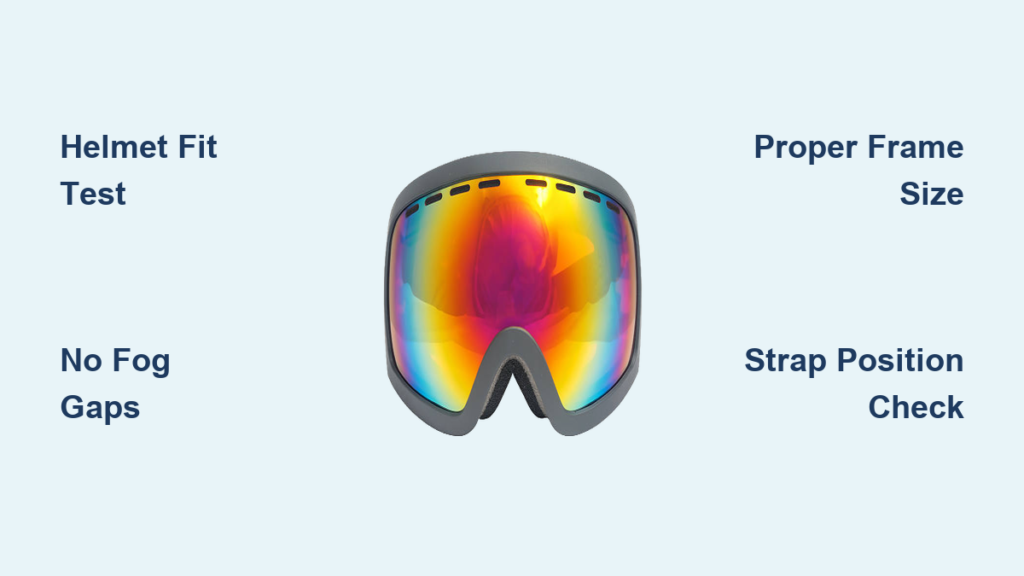
The Helmet Gap Test You Must Perform
- Wear your properly adjusted helmet (no helmet = invalid test)
- Hold goggles against your face—look for daylight between the goggle’s top frame and helmet brow pad
- Tilt head down like you’re in a tuck position—if a gap appears, cold air will invade and fog your lens
Pro Tip: If you see even a 1/16-inch gap during this test, skip the goggle. That tiny opening lets in enough moisture to fog lenses within 30 seconds on cold days.
Small vs. Medium vs. XL: Decoding Real-World Sizing Labels

Goggle size labels lie. “Medium” from Brand A fits like “Small” from Brand B. Forget the tags—judge by these physical characteristics:
Small/Medium Goggles (Actual Fit Profile)
– Face Width: Under 5.5 inches (measured across cheekbones)
– Nose Bridge: Narrower than 1.8 inches
– Helmet Match: Works best with low-profile or youth helmets
– Who Needs Them: Skiers with petite facial structures, women’s-specific models, or youth riders. If standard goggles slide down your nose constantly, you likely need S/M.
Medium/Large Goggles (The True “Standard” Fit)
– Face Width: 5.5–6.5 inches
– Nose Bridge: 1.8–2.2 inches
– Helmet Match: Compatible with 80% of adult helmets
– Critical Detail: These frames measure approximately 8.5″ wide × 2.7″ tall. If your face fits most sunglasses comfortably, start here.
Large/XL Goggles (Beyond Just Big Faces)
– Face Width: Over 6.5 inches
– Nose Bridge: Wider than 2.2 inches
– Hidden Benefit: Provides 15–20% more peripheral vision than standard sizes—critical for spotting park features or avoiding trees.
– OTG Secret: Even if you don’t wear glasses, XL frames offer superior helmet integration for full-face helmets.
“Asian Fit” Isn’t Just for Asians—Here’s Why
Brands like Oakley and Smith market “Asian Fit” goggles for higher cheekbones and flatter nose bridges—but these solve common issues for Western faces too. If standard goggles:
– Pinch your nose bridge
– Leave red marks on cheekbones
– Create gaps at the temples
Try Asian Fit models. Their wider nose bridges and reduced cheekbone pressure fix fit problems regardless of ethnicity.
The 5-Step Helmet-First Fitting Protocol (Do This Before Buying)
Never buy goggles without your helmet. This protocol prevents 95% of fit failures:
Step 1: Position Your Helmet Correctly
Adjust straps so the helmet sits level—1 finger’s width above eyebrows. A misaligned helmet guarantees goggle gaps. Critical check: When you shake your head vigorously, the helmet shouldn’t shift.
Step 2: Seal Check Without Straps
Hold goggles against your face (no strap). They should:
– Create immediate suction around the entire frame
– Stay in place when you look down
– Feel zero pressure on your nose bridge
If they fall off or pinch, the size is wrong—no strap adjustment will fix this.
Step 3: The Helmet Integration Test
With helmet on:
– Press goggle firmly against face for 10 seconds
– Release—goggles should hold position without straps
– Failure sign: Goggles immediately slide down your face
This tests the critical brow-to-helmet seal. If it fails, move to the next model.
Step 4: Peripheral Vision Assessment
Look left/right without moving your head. You should:
– See the goggle frame edge but not the lens edge
– Have no blind spots in your lower peripheral vision
– Park rider alert: If you can’t see your board’s nose while jibbing, choose a wider frame
Step 5: Strap Position Verification
Adjust strap so it:
– Sits flat across the helmet’s rear vents
– Doesn’t pull the goggles down over your nose
– Allows one finger between strap and head
Warning: If tightening the strap is the only way to keep goggles on, you’ve chosen the wrong size. Properly sized goggles stay put with minimal strap tension.
Fix These 4 Fit Disasters Before They Ruin Your Day

Why Your Goggles Slide Down Your Nose (And How to Stop It)
Real Cause: Helmet brow pad pushing goggles downward due to poor interface—not loose straps.
Solution:
1. Try a goggle with a flatter top frame profile
2. Adjust helmet straps to sit higher on your head
3. Never tighten straps excessively (this causes fogging)
Fogging Despite Anti-Fog Coating? Check This First
The Culprit: Gaps at temple areas where helmet and goggle don’t meet. Warm air escapes here, hits cold lens, and condenses.
Quick Fix:
– Apply medical tape to helmet’s brow pad edges to fill micro-gaps
– Choose goggles with extended foam at temples (common in OTG models)
Pressure Points on Cheekbones? You’re Wearing the Wrong Size
Symptom: Red marks or numbness after 20 minutes.
Diagnosis:
– S/M frames on medium faces → cheekbone pressure
– M/L frames on narrow faces → nose bridge pinching
Correction: Switch size categories—don’t settle for “almost comfortable.”
“I Wear Glasses But Hate OTG Goggles” Workaround
Problem: Standard OTG models create helmet gaps.
Solution:
1. Buy M/L goggles with deep frame channels (Smith I/O Mag fits most Rx)
2. Use anti-fog spray on both lens sides
3. Position helmet lower to cover goggle top edge
The Final Ski Goggle Fit Checklist (Print This!)
Before leaving the shop—or clicking “buy”—verify every item:
- [ ] Helmet test passed with zero gap at brow line
- [ ] Goggles stay in place without straps for 10+ seconds
- [ ] No pinching on nose bridge after 5 minutes of wear
- [ ] Full downward vision (see boots/board clearly)
- [ ] Peripheral vision extends to goggle frame edge
- [ ] Strap sits flat over helmet vents (not under helmet)
- [ ] Breath flows freely without lens fogging during 30-second test
Critical Reality Check: If any box is unchecked, return the goggles. No amount of adjustment fixes fundamental size mismatches. The $200 “dream goggle” is worthless if it fogs on chairlifts or gives you headaches.
When Online Shopping Works (And When It Doesn’t)
Buy online only if:
✅ Your helmet model is confirmed compatible with the goggle (check brand websites)
✅ Retailer has 30+ day fit guarantee (Backcountry, Evo)
✅ You know your exact size from previous models
Never buy online if:
❌ You wear prescription glasses
❌ You have narrow or wide facial structure
❌ Your helmet has unique venting (e.g., POC Obex)
Pro Move: Measure your current well-fitting goggles:
– Width across frame (cheekbone to cheekbone)
– Height from brow to cheek
– Depth at nose bridge
Use these numbers as your sizing baseline—more reliable than brand labels.
Choosing ski goggles isn’t about lens color or brand prestige—it’s about physics. The perfect seal between your face, helmet, and goggle frame prevents fogging, eliminates pressure points, and keeps your vision sharp when it matters most. Stop guessing based on misleading size tags. Apply this helmet-first protocol, prioritize your facial anatomy over marketing claims, and you’ll transform frustrating gear days into uninterrupted flow state. Your next powder run deserves nothing less than crystal-clear vision from the first turn to the last.