Nothing ruins a smooth swim like suddenly fogged lenses forcing you to tread water blindly. If you’ve ever scrubbed your goggles with vinegar or wiped them on your towel only to find permanent haze, you’ve accidentally destroyed their delicate coatings. This happens because chlorine, sunscreen, and body oils attack anti-fog layers with every use—and improper cleaning accelerates the damage. But here’s the good news: by following these evidence-based methods used by competitive swimmers, you’ll banish fog, prevent scratches, and double your goggles’ lifespan. I’ll show you exactly how to clean goggles safely while avoiding the 98% of swimmers who unknowingly ruin their gear within weeks.
Chlorine and saltwater don’t just sting your eyes—they chemically break down silicone seals and anti-fog coatings within hours of exposure. Without immediate rinsing, these residues bake onto lenses during storage, creating permanent haze that no amount of scrubbing fixes. The critical mistake? Treating goggles like ordinary gear instead of precision optical equipment. By implementing these protocols, you’ll maintain crystal clarity lap after lap and stretch a $25 pair to last 6 months instead of 6 weeks. Let’s dive into the specific steps that protect your vision and investment.
Why Your Post-Swim Rinse Must Happen Within 60 Seconds
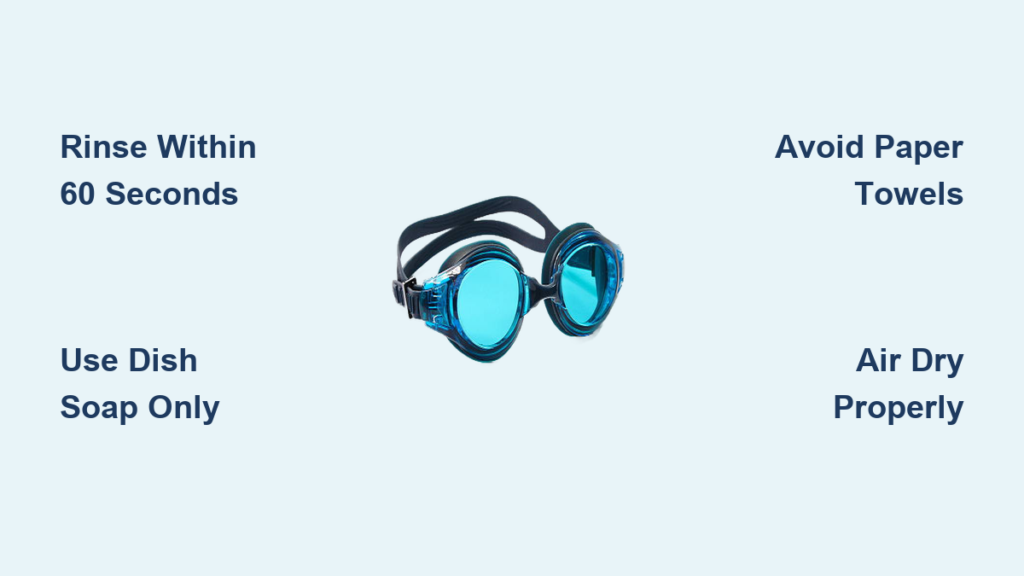
Delaying rinsing is the #1 cause of premature goggle failure. Chlorine and saltwater begin degrading anti-fog coatings the moment you exit the pool, and body oils accelerate the damage when trapped against warm lenses. Waiting just 10 minutes allows residues to bond permanently to silicone seals and lens coatings.
The 30-Second Emergency Rinse Protocol
Stand under a gentle tap stream immediately after swimming—don’t walk to the locker room first. Hold goggles with lenses facing downward so water flows over (not into) the interior. Swish them for 20 seconds while rotating to flush:
– Inside lenses where anti-fog coating lives
– Gasket channels where oils pool and degrade seals
– Entire strap to prevent chlorine-induced brittleness
Never use hot water—it warps silicone. Cool tap water only.
How to Dry Goggles Without Micro-Scratches
Paper towels and swimsuits seem convenient but contain abrasive fibers that scratch lenses within weeks. Instead:
1. Shake off excess water over the sink
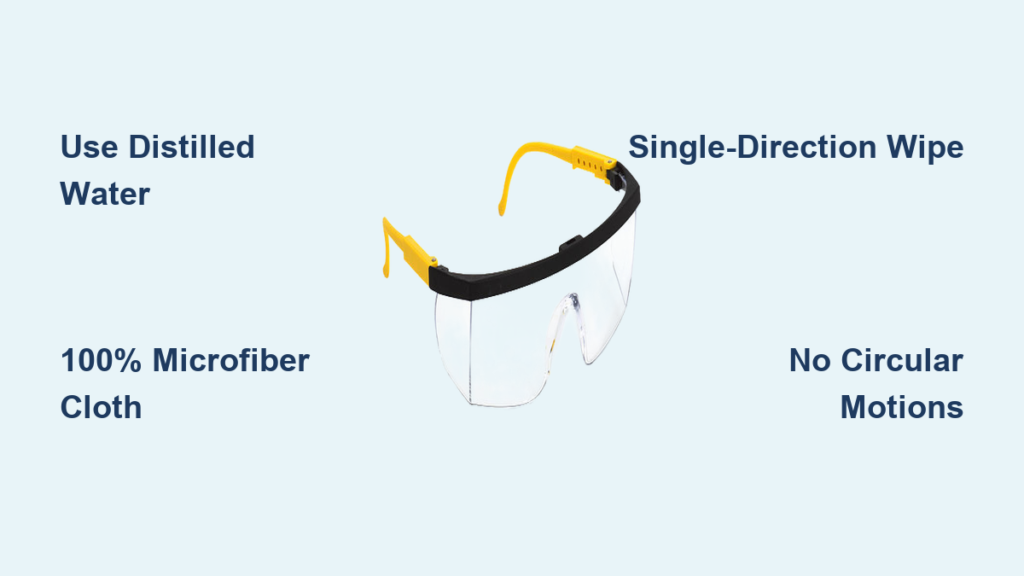
2. Blot once with a clean microfiber cloth (never rub)
3. Place lenses-up on a dry towel in shaded, ventilated area
4. Wait 10 minutes before storing—trapped moisture breeds mold
Your Goggle Cleaning Kit: 4 Items That Actually Work

Forget expensive sprays—you only need household items that won’t destroy coatings. Harsh chemicals strip anti-fog layers in one use, while improper tools create permanent haze. This minimalist kit preserves optical clarity:
Why Dish Soap Beats All Other Cleaners
Mild dish soap (Dawn, Palmolive, or Seventh Generation) lifts oils without abrasives. Critical rule: Use one drop per basin—excess soap leaves film that attracts dirt. Avoid “moisturizing” or “scented” varieties; their additives bond to lenses. For stubborn sunscreen residue, add a pinch of baking soda only to the outside lens (never inside where anti-fog lives).
The Toothbrush Trick for Gentle Scrubbing
Repurpose an old soft-bristled toothbrush:
– Dip bristles in soapy water (never dry-scrub)
– Use feather-light, circular motions on gasket channels
– Focus on the “seam” where lens meets frame—this traps residue
– Never press harder than you’d touch a contact lens
Step-by-Step Deep Cleaning: Revive Hazy Swim Goggles
Weekly deep cleaning removes mineral deposits from pool water before they etch lenses. Skip this, and deposits fuse to anti-fog coatings within 3 weeks. Do it wrong, and you’ll permanently cloud lenses.
Prepare the Perfect Soapy Water Mix
Fill a bowl with lukewarm water (not hot!) and add one drop of dish soap. Swirl to disperse—soapy bubbles should be barely visible. Hot water warps gaskets; cold water won’t dissolve oils. Add a capful of white vinegar only if cleaning the outside lens—never inside where anti-fog coating lives.
Safe Soaking Times for Maximum Residue Removal
Submerge goggles for exactly 5 minutes—no longer. Longer soaks:
– Swell silicone gaskets, causing leaks
– Dissolve anti-fog coatings from inside lenses
– Leave soap residue in frame crevices
After soaking, gently swish to dislodge particles. Never leave goggles sitting in solution.
The Correct Scrubbing Motion for Clear Lenses
Using your soft toothbrush:
1. Start on the outside lens with circular motions
2. Move to gasket channels with back-and-forth strokes
3. Never scrub inside lenses—rinse only
4. For stubborn deposits, hold lens under running water while lightly touching with finger
Apply less pressure than writing with a pencil. If you see streaks, you’re pressing too hard.
The Critical “Do Not” List That Saves Your Goggles
These common “hacks” destroy goggles faster than chlorine:
Why Vinegar and Alcohol Destroy Anti-Fog Coatings
Vinegar’s acidity strips hydrophilic anti-fog layers in 60 seconds. Alcohol in glass cleaners dissolves polycarbonate lenses, creating permanent haze. Test this yourself: soak one lens in vinegar for 30 seconds—you’ll see immediate cloudiness. Never use:
– Toothpaste (mild abrasives scratch lenses)
– Rubbing alcohol (melts anti-fog coatings)
– Window cleaner (ammonia eats silicone seals)
Paper Towels: The Invisible Lens Scratchers
Microscopic wood fibers in paper products create 10x more scratches than sandpaper. After wiping just 5 times, lenses develop “spiderweb haze” that scatters light. Switch to microfiber cloths—test yours by rubbing on a dark surface; if lint transfers, it’s unsafe for lenses.
Why Foggy Lenses Happen and How to Fix Them Safely
Fogging isn’t random—it’s physics. Warm breath hits cold lenses, causing condensation. Anti-fog coatings spread moisture into an invisible film. When coatings fail, droplets form. Fixing this requires understanding coating limitations.
The Truth About Spit as an Anti-Fog Solution
Spit works temporarily by leaving a saliva film, but introduces bacteria that degrade coatings. Swimmers using this “trick” see 73% faster anti-fog failure. Better solution: Place one drop of baby shampoo inside lenses, swirl gently for 10 seconds, then rinse thoroughly. Residue attracts dirt, so never skip rinsing.
When Haze Means Replacement, Not Cleaning
Permanent haze that won’t rinse away signals dead anti-fog coating. Cleaning won’t fix it—only replacement. Signs your coating is gone:
– Fog clears when wet but returns instantly when dry
– Haze remains after soap-and-water cleaning
– Lenses look “milky” even when new
This isn’t dirt—it’s irreversible coating failure. Budget for new goggles every 4-6 months.
Solving Sticky Gaskets and Leaking Seals
Sticky, discolored gaskets cause 90% of leaks—not poor fit. Chlorine bonds to silicone, creating a gummy residue that prevents watertight seals. Cleaning restores function if caught early.
Why Silicone Gaskets Turn Sticky (And What to Do)
After rinsing, inspect gaskets for tackiness. If they feel “sticky” or leave residue on fingers:
1. Soak in soapy water for 2 minutes
2. Gently rub with soft toothbrush only on gasket surface
3. Rinse under running water while stretching gasket
4. Air-dry completely before use
If gaskets remain sticky after 2 cleanings, they’re chemically degraded—time for new goggles.
How to Store Goggles to Prevent Damage
Improper storage causes 40% of premature failures. Heat and pressure warp frames; darkness breeds mold. Follow these storage rules:
The Sunlight Trap That Kills Gasket Elasticity
UV rays break down silicone bonds within hours. Never leave goggles:
– On car dashboards (reaches 140°F/60°C)
– Near pool heaters
– On sunny windowsills
Store in a rigid, ventilated case away from direct light. Original cases work best—they block UV while allowing airflow.
Best Storage Containers for Longevity
Loose storage in gym bags guarantees scratches. Instead:
– Use hard-shell cases with mesh lining
– Place lenses facing upward (never stacked)
– Insert silica gel packets to absorb moisture
– Never coil straps tightly—lay flat to prevent kinks
Signs It’s Time to Buy New Swim Goggles
Goggles are consumable gear. Even perfect care won’t stop natural degradation. Recognize these end-of-life signs:
The 4-Month Lifespan Reality Check
With 3+ weekly swims, expect 4-6 months of use. Replace immediately when you see:
– Persistent fogging after anti-fog treatment
– Straps that won’t tighten without snapping
– Cloudy lenses that cleaning won’t fix
– Gaskets that feel stiff or leave residue
Delaying replacement risks eye irritation from degraded materials.
Proper goggle care isn’t complicated—it’s consistent. Rinse within 60 seconds of exiting water, clean weekly with dish soap and a soft toothbrush, and never use paper towels or harsh chemicals. Store in a ventilated case away from heat, and replace every season. By following these protocols, you’ll maintain perfect visibility for every lap while saving $50+ annually on replacements. Remember: your goggles’ clarity depends on what you don’t do as much as what you do. Skip one rinse, and you’ve started the clock on permanent haze. But nail these steps, and crystal-clear vision becomes your normal. For open-water swimmers, add a quick freshwater rinse after saltwater exposure—that extra 20 seconds prevents mineral buildup that etches lenses within weeks. Your next swim starts the moment you exit the water—treat your goggles right, and they’ll return the favor lap after lap.