You’re navigating a moonless forest with your night vision goggles (NVGs), relying on their ghostly green image to guide your path. Suddenly, a car rounds the bend with high beams blazing—and in an instant, your expensive NVGs develop a permanent dark spot that ruins your night vision capabilities. Does light damage night vision goggles? Absolutely yes. Intense or prolonged exposure to bright light is the single greatest threat to your night vision investment, capable of causing immediate, irreversible destruction to the delicate image intensifier tube (IIT) at the heart of your device. Unlike consumer electronics with replaceable parts, NVG damage is almost always permanent and unrepairable.
This isn’t theoretical risk—it’s a daily operational hazard for military personnel, hunters, and night operators. The image intensifier tube, a marvel of vacuum-sealed engineering, amplifies available light through a multi-stage process involving photocathodes, microchannel plates, and phosphor screens. But this sensitivity to light becomes its Achilles’ heel when confronted with excessive photons. Understanding exactly how light damages night vision goggles isn’t just technical trivia; it’s essential knowledge for protecting your $2,000-$4,000 investment. In this guide, you’ll learn the specific damage pathways, why modern safeguards aren’t foolproof, and the non-negotiable practices that keep your NVGs functioning for years.
How Bright Light Permanently Damages Night Vision Goggle Tubes
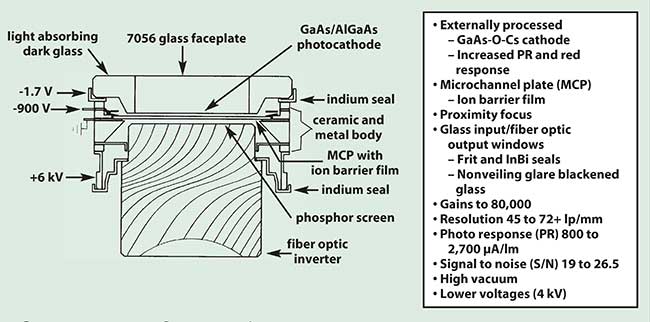
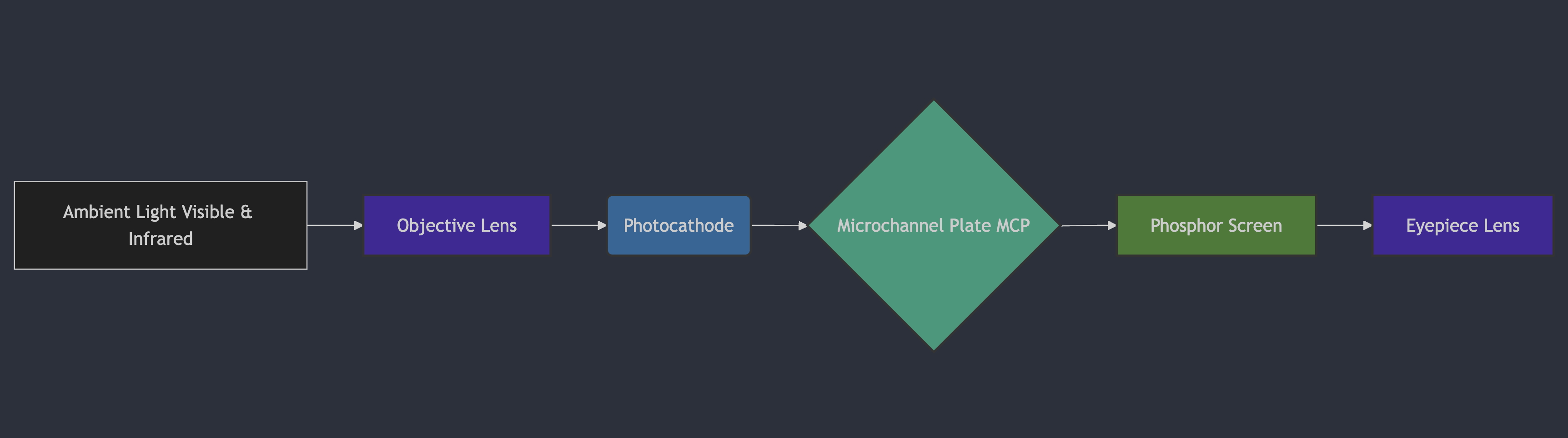
The catastrophic failure of your NVGs when exposed to bright light stems from physics, not poor manufacturing. Your night vision goggle’s image intensifier tube operates by converting photons into electrons, multiplying them through a microchannel plate (MCP), then converting them back to visible light on a phosphor screen. When excessive photons flood this system—like a tsunami overwhelming a dam—the delicate internal components suffer irreversible physical damage. This isn’t temporary blooming that recovers; it’s permanent structural failure requiring tube replacement at significant cost.
Photocathode, MCP, and Phosphor Screen: The Three Failure Points
When you point your NVGs at a bright light source, three critical components face destruction in milliseconds:
- Photocathode scorching: This light-sensitive layer converts photons to electrons. Intense light (like car headlights) focuses through your objective lens, superheating a microscopic spot on the photocathode. The result? A permanent dark blemish in your field of view that never disappears—like a burn mark on film. This is the most common light damage.
- Microchannel Plate (MCP) destruction: The MCP’s microscopic honeycomb channels multiply electrons. A concentrated light burst creates an electron surge that literally melts these channels. You’ll see distorted zones or “zingers” (fine lines) that degrade image quality across your entire view.
- Phosphor screen burn-in: The final green image screen can suffer “ghosting” when intense light creates permanent phosphor degradation. Unlike old CRT TVs where burn-in might fade, NVG phosphor damage is forever visible as faint shadows or spots.
Why the Sun Destroys Night Vision Tubes in Seconds
Never point your NVGs at the sun—even indirectly. Sunlight focused through your objective lens acts like a magnifying glass, concentrating enough energy to vaporize photocathode material instantly. Modern Generation 3 tubes might survive brief accidental exposure to automotive headlights thanks to protective systems, but direct sunlight guarantees permanent damage within 200 milliseconds. This isn’t an exaggeration; the focused solar energy exceeds 1,000 times normal operating levels. If you’ve ever seen NVGs with a distinct “sunspot” blemish near the center of the image, that’s the telltale signature of this catastrophic failure.
Autogating vs. Bright Source Protection: How Modern NVGs Fight Light Damage
Don’t mistake modern protective systems for invincibility. Generation 3 and Gen 3+ tubes incorporate sophisticated safeguards, but these are emergency brakes—not armor. They function only when light intensity crosses critical thresholds and can’t prevent damage from deliberate exposure. Think of them as airbags: lifesavers in crashes, but no substitute for safe driving.
How Autogating Prevents Instant Tube Destruction
Autogating is your NVG’s first line of defense against light spikes. Here’s what happens when headlights sweep across your goggles:
- The tube’s power supply detects a sudden light surge (like a camera flash)
- It rapidly cycles high voltage to the photocathode thousands of times per second
- This “gating” reduces electron flow during bright moments, preventing overload
- You see temporary image dimming or flickering instead of permanent damage
Crucially, autogating only works for transient light sources. It won’t save your tube if you deliberately stare at a streetlight for 10 seconds. And while it handles millisecond flashes well, sustained bright light (like indoor lighting) still causes cumulative stress that shortens tube life. Always assume autogating is a last-resort system—not permission to ignore light discipline.
Why Bright Source Protection (BSP) Is Your Critical Backup
Bright Source Protection takes autogating further with nanosecond-level reactions. When your NVGs detect light intense enough to cause damage:
- BSP instantly cuts power to the intensifier tube for 1/10,000th of a second
- You experience a momentary “blink” to black instead of blooming
- This prevents focused light from reaching destructive energy levels
Here’s what BSP won’t do: Protect against direct sunlight, prevent damage from prolonged exposure to moderately bright light, or compensate for user negligence. Military specs require BSP to handle 1,000 lux (bright office lighting), but no system survives direct sun exposure. If your NVGs “blink” frequently during use, that’s your warning to reposition—don’t wait for permanent damage.
Frontal Assault, Reflected Glare, and the Eyepiece Myth: Light Damage Pathways
Understanding exactly how light enters—and where it can’t enter—is critical for damage prevention. Not all light exposure carries equal risk, and one common myth needs immediate debunking.
Objective Lens: The Critical Vulnerability Zone
99% of light damage occurs through the front objective lens. When bright light enters here, your NVG’s optics focus it like a laser onto microscopic tube components. High-risk scenarios include:
- Direct frontal exposure: Looking at car headlights, streetlights, or the moon (yes, the moon can cause damage on clear nights with Gen 1 devices)
- Glancing/reflected light: Sunlight bouncing off windows, water, or snow into your objective lens
- Prolonged ambient exposure: Using NVGs indoors under bright lights for extended periods
Critical insight: Diffuse bright light (like a well-lit room) causes slower cumulative damage through constant tube stress, while focused light (a flashlight beam) causes instant localized burns. Both destroy your NVG—just at different speeds.
Why Eyepiece Light Poses Zero Threat to Gen 3 Tubes
Myth busted: Light entering the eyepiece (your viewing end) cannot damage modern NVGs. Here’s why:
- Light traveling backward hits the phosphor screen first, where most energy gets absorbed
- Remaining light encounters the microchannel plate (MCP), which blocks reverse transmission
- The ion barrier film on Gen 3 tubes acts as a final reverse-light shield
You can safely use NVGs with a headlamp behind you or in a lit room without fear of eyepiece damage. This only applies to Generation 3+ tubes—older Gen 1/2 models lack these safeguards. But remember: Front-facing light remains the existential threat.
5 Non-Negotiable Protective Measures to Prevent NVG Light Damage

Technology alone won’t save your investment. These user-driven protocols form your primary defense against light-induced failure.
Always Use Lens Caps—Even During Short Breaks
This is the single most effective safeguard. Install front and rear lens caps the moment NVGs leave your head. During a 2-minute coffee break at night, an unexpected car headlight can destroy your tube. Military operators follow the “3-second rule”: If you’re not actively using NVGs, caps go on within 3 seconds. No exceptions. Consider magnetic caps for instant deployment—your tube’s lifespan depends on this habit.
Ban Sunlight Testing Forever
Never “test” autogating by pointing NVGs at bright lights. YouTube videos showing NVGs handling car headlights create dangerous misconceptions. Those demonstrations use:
– Brief exposure (under 1 second)
– Indirect angles
– Modern Gen 3+ tubes with BSP
Real-world damage occurs when users deliberately hold NVGs toward lights longer than the system can compensate. If you see persistent blooming (halos around lights), you’re already causing damage. Stop immediately.
Master Light Discipline in Transitional Zones
When moving from dark to lit areas:
1. Keep your non-NVG eye closed to maintain night vision
2. Cover the objective lens with your palm while transitioning
3. Only uncover when facing away from light sources
4. Use terrain (walls, vehicles) as light shields
Pro tip: Practice “sweeping” motions—never pan slowly across bright areas. Quick movements give protective systems time to react between light bursts.
Deploy Objective Lens Filters
A KillFlash anti-reflective device (ARD) or objective lens hood:
– Breaks up direct light rays before they focus
– Reduces glare from snow, water, or glass
– Adds physical protection against scratches
– Cuts risk of damage by 70% in high-glare environments
Warning: Cheap plastic lens covers can melt or discolor under intense light. Invest in military-spec metal ARDs.
Never Operate NVGs in Daylight Without Caps
Daylight use without lens caps guarantees damage. Even on cloudy days, ambient light exceeds safe thresholds. If you must carry uncapped NVGs during daylight:
– Keep them in a light-proof pouch
– Point objective lenses downward
– Never remove caps outdoors
Why the Sun Is Your Night Vision’s Worst Enemy (And How to Win)
Direct sunlight destroys NVG tubes faster than any other light source. Unlike car headlights that might cause a spot, the sun instantly vaporizes photocathode material. One unguarded glance at dawn can render your $3,500 goggles worthless. But with proper protocols, you’ll avoid the #1 cause of NVG failure.
The Unbreakable Rules for NVG Longevity
- Lens caps are armor, not accessories: Treat them like firearm safety—always engaged when not in use
- Your eyes are the best sensors: If you’d squint without NVGs, turn away immediately
- Damage is forever: Spots, zingers, and ghosting never heal—only worsen over time
- Safeguards have limits: Autogating/BSP protect against accidents, not negligence
Final reality check: A single moment of poor light discipline can destroy years of savings. But by respecting light’s destructive power and implementing these practices, your NVGs will deliver crystal-clear night vision for 10,000+ hours. Keep caps on, avoid frontal light, and let your protective systems stay dormant where they belong—in standby, not constantly fighting preventable damage. Your vision depends on it.