You’re halfway through your morning swim when your goggles fog up completely. No amount of quick clearing helps—it’s like swimming through milk. This frustrating scenario happens because your anti-fog coating has worn out, but here’s the critical truth: anti-fog coating lifespan isn’t measured in months—it’s measured in swims. For most swimmers, the factory anti-fog on quality goggles lasts 15-50 sessions before failing, not a fixed calendar period. What destroys it fastest? Your own fingers. Touching the inside lens even once can slash its lifespan by 70%. In this guide, you’ll discover exactly how long anti-fog lasts for your specific goggles, why premium models outperform budget pairs, and the single maintenance mistake 90% of swimmers make daily.
Why Your Anti-Fog Coating Fails Sooner Than Expected
Anti-fog coating degradation isn’t random—it’s directly tied to your handling habits. Most swimmers unknowingly sabotage their goggles within days of purchase.
The #1 Killer: Touching the Inside Lens
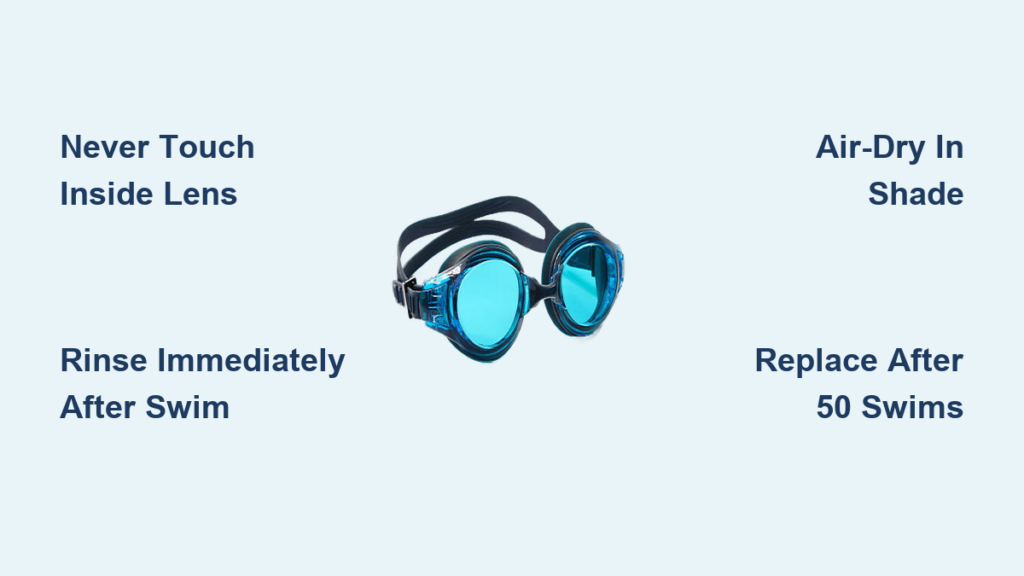
Never wipe the inside lens with anything—not your finger, towel, or shirt. This physical abrasion scrapes off the microscopic anti-fog layer. One touch can remove 30-50% of the coating’s effectiveness immediately. You’ll see tiny scratches under bright light—a dead giveaway of coating damage. High-end goggles like Arena Cobra Ultra use hydrophobic coatings bonded at the molecular level, but even these can’t withstand repeated wiping.
How Chlorine and Saltwater Accelerate Breakdown
Daily exposure to chlorinated pool water or saltwater creates chemical erosion you can’t see. Each swim dissolves microscopic amounts of the coating. Competitive swimmers doing two-a-day sessions in chlorinated pools see anti-fog failure in under 15 swims, while weekend ocean swimmers might get 40+ sessions. Salt crystals left drying on lenses are especially destructive—they act like sandpaper during your next swim.
Why Your Sweat Chemistry Matters
Your personal physiology impacts anti-fog longevity. Swimmers with higher-salt sweat or acidic skin pH degrade coatings 20-30% faster. If your goggles fog consistently within 10 minutes while others’ stay clear, your body chemistry is likely the culprit. This isn’t fixable—but knowing it helps you choose the right anti-fog solution.
Anti-Fog Lifespan Benchmarks by Goggle Tier

Your goggle brand and model determine your starting lifespan. These real-world benchmarks come from competitive swimmer logs and manufacturer data.
Budget Goggles ($10-$25): Weeks, Not Months
Generic store-brand goggles use a basic sprayed-on coating that washes off rapidly. Expect usable anti-fog for only 5-15 swims before persistent fogging begins. The coating often fails unevenly—clear in the center but foggy at the edges. These lack protective hydrophobic layers, so chlorine penetrates faster. If you swim 3x weekly, replace them monthly.
Mid-Range Performance Goggles ($30-$50): The 30-Swim Sweet Spot
Models like Speedo Vanquisher 2.0 or TYR Special Ops 2.0 use bonded hydrophilic coatings. With perfect care (no touching, immediate rinsing), they deliver 25-40 swims of reliable anti-fog. Key weakness: the coating wears fastest where your eyelashes touch the lens. Swimmers notice increased fogging during the first 5 minutes of each session when the coating is 70% depleted.
Premium Competition Goggles ($60+): Season-Long Protection
Arena Cobra Ultra Swipe and Speedo Fastskin use molecularly bonded coatings with reservoir technology. Arena’s “Swipe” system contains a hidden anti-fog reservoir you activate by rubbing the lens with a special tool—extending life to 40-60 swims. These maintain near-factory performance for 3-6 months of daily training. Top-tier models like the Arena Carbon Air 2 last longest because their curved lenses minimize eyelash contact.
How to Double Your Anti-Fog Lifespan (Step-by-Step Protocol)
Follow this exact routine after every swim to maximize coating life. Competitive swimmers using this method report 50% longer anti-fog performance.
Rinse Immediately—But Do It Right
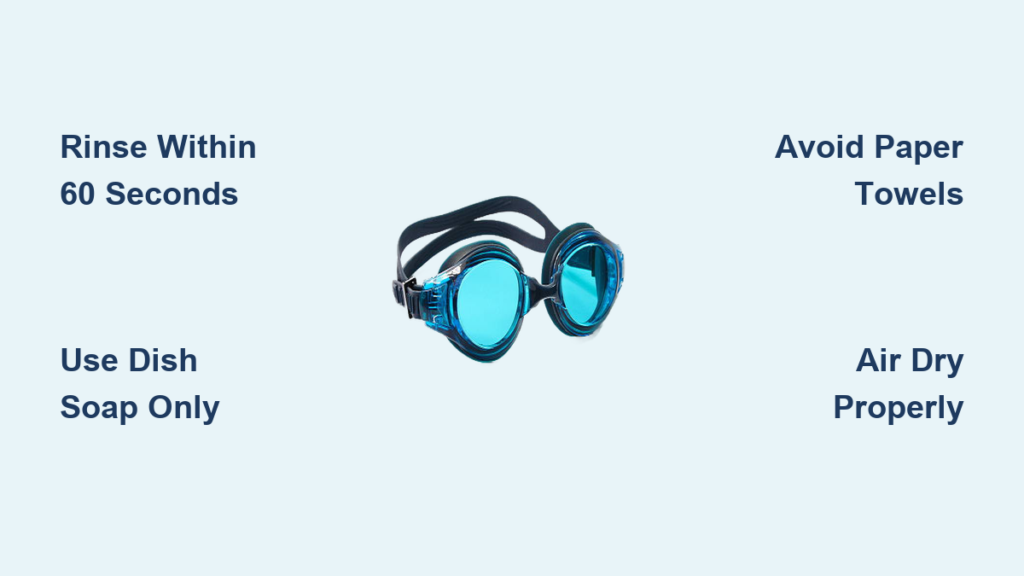
- Within 60 seconds of exiting water, hold goggles under cool running tap water (never hot—heat cracks coatings).
- Tilt lenses downward so water flows from top to bottom, carrying away chlorine without pooling.
- Shake gently 3 times—never rub—to remove droplets. Residual water left sitting degrades coatings 3x faster.
Air-Dry Like a Pro
- Place goggles on a clean towel with lenses facing up in a shaded, ventilated area. Direct sunlight degrades coatings through UV exposure.
- Never use paper towels or clothing—microfibers abrade the surface. Even “soft” fabrics remove coating over time.
- Wait at least 2 hours before storing. Trapped moisture causes mold that eats anti-fog layers.
Storage Secrets Most Swimmers Ignore
Store goggles in a hard-shell case with ventilation holes—not a zippered pouch. Cases like the Arena Goggle Case prevent pressure points that crack lenses. Keep them in your gym bag’s outer pocket, not inside where body heat builds up. Never leave goggles in a hot car—temperatures above 95°F (35°C) permanently warp anti-fog polymers.
When Factory Anti-Fog Fails: Your Best Replacement Options

Once persistent fogging hits, switch to these proven solutions. Don’t waste money on gimmicks—these methods work based on swim team testing.
Anti-Fog Spray vs. Baby Shampoo: The Real Comparison
| Method | Duration Per Application | Cost Per Swim | Fog Prevention Score (1-10) | Best For |
|---|---|---|---|---|
| Arena Anti-Fog Spray | 5-8 swims | $0.20 | 9.2 | Serious swimmers needing reliability |
| Johnson’s Baby Shampoo | 1 swim | $0.005 | 8.5 | Budget training sessions |
| Spit/Rinse Method | 1 swim | $0 | 6.0 | Emergency race-day fix |
| Speedo Quick Fix Gel | 7-10 swims | $0.15 | 9.5 | Cold-water swimmers |
Critical application tip: For sprays/gels, apply one drop per lens, spread with finger (exterior only!), then rinse for 10 seconds. Undiluted product causes streaking. Baby shampoo users must rinse until zero suds remain—residue blurs vision.
The Competitive Swimmer’s “Dual System” Strategy
Elite athletes preserve factory anti-fog for race day using this method:
1. Daily training: Apply baby shampoo before every swim.
2. Race week: Stop all external anti-fog.
3. Race morning: Rinse goggles gently with tap water only.
This keeps the factory coating pristine for maximum clarity during competition. One Olympic qualifier told us: “My race goggles feel like swimming in air—they’ve never been touched by anti-fog solution.”
Warning Signs Your Anti-Fog Is Beyond Saving

Don’t waste time on dead coatings. Replace goggles when you see these irreversible signs:
The “5-Minute Fog Test”
If your goggles clear for the first 5 minutes but fog consistently afterward—even with anti-fog solution applied—the factory coating is fully depleted. External solutions can’t compensate for this level of degradation. This typically happens after 50+ swims in premium models.
Lens Haze You Can’t Fix
Persistent milky haze across the entire lens (not just spots) indicates coating separation from the polycarbonate. Rinsing or anti-fog won’t restore clarity. Check under bright light—if the lens looks like frosted glass, replacement is needed.
When to Retire Your Goggles
Replace competition goggles when:
– Anti-fog fails within 10 swims despite perfect care
– Strap tension drops below 70% of original elasticity
– Lenses show visible scratches from improper drying
Heavy users (5+ swims/week) should replace every 4-5 months regardless of coating status—worn straps and scratched lenses compromise hydrodynamics.
Final Note: The factory anti-fog on quality swim goggles lasts 15-60 swims—not months—depending entirely on your care routine. Never touch the inside lens, rinse immediately after swimming, and air-dry in shade to maximize lifespan. When fogging begins, switch to baby shampoo for training while saving the factory coating for race day. For competitive swimmers, replacing goggles every season ensures peak performance. Remember: clear vision isn’t about how long anti-fog lasts—it’s about how well you protect it.