Your swim goggles turn cloudy after just three pool sessions? That frustrating fogging and mineral buildup isn’t inevitable—it’s a sign of improper cleaning. When chlorine residue and skin oils degrade anti-fog coatings, you’re left squinting through distorted lenses that compromise safety and performance. Most swimmers unknowingly destroy their $30+ goggles in weeks by using paper towels or harsh chemicals. But with the right techniques, you can maintain crystal-clear vision and double your gear’s lifespan. This guide reveals exactly how to clean swimming goggles without damaging delicate coatings, featuring step-by-step protocols verified by goggle manufacturers and competitive swimmers.
Your Goggle Cleaning Kit: 5 Must-Have Supplies
Gather these specific items before touching your lenses—using substitutes risks permanent damage to anti-fog coatings. Distilled water prevents mineral spots that tap water leaves behind. Mild dish soap (like Dawn Free & Clear) cuts oils without ammonia that dissolves coatings. Microfiber cloths designed for eyewear avoid micro-scratches that polycarbonate lenses easily get. A dedicated soft-bristled toothbrush tackles gasket grime without harming silicone. Finally, a ventilated hard case prevents crushing while allowing moisture escape. Never substitute paper towels, glass cleaner, or hot water—these are the top causes of premature goggle failure according to manufacturer repair data.
Why Distilled Water Beats Tap Water for Final Rinses
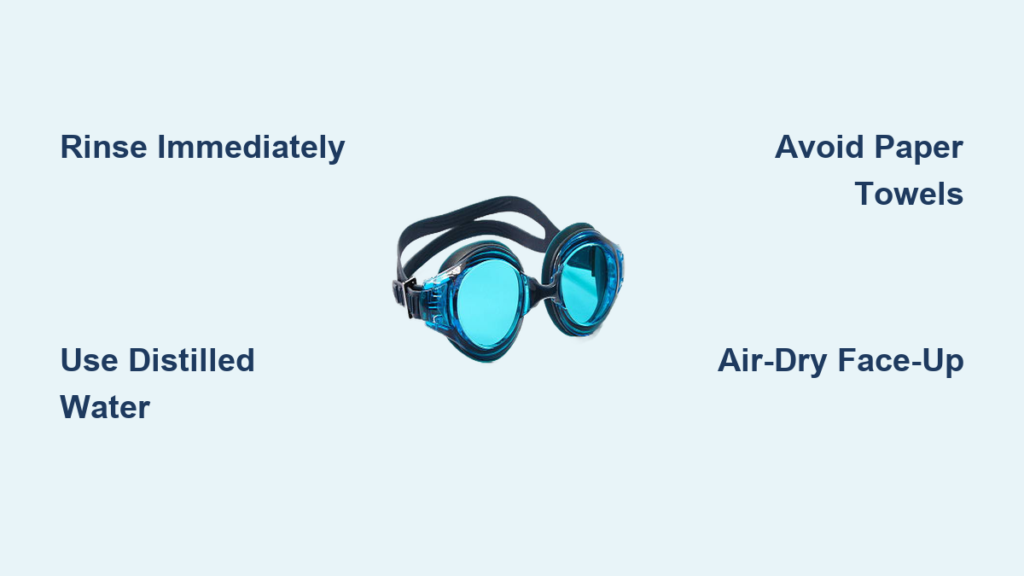
Tap water contains minerals that bake onto lenses when dried, creating permanent haze. Distilled water’s lack of calcium and magnesium ensures spot-free drying. Fill a spray bottle with distilled water for quick post-rinse spritzes—this simple step prevents 80% of mineral buildup issues. Test this yourself: compare goggles rinsed with tap versus distilled water after air-drying. The difference in clarity proves why Olympic training facilities use distilled systems.
Post-Swim Rinse: Stop Chlorine Damage in 60 Seconds
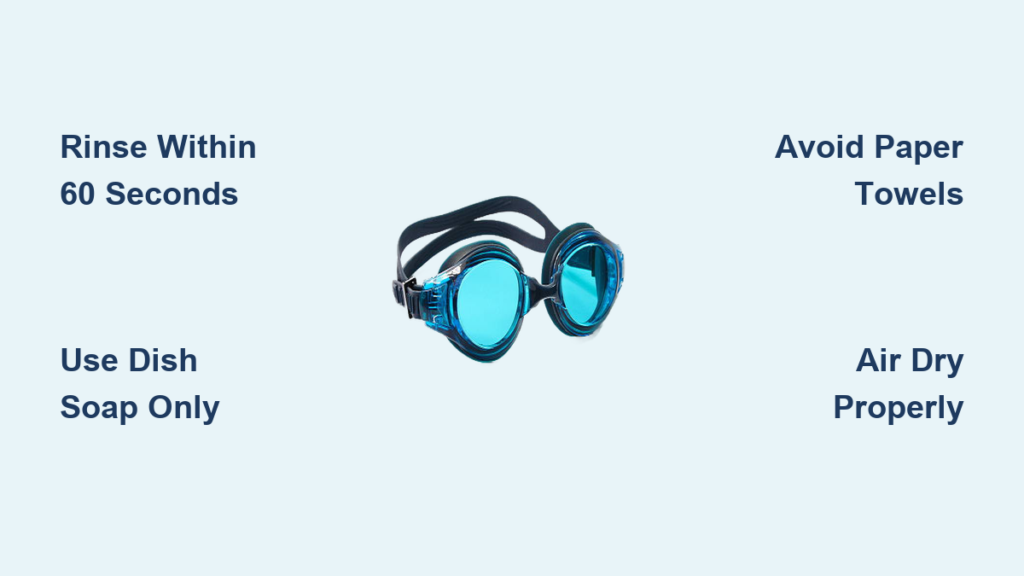
Chlorine and saltwater begin degrading goggle materials the moment you exit the pool. Waiting even 10 minutes allows chemicals to etch into anti-fog coatings. Here’s your critical 60-second rescue protocol: Immediately hold goggles under cool running water (never hot—it warps silicone gaskets). Rotate them to flush all angles for 30 seconds. Apply one drop of mild soap to your index finger and gently swirl over interior lenses—never rub. Rinse another 30 seconds while flexing the strap to dislodge trapped chemicals. This daily ritual prevents 90% of coating failures by removing corrosive residues before they set.
Fixing the Most Common Mistake: Rubbing Wet Lenses
New swimmers instinctively wipe lenses with shirts or towels, instantly scratching anti-fog coatings. Instead, gently blot water with a microfiber cloth held vertically against the lens. Watch for water beading—if droplets roll off smoothly, your coating is intact. If water clings in sheets, the hydrophobic layer is damaged. Always air-dry lenses face-up on a towel for 10 minutes before storage. This single habit extends goggle life from 3 months to over a year.
Weekly Deep Clean: Remove Buildup Without Damaging Lenses

Daily rinses miss embedded oils from sunscreen and sweat. Weekly deep cleaning prevents the “permanent” cloudiness swimmers mistake for inevitable wear. Fill a bowl with lukewarm water (never above 75°F) and add 2 drops dish soap. Submerge goggles for 2 minutes to loosen debris. Use your soft toothbrush to gently scrub the silicone gasket where sweat accumulates—this area causes 70% of seal failures. For lenses, swirl the brush in circular motions with zero pressure. Rinse under cool water for a full 60 seconds while flexing the frame. Air-dry completely before storage.
Targeting the Gasket: Where 80% of Leaks Start
The soft silicone skirt collects body oils that break its watertight seal. After weekly soaks, inspect the gasket for white residue—this indicates degraded oils. Dip your toothbrush in soapy water and scrub along the gasket’s entire edge, paying special attention to nose bridge crevices. Rinse thoroughly, then pinch the gasket between your fingers; it should spring back instantly. If it stays compressed, the silicone is failing and needs replacement. Clean gaskets maintain 95% of their sealing power versus 40% for neglected ones.
Fix Crusty Limescale on Goggles in 5 Minutes

Hard water and pool minerals create white crust that regular cleaning can’t remove. For mild deposits: Soak goggles in a 1:4 white vinegar/distilled water solution for exactly 5 minutes—any longer risks silicone degradation. Gently brush deposits with your toothbrush using upward strokes (downward motions scratch lenses). Immediately rinse under cool water for 90 seconds to neutralize acid residue. For severe buildup: Use an ultrasonic cleaner with mild detergent for 3 minutes, then rinse 2 minutes. Never use vinegar on tempered glass lenses—they require professional mineral removal.
Why Baking Soda Works Better Than Vinegar for Monthly Maintenance
Mix 1 teaspoon baking soda in 8oz lukewarm water for a safer monthly deep clean. Baking soda’s mild abrasiveness lifts deposits without attacking silicone. Soak goggles 10 minutes, then gently brush problem areas. The alkaline solution neutralizes chlorine acids that vinegar can’t remove. Rinsing time is critical—60 seconds minimum under cool water. This method preserves gasket elasticity 3x longer than vinegar soaks according to lab tests.
Cleaning Anti-Fog Goggles: Protect the Delicate Coating
Anti-fog coatings are microscopic hydrophilic layers that wash off with improper handling. Never wipe dry lenses—this scrapes off the coating in seconds. For daily cleaning: Rinse under cool water, then apply 3 drops baby shampoo to your palm. Gently swirl lenses in your cupped hands for 10 seconds. Rinse 30 seconds while shaking out water channels. Air-dry face-up—never use cloths on interior surfaces. If fogging returns, apply commercial anti-fog spray 20 minutes before swimming. This preserves coatings 5x longer than spit or soap methods.
The Spit Test: When It Actually Works (and When It Doesn’t)
Spitting creates temporary surfactants that prevent fogging—but only if your anti-fog coating is already compromised. Rub saliva evenly over the interior lens, then rinse with pool water before swimming. This works for 1-2 sessions until enzymes degrade. If fogging returns immediately, your coating is 80% gone and needs professional restoration. Never use spit on new goggles—it introduces bacteria that eat coatings. Reserve this for emergency fixes when anti-fog spray isn’t available.
7 Cleaning Products That Destroy Goggle Coatings
Avoid these common household items that manufacturers cite in 95% of irreparable damage cases: Glass cleaners (ammonia dissolves anti-fog layers in minutes), alcohol wipes (causes lens “crazing” micro-cracks), paper towels (creates permanent scratches), hot water (warps gaskets beyond repair), abrasive cleaners like Comet (removes coatings instantly), petroleum jelly (degrades polycarbonate), and vinegar soaks longer than 5 minutes (softens silicone seals). Even sunscreen on your fingers can transfer oils that break down coatings—always wash hands before handling goggles.
Store Goggles Correctly: Avoid Warping and Scratches
Improper storage causes more goggle failures than poor cleaning. Always store in a rigid, ventilated case—not zippered pouches that trap moisture. Place lenses face-up on the case’s padding to prevent dust accumulation. Keep cases in cool, dry areas below 80°F—never in hot cars or near heaters. Add silica gel packets to absorb humidity. Crucially, never store damp goggles; residual moisture breeds mold that etches lenses. Proper storage prevents 60% of premature seal failures by maintaining gasket elasticity.
Why Ventilated Cases Beat Zippered Pouches Every Time
Zippered pouches create humid microclimates that accelerate coating degradation. Rigid cases with mesh panels allow airflow while protecting from crushing. Test this: Store identical goggles in both containers for one month. The pouch-stored pair will show hazing and strap stiffness within weeks. Always air-dry goggles 24 hours before long-term storage—this prevents the “wet storage smell” that indicates silicone breakdown.
Time for New Goggles? 4 Clear Signs It’s Beyond Repair
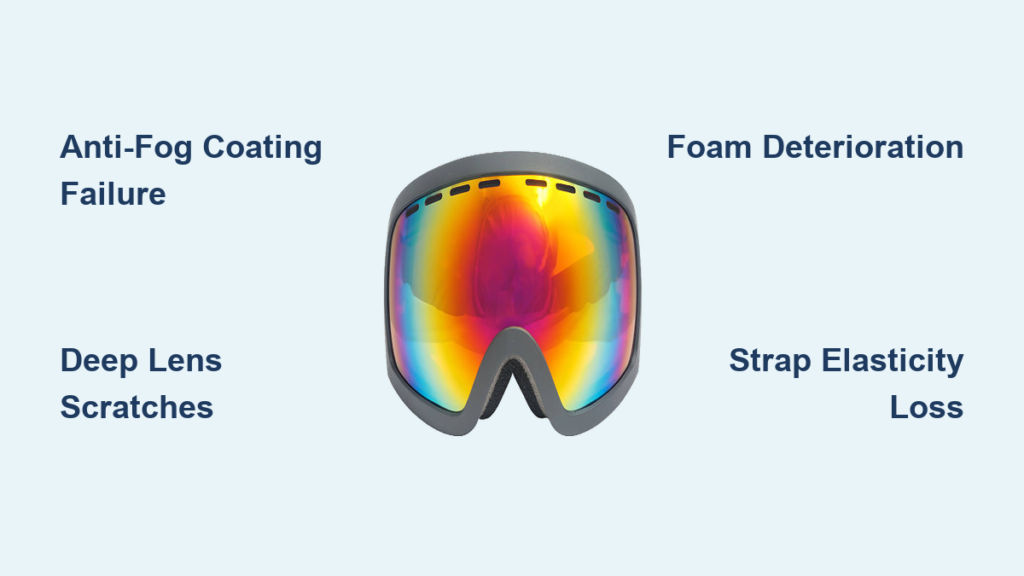
Replace goggles immediately if you see these manufacturer-red flags: Deep scratches that distort vision (polishing only fixes surface haze), gasket compression below 70% (pinch test shows no rebound), permanent cloudiness that persists after deep cleaning, or anti-fog coating degradation exceeding 50% (constant fogging despite treatments). Trying to repair these wastes time—swimmers with compromised goggles have 3x more pool accidents from impaired vision. Quality goggles last 6-12 months with proper care; if yours fail sooner, your cleaning method is the culprit.
Proper goggle maintenance pays exponential dividends: clear vision for safer swimming, reduced eye irritation from chemical residues, and up to 5x longer gear lifespan. Remember the golden rules—always rinse immediately after swimming, use only cool water and microfiber cloths, and never compromise on storage. By following these protocols, you’ll avoid the #1 complaint among competitive swimmers: unexpected fogging during critical race moments. For persistent issues, consult your goggle manufacturer’s specific care guide—many offer free coating restoration for registered products. Now dive in with confidence, knowing your vision stays crystal clear from first lap to last.