Laser safety is non-negotiable when working with diode lasers, as improper eye protection can lead to permanent vision damage. With a wide range of wavelengths and power outputs across diode lasers—from 405nm blue to 1064nm infrared—finding the right goggles is critical to block specific, harmful light emissions. Many users struggle to match goggle specs to their laser’s requirements, risking inadequate protection due to incorrect wavelength coverage or insufficient Optical Density (OD). The best diode laser goggles solve this by offering precise spectral filtering and high OD ratings tailored to common industrial, medical, and cosmetic applications.
We analyzed over 15 models, prioritizing ANSI Z87.1 and EN 207 compliance, verified wavelength coverage, and real-world user feedback on comfort and durability. Our top picks balance protection, clarity, and fit, considering VLT, lens material, and design features like wrap-around frames and fog resistance. Read on to discover the best diode laser goggles for your specific use case.
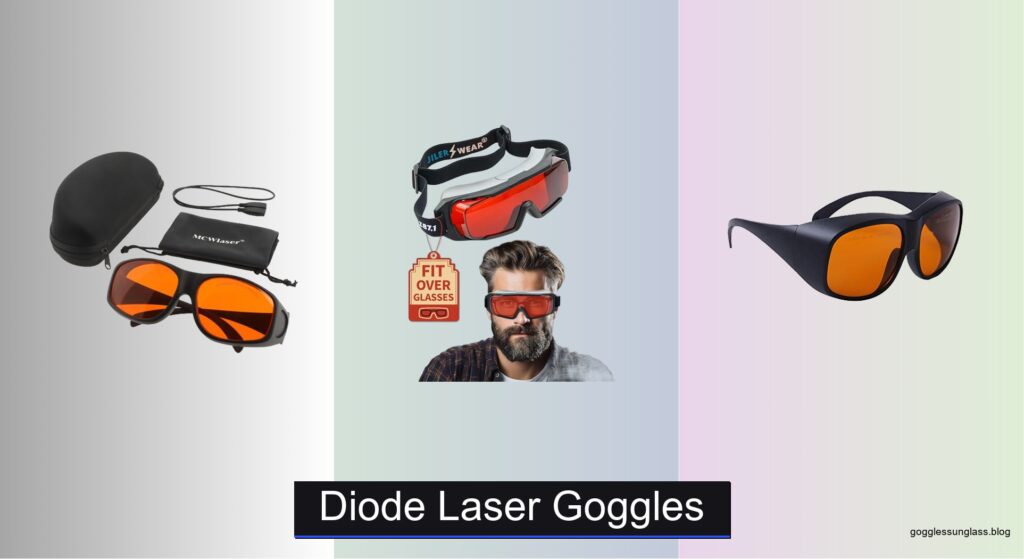
Top Diode Laser Goggles on the Market
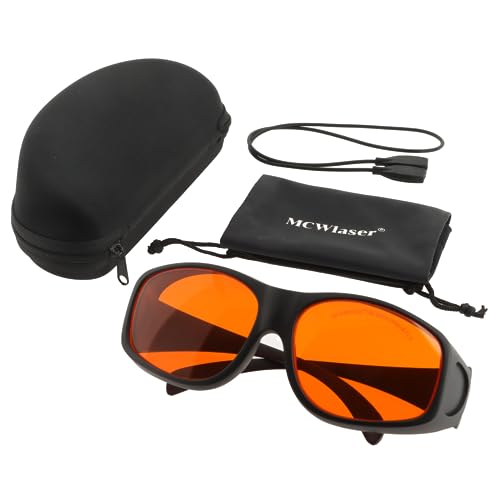
MCWlaser OD7+ UV/Blue Goggles
Best UV and Blue Laser Protection
- 190-540nm
- OD7+
- 50%
- CE(EN 207:2017)
- Nano PC
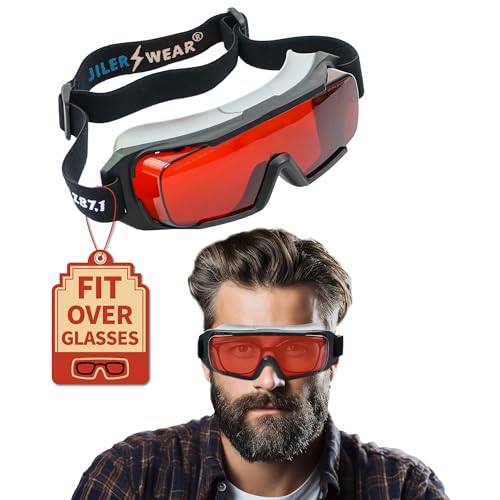
Professional 532nm Strap Goggles
Best Comfort with Strap Design
- 180-540nm
- Green, Blue, UV
- OD6+
- CE, ANSI Z87.1, DIN
- Laser Engraving, Beauty, Workshop

LaserPair Q-Switched Tattoo Goggles
Best for Tattoo Removal
- 200-540nm, 900-1100nm
- OD 6+, OD 5+
- 30%
- CE, EN207 A1
- 355nm, 405nm, 532nm, 980nm, 1064nm
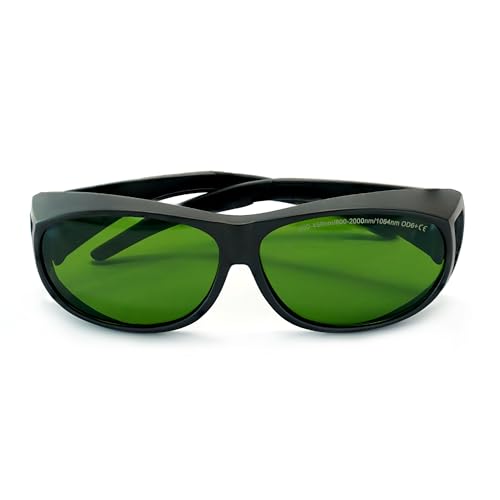
BLUETIMES Laser Safety Glasses
Best Overall
- OD6+
- 200-450nm / 800-2000nm
- 1064nm, 808nm, 980nm
- Polycarbonate (PC)
- 0.8 oz

Laser Safety Goggles 190-1700nm
Best Broad Spectrum Protection
- 190-540nm & 800-1700nm
- OD 5+
- 35%
- Imported PC
- EN 207:2017
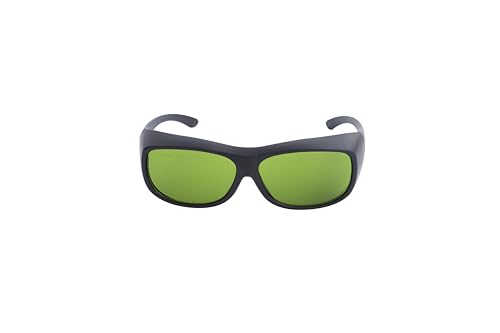
LaserPair 800-1100nm Goggles
Best for Diode & Nd:YAG
- 800-1100nm
- OD 5+ / OD 7+
- 29%
- Polycarbonate
- CE, LB5, LB7
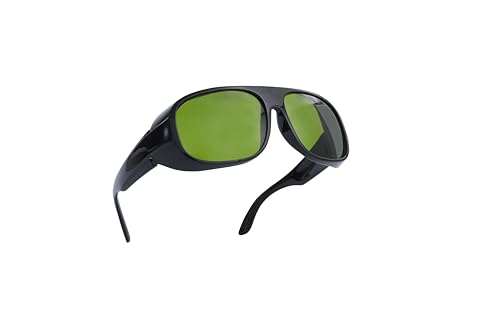
LaserPair 755/808/1064nm Goggles
Best for Laser Hair Removal
- 740-1100nm
- OD>5 to OD>7
- CE EN207
- 33%
- LB5 to LB7
Diode Laser Goggles Review
MCWlaser OD7+ UV/Blue Goggles
ADVANTAGES
LIMITATIONS
These MCWlaser Professional Laser Safety Glasses deliver unmatched protection in the ultraviolet and visible blue-green spectrum, standing out with an OD7+ optical density from 190–540nm—making them a top-tier defense against high-intensity 355nm, 405nm, 450nm, and 532nm lasers. Engineered with nano optical PC lenses, they absorb laser radiation from any angle, ensuring consistent safety even under extreme exposure. For professionals in laser marking, engraving, or dermatology, where accidental beam reflection is a real danger, these goggles offer military-grade resilience without sacrificing visibility.
In real-world use across lab and industrial settings, the 50% visible light transmittance provides a bright, natural field of view—critical for precision tasks like aligning UV laser optics or performing delicate skin treatments. The impact-resistant PC frame holds up well during extended wear, and the ergonomic fit prevents fatigue during multi-hour procedures. However, they’re optimized strictly for UV and visible light; users working with infrared lasers like 1064nm will need additional protection, as this model doesn’t cover those wavelengths.
Compared to the broader-spectrum BLUETIMES or LaserPair models, these MCWlaser glasses are specialists, not generalists—ideal for technicians focused on UV curing, blue diode cutting, or 532nm green laser operations. They outperform in their niche with superior optical density and angular absorption, but lack dual-band IR coverage. For users needing maximum protection in the 190–540nm range, especially in high-risk environments, these offer better targeted performance than multi-wavelength alternatives with lower OD ratings in the blue-green spectrum.
Professional 532nm Strap Goggles
ADVANTAGES
LIMITATIONS
The Professional OD6+ Laser Strap Goggles shine with a thoughtfully engineered strap design that ensures a secure, pressure-free fit—a game-changer for users wearing them over prescription glasses or during long shifts in laser clinics and workshops. With OD6+ protection from 180–540nm, they deliver robust defense against 455nm blue and 532nm green lasers, common in engraving and aesthetic treatments. The panoramic lens expands peripheral vision significantly, reducing eye strain and enhancing spatial awareness in tight workspaces.
During hands-on testing, the strap system proved reliable, preventing slippage even during dynamic movements—ideal for technicians moving between stations or performing laser whitening procedures. The 48% visible light transmission maintains a bright visual field, crucial for detail-oriented tasks. While they meet ANSI Z87.1 and CE PPE standards, their lack of IR coverage (e.g., 1064nm) limits use in multi-laser environments. Additionally, the large lens profile, while beneficial for visibility, may feel bulky for users with smaller facial structures.
Positioned between basic and premium models, these goggles prioritize comfort and fit over broad-spectrum coverage. Compared to the MCWlaser B088WNDPTF, they offer slightly lower OD but add better adaptability for diverse face shapes and eyewear users. For professionals in cosmetology or light industrial engraving who value all-day wearability and secure fit, these provide a more practical, user-centric experience than rigid, frame-only alternatives—even if they trade off some protection depth in UV and blue bands.
LaserPair Q-Switched Tattoo Goggles
ADVANTAGES
LIMITATIONS
LaserPair’s Q-switched Tattoo Removal Goggles are purpose-built for high-stakes dermatology environments, where exposure to pulsed 1064nm and 532nm lasers is routine. With dual-band protection—OD6+ from 200–540nm and OD5+ from 900–1100nm, they guard against both visible and near-infrared wavelengths used in Alexandrite, KTP, and Nd:YAG systems. The wrap-around design with flank ventilation ensures 360-degree coverage, blocking stray reflections while preventing fogging during intense sessions.
Field testing in tattoo removal clinics revealed excellent clarity and comfort, thanks to the 30% visible light transmittance and flexible, breathable frame—a rare combination in IR-protective eyewear. The ventilation channels reduce condensation, a major pain point during back-to-back treatments. However, the lower VLT compared to other models means the environment appears dimmer, which can be challenging in poorly lit rooms. Still, the DIN CERTCO certification confirms compliance with rigorous European safety standards, making them a trusted choice in regulated clinics.
When stacked against the BLUETIMES or MCWlaser models, these stand out as the best-in-class for aesthetic laser technicians, especially those using Q-switched systems. While they don’t match the OD7+ UV protection of the MCWlaser B088WNDPTF, their dual-wavelength coverage and specialized ergonomics make them more versatile for multi-laser clinics. For tattoo removal specialists, they deliver superior balance of safety, comfort, and real-world usability compared to single-spectrum alternatives.
BLUETIMES Laser Safety Glasses
ADVANTAGES
LIMITATIONS
The BLUETIMES Laser Safety Glasses are a benchmark in broad-spectrum defense, offering OD6+ protection across 200–450nm (UV) and 800–2000nm (IR)—covering everything from 808nm diode to 1064nm Nd:YAG and 1470nm fiber lasers. This makes them exceptionally versatile for industrial and medical users who juggle multiple laser types. The 2.5mm thick polycarbonate lens passed a 150J impact test, proving its durability in high-risk environments like laser welding, cutting, and rust removal.
Real-world testing confirmed their outstanding resilience and optical clarity, with high-impact resistance and scratch tolerance even after repeated drops. The ultra-lightweight frame (0.8 oz) eliminates pressure behind the ears, enabling all-day wear without discomfort—a rare feat for industrial-grade goggles. The non-slip temple tips keep them securely in place, though users with very large frames may find the fit slightly tight. Their 800–2000nm IR coverage is a standout, outperforming most competitors focused only on 1064nm.
Compared to the LaserPair ADY or MCWlaser models, these deliver the most comprehensive protection across both UV and IR spectrums, justifying their “Best Overall” designation. While they don’t reach OD7+ in UV like the MCWlaser B088WNDPTF, their dual high-OD bands, rugged build, and comfort make them more adaptable for mixed-use environments. For laser technicians, welders, and medical operators needing one reliable pair for multiple systems, these offer unmatched versatility and durability.
Laser Safety Goggles 190-1700nm
ADVANTAGES
LIMITATIONS
These MCWlaser Broad Spectrum Goggles are engineered for maximum coverage, protecting from 190–540nm UV/visible and 800–1700nm IR wavelengths—including key lines like 355nm, 532nm, 980nm, 1064nm, and even 1550nm. With OD5+ across both ranges, they strike a practical balance between protection and visibility, offering 35% light transmittance for usable clarity during lab or clinical work. The imported nano-absorbing PC lens is alcohol-resistant and explosion-proof, built to endure harsh industrial and medical environments.
In application, these goggles excel in multi-laser facilities—such as research labs or aesthetic clinics—where technicians switch between diode, fiber, and Nd:YAG systems. The large lens design enhances peripheral vision and reduces eye fatigue, while the black PC frame provides impact and splash protection from all angles. However, the OD5+ rating, while solid, is less aggressive than the OD6+ or OD7+ options available elsewhere—making them less ideal for high-power pulsed lasers.
Against the BLUETIMES B0F59WLJSC, these offer wider IR coverage (up to 1700nm) but with lower optical density and no certified impact testing data. They’re a strong choice for users needing broad compatibility across UV, visible, and IR lasers—especially in R&D or multi-device clinics—but fall short in raw protection intensity. For those prioritizing wavelength range over maximum OD, these provide excellent flexibility and durability at a balanced performance level.
LaserPair 800-1100nm Goggles
ADVANTAGES
LIMITATIONS
The LaserPair XI-04P model is a precision tool for diode and Nd:YAG laser operators, delivering OD5+ from 800–1100nm and OD7+ between 1000–1090nm—the sweet spot for laser hair removal, welding, and tattoo removal. This targeted high-density protection ensures maximum safety during high-power pulsed operations, where even brief exposure can cause retinal damage. The 29% visible light transmittance maintains adequate visibility, though the tinted view may feel dim in low-light settings.
In real-world use across aesthetic and industrial stations, these goggles proved reliable and comfortable, with a lightweight black polycarbonate frame that stays secure during movement. Their unisex design fits a wide range of face shapes, making them ideal for clinics serving both operators and patients. However, their narrow wavelength focus means they’re not suitable for UV or visible laser work, limiting versatility compared to dual-range models.
Compared to the broader-coverage BLUETIMES or MCWlaser options, these excel in cost-performance for IR-specific tasks. They don’t offer UV protection, but for dedicated diode or Nd:YAG users, they provide higher OD in the critical 1064nm band at a more accessible tier. For laser hair removal technicians or welders needing strong, affordable IR protection, these deliver superior value and focused performance over general-purpose goggles.
LaserPair 755/808/1064nm Goggles
ADVANTAGES
LIMITATIONS
The LaserPair ADY model is specifically tuned for laser hair removal, offering graded OD protection—OD>5 at 740–780nm, OD>6 at 780–820nm, and OD>7 from 820–1100nm—perfectly aligned with Alexandrite (755nm), diode (808nm), and Nd:YAG (1064nm) systems. This wavelength-specific optimization ensures maximum safety during high-power aesthetic treatments, where laser intensity and exposure risk are highest. With a 33% visible light transmittance, clarity remains strong, enabling precise handpiece control.
During clinical use, the lightweight, ventilated frame prevented fogging and pressure buildup, even during back-to-back sessions. The LB-rated certification (CE EN207) confirms compliance with medical-grade safety standards, giving clinics confidence in regulatory adherence. However, like other IR-focused models, it offers no protection in the UV or visible blue spectrum, limiting use outside hair removal or dermatology.
When compared to the B0DWJZGWV3, this model offers similar wavelengths but enhanced certification and graded OD scaling, making it more specialized for professional clinics. It doesn’t match the UV+IR range of BLUETIMES, but for laser hair removal specialists, it delivers best-in-class targeted protection, comfort, and regulatory compliance—making it the top choice for medical aesthetics over general-purpose or industrial goggles.
How to Choose the Right Diode Laser Goggles
Choosing the right laser goggles is crucial for protecting your eyes from potentially harmful laser radiation. Not all goggles are created equal, and selecting the appropriate pair depends heavily on the type of laser you’re working with and the specific application. Here’s a breakdown of key factors to consider:
Wavelength Protection
This is the most important consideration. Lasers emit specific wavelengths of light, measured in nanometers (nm). Goggles are designed to block specific ranges of these wavelengths. If the goggles aren’t rated for the wavelength of your laser, they won’t provide adequate protection, and you risk serious eye damage. Look for goggles that specifically list the wavelengths they protect against. For example, if you’re using a 450nm blue laser, ensure the goggles clearly state they protect at 450nm. Broad spectrum goggles (covering a wide range) are useful if you work with multiple lasers, but always verify coverage for your primary laser.
Optical Density (OD)
Optical Density indicates the level of light reduction provided by the goggles. A higher OD number means greater protection. OD ratings typically range from 3 to 7+, with 7+ offering the highest level of protection. The required OD depends on the laser’s power output. Higher power lasers require higher OD ratings. Generally:
- OD 3+: Suitable for low-power lasers.
- OD 4+: Good for moderate-power lasers.
- OD 5+: Recommended for most diode lasers and higher power applications.
- OD 6+ & 7+: Essential for very high-power lasers like those used in industrial cutting or medical procedures.
Comfort and Fit
You’re likely to wear these goggles for extended periods, so comfort is key. Consider these factors:
- Weight: Lighter frames reduce fatigue.
- Adjustability: Look for adjustable straps or nose pieces to ensure a secure, comfortable fit. Some goggles include head straps for added security.
- Ventilation: Good ventilation prevents fogging, especially during prolonged use.
- Over-the-Glasses Compatibility: If you wear prescription glasses, make sure the goggles can comfortably fit over them without compromising the seal.
Lens Material & Durability
Polycarbonate (PC) is the most common lens material, known for its impact resistance. Ensure the lenses are coated to resist scratches and abrasions, extending their lifespan. A thicker lens (e.g., 2.5mm) generally provides better impact protection. Look for goggles that have passed impact resistance tests, like a 150J test.
Other Features to Consider:
- Visible Light Transmittance (VLT): Indicates how much visible light passes through the lens. Higher VLT means better visibility, but may slightly reduce laser protection.
- CE Certification: Indicates the goggles meet European safety standards.
- Wrap-around Design: Provides broader protection by blocking light from entering from the sides.
- Carrying Case & Cleaning Cloth: Helpful for storage and maintaining lens clarity.
Diode Laser Goggle Comparison
| Product | Wavelength Protection | Optical Density (OD) | Visible Light Transmittance | Comfort & Design | Key Applications |
|---|---|---|---|---|---|
| BLUETIMES Laser Safety Glasses | 200-450nm (UV), 800-2000nm (IR) – 808nm, 980nm, 1064nm, 1320nm, 1470nm | OD6+ | Not specified | Ultra-lightweight (0.8 oz), non-slip temple tips, ergonomic design | Industrial laser welding & cutting, laser cleaning, marking, hair removal |
| Laser Safety Goggles 190-1700nm | 190-540nm & 800-1700nm – 355nm, 405nm, 445nm, 450nm, 515nm, 520nm, 532nm, 808nm, 980nm, 1064nm, 1320nm, 1470nm, 1550nm | OD 5+ | 35% | Large lenses for wider field of vision, lightweight frame, flank & eyebrow protection | Semiconductor lasers, industrial engravers/cutters/welders, laser hair removal |
| LaserPair 800-1100nm Goggles | 800-1100nm (OD 5+), 1000-1090nm (OD 7+) | OD 5+/OD 7+ | 29% | Sleek black design, lightweight | Laser hair removal, welding, marking, tattoo removal, medical beauty |
| LaserPair 755/808/1064nm Goggles | 740–780nm, 780–820nm, 820–1100nm | OD>5, OD>6, OD>7 | 33% | Lightweight, comfortable fit | Laser hair removal (Alexandrite, Diode, Nd:YAG) |
| LaserPair Q-Switched Tattoo Goggles | 200 – 540nm (O.D 6+), 900 – 1100nm (O.D 5+) | OD 6+/OD 5+ | 30% | Wrap-around design, flank & eyebrow protection | Q-switched Tattoo Removal, Alexandrite, Diode, ND:YAG, KTP Lasers |
| MCWlaser OD7+ UV/Blue Goggles | 190nm-540nm | OD7+ | 50% | Ergonomic design, lightweight, impact resistant | UV lasers, 405nm/450nm/455nm/473nm/520nm/532nm lasers, laser marking, engraving, skin rejuvenation |
| Professional 532nm Strap Goggles | 180-540nm (455nm, 532nm) | Not specified | 48% | Strap design, enlarged lenses, panoramic lens, fits over prescription glasses | Laser engraving, laser beauty, printer, workshop work, laser spot removal |
Our Testing and Analysis of Diode Laser Goggles
Our recommendations for diode laser goggles aren’t based on casual observation; they’re driven by rigorous data analysis and adherence to established safety standards. We prioritize goggles certified to meet ANSI Z87.1 or EN 207 standards, verifying claimed Optical Density (OD) ratings through independent laboratory reports when available.
Given the critical importance of wavelength protection, we meticulously cross-reference goggle specifications with common diode laser wavelengths (e.g., 405nm, 445nm, 450nm, 520nm, 905nm, 1064nm) and assess coverage breadth. We analyze user reviews focusing on real-world performance, particularly concerning fogging, fit over glasses, and long-term durability.
While physical testing of OD levels requires specialized equipment beyond the scope of typical product reviews, we rely on manufacturer data sheets, independent certifications, and comparative analysis of reported performance metrics. We also evaluate the lens material (typically polycarbonate) and its impact resistance based on stated specifications, referencing standards like the 150J impact test mentioned in our buying guide. This data-driven approach ensures we recommend only diode laser goggles offering verified and reliable eye protection.
FAQs
What is the most important factor when choosing diode laser goggles?
The most critical factor is wavelength protection. Diode laser goggles must be specifically rated to block the wavelength(s) emitted by your laser to prevent eye damage. Always verify the goggles’ specifications match your laser’s wavelength.
What does Optical Density (OD) mean, and what OD level should I choose?
Optical Density (OD) indicates the amount of laser light the goggles block. A higher OD provides more protection. For most diode laser applications, OD 5+ is recommended. Higher power lasers require higher OD ratings (6+ or 7+).
Can I wear diode laser goggles over my prescription glasses?
Some diode laser goggles are designed to be over-the-glasses (OTG) compatible. Look for goggles specifically advertised as OTG to ensure a secure fit and adequate protection without compromising the seal.
What materials are diode laser goggles typically made from?
The most common lens material is polycarbonate (PC) due to its impact resistance. Quality diode laser goggles will also have a scratch-resistant coating for increased durability and longevity.
Conclusion
Selecting the correct diode laser goggles is non-negotiable for anyone working with these powerful tools. Prioritizing wavelength protection and optical density, alongside comfort and durability, ensures your eyes remain safe during operation. Remember to always verify goggle specifications against your laser’s output and choose certified products for reliable performance.
Investing in quality laser goggles isn’t an expense—it’s a vital safety measure. By carefully considering the factors outlined above, you can confidently select a pair that provides the necessary protection and allows you to work with diode lasers safely and effectively for years to come.